
Verwandte Artikel zu The Paperback Apocalypse: How the Christian Church...
Inhaltsangabe
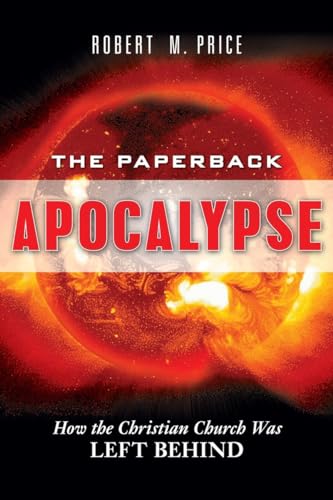
The great popularity of The Left Behind novels by Tim LaHaye and Jerry Jenkins attests to the strong appeal of apocalyptic beliefs in many conservative Christian communities. As biblical scholar Robert M. Price reveals in this history and critique of Christian end-time beliefs, LaHaye and Jenkins’s famous novels are just the latest examples of a long tradition of popular fundamentalist eschatology.
Price traces the origin and scriptural basis, which is sometimes astonishingly skimpy, for such beliefs as the Rapture, the Second Coming, the Antichrist, and Messianic prophecy. He emphasizes that the writers of the New Testament consistently set a first-century deadline for the return of Jesus Christ, and yet the stubborn fact that the Second Coming obviously did not occur has not deterred fundamentalist Christians from blindly predicting the event throughout the centuries up to the present day.
Price then critiques the raft of previous apocalyptic novels before turning to the Left Behind series. He offers both literary and theological criticism, while explaining the psychological appeal of the books. Finally, he offers a parody chapter on the Left Behind series called "Tribulation Farce."
With its approachable, engaging style, The Paperback Apocalypse makes complex scholarly research accessible to the interested lay reader. Seminarians, religion scholars, interested observers of the American religious scene, and even fans of the Left Behind series will learn much from Price’s in-depth scholarship.
Die Inhaltsangabe kann sich auf eine andere Ausgabe dieses Titels beziehen.
Über die Autorin bzw. den Autor
Robert M. Price (Selma, NC), professor of scriptural studies at the Johnnie Colemon Theological Seminary, is the editor (with Jeffery Jay Lowder) of The Empty Tomb: Jesus Beyond the Grave and the Journal of Higher Criticism. He is also the author of Top Secret: The Truth Behind Today’s Pop Mysticisms; The Paperback Apocalypse: How the Christian Church Was Left Behind; The Reason-Driven Life: What Am I Here on Earth For? and many other works.
Auszug. © Genehmigter Nachdruck. Alle Rechte vorbehalten.
THE PAPERBACK APOCALYPSE
How the Christian Church WAS LEFT BEHINDBy ROBERT M. PRICEPrometheus Books
Copyright © 2007 Robert M. PriceAll right reserved.
ISBN: 978-1-59102-583-2
Contents
Introduction: The Beginning of Sorrows...............................9Chapter 1. The Evolution of Apocalyptic..............................17Chapter 2. Messianic Prophecy........................................41Chapter 3. The Gospel of the Antichrist..............................69Chapter 4. The Second Coming.........................................89Chapter 5. The Secret Rapture........................................123Chapter 6. The Delay of the Parousia.................................145Chapter 7. Earlier Christian Apocalypse Novels.......................175Chapter 8. Later Christian Apocalypse Novels.........................203Chapter 9. Mainstream Apocalypse Novels..............................241Chapter 10. LaHaye's Behind..........................................271Conclusion: The Eschaton.............................................309Appendix 1: Wastin' Away in Millenniumville..........................313Appendix 2: Yet More Christian Apocalypse Novels.....................325Bibliography.........................................................361Indexes..............................................................371
Chapter One
THE EVOLUTION OF APOCALYPTIC"Everything that has a beginning has an end." -The Matrix Revolutions
"The disciples say to Jesus, 'Tell us what our end will be.' Jesus says, 'Have you found the beginning, that you ask about the end? For where the beginning is, there, too, shall be the end. Blessed is the one who shall stand at the beginning, for he shall know the end, and he shall not taste death.'" -Gospel of Thomas, saying 18
BEGINNINGS OF THE END
The Greek word for revelation is apocalypse. Thus it is all the same whether one refers to the last book of the Bible as "the Revelation of John" or "the Apocalypse of John." They mean exactly the same thing. And the noun apocalypse has lent itself to a whole genre of books like Revelation, which also claim to set forth visions of (as Swedenborg put it) "heaven and its wonders and hell." The standard features of these writings as well as the unique, enigmatic style of them are both dubbed "apocalyptic." Apocalyptic documents usually take the form of visionary journeys starring this or that famous ancient hero, together with the secrets they have brought back and are now entrusting to the reader. Such secrets include, primarily, the scheduled events of the future-usually the immediate future, which is also the end of history as we know it, and the makeup of the physical universe including the machinery of weather, the motions of the stars and planets, and the proper calendars based on them.
Apocalyptic language is cipher language, an avoidance of straight description. Such texts abound in descriptions of monsters that are half this and half that: twelve-winged eagles, seven-headed dragons, and so on. The fortunes of earthly empires and mundane populations are somehow conveyed in the form of heavenly battles, angels, and stars. There are two likely reasons for such elusive language and such an abundance of symbols. First, apocalypses sometimes functioned as samizdat, underground handbills to encourage the members of a persecuted community, reassuring them that the evil powers' days were numbered and that the readers' redemption was drawing nigh. In such cases, the apocalypses must not fall into the wrong hands. If the Gestapo were to burst in and confiscate your sacred writings, and they discovered gleeful predictions of the demise of their regime, it would go much worse for you and your compatriots. So better to write in cipher language that they can never make sense of. Heck, you're in enough trouble already!
But most apocalypses do not seem to have been the product of persecution, nor were they occasioned by it. And here the clue for the explanation of the symbol language lies in the fact that apocalypses were the creations not of prophets but of scribes, the kind of people most interested in forecasting the future, speculating on the afterlife, and charting the stars and the calendars. What such language suggests is that the apocalypses were puzzles designed to force their readers to prove their acumen by making them work for the answers. It is exactly the same as when a teacher tells a parable, a figurative story, and caps it off with "He who has ears, let him hear." Even so, Revelation teases its readers with the name of the Beast but leaves it in a cipher: "Let him who has wisdom reckon the number of the Beast, for it is the number of a man. His number is six hundred sixty-six." Get it? The object was not to cast one's pearls of wisdom before swine. Such wisdom was not for everyone. In the same way, the rabbis forbade Jews to study the mysterious Lore of Creation until they were forty years old.
ROYAL VISIONS
As Paul D. Hanson suggests, we may discover "the dawn of apocalyptic" (his book's title) in the religio-political struggles of the Jewish aristocrats returning to Palestine after the Babylonian Exile in the fifth century BCE. But first we must take a step back for a brief look at the ideologies of the prophets and the monarchy in preexilic Judah.
The institution of the monarchy in Israel was an importation from the surrounding countries, as 1 Samuel, chapter 8, makes clear. Hitherto, rule was by charismatic judges, if at all. When the institution of kingship was introduced, the accompanying royal ideology came along with it. As everyone knows, traditionally all kings claimed "the mandate of heaven" for their regime. They reigned at the pleasure of God or the gods. The "divine right of kings" meant that the king was the earthly servant, mouthpiece, and vicar of God. If you wanted to know God's will, ask the king. He tried cases and set national policy. The welfare of the nation as well as the fertility of its crops and the bounty of its harvests were bound up with the king. The energy of nature seemed to run out in the fall as days became shorter and vegetation died away. This implied that the monarchy, too, had in some way run out of steam and required rebirth, reinvigoration, rehabilitation. Perhaps the year's end entropy had to do with the king's declining powers or with his possible unfaithfulness to God's commands. So the thing to do was to recall the primordial time when the gods/God created the earth and the king of gods rose to power via the creation. Each ancient culture in the Near East (and beyond) had a yearly ritual in which it ceremonially reenacted creation and thus sought to reinvigorate both the world of nature and the power of the monarchy.
The ritual, of which we know a good deal, mainly from Babylon but consistently echoed in the adjacent civilizations, contained many interrelated elements, all reenacting the local myth of creation. In Babylon, the story was that the gods cringed before the power of the titan Kingu and the dragon Tiamat. Neither the divine warrior Anu nor the warrior goddess Astarte availed against Tiamat. But then Marduk, the warrior and storm god, son of the king of gods, Ea, stood forth and proposed that he would vanquish the monster if in return the gods would agree to crown him king in his father's stead. The others were happy to agree to this, since such a victory would demonstrate...
„Über diesen Titel“ kann sich auf eine andere Ausgabe dieses Titels beziehen.
Suchergebnisse für The Paperback Apocalypse: How the Christian Church...

Beispielbild für diese ISBN
Paperback Apocalypse: How the Christian Church Was Left Behind
Anbieter: World of Books (was SecondSale), Montgomery, IL, USA
Verkäuferbewertung 5 von 5 Sternen

Zustand: Good. Item in good condition and has highlighting/writing on text. Used texts may not contain supplemental items such as CDs, info-trac etc. Artikel-Nr. 00094000628
Gebraucht kaufen
EUR 4,61
Versand gratis
Versand innerhalb von USA
Versand innerhalb von USA
Anzahl: 1 verfügbar