
Verwandte Artikel zu The Holy Wild: Trusting in the Character of God
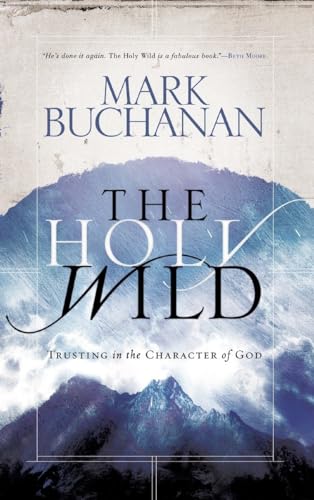
Inhaltsangabe
Our perception of God makes a difference in every crevice of our character, from our inner anxieties to our public conversations. It determines whether we're trusting or suspicious, whether we're happy or discontent - and whether or not we can rely on God matters mightily on the day of our death. Mark Buchanan's third book continues his penetrating exploration of the God we worship. Bravely and honestly, he poses the direst question of human existence: Can God be trusted?
God Is _________.
How do you describe the Creator of the universe, the Maker of your inmost being? Your first chosen word for the blank space above reveals your perception of Him. Right or wrong, it defines every crevice of who you are.
Wouldn’t you rather be right?
Journey now into the holy wild and walk with the God who is surprising, dangerous, and mysterious. But is He good? Can you trust Him?
Accept the invitation to explore places you have not dared to go. And find the answer for yourself.
Christian Living/Practical Life/General
ISBN 1-59052-448-9
Die Inhaltsangabe kann sich auf eine andere Ausgabe dieses Titels beziehen.
Über die Autorin bzw. den Autor
Mark Buchanan is a pastor and bestselling author who lives with his wife, Cheryl, and their three children on the west coast of Canada. Educated at the University of British Columbia and Regent College, he has been published in numerous periodicals, including Christianity Today and Books and Culture.
Auszug. © Genehmigter Nachdruck. Alle Rechte vorbehalten.
The Holy Wild
By Mark BuchananMultnomah Publishers
Copyright © 2005 Mark BuchananAll right reserved.
ISBN: 9781590524480
Chapter One
The God of the Holy WildThe summer I wrote this, we discovered a nest of snakes living in our house. It was a hotspell, and often we retreated to the basement to escape the worst of it.
We weren't the only ones, it turned out.
A mother snake, at some point, had found her way into our house (we left most ofour doors open that summer to create airflow). She had slithered into the back corner ofthe coolest, most interior room, and there hatched a brood of baby snakes: tiny blackserpents, with slender, tapered bodies and teardrop-shaped heads and little, red flickeringtongues.
I hate snakes. I once heard about a man who, digging in his garden, hacked hisshin apart with his spade when a garter snake slithered up his pant leg. I understood this:the panic, the wildness, the madness, the willingness to maim yourself to protect yourself.If it had been me and not Adam and Eve in Eden, we wouldn't be in the trouble we're in,but not because I have greater virtue; simply because it was a serpent who seduced them.I'd have killed it first.
One evening I came home from a deacons meeting (was this itself a sign?) andCheryl, wide-eyed and pale, met me at the door. "We have snakes," she said, hissing andwrithing, snakelike, herself. She and my son had already managed to capture in a jar twoof the babies. It was my job, I was told, to track down the mother. I began with stiffcaution, jabbing sticks under furniture then leaping back, expecting Medusa's head tocome shaking out at me. Everything I rousted out-a wisp of dust, a stray hairpin, a snipof thread-startled me. Every sensation of something touching me-the edge of a quiltbrushing my shin, the corner of a desk biting my hip, a strand of cobweb trailing acrossmy neck, the frays of cut cloth tickling my arm-sent me into a spasm of thrashing. Aftera while, I got more bold, more determined, especially since I had looked everywhere andfound nothing.
"She's gone," I said. "Must have got out somehow. She's a bad mother.Abandoned the little ones to their fate. Imagine that."
Cheryl wasn't buying it. "Check again," she said. "Take a better look under thehide-a-bed. Mark, I spend hours in this room every week. My parents are coming onMonday to sleep in this room. I won't rest until I know it's safe."
So I pulled the mattress off the hide-a-bed and poked my head under the frame.
Bingo.
There she was, curled up on the back ledge of the bed frame. She was only aboutfourteen inches long and no thicker than my baby finger. But in my phobic, manicalertness, she may as well have been a Burmese python, smugly swallowing the dog, justgetting started.
What followed was ten minutes of slapstick comedy-a burlesque of blundering,scrambling antics, a wild pantomime of overreaction. I chased that snake around, tryingto pinch its thin, wriggling body between two blunt-end four-foot sticks and drop it in asmall-mouthed jar. It kept getting free, to the accompaniment of our shrieks and hollers,and would scoot off to another corner and pile its body into dense coils. After severaltries, it was glaringly obvious this approach was futile. I asked my son to fetch my gardengloves. I would have to pick it up.
I did it. There was no heroism or elegance in it. I held the snake away from melike I might a dead fish that had been left out in the sun. But I did it.
Over the next few days, as we found more snakes, we discovered that our nine-year-old daughter Sarah was fearless with them. She would simply pick each snake upwith her bare hands, hold it near her face, scold it as though it were a naughty dog whochewed up the hose, then set it loose in the garden, telling it to go find its mother.
Here's the thing. Ever since, it's been hard for me to rest in that room. Walkinginto it, I slow, halt, turn, look now this way, now that. I even look up, as though I'mdealing with a fat, hungry tree snake, its body languidly draped along the curtain rod, itshead undulating downward. Every nerve in me is heightened, every muscle taut andtrembling, and the little hairs on my arms stand up.
I may never sleep in that bed again. After we found the snakes, we had a string ofstifling hot nights-nights like huge furnaces, roaring and devouring, the surface ofthings glazed with heat. Nights that skewered and roasted you like a pig on a spit, turningslow, dripping, shriveling. On nights like those, we used to escape to the coolness of thebasement to sleep.
But no more.
Instead, we now suffer upstairs, suffer all night long. There we lie, listless andrestless, prickly and sweaty, longing for relief. On the worst of these nights I almost givein, slip downstairs, open the hide-a-bed, and crawl in. But I know it's no good. Everytime I shut my eyes, I would see them, thousands of them, every length and thickness ofthem, twining, coiling, darting, hissing, squirming. I know that if I ever got to sleep'sthreshold, to that blissful, hypnotic place where your body hovers over oblivion and startsto ease down, something would graze the nape of my neck or tickle the hollow in mycollarbone, and I would leap up, wild with panic, punching the air and slapping myself.
I don't trust that bed.
[Dingbat divider here]
The funny thing is, the bed hasn't changed at all. It's just as sturdy, just as comfortable. Itcan hold my weight, soothe my soreness. What has changed is my experience. I nowharbor a suspicion that dread things lurk beneath. And so I approach the bed with aguardedness that I won't let drop.
This book is about resting in the character of God. I take it to be that resting andtrusting are near synonyms: I rest where I can trust. I rest on the bed that I'm assuredwon't buckle beneath my weight, in the room where I'm confident I won't be leftvulnerable to enemies or predators, in the house where I'm certain I won't be exposed totoxins or contagions. If I doubt any of these things, if I lack trust, I may sleep in the houseor the room or the bed-but I won't really rest there. I'll do it out of sheer exhaustion,maybe, but not out of trust. I'll be fitful and anxious, always checking my back, tense andclenching, a hair trigger on my reflexes.
My point: How I think about the bed determines whether or not I rest in it. Thebed, as I said, hasn't changed. But I have.
Sometimes our faith in God is like that: snake-infested. God doesn't change, buthow we think about Him does. Dread things, we suspect, lurk in the basement. It is hardfor us to rest in God, because it is hard for us to trust.
[Dingbat divider here]
My first book was called Your God Is Too Safe. In it, I invited us to be done with the godof our own invention, the god who resembles a museum curator, pale, quibbling,fastidious; or a group therapist, vague, earnest, doting; but not the Lion of Judah, fierceand wild and good. I diagnosed our inner stuckness as a mostly theological sickness, animpaired vision of God as God. For various reasons, we would rather contrive a god whois perfectly content to make his bed in the servants' quarters than worship the God who ison the loose, ruling from the heights, slipping in among the ranks, skulking about indisguise, equally absent and present in most disruptive ways. Then I prescribed a wayout: the practice of holy habits. These are disciplines that, like well-treasured and well-guardedfamily recipes, have been passed along from generation to generation amongChristians. They are simple, adaptable, workable, and they train us in...
„Über diesen Titel“ kann sich auf eine andere Ausgabe dieses Titels beziehen.
Suchergebnisse für The Holy Wild: Trusting in the Character of God

Beispielbild für diese ISBN
The Holy Wild: Trusting the Character of God
Anbieter: World of Books (was SecondSale), Montgomery, IL, USA
Verkäuferbewertung 5 von 5 Sternen

Paperback. Zustand: Good. Our perception of God makes a difference in every crevice of our character, from our inner anxieties to our public conversations. It determines whether we're trusting or suspicious, whether we're happy or discontent - and whether or not we can rely on God matters mightily on the day of our death. Mark Buchanan's third book continues his penetrating exploration of the God we worship. Bravely and honestly, he poses the direst question of human existence: Can God be trusted? God Is _________. How do you describe the Creator of the universe, the Maker of your inmost being? Your first chosen word for the blank space above reveals your perception of Him. Right or wrong, it defines every crevice of who you are. Wouldn't you rather be right? Journey now into the holy wild and walk with the God who is surprising, dangerous, and mysterious. But is He good? Can you trust Him? Accept the invitation to explore places you have not dared to go. And find the answer for yourself. Christian Living/Practical Life/General ISBN 1-59052-448-9. Artikel-Nr. 00105649163
Gebraucht kaufen
EUR 4,73
Versand gratis
Versand innerhalb von USA
Versand innerhalb von USA
Anzahl: 3 verfügbar
Beispielbild für diese ISBN
The Holy Wild: Trusting in the Character of God
Anbieter: BooksRun, Philadelphia, PA, USA
Verkäuferbewertung 5 von 5 Sternen
Paperback. Zustand: Fair. The item might be beaten up but readable. May contain markings or highlighting, as well as stains, bent corners, or any other major defect, but the text is not obscured in any way. Artikel-Nr. 1590524489-7-1
Gebraucht kaufen
EUR 4,87
Versand gratis
Versand innerhalb von USA
Versand innerhalb von USA
Anzahl: 1 verfügbar
Beispielbild für diese ISBN
The Holy Wild : Trusting in the Character of God
Verlag:
Doubleday Religious Publishing Group, The, 2005
ISBN 10: 1590524489
ISBN 13: 9781590524480
Gebraucht
Softcover
Anbieter: Better World Books, Mishawaka, IN, USA
Verkäuferbewertung 5 von 5 Sternen
Zustand: Very Good. Pages intact with possible writing/highlighting. Binding strong with minor wear. Dust jackets/supplements may not be included. Stock photo provided. Product includes identifying sticker. Better World Books: Buy Books. Do Good. Artikel-Nr. 5580350-6
Gebraucht kaufen
EUR 6,19
Versand gratis
Versand innerhalb von USA
Versand innerhalb von USA
Anzahl: 1 verfügbar
Beispielbild für diese ISBN
The Holy Wild : Trusting in the Character of God
Verlag:
Doubleday Religious Publishing Group, The, 2005
ISBN 10: 1590524489
ISBN 13: 9781590524480
Gebraucht
Softcover
Anbieter: Better World Books, Mishawaka, IN, USA
Verkäuferbewertung 5 von 5 Sternen
Zustand: Good. Pages intact with minimal writing/highlighting. The binding may be loose and creased. Dust jackets/supplements are not included. Stock photo provided. Product includes identifying sticker. Better World Books: Buy Books. Do Good. Artikel-Nr. 4176683-6
Gebraucht kaufen
EUR 6,19
Versand gratis
Versand innerhalb von USA
Versand innerhalb von USA
Anzahl: 2 verfügbar
Beispielbild für diese ISBN
The Holy Wild
Anbieter: ThriftBooks-Dallas, Dallas, TX, USA
Verkäuferbewertung 5 von 5 Sternen
Paperback. Zustand: Very Good. No Jacket. May have limited writing in cover pages. Pages are unmarked. ~ ThriftBooks: Read More, Spend Less. Artikel-Nr. G1590524489I4N00
Gebraucht kaufen
EUR 6,42
Versand gratis
Versand innerhalb von USA
Versand innerhalb von USA
Anzahl: 1 verfügbar
Beispielbild für diese ISBN
The Holy Wild
Anbieter: ThriftBooks-Atlanta, AUSTELL, GA, USA
Verkäuferbewertung 5 von 5 Sternen
Paperback. Zustand: Very Good. No Jacket. May have limited writing in cover pages. Pages are unmarked. ~ ThriftBooks: Read More, Spend Less. Artikel-Nr. G1590524489I4N00
Gebraucht kaufen
EUR 6,44
Versand gratis
Versand innerhalb von USA
Versand innerhalb von USA
Anzahl: 1 verfügbar
Foto des Verkäufers
The Holy Wild: Trusting in the Character of God
Verlag:
PRH Christian Publishing, 2005
ISBN 10: 1590524489
ISBN 13: 9781590524480
Gebraucht
paperback
Anbieter: WeBuyBooks, Rossendale, LANCS, Vereinigtes Königreich
Verkäuferbewertung 5 von 5 Sternen
paperback. Zustand: Very Good. Most items will be dispatched the same or the next working day. A copy that has been read, but is in excellent condition. Pages are intact and not marred by notes or highlighting. The spine remains undamaged. Artikel-Nr. rev3492988369
Gebraucht kaufen
EUR 4,63
EUR 6,06 Versand
Versand von Vereinigtes Königreich nach USA
Versand von Vereinigtes Königreich nach USA
Anzahl: 1 verfügbar
Foto des Verkäufers
The Holy Wild: Trusting in the Character of God
Verlag:
PRH Christian Publishing, 2005
ISBN 10: 1590524489
ISBN 13: 9781590524480
Gebraucht
paperback
Anbieter: WeBuyBooks, Rossendale, LANCS, Vereinigtes Königreich
Verkäuferbewertung 5 von 5 Sternen
paperback. Zustand: Good. Most items will be dispatched the same or the next working day. A copy that has been read but remains in clean condition. All of the pages are intact and the cover is intact and the spine may show signs of wear. The book may have minor markings which are not specifically mentioned. Artikel-Nr. rev7345932235
Gebraucht kaufen
EUR 4,63
EUR 6,06 Versand
Versand von Vereinigtes Königreich nach USA
Versand von Vereinigtes Königreich nach USA
Anzahl: 1 verfügbar
Beispielbild für diese ISBN
The Holy Wild: Trusting in the Character of God
Anbieter: WorldofBooks, Goring-By-Sea, WS, Vereinigtes Königreich
Verkäuferbewertung 5 von 5 Sternen
Paperback. Zustand: Very Good. The book has been read, but is in excellent condition. Pages are intact and not marred by notes or highlighting. The spine remains undamaged. Artikel-Nr. GOR005873425
Gebraucht kaufen
EUR 4,27
EUR 6,62 Versand
Versand von Vereinigtes Königreich nach USA
Versand von Vereinigtes Königreich nach USA
Anzahl: 3 verfügbar
Beispielbild für diese ISBN
The Holy Wild: Trusting in the Character of God
Anbieter: Kennys Bookstore, Olney, MD, USA
Verkäuferbewertung 5 von 5 Sternen
Zustand: New. 2005. paperback. . . . . . Books ship from the US and Ireland. Artikel-Nr. V9781590524480
Neu kaufen
EUR 22,39
EUR 9,38 Versand
Versand innerhalb von USA
Versand innerhalb von USA
Anzahl: 15 verfügbar