
Verwandte Artikel zu Happy Moscow (New York Review Books Classics)
Inhaltsangabe
An NYRB Classics Original
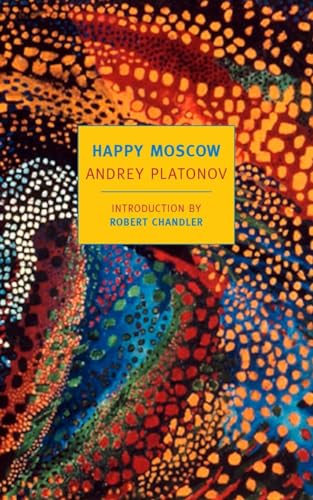
Moscow Chestnova is a bold and glamorous girl, a beautiful parachutist who grew up with the Revolution. As an orphan, she knew tough times—but things are changing now. Comrade Stalin has proclaimed that “Life has become better! Life has become merrier!” and Moscow herself is poised to join the Soviet elite. But her ambitions are thwarted when a freak accident propels her flaming from the sky. A new, stranger life begins. Moscow drifts from man to man, through dance halls, all-night diners, and laboratories in which the secret of immortality is actively being investigated, exploring the endless avenues and vacant spaces of the great city whose name she bears, looking for happiness, somewhere, still.
Unpublishable during Platonov’s lifetime, Happy Moscow first appeared in Russian only in 1991. This new edition contains not only a revised translation of Happy Moscow but several related works: a screenplay, a prescient essay about ecological catastrophe, and two short stories in which same characters reappear and the reader sees the mind of an extraordinary writer at work.
Die Inhaltsangabe kann sich auf eine andere Ausgabe dieses Titels beziehen.
Über die Autorin bzw. den Autor
Andrey Platonovich Platonov (1899–1951) was the son of a railway worker. The eldest of eleven children, he began work at the age of thirteen, eventually becoming an engine driver’s assistant. He began publishing poems and articles in 1918, while studying engineering. Throughout much of the Twenties Platonov worked as a land reclamation expert, draining swamps, digging wells, and also building three small power stations. Between 1927 and 1932 he wrote his most politically controversial works, some of them first published in the Soviet Union only in the late 1980s. Other stories were published but subjected to vicious criticism. Stalin is reputed to have written “scum” in the margin of the story “For Future Use,” and to have said to Alexander Fadeyev (later Secretary of the Writers’ Union), “Give him a good belting—for future use!” During the Thirties Platonov made several public confessions of error, but went on writing stories only marginally more acceptable to the authorities. His son was sent to the Gulag in 1938, aged fifteen; he was released three years later, only to die of the tuberculosis he had contracted there. From September 1942, after being recommended to the chief editor of Red Star by his friend Vasily Grossman, Platonov worked as a war correspondent and managed to publish several volumes of stories; after the war, however, he was again almost unable to publish. He died in 1951, of tuberculosis caught from his son. Happy Moscow, one of his finest short novels, was first published in 1991; a complete text of Soul was first published only in 1999; letters, notebook entries, and unfinished stories continue to appear.
Robert chandler’s translations of Sappho and Guillaume Apollinaire are published in the series “Everyman’s Poetry.” His translations from Russian include Vasily Grossman’s Life and Fate, Leskov’s Lady Macbeth of Mtsensk and Aleksander Pushkin’s Dubrovsky and The Captain’s Daughter. Together with his wife, Elizabeth, and other colleagues he has co-translated numerous works by Andrey Platonov. One of these, Soul, was chosen in 2004 as “best translation of the year from a Slavonic language” by the AAT SEEL (the American Association of Teachers of Slavonic and East European Languages); it was also shortlisted for the 2005 Rossica Translation Prize and the Weidenfeld European Translation Prize. Robert Chandler’s translation of Hamid Ismailov’s The Railway won the AAT SEEL prize for 2007 and received a special commendation from the judges of the 2007 Rossica Translation Prize. Robert Chandler is the editor of Russian Short Stories from Pushkin to Buida and Russian Magic Tales from Pushkin to Platonov and the author of a biography of Alexander Pushkin.
Elizabeth Chandler is a co-translator of Platonov’s Soul and The Foundation Pit, of Grossman's Everything Flows and The Road, and of Pushkin’s The Captain’s Daughter.
Auszug. © Genehmigter Nachdruck. Alle Rechte vorbehalten.
HAPPY MOSCOW
By ANDREY PLATONOVNEW YORK REVIEW BOOKS
Copyright © 2011 Anton MartynenkoAll right reserved.
ISBN: 978-1-59017-585-9
Contents
Introduction to Happy Moscow..........................................1HAPPY MOSCOW..........................................................7Around Happy Moscow...................................................119THE MOSCOW VIOLIN.....................................................129ON THE FIRST SOCIALIST TRAGEDY........................................153FATHER................................................................159LOVE FOR THE MOTHERLAND OR, THE SPARROW'S JOURNEY.....................213The Text and the Translation..........................................227Notes.................................................................233Further Reading.......................................................265
Chapter One
HAPPY MOSCOW
1
A dark man with a burning torch was running down the street into a boring night of late autumn. The little girl saw him through a window of her home as she woke from a boring dream. Then she heard the powerful shot of a rifle and a poor, sad cry—the man running with the torch had probably been killed. Soon after this came many distant shots and a din of people in the neighboring prison ... The little girl went to sleep and forgot everything she saw later in other days: she was too small, and the memory and mind of early childhood were overgrown in her body forever by subsequent life. But until her late years a nameless man would unexpectedly and sadly rise up in her and run—in the pale light of memory—and perish once again in the dark of the past, in the heart of a grown-up child. Amid hunger and sleep, at a moment of love or some young joy—suddenly the sad cry of the dead man was there again in the distance, in the depth of her body, and the young woman would immediately change her life: if she was dancing, she would interrupt the dance; if she was laboring, she would work more surely, with more concentration; if she was alone, she would cover her face with her hands. It was on that rainy night of late autumn that the October Revolution had begun—in the city where Moscow Ivanovna Chestnova was then living.
Her father died from typhoid; the hungry, orphaned girl went out of the house and never went back there again. Remembering neither people nor space, her soul gone to sleep, for several years she walked and ate up and down her motherland, as if in an emptiness, until she came to herself in a children's home and at school. She was sitting at a desk by a window, in the city of Moscow. The trees on the boulevard had stopped growing; leaves were falling from them without any wind, covering the now silent earth for its long sleep to come. It was the end of September, and the year when wars all ended and the transport system began to function again.
Moscow Chestnova had been in the children's home for two years. It was here she had been given a name, a surname, and even a patronymic, since the little girl remembered her own name and early childhood only very indefinitely. She thought her father had called her Olya, but she had not been sure of this and had kept silent, like someone nameless, like that nighttime man who had perished. So she had been given a first name in honor of Moscow; a patronymic in memory of Ivan, an ordinary Red Army soldier who had fallen in battle; and a surname in recognition of the honesty of her heart—which had not had time to become dishonest, in spite of long unhappiness.
Moscow Chestnova's clear and ascending life began on that autumn day; sitting by the window, already in the second class, she was looking into the death of the leaves on the boulevard when she read with interest a sign on the building opposite: A. V. KOLTSOV WORKERS' AND PEASANTS' LIBRARY AND READING ROOM. Before the last lesson the children had each, for the first time in their lives, been given a white roll with a meat patty and some potato, and they were told what patties are made out of: cows. At the same time they were instructed to write a composition for the next day about a cow—if they had ever seen one—and also about their own future life. In the evening Moscow Chestnova, now full of white bread and dense patty, was writing her composition at the communal table; her girlfriends had all gone to sleep and a little electric light was burning weakly. "Story of a Little Girl with No Father or Mother About Her Future Life: Now we are being taught mind, but a mind is in a head, there is nothing on the outside. We must, to be honest, live with labor. I want to live a future life, let there be biscuits and jam and sweets and let me always be able to walk in the fields past trees. Or else I won't live, I won't feel like it. I want to live in an ordinary way with happiness. There's nothing to say in addition."
Subsequently, Moscow ran away from school. She was brought back after a year and was held up to shame at a communal assembly: How could she, a daughter of the Revolution, behave in such an unethical and undisciplined manner?
"I'm not a daughter, I'm an orphan!" Moscow answered—and once again began studying diligently, as though she had not been in absence anywhere at all.
What she liked most in nature were the wind and the sun. She liked to lie somewhere in the grass; to listen to what the wind, like someone unseen and full of yearning, was noising about in the thick of the bushes; and to see the summer clouds float by high above all the unknown countries and peoples. Observation of clouds and space made Moscow's heart beat more rapidly in her chest, as if her body had been raised to a great height and left there on its own. Then she would wander through fields, over simple, poor land, looking carefully and keenly all around her, still getting used to living in the world, and feeling glad that everything in it was fitting for her—for her body, heart, and freedom.
After completing her nine years of school, Moscow, like every young person, began unconsciously looking for a path into her future, into a happy closeness of people; her hands longed for activity, her heart sought pride and heroism, and in her mind some still-mysterious but elevated fate was already triumphing. The seventeen-year-old Moscow could not enter anywhere on her own; she was waiting for an invitation, as if she valued in herself the gift of youth and now grown-up strength. And so, for a time, she became lonely and strange. Then a chance man got to know Moscow and conquered her with his feelings and pleasing manner, and she married him, immediately and forever spoiling her body and her youth. Her large hands, fit for bold activity, were taken up with embraces; her heart, which had sought heroism, began to love just one sly man who kept a tight grip on her, as if she were his inalienable asset. But one morning Moscow began to feel such an aching shame of her own life, not quite knowing exactly why, that she kissed her sleeping husband on the forehead by way of farewell and left the room, not even taking a change of clothes with her. Until evening she wandered along the boulevards and the bank of the Moscow River, sensing only the petty drizzle and wind of September and not thinking anything, being empty and tired.
She wanted, as she had done in her wandering childhood, to find some kind of box or vacant food stall to sleep in, but she noticed she had long grown too big and that there was nowhere she could squeeze into unnoticeably. She sat down on a bench in the darkness of the late boulevard and dozed off,...
„Über diesen Titel“ kann sich auf eine andere Ausgabe dieses Titels beziehen.
Suchergebnisse für Happy Moscow (New York Review Books Classics)

Beispielbild für diese ISBN
Happy Moscow
Verlag:
New York Review of Books, 2012
ISBN 10: 1590175859
ISBN 13: 9781590175859
Gebraucht
Paperback
Anbieter: ThriftBooks-Atlanta, AUSTELL, GA, USA
Verkäuferbewertung 5 von 5 Sternen

Paperback. Zustand: Good. No Jacket. Pages can have notes/highlighting. Spine may show signs of wear. ~ ThriftBooks: Read More, Spend Less. Artikel-Nr. G1590175859I3N00
Gebraucht kaufen
EUR 8,54
Versand gratis
Versand innerhalb von USA
Versand innerhalb von USA
Anzahl: 1 verfügbar
Beispielbild für diese ISBN
HAPPY MOSCOW
Anbieter: Magers and Quinn Booksellers, Minneapolis, MN, USA
Verkäuferbewertung 5 von 5 Sternen
paperback. Zustand: Like New. May have light shelf wear and/or a remainder mark. Complete. Clean pages. paperback. Artikel-Nr. 832231
Gebraucht kaufen
EUR 10,02
EUR 3,58 Versand
Versand innerhalb von USA
Versand innerhalb von USA
Anzahl: 2 verfügbar
Beispielbild für diese ISBN
Happy Moscow
Anbieter: Revaluation Books, Exeter, Vereinigtes Königreich
Verkäuferbewertung 5 von 5 Sternen
Paperback. Zustand: Brand New. 266 pages. 8.00x5.00x0.75 inches. In Stock. Artikel-Nr. xr1590175859
Neu kaufen
EUR 20,05
EUR 12,00 Versand
Versand von Vereinigtes Königreich nach USA
Versand von Vereinigtes Königreich nach USA
Anzahl: 1 verfügbar
Beispielbild für diese ISBN
Happy Moscow
Anbieter: Kennys Bookstore, Olney, MD, USA
Verkäuferbewertung 5 von 5 Sternen
Zustand: New. 2012. Paperback. . . . . . Books ship from the US and Ireland. Artikel-Nr. V9781590175859
Neu kaufen
EUR 24,40
EUR 9,41 Versand
Versand innerhalb von USA
Versand innerhalb von USA
Anzahl: 15 verfügbar
Foto des Verkäufers
Happy Moscow
Anbieter: GreatBookPricesUK, Woodford Green, Vereinigtes Königreich
Verkäuferbewertung 5 von 5 Sternen
Zustand: As New. Unread book in perfect condition. Artikel-Nr. 18929760
Gebraucht kaufen
EUR 27,88
EUR 18,00 Versand
Versand von Vereinigtes Königreich nach USA
Versand von Vereinigtes Königreich nach USA
Anzahl: 1 verfügbar
Foto des Verkäufers
Happy Moscow
Anbieter: moluna, Greven, Deutschland
Verkäuferbewertung 5 von 5 Sternen
Zustand: New. Andrey Platonovich Platonov (1899&ndash1951) was the son of a railway worker. The eldest of eleven children, he began work at the age of thirteen, eventually becoming an engine driver&rsquos assistant. He began publishing poems and articles in 1918, while. Artikel-Nr. 904391348
Neu kaufen
EUR 18,69
EUR 48,99 Versand
Versand von Deutschland nach USA
Versand von Deutschland nach USA
Anzahl: 1 verfügbar