
Verwandte Artikel zu China Hands: Nine Decades of Adventure, Espionage,...
Inhaltsangabe
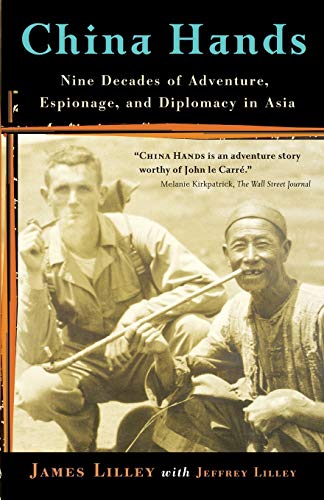
James Lilley's life and family have been entwined with China's fate since his father moved to the country to work for Standard Oil in 1916. Lilley spent much of his childhood in China and after a Yale professor took him aside and suggested a career in intelligence, it became clear that he would spend his adult life returning to China again and again.
Lilley served for twenty-five years in the CIA in Laos, Tokyo, Hong Kong, and Taiwan before moving to the State Department in the early 1980s to begin a distinguished career as the U.S.'s top-ranking diplomat in Taiwan, ambassador to South Korea, and finally, ambassador to China. From helping Laotian insurgent forces assist the American efforts in Vietnam to his posting in Beijing during the Tiananmen Square crackdown, he was in a remarkable number of crucial places during challenging times as he spent his life tending to America's interests in Asia. In China Hands, he includes three generations of stories from an American family in the Far East, all of them absorbing, some of them exciting, and one, the loss of Lilley's much loved and admired brother, Frank, unremittingly tragic.
China Hands is a fascinating memoir of America in Asia, Asia itself, and one especially capable American's personal history.
Die Inhaltsangabe kann sich auf eine andere Ausgabe dieses Titels beziehen.
Über die Autorin bzw. den Autor
During a government career spanning four decades, James Lilley served in the CIA, White House, State Department, and Defense Department. He is the only American to have served as the head of the American missions in Beijing, where he was ambassador from 1989-1991, and Taiwan, where he was Director of the American Institute in Taiwan from 1982-1984. He also served as the U.S. ambassador to South Korea from 1986-1989. He is currently a senior fellow at the American Enterprise Institute in Washington, DC.
Jeffrey Lilley is a journalist. He lives in Silver Springs, Maryland, with his wife and two sons.
Auszug. © Genehmigter Nachdruck. Alle Rechte vorbehalten.
China Hands
Nine Decades of Adventure, Espionage, and Diplomacy in AsiaBy James R. LilleyPublicAffairs
Copyright © 2005 James R. LilleyAll right reserved.
ISBN: 9781586483432
Chapter One
"WHERE THE DAISIES COVER THE COUNTRY LAND"My family's connection with China began in the shadow of thepicturesque peaks that line the country's great waterway, theYangtze River. There, in 1917, in the heartland of a country known byits people as the center of the world, my father was traveling upstreamon a Chinese junk. Along the way he recorded the family's first imagesof life in the Middle Kingdom, a place that we would work in andaround for the next nine decades.
From his perch on the junk, my father admired the Yangtze's dramaticscenery and noted the exotic names of some of its gorges-oxliver, wild duck, and horse lungs. At the Wushan Gorge, "the greatgloomy gorge of the river" as he called it, cliffs rose up over the Yangtzeto heights of a thousand feet and channeled rapids that could break aboat into pieces. "Awe-inspiring in its massive ruggedness," my fatherwrote in his diary of the trip. During the journey upstream, a hundredlaborers, trudging at times along narrow paths carved into the limestonerock, used ropes to haul the boat against the current. Later my fatherheard gunshots that signaled the start of a battle between armiesof opposing warlords. Exotic scenery, perilous rapids, backbreakinglabor, and brewing conflict-my father recorded it all.
Frank Walder Lilley II had arrived in China a year earlier. Afterdropping out of Cornell University, he had gone to California to "seekhis fortune." But destiny drew him farther afield. After reading in alocal newspaper that the Standard Oil Company was looking for singlemen to go to China, he sent in an application. When he was accepted,he joined a growing corps of marketers, or "classmen" as they werecalled, for John D. Rockefeller's Standard Oil Company of New York,or SOCONY. The men were sent all over the world to sell oil and oilproducts. They were part of America's expanding economic empire.
The commitment my father made to work for Standard Oil was excessiveby today's standards. He agreed to learn Chinese, work withoutvacation, and stay unmarried for three years. But at 26, sporting a mustacheand a piercing gaze, he was eager for adventure. And without acollege degree, he was happy to have a steady job.
SOCONY employees called their work "selling oil for the lamps ofChina," and it became an almost messianic mission to spread lightaround China and make profits for "the company." The sign of SOCONYwas a flying red horse, and it came to be recognized around thecountry. In those days, in a phrase that conjured up thoughts of empire,it was said that Standard Oil's holdings in the world were so vast thatthe sun never went down over the business.
That scenic ride up the Yangtze dropped my father off in Wanxian, acity in China's interior in eastern Sichuan Province. His job was to sellkerosene and other oil products to the Chinese multitudes. To do this,he established a network of Chinese sales agents to peddle oil productsto the villages and towns in his district. Like his fellow SOCONYmanagers working in remote locations, my father had to learn quicklyhow to distinguish between locals he could do business with and thosehe should stay away from. On the trip up the Yangtze in 1917 he got ataste of what he was in for. "One of the coolies punched a hole in one ofthe tins and poured out 1/2 a tin of oil," my father wrote in his diary. "Wediscovered the theft when the oil was being put back on the junk andafter much arguing made the no. 1 coolie pay $1 for the oil. A great dealof this goes on here and we wanted to teach the crowd a lesson."
The business was time-consuming and demanded patience. Successin securing reliable and trustworthy Chinese agents depended largelyupon how well the manager understood Chinese customs and ways ofdoing business. The American managers and their Chinese agents differedlike night and day-both on the surface and in more substantiveways. The managers wore Western suits and fedoras. The agents woreskullcaps and dressed in Chinese collarless shirts and long gowns. History,language, and culture were completely different. China was thousandsof years old. The United States of America was not halfwaythrough its second century. The Chinese wrote in characters and spokein rising and falling cadences, while Americans used an alphabet andconversed in a monotone.
But there were much more subtle differences as well. If a managerwas successful in dealing with the Chinese, he earned the Chinesemoniker of a "keeper of the custom," meaning one who understoodChinese rites and practices, such as figuring out family ties, lining upallies, acting deferentially, and avoiding humiliation of others. Thismade him an "honorable adversary," a description that revealed a dislikeand distrust of foreigners.
* * *
China was in a state of upheaval when my father arrived in 1916.Several years earlier, a bloodless revolution had toppled the country'slast emperor, a six-year-old boy named Pu Yi. The breakdown of theimperial system was followed by the rise of a republican form of governmentin 1912, headed by a president and based on provincial assembliesand a national parliament. But real power rested with powerfulmilitary governors or regional warlords. The republican governmentcollapsed several years later, and an era dominated by warlords ensued.Along the Yangtze, in a microcosm of what was happening throughoutChina, warlords vied for power, and robbers and ex-soldiers controlledpassages of the river and preyed on traders. In fact, for periods of timein 1916, shipping companies stopped sending boats up parts of theYangtze because lawless bands along the banks were shooting at anythingthat moved.
My father's first respite from these challenges of work and turmoilcame in late 1919 when he was allowed three and a half months ofhome leave. Three years of living alone in the backcountry of Chinahad made his thinking clear on one thing: He needed a wife. And hehad to work fast at finding one since the boat journeys across the Pacificwould take up almost half of his allotted vacation time. Fortunately,during those years in the interior of China, he hadn't been justselling oil. He had also spent time selling the idea of himself its a husbandto a schoolteacher he had met before leaving for China.
Inez Bush came from Monroe, New York, an area of rolling farmlandand lakes about forty miles northwest of New York City, wheremy father's family had moved from Canada in the early part of the century.While Inez had dated other people in my father's absence, whenhe returned and asked for her hand, Inez, beautiful but an old-maidish25 years old, accepted. My father never did ask her father for permission.Since he came from a strict Catholic family and my mother's familywas Protestant, both sets of parents were opposed to the union. Myparents solved the problem by eloping. And by deciding then that formalreligion would be minimized in their new family's life even thoughthe strong Catholic strain would live on in Grandma Lilley.
My oldest sibling, Frank Walder III, was born in 1920 in Wuhu, a portcity on the Yangtze about two hundred miles inland from Shanghai. FollowingFrank's birth my homesick mother returned to the United Stateswith her newborn son. But after several months of washing clothes,cooking meals, and doing chores at her parents' home in Monroe, sheheaded back to China, more appreciative of the house staff that...
„Über diesen Titel“ kann sich auf eine andere Ausgabe dieses Titels beziehen.
Suchergebnisse für China Hands: Nine Decades of Adventure, Espionage,...

Beispielbild für diese ISBN
China Hands
Anbieter: World of Books (was SecondSale), Montgomery, IL, USA
Verkäuferbewertung 5 von 5 Sternen

Zustand: Good. Item in good condition. Textbooks may not include supplemental items i.e. CDs, access codes etc. Artikel-Nr. 00103019040
Gebraucht kaufen
EUR 6,49
Versand gratis
Versand innerhalb von USA
Versand innerhalb von USA
Anzahl: 2 verfügbar
Beispielbild für diese ISBN
China Hands: Nine Decades of Adventure, Espionage, and Diplomacy in Asia
Anbieter: ThriftBooks-Reno, Reno, NV, USA
Verkäuferbewertung 5 von 5 Sternen
Paperback. Zustand: Good. No Jacket. Pages can have notes/highlighting. Spine may show signs of wear. ~ ThriftBooks: Read More, Spend Less. Artikel-Nr. G1586483439I3N00
Gebraucht kaufen
EUR 6,50
Versand gratis
Versand innerhalb von USA
Versand innerhalb von USA
Anzahl: 1 verfügbar
Beispielbild für diese ISBN
China Hands: Nine Decades of Adventure, Espionage, and Diplomacy in Asia
Anbieter: ThriftBooks-Atlanta, AUSTELL, GA, USA
Verkäuferbewertung 5 von 5 Sternen
Paperback. Zustand: Very Good. No Jacket. May have limited writing in cover pages. Pages are unmarked. ~ ThriftBooks: Read More, Spend Less. Artikel-Nr. G1586483439I4N00
Gebraucht kaufen
EUR 6,50
Versand gratis
Versand innerhalb von USA
Versand innerhalb von USA
Anzahl: 1 verfügbar
Beispielbild für diese ISBN
China Hands: Nine Decades of Adventure, Espionage, and Diplomacy in Asia
Anbieter: ThriftBooks-Dallas, Dallas, TX, USA
Verkäuferbewertung 5 von 5 Sternen
Paperback. Zustand: Good. No Jacket. Pages can have notes/highlighting. Spine may show signs of wear. ~ ThriftBooks: Read More, Spend Less. Artikel-Nr. G1586483439I3N00
Gebraucht kaufen
EUR 6,50
Versand gratis
Versand innerhalb von USA
Versand innerhalb von USA
Anzahl: 1 verfügbar
Beispielbild für diese ISBN
China Hands: Nine Decades of Adventure, Espionage, and Diplomacy in Asia
Anbieter: ThriftBooks-Atlanta, AUSTELL, GA, USA
Verkäuferbewertung 5 von 5 Sternen
Paperback. Zustand: Good. No Jacket. Pages can have notes/highlighting. Spine may show signs of wear. ~ ThriftBooks: Read More, Spend Less. Artikel-Nr. G1586483439I3N00
Gebraucht kaufen
EUR 6,50
Versand gratis
Versand innerhalb von USA
Versand innerhalb von USA
Anzahl: 1 verfügbar
Beispielbild für diese ISBN
China Hands: Nine Decades of Adventure, Espionage, and Diplomacy in Asia
Anbieter: ThriftBooks-Dallas, Dallas, TX, USA
Verkäuferbewertung 5 von 5 Sternen
Paperback. Zustand: Fair. No Jacket. Readable copy. Pages may have considerable notes/highlighting. ~ ThriftBooks: Read More, Spend Less. Artikel-Nr. G1586483439I5N00
Gebraucht kaufen
EUR 6,50
Versand gratis
Versand innerhalb von USA
Versand innerhalb von USA
Anzahl: 1 verfügbar
Beispielbild für diese ISBN
China Hands: Nine Decades of Adventure, Espionage, and Diplomacy in Asia
Anbieter: ThriftBooks-Dallas, Dallas, TX, USA
Verkäuferbewertung 5 von 5 Sternen
Paperback. Zustand: Very Good. No Jacket. May have limited writing in cover pages. Pages are unmarked. ~ ThriftBooks: Read More, Spend Less. Artikel-Nr. G1586483439I4N00
Gebraucht kaufen
EUR 6,50
Versand gratis
Versand innerhalb von USA
Versand innerhalb von USA
Anzahl: 1 verfügbar
Beispielbild für diese ISBN
China Hands: Nine Decades of Adventure, Espionage, and Diplomacy in Asia
Anbieter: ThriftBooks-Atlanta, AUSTELL, GA, USA
Verkäuferbewertung 5 von 5 Sternen
Paperback. Zustand: Fair. No Jacket. Readable copy. Pages may have considerable notes/highlighting. ~ ThriftBooks: Read More, Spend Less. Artikel-Nr. G1586483439I5N00
Gebraucht kaufen
EUR 6,50
Versand gratis
Versand innerhalb von USA
Versand innerhalb von USA
Anzahl: 1 verfügbar
Beispielbild für diese ISBN
China Hands : Nine Decades of Adventure, Espionage, and Diplomacy in Asia
Anbieter: Better World Books, Mishawaka, IN, USA
Verkäuferbewertung 5 von 5 Sternen
Zustand: Good. New Ed. Pages intact with minimal writing/highlighting. The binding may be loose and creased. Dust jackets/supplements are not included. Stock photo provided. Product includes identifying sticker. Better World Books: Buy Books. Do Good. Artikel-Nr. 4204014-6
Gebraucht kaufen
EUR 6,59
Versand gratis
Versand innerhalb von USA
Versand innerhalb von USA
Anzahl: 3 verfügbar
Beispielbild für diese ISBN
China Hands : Nine Decades of Adventure, Espionage, and Diplomacy in Asia
Anbieter: Better World Books: West, Reno, NV, USA
Verkäuferbewertung 5 von 5 Sternen
Zustand: Very Good. New Ed. Pages intact with possible writing/highlighting. Binding strong with minor wear. Dust jackets/supplements may not be included. Stock photo provided. Product includes identifying sticker. Better World Books: Buy Books. Do Good. Artikel-Nr. 6401703-6
Gebraucht kaufen
EUR 6,59
Versand gratis
Versand innerhalb von USA
Versand innerhalb von USA
Anzahl: 1 verfügbar