
Verwandte Artikel zu Recruiter's Handbook: A Complete Guide for Sourcing,...
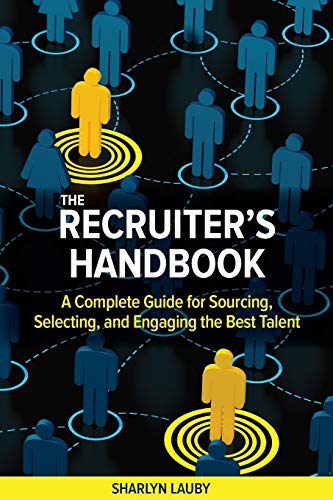
Recruiter's Handbook: A Complete Guide for Sourcing, Selecting, and Engaging the Best Talent - Softcover
Inhaltsangabe
The Recruiter's Handbook provides comprehensive, step-by-step guidelines through the complete recruiting process. Written by HR Bartender's Sharlyn Lauby, SHRM-SCP, with insights, tips, and tools from dozens of HR, recruiting, and business experts, the Handbook delivers a proven roadmap to not only help shorten learning curves and avoid legal pitfalls, but build trust in new hire relationships. Along the way it shows how to drive cultural change by offering guidelines for veteran, disabled, or ex-offender recruiting efforts, how to build strong apprenticeship, mentoring, or internship programs, how to effectively conduct assessments, reference checks, and background checks, and much more.
Die Inhaltsangabe kann sich auf eine andere Ausgabe dieses Titels beziehen.
Über die Autorin bzw. den Autor
Sharlyn Lauby, SHRM-SCP, SPHR, CPLP, is the author/owner of the "HR Bartender" blog (with more than 65K followers on Twitter). The blog has been recognized as one of the Top 5 Business Blogs Read by HR professionals and a Top 25 Must-Read Blog for Employers. She is also president of ITM Group Inc., a South Florida based training and human resources consulting firm focused on helping companies retain and engage talent.
Auszug. © Genehmigter Nachdruck. Alle Rechte vorbehalten.
The Recruiter's Handbook
A Complete Guide for Sourcing, Selecting, and Engaging the Best Talent
By Sharlyn LaubySociety For Human Resource Management
Copyright © 2018 Sharlyn Lauby
All rights reserved.
ISBN: 978-1-58644-465-5All rights reserved.
Contents
Acknowledgments,
Foreword: Dan Schawbel,
Foreword: Paul Falcone,
Preface,
Section I: Recruiting Responsibilities,
Chapter 1: What Is Recruiting?,
Chapter 2: Why Is Recruiting Important?,
Section II: Candidate Strategies,
Chapter 3: Employment Branding,
Chapter 4: Candidate Experience,
Section III: Organizational Recruiting Strategies,
Chapter 5: Workforce Planning,
Chapter 6: Creating a Recruiting Strategy,
Section IV: Sourcing Strategies,
Chapter 7: Sourcing,
Section V: Selecting the Best Candidate,
Chapter 8: Interview Experience,
Chapter 9: Selection,
Section VI: Extending the Offer,
Chapter 10: Background Checks,
Chapter 11: Extending the Job Offer,
Section VII: Onboarding,
Chapter 12: Before a New Hire's First Day,
Chapter 13: Orientation,
Chapter 14: Onboarding,
Chapter 15: Post-Hire Activities,
Section VIII: Evaluation,
Chapter 16: Measuring the Effectiveness of Your Recruiting Program,
Chapter 17: Next Steps in Recruiting,
References and Resources,
About the Author,
Additional SHRM-Published Books,
SHRMStore Books Approved for Recertification Credit,
CHAPTER 1
What Is Recruiting?
Before we can launch into a conversation about how to be an effective recruiter, it's important to define "recruiting." The way we do business is changing all the time, so common definitions will naturally change along with it.
To make things simple and, since this book is being published by the Society for Human Resource Management (SHRM), we'll use its definition for recruiting, which is "the activity of identifying and soliciting individuals — either from within or outside an organization — to fill job vacancies or staff for growth."
Recruiting versus Talent Acquisition
One of the clarifications we need to address is the relationship between recruiting and talent acquisition. I'm guilty of using these terms interchangeably, but there is a difference.
SHRM defines talent acquisition as "the process of attracting and recruiting the best talent available for the organization." The goal of talent acquisition is broader in scope. It's to "ensure the organization has the right people, with the right skills, who are in the right job, and are working against the right requirements."
Using these two definitions, recruiting is a component of talent acquisition. Another way to phrase that is talent acquisition drives recruiting, similar to how marketing drives sales. The other key words to focus on in the definitions are "activity" and "process." Recruiting is an activity, meaning a major piece of work to be completed. Talent acquisition is a process, which involves several activities, including recruiting.
For this book, we're going to talk about both talent acquisition and recruiting. To be an effective recruiter, you need to know a little about talent acquisition, even if you're not regularly involved with talent acquisition strategy. This strategy affects the work of recruiters. And there might be times when you need to push for a change in talent acquisition strategy to deliver results. More on that later.
Recruiting's Place in the Employee Life Cycle
In the preface, we talked about some of the changes that are taking shape with the employee life cycle. While the cycle is changing, recruiting is still firmly ensconced in the process. In fact, if there's a change in the employee life cycle that involves recruiting, we could argue that recruiting has been replaced with talent acquisition.
Regardless of what the unemployment rate looks like, organizations have found that the best way to attract and hire talent is by building relationships with candidates. In this book, we'll talk about the specifics, but the best way to hire premier talent starts before a person becomes an employee.
For recruiters, understanding the role of talent acquisition and recruiting in the employee life cycle is important. The way a candidate becomes an employee sets the stage for the other components of the life cycle. For example, if a candidate is sourced using social media tools, the candidate might logically assume that the organization embraces employees using social media. If the employee started work and discovered the opposite, he or she might become disillusioned with the job and the company. Recruiters should be conscious of their place in the employee experience and strive to complement it — not contradict it.
Recruiting Ethics
We can't talk about a process without discussing the ethics involved. Ethics are the values and standards that drive our behavior. When it comes to talent acquisition and recruiting, we have an ethical obligation to treat candidates with respect throughout the recruitment and selection process. To ensure that we maintain an ethical process, we can refer to two models:
Procedural justice focuses on the fairness of how decisions get made. An example of a question recruiters might ask about an organization's recruiting and hiring process might be, "Are the steps taken to make the hiring decision fair?"
Distributive justice focuses on the perceived fairness of the outcomes. "Is the final hiring decision itself fair?" would be a question recruiters can ask.
Recruiting, like many other business processes, can face challenges. At times recruiters will be asked to accelerate the process. Or cut corners. Organizations don't make these requests to intentionally question the ethics of a recruiting professional. They make these requests so they can get someone hired. Recruiters must understand their ethical obligations and make sure they do not compromise their ethics.
The bottom line: A recruiter's goal is to bring people into the organization quickly and ethically.
Organizations must recruit. There's absolutely no way around it. Successful organizations develop talent acquisition strategies to drive their recruiting efforts. They understand the role that recruiting plays with candidates and employees. Recruiters work with the other business functions to create alignment between hiring and performance management, succession planning, training, etc. All of these activities must be accomplished in an ethical fashion to maintain the credibility of the recruiter, the function, and the organization.
Bringing people into the organization is necessary, almost self-explanatory. But why is recruiting so important? Let's talk about value in the next chapter.
CHAPTER 2Why Is Recruiting Important?
By definition alone, we know that recruiting is important. But outlining the reasons has value because there will be times when we have to convince the organization to recruit, even when no job openings exist. There will also be times when we will ask for resources to support recruiting and need a justification for doing so. Understanding the reasons that recruiting is important to the organization helps recruiters get the job done.
Recruiting Is an Essential Business Competency
Competencies are defined as the ability to do something. Organizations establish competencies as a way of establishing performance expectations and...
„Über diesen Titel“ kann sich auf eine andere Ausgabe dieses Titels beziehen.
Suchergebnisse für Recruiter's Handbook: A Complete Guide for Sourcing,...

Beispielbild für diese ISBN
Recruiter's Handbook : A Complete Guide for Sourcing, Selecting, and Engaging the Best Talent
Verlag:
Society for Human Resource Management, 2018
ISBN 10: 1586444654
ISBN 13: 9781586444655
Gebraucht
Paperback
Anbieter: World of Books (was SecondSale), Montgomery, IL, USA
Verkäuferbewertung 5 von 5 Sternen

Paperback. Zustand: Very Good. Provides comprehensive, step-by-step guidelines through the complete recruiting process. With insights, tips, and tools from dozens of HR, recruiting, and business experts, this handbook delivers a proven roadmap to not only help shorten learning curves and avoid legal pitfalls, but build trust in new hire relationships. Artikel-Nr. 00108537505
Gebraucht kaufen
EUR 5,14
Versand gratis
Versand innerhalb von USA
Versand innerhalb von USA
Anzahl: 1 verfügbar
Beispielbild für diese ISBN
Recruiter's Handbook : A Complete Guide for Sourcing, Selecting, and Engaging the Best Talent
Verlag:
Society for Human Resource Management, 2018
ISBN 10: 1586444654
ISBN 13: 9781586444655
Gebraucht
Paperback
Anbieter: World of Books (was SecondSale), Montgomery, IL, USA
Verkäuferbewertung 5 von 5 Sternen
Paperback. Zustand: Good. Provides comprehensive, step-by-step guidelines through the complete recruiting process. With insights, tips, and tools from dozens of HR, recruiting, and business experts, this handbook delivers a proven roadmap to not only help shorten learning curves and avoid legal pitfalls, but build trust in new hire relationships. Artikel-Nr. 00105469335
Gebraucht kaufen
EUR 5,14
Versand gratis
Versand innerhalb von USA
Versand innerhalb von USA
Anzahl: 2 verfügbar
Beispielbild für diese ISBN
Recruiter's Handbook
Anbieter: ThriftBooks-Dallas, Dallas, TX, USA
Verkäuferbewertung 5 von 5 Sternen
Paperback. Zustand: Very Good. No Jacket. Former library book; May have limited writing in cover pages. Pages are unmarked. ~ ThriftBooks: Read More, Spend Less. Artikel-Nr. G1586444654I4N10
Gebraucht kaufen
EUR 6,96
Versand gratis
Versand innerhalb von USA
Versand innerhalb von USA
Anzahl: 1 verfügbar
Beispielbild für diese ISBN
Recruiter's Handbook
Anbieter: ThriftBooks-Atlanta, AUSTELL, GA, USA
Verkäuferbewertung 5 von 5 Sternen
Paperback. Zustand: Very Good. No Jacket. May have limited writing in cover pages. Pages are unmarked. ~ ThriftBooks: Read More, Spend Less. Artikel-Nr. G1586444654I4N00
Gebraucht kaufen
EUR 6,96
Versand gratis
Versand innerhalb von USA
Versand innerhalb von USA
Anzahl: 1 verfügbar
Beispielbild für diese ISBN
Recruiter's Handbook
Anbieter: ThriftBooks-Atlanta, AUSTELL, GA, USA
Verkäuferbewertung 5 von 5 Sternen
Paperback. Zustand: Good. No Jacket. Pages can have notes/highlighting. Spine may show signs of wear. ~ ThriftBooks: Read More, Spend Less. Artikel-Nr. G1586444654I3N00
Gebraucht kaufen
EUR 6,96
Versand gratis
Versand innerhalb von USA
Versand innerhalb von USA
Anzahl: 1 verfügbar
Beispielbild für diese ISBN
Recruiter's Handbook
Anbieter: ThriftBooks-Atlanta, AUSTELL, GA, USA
Verkäuferbewertung 5 von 5 Sternen
Paperback. Zustand: Fair. No Jacket. Readable copy. Pages may have considerable notes/highlighting. ~ ThriftBooks: Read More, Spend Less. Artikel-Nr. G1586444654I5N00
Gebraucht kaufen
EUR 6,96
Versand gratis
Versand innerhalb von USA
Versand innerhalb von USA
Anzahl: 1 verfügbar
Beispielbild für diese ISBN
Recruiter's Handbook
Anbieter: ThriftBooks-Dallas, Dallas, TX, USA
Verkäuferbewertung 5 von 5 Sternen
Paperback. Zustand: Good. No Jacket. Pages can have notes/highlighting. Spine may show signs of wear. ~ ThriftBooks: Read More, Spend Less. Artikel-Nr. G1586444654I3N00
Gebraucht kaufen
EUR 6,96
Versand gratis
Versand innerhalb von USA
Versand innerhalb von USA
Anzahl: 1 verfügbar
Beispielbild für diese ISBN
Recruiter's Handbook
Anbieter: ThriftBooks-Reno, Reno, NV, USA
Verkäuferbewertung 5 von 5 Sternen
Paperback. Zustand: Very Good. No Jacket. May have limited writing in cover pages. Pages are unmarked. ~ ThriftBooks: Read More, Spend Less. Artikel-Nr. G1586444654I4N00
Gebraucht kaufen
EUR 6,96
Versand gratis
Versand innerhalb von USA
Versand innerhalb von USA
Anzahl: 1 verfügbar
Beispielbild für diese ISBN
Recruiter's Handbook
Anbieter: ThriftBooks-Dallas, Dallas, TX, USA
Verkäuferbewertung 5 von 5 Sternen
Paperback. Zustand: Very Good. No Jacket. May have limited writing in cover pages. Pages are unmarked. ~ ThriftBooks: Read More, Spend Less. Artikel-Nr. G1586444654I4N00
Gebraucht kaufen
EUR 6,96
Versand gratis
Versand innerhalb von USA
Versand innerhalb von USA
Anzahl: 1 verfügbar
Beispielbild für diese ISBN
The Recruiter's Handbook : A Complete Guide for Sourcing, Selecting, and Engaging the Best Talent
Verlag:
Society for Human Resource Management, 2018
ISBN 10: 1586444654
ISBN 13: 9781586444655
Gebraucht
Softcover
Anbieter: Better World Books, Mishawaka, IN, USA
Verkäuferbewertung 5 von 5 Sternen
Zustand: Good. Former library copy. Pages intact with minimal writing/highlighting. The binding may be loose and creased. Dust jackets/supplements are not included. Includes library markings. Stock photo provided. Product includes identifying sticker. Better World Books: Buy Books. Do Good. Artikel-Nr. 42575344-6
Gebraucht kaufen
EUR 7,37
Versand gratis
Versand innerhalb von USA
Versand innerhalb von USA
Anzahl: 1 verfügbar