
Inhaltsangabe
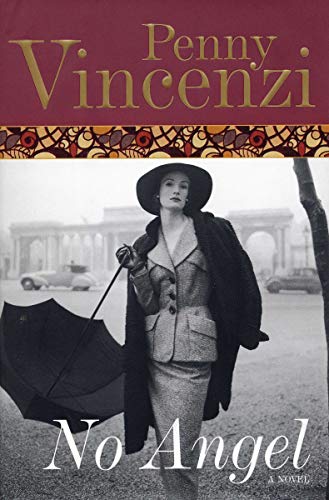
Penny Vincenzi’s novel No Angel is an irresistibly sweeping saga of power, family politics, and passion—a riveting drama and a fervent love story.
Celia Lytton is the beautiful and strong-willed daughter of wealthy aristocrats, and she is used to getting her way. She moves through life making difficult and often dangerous decisions that affect herself and others—her husband, Oliver, and their children; the destitute Sylvia Miller, whose life is transformed by Celia’s intrusion; as well as Oliver’s daunting elder sister, who is not all she appears to be; and Sebastian Brooke, for whom Celia makes the most dangerous decision of all.
Set against the tumultuous backdrop of London and New York in the First World War, No Angel is, as British Good Housekeeping wrote, “an absorbing page-turner, packed with believable characters and satisfyingly extreme villains, eccentrics, and manipulators.” Readers of Maeve Binchy, Barbara Taylor Bradford, and Anita Shreve will fall in love with this epic, unputdownable novel.
No Angel by Penny Vincenzi is the gripping first installment in the Spoils of Time trilogy:
Celia Lytton is the beautiful and strong-willed daughter of wealthy aristocrats, and she is used to getting her way. She moves through life making difficult and often dangerous decisions that affect herself and others—her husband, Oliver, and their children; the destitute Sylvia Miller, whose life is transformed by Celia’s intrusion; as well as Oliver’s daunting elder sister, who is not all she appears to be; and Sebastian Brooke, for whom Celia makes the most dangerous decision of all.
Set against the tumultuous backdrop of London and New York in the First World War, No Angel is, as British Good Housekeeping wrote, “an absorbing page-turner, packed with believable characters and satisfyingly extreme villains, eccentrics, and manipulators.” Readers of Maeve Binchy, Barbara Taylor Bradford, and Anita Shreve will fall in love with this epic, unputdownable novel.
No Angel by Penny Vincenzi is the gripping first installment in the Spoils of Time trilogy:
- No Angel
- Something Dangerous
- Into Temptation
Die Inhaltsangabe kann sich auf eine andere Ausgabe dieses Titels beziehen.
Über die Autorin bzw. den Autor
Penny Vincenzi has written seventeen bestselling novels, including No Angel, Something Dangerous, Into Temptation, Wicked Pleasures, Another Woman, Forbidden Places, Windfall, An Outrageous Affair, The Dilemma, Almost a Crime, and A Perfect Heritage. Before becoming a novelist, she worked at such magazines as Vogue, Tatler, and Cosmopolitan. She has four daughters, and divides her time between London and Gower, South Wales. Over seven million copies of her books have been sold worldwide.
Auszug. © Genehmigter Nachdruck. Alle Rechte vorbehalten.
Table of Contents
Title Page
Copyright Page
Dedication
Acknowledgements
Part One - 1904 – 1914
CHAPTER 1
CHAPTER 2
CHAPTER 3
CHAPTER 4
CHAPTER 5
CHAPTER 6
CHAPTER 7
CHAPTER 8
Part Two - 1914 – 1918
CHAPTER 9
CHAPTER 10
CHAPTER 11
CHAPTER 12
CHAPTER 13
CHAPTER 14
Part Three - 1918 – 1920
CHAPTER 15
CHAPTER 16
CHAPTER 17
CHAPTER 18
CHAPTER 19
CHAPTER 20
CHAPTER 21
CHAPTER 22
CHAPTER 23
CHAPTER 24
CHAPTER 25
CHAPTER 26
CHAPTER 27
CHAPTER 28
CHAPTER 29
CHAPTER 30
CHAPTER 31
CHAPTER 32
CHAPTER 33
EPILOGUE
ALSO BY THE SAME AUTHOR
ALSO BY THE SAME AUTHOR
Into Temptation
The Dilemma
Something Dangerous
Almost A Crime
An Outrageous Affair
Sheer Abandon
An Absolute Scandal
Forbidden Places
This edition first published in the United States in 2003 by
The Overlook Press, Peter Mayer Publishers, Inc.
141 Wooster Street
New York, NY 10012
www.overlookpress.com
For bulk and special sales, please contact sales@overlookny.com
All Rights Reserved. No part of this publication may be reproduced or
transmitted in any form or by any means, electronic or mechanical,
including photocopy, recording, or any information storage and
retrieval system now known or to be invented without permission in
writing from the publisher, except by a reviewer who wishes to quote
brief passages in connection with a review written for
inclusion in a magazine, newspaper, or broadcast.
Cataloging-in-Publication Data is available from the Library of Congress.
Manufactured in the United States of America
ISBN: 9781590207987
For Paul: with love. Not to mention huge appreciation for some particularly crucial structural advice.
Acknowledgements
As always, a long list of people without whom this book would not have happened. Probably top of the bill should go to my agent Desmond Elliott (no relation to the villain of the piece) for his encyclopaedian knowledge of publishing, after a wonderful lifetime in the business. Stories, anecdotes, facts and figures tumbled down the wires from his office to mine; the book would have been much the poorer without him.
I owe a big debt too to Rosemary Stark who gave me an extraordinarily insightful view of twin-ness, as did Jo Puccioni.
I would like to thank Martin Harvey for taking me round the Garrick Club and acquainting me so patiently with its history and its connection with publishing, and Ursula Lloyd who once more guided me through the complexities of medicine in the early part of the century, and Hugh Dickens for an immensely authoritative over-view of military matters.
For legal and other advice, I owe, as always, huge gratitude to Sue Stapely who either knows whatever I need to, or someone else who does; and to Mark Stephens who adds zest and originality to his fearsome knowledge of libel law and publishing.
I have delved into some particularly wonderful books for information: most notablyDespatches from the Heart by Annette Tapert, In Society: The Brideshead Years by Nicholas Courtney,The Country House Remembered edited by Merlin Watterson, Mrs Keppel and Her Daughter by Diana Souhami and the marvelousRound About a Pound a Week by Maud Pember Reeves. Huge thanks to my four daughters Polly, Sophie, Emily and Claudia who continue to endure my self centered and panicky ramblings as publication draws nearer with kindness and sympathy, never indicating for a moment that they find (as they must do) the annual repetition of the drama rather tedious. I am and always will be immensely grateful to them. And to my husband Paul who has to endure even more of it, and (almost) never indicates it either…
I owe everybody a great deal. It has, as always, in retrospect anyway, been tremendous fun.
Part One
1904 – 1914
CHAPTER 1
Celia stood at the altar, smiling into the face of her bridegroom and wondered if she was about to test his vow to cherish her in sickness and in health rather sooner than he might have imagined. She really did feel as if she was going to vomit: there and then, in front of the congregation, the vicar, the choir. This was truly the stuff of which nightmares were made. She closed her eyes briefly, took a very deep breath, swallowed; heard dimly through her swimmy clammy nausea the vicar saying, ‘I now pronounce you man and wife’, and somehow the fact that she had done it, managed this marriage, managed this day, that she was married to Oliver Lytton, whom she loved so much, and that no one could change anything now, made her feel better. She saw Oliver’s eyes on her, tender, but slightly anxious, having observed her faintness, and she managed to smile again before sinking gratefully on to her knees for the blessing.
Not an ideal condition for a bride to be in, almost three months’ pregnant; but then if she hadn’t been pregnant, her father would never have allowed her to marry Oliver anyway. It had been a fairly drastic measure; but it had worked. As she had known it would. And it had certainly been fun: she had enjoyed becoming pregnant a lot.
The blessing was over now; they were being ushered into the vestry to sign the register. She felt Oliver’s hand taking hers, and glanced over her shoulder at the group following them. There were her parents, her father fiercely stern, the old hypocrite: she’d grown up seeing pretty housemaid after pretty housemaid banished from the house, her mother, staunchly smiling, Oliver’s frail old father, leaning on his cane supported by his sister Margaret, and just behind them, Oliver’s two brothers, Robert rather stiff and formal and slightly portly, Jack, the youngest, absurdly handsome, with his brilliant blue eyes restlessly exploring the congregation for any pretty faces. Beyond them were the guests, admittedly rather few, just very close friends and family, and the people from the village and the estate, who of course wouldn’t have missed her being married for anything. She knew that in some ways her mother minded about that more than about anything else really, that it wasn’t a huge wedding like her sister Caroline’s, with three hundred guests at St Margaret’s Westminster, but a quiet affair in the village church. Well, she didn’t mind. She didn’t mind in the very least. She had married Oliver: she had got her way.
‘Of course you can’t marry him,’ her mother had said, ‘he has no money, no position, no house even, your father won’t hear of it.’
Her father did hear about it, about her wish to marry Oliver, because she made him listen; but he reiterated everything her mother had said.
‘Ridiculous. Throwing your life away. You want to marry properly, Celia, into your own class, someone who can keep you and support you in a reasonable way.’
She said she did not want to marry properly, she wanted to marry Oliver, because she loved him; that he had a brilliant future, that his father owned a successful publishing house in London which would be his one day.
‘Successful, nonsense,’ her father said, ‘if it was successful he wouldn’t be living in Hampstead would he? With nowhere in the country. No,...
„Über diesen Titel“ kann sich auf eine andere Ausgabe dieses Titels beziehen.
Weitere beliebte Ausgaben desselben Titels

Suchergebnisse für No Angel (Spoils of Time)

Beispielbild für diese ISBN
No Angel: A Sweeping Saga of Love, Power, and Publishing in the Edwardian Era (Spoils of Time)
Anbieter: World of Books (was SecondSale), Montgomery, IL, USA
Verkäuferbewertung 5 von 5 Sternen

Zustand: Good. Item in good condition. Textbooks may not include supplemental items i.e. CDs, access codes etc. Artikel-Nr. 00085232622
Gebraucht kaufen
EUR 3,89
Versand gratis
Versand innerhalb von USA
Versand innerhalb von USA
Anzahl: 12 verfügbar
Beispielbild für diese ISBN
No Angel: A Sweeping Saga of Love, Power, and Publishing in the Edwardian Era (Spoils of Time)
Anbieter: World of Books (was SecondSale), Montgomery, IL, USA
Verkäuferbewertung 5 von 5 Sternen
Zustand: Acceptable. Item in acceptable condition! Textbooks may not include supplemental items i.e. CDs, access codes etc. Artikel-Nr. 00094241057
Gebraucht kaufen
EUR 4,56
Versand gratis
Versand innerhalb von USA
Versand innerhalb von USA
Anzahl: 2 verfügbar
Beispielbild für diese ISBN
No Angel: A Sweeping Saga of Love, Power, and Publishing in the Edwardian Era (Spoils of Time)
Anbieter: World of Books (was SecondSale), Montgomery, IL, USA
Verkäuferbewertung 5 von 5 Sternen
Zustand: Good. Item in good condition. Textbooks may not include supplemental items i.e. CDs, access codes etc. Artikel-Nr. 00085484190
Gebraucht kaufen
EUR 4,56
Versand gratis
Versand innerhalb von USA
Versand innerhalb von USA
Anzahl: 14 verfügbar
Beispielbild für diese ISBN
No Angel
Verlag:
Harry N. Abrams (edition Reprint), 2004
ISBN 10: 1585676071
ISBN 13: 9781585676071
Gebraucht
Paperback
Anbieter: BooksRun, Philadelphia, PA, USA
Verkäuferbewertung 5 von 5 Sternen
Paperback. Zustand: Fair. Reprint. The item might be beaten up but readable. May contain markings or highlighting, as well as stains, bent corners, or any other major defect, but the text is not obscured in any way. Artikel-Nr. 1585676071-7-1
Gebraucht kaufen
EUR 5,64
Versand gratis
Versand innerhalb von USA
Versand innerhalb von USA
Anzahl: 1 verfügbar
Beispielbild für diese ISBN
No Angel
Anbieter: ThriftBooks-Reno, Reno, NV, USA
Verkäuferbewertung 5 von 5 Sternen
Paperback. Zustand: Very Good. No Jacket. May have limited writing in cover pages. Pages are unmarked. ~ ThriftBooks: Read More, Spend Less. Artikel-Nr. G1585676071I4N00
Gebraucht kaufen
EUR 6,14
Versand gratis
Versand innerhalb von USA
Versand innerhalb von USA
Anzahl: 1 verfügbar
Beispielbild für diese ISBN
No Angel
Anbieter: ThriftBooks-Dallas, Dallas, TX, USA
Verkäuferbewertung 5 von 5 Sternen
Paperback. Zustand: Good. No Jacket. Pages can have notes/highlighting. Spine may show signs of wear. ~ ThriftBooks: Read More, Spend Less. Artikel-Nr. G1585676071I3N00
Gebraucht kaufen
EUR 6,14
Versand gratis
Versand innerhalb von USA
Versand innerhalb von USA
Anzahl: 1 verfügbar
Beispielbild für diese ISBN
No Angel
Anbieter: ThriftBooks-Dallas, Dallas, TX, USA
Verkäuferbewertung 5 von 5 Sternen
Paperback. Zustand: Fair. No Jacket. Readable copy. Pages may have considerable notes/highlighting. ~ ThriftBooks: Read More, Spend Less. Artikel-Nr. G1585676071I5N00
Gebraucht kaufen
EUR 6,14
Versand gratis
Versand innerhalb von USA
Versand innerhalb von USA
Anzahl: 1 verfügbar
Beispielbild für diese ISBN
No Angel
Anbieter: ThriftBooks-Phoenix, Phoenix, AZ, USA
Verkäuferbewertung 5 von 5 Sternen
Paperback. Zustand: Very Good. No Jacket. May have limited writing in cover pages. Pages are unmarked. ~ ThriftBooks: Read More, Spend Less. Artikel-Nr. G1585676071I4N00
Gebraucht kaufen
EUR 6,14
Versand gratis
Versand innerhalb von USA
Versand innerhalb von USA
Anzahl: 1 verfügbar
Beispielbild für diese ISBN
No Angel
Anbieter: ThriftBooks-Atlanta, AUSTELL, GA, USA
Verkäuferbewertung 5 von 5 Sternen
Paperback. Zustand: Very Good. No Jacket. May have limited writing in cover pages. Pages are unmarked. ~ ThriftBooks: Read More, Spend Less. Artikel-Nr. G1585676071I4N00
Gebraucht kaufen
EUR 6,14
Versand gratis
Versand innerhalb von USA
Versand innerhalb von USA
Anzahl: 2 verfügbar
Beispielbild für diese ISBN
No Angel
Anbieter: ThriftBooks-Dallas, Dallas, TX, USA
Verkäuferbewertung 5 von 5 Sternen
Paperback. Zustand: Very Good. No Jacket. May have limited writing in cover pages. Pages are unmarked. ~ ThriftBooks: Read More, Spend Less. Artikel-Nr. G1585676071I4N00
Gebraucht kaufen
EUR 6,14
Versand gratis
Versand innerhalb von USA
Versand innerhalb von USA
Anzahl: 1 verfügbar