
Verwandte Artikel zu Insects: A Guide to Familiar American Insects (Golden...
Inhaltsangabe
Enjoy and Learn!
Expert Knowledge!
Easy-to-Read!
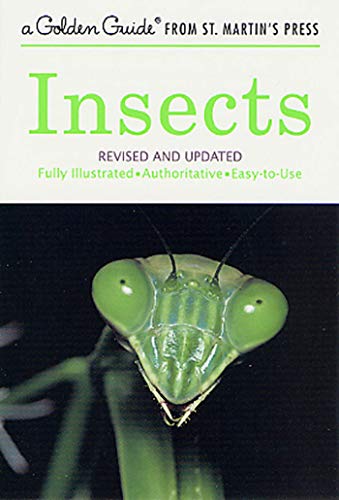
This handy guide to the most common, important and showy North American insects will help the novice begin a fascinating study. Includes:
A key to insect groups
Mature and immature forms
How insects grow and develop and what they eat
How to find and observe them
Full color pictures, nontechnical language, and up-to-date range maps make this a gem of a guide for beginners at any age.
Die Inhaltsangabe kann sich auf eine andere Ausgabe dieses Titels beziehen.
Über die Autorin bzw. den Autor
Golden Guides first appeared in 1949 and quickly established themselves as authorities on subjects from Natural History to Science. Relaunched in 2000, Golden Guides from St. Martin's Press feature modern, new covers as part of a multi-year, million-dollar program to revise, update, and expand the complete line of guides for a new generation of students.
Auszug. © Genehmigter Nachdruck. Alle Rechte vorbehalten.
Insects
A Guide to Familiar American Insects
By Herbert S. Zim, Clarence Cottam, James Gordon Irving, Susan SimonSt. Martin's Press
Copyright © 2002 St. Martin's Press
All rights reserved.
ISBN: 978-1-58238-129-9All rights reserved.
Contents
Title Page,
Copyright Notice,
Foreword,
Using This Book,
Key To Major Insect Groups,
Seeing Insects,
Studying And Collecting Insects,
Mayflies And Stoneflies,
Dragonflies And Damselflies,
Walkingsticks,
Mole And Camel Crickets,
Grasshoppers And Locusts,
Field Crickets,
Katydids,
Mormon Cricket,
American Cockroach,
Mantises,
Termites,
Earwigs,
Aphids,
Leafhoppers,
Cicadas,
Treehoppers,
Spittlebug,
Scale Insects,
Stink Bugs And Shield Bugs,
Squash Bugs,
Milkweed Bugs,
Ambush Bug,
Chinch Bug,
Aquatic Bugs,
Lice,
Dobsonfly,
Lacewings,
Antlions,
Tiger Beetles,
Ground Beetles,
Carrion Beetles,
Water Beetles,
Fireflies And Glowworms,
Ladybird Beetles,
Scarab Beetles,
Rose Chafer,
Japanese Beetle,
May Beetles,
Green June Beetle,
Stag Beetles And Bess Bugs,
Darkling And Prionus Beetles,
Click Beetles,
Longhorned And Flatheaded Borers,
Beetles Common In Gardens,
Controlling Garden Pests,
Weevils,
Caddisflies,
Butterflies And Moths,
Monarch,
Viceroy,
Purples,
Common Buckeye,
Fritillaries,
Checkerspots,
Anglewings,
Mourning Cloak,
Red Admiral, American Lady, And Painted Lady,
Nymphs And Satyrs,
Hairstreaks, Coppers, And Blues,
Cabbage White,
Sulphurs,
Swallowtails,
Skippers,
Ailanthus Silkmoth,
Cecropia Moth,
Promethea Moth,
Polyphemus Moth,
Io Moths,
Luna Moth,
Imperial And Regal Moths,
Sphinx Moths,
Underwing Moths,
Corn Earworm And Borers,
Salt Marsh Tiger Moth And Isabella Moths,
White-Marked Tussock Moth,
Gypsy Moth,
Tent Caterpillars And Fall Webworms,
Cankerworms,
Peach Tree Borer,
Codling Moth,
Bagworms,
Scorpionflies,
Crane Flies,
Mosquitoes,
Flies,
Bluebottle And Greenbottle Flies,
Tachinid And Other Flies,
Horntails And Sawflies,
Ichneumons,
Mud Wasps,
Insect Galls,
Carpenter Ants,
Fire And Cornfield Ants,
Household Ants,
Velvet Ants,
Cicada Killer,
Paper Wasps,
Bees,
Pests Of Cloth And Clothing,
Pests Of Animals,
Other Common Pests,
For More Information,
Scientific Names,
Index,
Copyright,
CHAPTER 1
SEEING INSECTS
Insects have been on this earth for nearly 400 million years and are found nearly everywhere, even in the Antarctic. More kinds of insects are known than all other animals visible to the naked eye. A few insects have been called man's worst enemy, but we would be hard put to exist without them. Insects play many important roles in the environment. They are an important food source for many animals, extraordinary pollinators, and play a critical role in recycling. They are also gems of natural beauty, zoological mysteries, and a constant source of interest.
WHAT INSECTS ARE Insects are related to crabs and lobsters. Like these sea animals, they possess a kind of skeleton on the outside of their bodies. The body itself is composed of three divisions: head, thorax, and abdomen. The thorax has three segments, each with a pair of jointed legs; so an insect normally has six legs. Most insects also have two pairs of wings attached to the thorax, but some have only one pair, and a few have none at all. Insects usually have three sets of mouthparts, two kinds of eyes — simple and compound — and one pair of antennae.
This describes typical insects, but many common ones are not typical. The thorax and abdomen may appear to run together. Immature stages (larvae) of many insects are worm-like, though their six true legs and perhaps some extra false ones may be counted. Immature insects are often difficult to identify. It is also hard to tell the sex of some insects. In some groups males are larger or have larger antennae or different markings. Females are sometimes marked by a pointed ovipositor for laying eggs extending from the base of the abdomen.
INSECT RELATIVES A number of animals are often confused with insects. Spiders, ticks, and mites have only two body divisions and four pairs of legs. They have no antennae. Other insect-like animals have the head and thorax joined like the spiders. Crustaceans have at least five pairs of legs and two pairs of antennae. Most live in water (crabs, lobsters, shrimps), but the sowbug is a land dweller. Centipedes and millipedes have many segments to their bodies with one pair of legs (centipedes) or two pairs (millipedes) on each. Centipedes have a pair of long antennae; millipedes have a short pair.
NUMBER OF INSECTS The insect group (Class Insecta) is by far the largest group of animals in the world. Over a million species have been identified, but one authority estimates this may be only 3 percent of the insects yet to be discovered. The class is divided into over 30 orders. One order encompasses the butterflies and moths; one, the termites; another, the beetles. The beetles alone include some 280,000 described species. There are more kinds of beetles than kinds of all other animals known, outside the insects. Butterflies and moths total over 146,000 species. Bees, wasps, and ants number 115,000; true bugs, 65,000 or more. The student of insect life need never run out of material. Over 15,000 species have been found around New York City alone. You can find a thousand species in your vicinity if you look for small insects as well as large, showy ones.
INSECTS AND PEOPLE Whether certain insects are considered helpful or harmful to people depends as much on us as it does on insects. Our ways of farming and raising animals have provided some insects which might otherwise be rare with conditions enabling them to multiply a thousandfold. Less than 1 percent of insects are considered harmful, but these destroy 10 percent of our crops, causing a loss of billions of dollars annually. Some insects are parasitic on other animals, and some carry diseases.
On the other hand, this would be a sorry world without insects. We would have no apples, grapes, or clover, much less cotton, and fewer oranges and garden vegetables, for these and many other plants depend on insects to pollinate their flowers. And there would be no honey, of course. Some insects aid the process of recycling, a process that is essential to life. Some insects help control others, and all help maintain the vitality of ecosystems.
INSECTS IN NATURE In the broad view, insects play an important natural role, not only in ways that benefit humans but in ways that make our rich plant life and wildlife possible. They are food for many kinds of mammals, birds, amphibians, and fish. Many of our songbirds depend almost entirely on an insect diet. Every fisherman knows how freshwater game fish go after insects. Keep this broad view in mind when people start talking about widespread insect control — something that may become possible with newer chemicals and genetic engineering. Pesticide usage on a large scale is devastating to other species, many of which may be...
„Über diesen Titel“ kann sich auf eine andere Ausgabe dieses Titels beziehen.
Suchergebnisse für Insects: A Guide to Familiar American Insects (Golden...

Beispielbild für diese ISBN
Insects: Revised and Updated
Verlag:
Golden Guides from St. Martin's Press, 2001
ISBN 10: 1582381291
ISBN 13: 9781582381299
Gebraucht
Paperback
Anbieter: World of Books (was SecondSale), Montgomery, IL, USA
Verkäuferbewertung 5 von 5 Sternen

Paperback. Zustand: Fair. Enjoy and Learn! Expert Knowledge! Easy-to-Read! This handy guide to the most common, important and showy North American insects will help the novice begin a fascinating study. Includes: A key to insect groups Mature and immature forms How insects grow and develop and what they eat How to find and observe them Full color pictures, nontechnical language, and up-to-date range maps make this a gem of a guide for beginners at any age. Artikel-Nr. CIN1582381291A
Gebraucht kaufen
EUR 4,22
Versand gratis
Versand innerhalb von USA
Versand innerhalb von USA
Anzahl: 2 verfügbar
Beispielbild für diese ISBN
Insects: Revised and Updated
Verlag:
Golden Guides from St. Martin's Press, 2001
ISBN 10: 1582381291
ISBN 13: 9781582381299
Gebraucht
Paperback
Anbieter: World of Books (was SecondSale), Montgomery, IL, USA
Verkäuferbewertung 5 von 5 Sternen
Paperback. Zustand: Good. Enjoy and Learn! Expert Knowledge! Easy-to-Read! This handy guide to the most common, important and showy North American insects will help the novice begin a fascinating study. Includes: A key to insect groups Mature and immature forms How insects grow and develop and what they eat How to find and observe them Full color pictures, nontechnical language, and up-to-date range maps make this a gem of a guide for beginners at any age. Artikel-Nr. 00101977696
Gebraucht kaufen
EUR 4,22
Versand gratis
Versand innerhalb von USA
Versand innerhalb von USA
Anzahl: 13 verfügbar
Foto des Verkäufers
Golden Guide 160 Pages Paperback Insects Book (A Golden Guide from St. Martin's Press)
Anbieter: Dream Books Co., Denver, CO, USA
Verkäuferbewertung 5 von 5 Sternen
Zustand: acceptable. This copy has clearly been enjoyedâ"expect noticeable shelf wear and some minor creases to the cover. Binding is strong, and all pages are legible. May contain previous library markings or stamps. Artikel-Nr. 4EKQOV002NEM_ns
Gebraucht kaufen
EUR 4,80
Versand gratis
Versand innerhalb von USA
Versand innerhalb von USA
Anzahl: 1 verfügbar
Beispielbild für diese ISBN
Insects: Revised and Updated
Verlag:
Golden Guides from St. Martin's Press, 2001
ISBN 10: 1582381291
ISBN 13: 9781582381299
Gebraucht
Paperback
Anbieter: ThriftBooks-Phoenix, Phoenix, AZ, USA
Verkäuferbewertung 5 von 5 Sternen
Paperback. Zustand: Good. No Jacket. Pages can have notes/highlighting. Spine may show signs of wear. ~ ThriftBooks: Read More, Spend Less. Artikel-Nr. G1582381291I3N00
Gebraucht kaufen
EUR 6,04
Versand gratis
Versand innerhalb von USA
Versand innerhalb von USA
Anzahl: 2 verfügbar
Beispielbild für diese ISBN
Insects: Revised and Updated
Verlag:
Golden Guides from St. Martin's Press, 2001
ISBN 10: 1582381291
ISBN 13: 9781582381299
Gebraucht
Paperback
Anbieter: ThriftBooks-Reno, Reno, NV, USA
Verkäuferbewertung 5 von 5 Sternen
Paperback. Zustand: Good. No Jacket. Former library book; Pages can have notes/highlighting. Spine may show signs of wear. ~ ThriftBooks: Read More, Spend Less. Artikel-Nr. G1582381291I3N10
Gebraucht kaufen
EUR 6,04
Versand gratis
Versand innerhalb von USA
Versand innerhalb von USA
Anzahl: 1 verfügbar
Beispielbild für diese ISBN
Insects: Revised and Updated
Verlag:
Golden Guides from St. Martin's Press, 2001
ISBN 10: 1582381291
ISBN 13: 9781582381299
Gebraucht
Paperback
Anbieter: ThriftBooks-Phoenix, Phoenix, AZ, USA
Verkäuferbewertung 5 von 5 Sternen
Paperback. Zustand: Very Good. No Jacket. May have limited writing in cover pages. Pages are unmarked. ~ ThriftBooks: Read More, Spend Less. Artikel-Nr. G1582381291I4N00
Gebraucht kaufen
EUR 6,04
Versand gratis
Versand innerhalb von USA
Versand innerhalb von USA
Anzahl: 1 verfügbar
Beispielbild für diese ISBN
Insects: Revised and Updated
Verlag:
Golden Guides from St. Martin's Press, 2001
ISBN 10: 1582381291
ISBN 13: 9781582381299
Gebraucht
Paperback
Anbieter: ThriftBooks-Reno, Reno, NV, USA
Verkäuferbewertung 5 von 5 Sternen
Paperback. Zustand: Fair. No Jacket. Readable copy. Pages may have considerable notes/highlighting. ~ ThriftBooks: Read More, Spend Less. Artikel-Nr. G1582381291I5N00
Gebraucht kaufen
EUR 6,04
Versand gratis
Versand innerhalb von USA
Versand innerhalb von USA
Anzahl: 3 verfügbar
Beispielbild für diese ISBN
Insects: Revised and Updated
Verlag:
Golden Guides from St. Martin's Press, 2001
ISBN 10: 1582381291
ISBN 13: 9781582381299
Gebraucht
Paperback
Anbieter: ThriftBooks-Dallas, Dallas, TX, USA
Verkäuferbewertung 5 von 5 Sternen
Paperback. Zustand: Good. No Jacket. Missing dust jacket; Pages can have notes/highlighting. Spine may show signs of wear. ~ ThriftBooks: Read More, Spend Less. Artikel-Nr. G1582381291I3N01
Gebraucht kaufen
EUR 6,04
Versand gratis
Versand innerhalb von USA
Versand innerhalb von USA
Anzahl: 1 verfügbar
Beispielbild für diese ISBN
Insects: Revised and Updated
Verlag:
Golden Guides from St. Martin's Press, 2001
ISBN 10: 1582381291
ISBN 13: 9781582381299
Gebraucht
Paperback
Anbieter: ThriftBooks-Dallas, Dallas, TX, USA
Verkäuferbewertung 5 von 5 Sternen
Paperback. Zustand: Good. No Jacket. Former library book; Pages can have notes/highlighting. Spine may show signs of wear. ~ ThriftBooks: Read More, Spend Less. Artikel-Nr. G1582381291I3N10
Gebraucht kaufen
EUR 6,04
Versand gratis
Versand innerhalb von USA
Versand innerhalb von USA
Anzahl: 1 verfügbar
Beispielbild für diese ISBN
Insects: Revised and Updated
Verlag:
Golden Guides from St. Martin's Press, 2001
ISBN 10: 1582381291
ISBN 13: 9781582381299
Gebraucht
Paperback
Anbieter: ThriftBooks-Atlanta, AUSTELL, GA, USA
Verkäuferbewertung 5 von 5 Sternen
Paperback. Zustand: Good. No Jacket. Pages can have notes/highlighting. Spine may show signs of wear. ~ ThriftBooks: Read More, Spend Less. Artikel-Nr. G1582381291I3N00
Gebraucht kaufen
EUR 6,04
Versand gratis
Versand innerhalb von USA
Versand innerhalb von USA
Anzahl: 2 verfügbar