
Verwandte Artikel zu How to Draw Cats and Kittens: A Complete Guide for...
Inhaltsangabe
Cats are creatures of beauty and mystery. They live among us but have never quite been tamed, drawing the ire of some and the admiration of others. They keep rodents away from our homes and offer purring companionship for those they have deemed worthy of their attention. The feline form exudes grace and flexibility and can be a joy to draw.
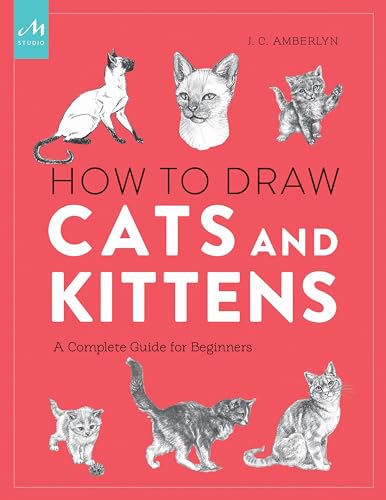
In this step-by-step guide, J. C. Amberlyn combines her love of cats with her beautiful, detailed drawing style in order to teach beginning artists to draw many different breeds of cats and kittens in pencil and pen-and-ink.
Cats are creatures of beauty and mystery. They live among us but have never quite been tamed, drawing the ire of some and the admiration of others. They keep rodents away from our homes and offer purring companionship for those they have deemed worthy of their attention. The feline form exudes grace and flexibility and can be a joy to draw.
How to Draw Cats and Kittens continues a rich tradition of cats in art. Covering all the most popular types of cats, as well as kittens, this book gives easy-to-follow instructions for drawing cats in many poses and a variety of expressions. Amberlyn includes basic information on art materials and the fundamental mechanics of drawing so that even beginners will feel confident and successful as they learn to produce highly detailed, lifelike drawings of their fluffy companions.
Die Inhaltsangabe kann sich auf eine andere Ausgabe dieses Titels beziehen.
Über die Autorin bzw. den Autor
J. C. Amberlyn is an artist, book author, photographer, animator, and naturalist. She is the author of Drawing Wildlife, Drawing Manga Animals, Chibis, and Other Adorable Creatures, The Artist's Guide to Drawing Animals: How to Draw Cats, Dogs, and Other Favorite Pets; and How to Draw Manga Characters: A Beginner’s Guide. J. C. loves art, animation, animals, and adventure in the great outdoors. She seeks to create visual and written works of art that strike a chord with her audience, whether they celebrate the life that shares the planet with us or the rich inner workings of the human mind and experience. With her books, she shares techniques for creating epic stories, engaging characters, and appealing art for readers of all skill levels. Her work has received recognition and a number of awards and has been published in various media. She lives in Arizona.
Auszug. © Genehmigter Nachdruck. Alle Rechte vorbehalten.
Chapter Two: KITTENS
There are few things cuter than a kitten. Oversized heads, wide eyes, and an insatiable curiosity combine into an appealing creature for admirers and artists alike. When drawing kittens, strive for that sense of innocence playfulness.
Kitten Features
Kittens look like round blobs of fur sometimes, but they still have bone and muscle underneath all that softness. They have the same basic structure as any adult cat, though the proportions reflect the larger skull and sometimes long, gangly legs. They have a teeter-tottering, uncertain gait when young, because they’re not quite as sure on their feet yet as an adult cat.
[ILLUSTRATION] Kittens have comparatively larger eyes and smaller noses and muzzles than adult cats.
[ILLUSTRATION] Here are the underlying shapes I used to block in the head of a Siamese kitten, along with the finished drawing seen here. Note how rounded much of it is and how parts connect to one another. For instance, the shape of the nose extends up to meet the inside corners of the eyes. The muzzle comes up and then extends out under the cheeks. The invisible line that connects the spot above the kitten’s eyes where whiskers are found extends up to meet the inside corners of the ears. The outside corners of the eyes stretch back to meet the outside corners of the ears.
[ILLUSTRATION] Like many young animals, kittens have a comparatively large head and gangly-looking legs.
Comparison of Kitten and Cat Proportions
Note how much larger the kitten’s head looks in comparison to its body. In addition, its ears appear a little larger in comparison to its head. Note that the adult cat’s muzzle is more developed and wider. The adult cat has longer legs, a longer body, and a longer tail. Its hindquarters are longer, thicker, and more developed than those of a kitten.
[ILLUSTRATION] Kitten
[ILLUSTRATION] Cat
[ILLUSTRATION] Kitten bodies consist of many rounded shapes. In this three-stage step-by-step sequence of a sitting six-week-old kitten, you see a comparatively large head set on other round shapes in the chest, paws, and hind legs. The second drawing also shows some of the basic skeletal structure.
[ILLUSTRATION] Like adult cats, kittens are flexible and agile. Note how the newly developing muscles in the legs support a flexible spine in this inquisitive kitten climbing over furniture.
[ILLUSTRATION] More rounded shapes are evident in this resting kitten, both in the sketch of blocked-in basic shapes and in the finished sketch.
The Personality of Kittens
Kittens are curious and playful. When awake, they tend to be full of energy, always exploring their environment. It can be fun to draw them investigating every nearby moving object—including each other. Kittens are likely to try crouching and pouncing, but they don’t quite have the coordination of an adult cat yet.
[ILLUSTRATION] Some of the basic geometric, stylized shapes in a kitten’s body.
[ILLUSTRATION] These kittens are about four weeks old.
[ILLUSTRATION] Seven-week-old kittens.
[ILLUSTRATION] Eight-week-old kittens playing.
[ILLUSTRATION] In this sketch of two kittens playing, I indicate some of the basic bone structure.
[ILLUSTRATION] This basic underlying bone structure is shown at a three-quarter angle.
[ILLUSTRATION] Two kittens wrestle and play with each other.
Kittens from Birth to Six Months
Kittens change rapidly from birth to six months of age. Here is a look at some of the features of kittens as they grow and become more coordinated.
Newborn to Three Weeks
A mother cat has an average of two to five kittens per litter. The kittens’ eyes don’t open until they are about seven to ten days old, and their vision isn’t fully developed until they’re several weeks old. Young kittens’ eyes may appear a little unfocused because of this. Their bodies are round and features like legs are comparatively small and underdeveloped. The ears are folded down at birth.
[ILLUSTRATION] Note the closed eyes and folded ears of the newborn kitten.
[ILLUSTRATION] This kitten is one week old. Its eyes have opened but are still a little unfocused.
[ILLUSTRATION] Two-week-old kitten. Its vision is still blurry but it has started to crawl around.
[ILLUSTRATION] In both the sketch and finished version of this trio, you can see that by about three weeks of age a kittens’ ears have grown fully erect. Kittens also will begin to walk around unsteadily at this age.
Four to Five Weeks
Kittens begin to develop more as they grow more active. Their legs become a little stronger, and they begin to leap and pounce.
[ILLUSTRATION] Four-week-old kitten. Note how it stands straight on all four feet. It will still be a little wobbly as it walks, however.
Six to Eight Weeks
By six weeks old, kittens are full of energy. They actively explore their world. Their bodies are growing stronger, and they’re beginning to look more like adults, except that their heads are comparatively large and their legs are still a little short and not completely developed.
[ILLUSTRATION] Six-week-old kitten. Some of the poise of an adult cat starts to show through at this stage.
[ILLUSTRATION] Eight-week-old kitten. At eight weeks, kittens are weaned from their mother. This can be a good time to find them their forever home.
Nine Weeks to Four Months
Kittens’ legs are growing longer, and their feet seem comparatively big in relation to their bodies. They begin to fill out more but still have that big-headed, large-eyed look.
[ILLUSTRATION] A kitten at three and a half months old. Its legs start to look gangly and comparatively longer to its body than before.
[ILLUSTRATION] This three-month-old kitten finds a perch on an adult cat, who seems quite tolerant to this all.
[ILLUSTRATION] Four-month-old kitten.
[ILLUSTRATION] This sketch breaks down a four-month-old kitten’s head into its basic shapes.
[ILLUSTRATION] Note the comparatively large head and paws of this four-month-old kitten rolling on its back.
Five to Six Months
By around six months, kittens are becoming adolescent cats, basically teenagers. They look like small, gangly adults that have slightly larger heads and eyes in comparison to mature adult proportions. The cat will continue to develop until it physically matures at around one year of age.
[ILLUSTRATION] A six-month-old kitten showing signs of the adult cat it will be but has not quite yet filled out to become.
DEMONSTRATION: Drawing a Siamese Kitten
[ILLUSTRATION] Step 1: Draw a circle for the head. Draw horizontal and vertical guidelines that divide the circle into four equal quarters. Measure the length of the head circle, and mark the same measurement just below it so that you now have two head lengths to work with. Add a smaller circle overlapping, and below and slightly to the left of, the head circle to show where the chest will be. The bottom of the chest circle should extend about halfway down the second head-length measurement. Also go ahead and add triangular ears that start above the center of the head and don’t quite meet at the top.
[ILLUSTRATION] Step 2: To create the front legs, draw a somewhat horseshoe-like shape in the middle of the chest to depict the inside of the legs, and then add the outside of the legs. The right leg and front shoulder, on the viewer’s left, are angled slightly...
„Über diesen Titel“ kann sich auf eine andere Ausgabe dieses Titels beziehen.
Suchergebnisse für How to Draw Cats and Kittens: A Complete Guide for...

Beispielbild für diese ISBN
How to Draw Cats and Kittens: A Complete Guide for Beginners
Anbieter: ThriftBooks-Atlanta, AUSTELL, GA, USA
Verkäuferbewertung 5 von 5 Sternen

Paperback. Zustand: Good. No Jacket. Pages can have notes/highlighting. Spine may show signs of wear. ~ ThriftBooks: Read More, Spend Less. Artikel-Nr. G1580935001I3N00
Gebraucht kaufen
EUR 9,69
Versand gratis
Versand innerhalb von USA
Versand innerhalb von USA
Anzahl: 1 verfügbar
Beispielbild für diese ISBN
How to Draw Cats and Kittens: A Complete Guide for Beginners
Anbieter: World of Books (was SecondSale), Montgomery, IL, USA
Verkäuferbewertung 5 von 5 Sternen
Paperback. Zustand: Good. Cats are creatures of beauty and mystery. They live among us but have never quite been tamed, drawing the ire of some and the admiration of others. They keep rodents away from our homes and offer purring companionship for those they have deemed worthy of their attention. The feline form exudes grace and flexibility and can be a joy to draw. Artikel-Nr. 00099281491
Gebraucht kaufen
EUR 9,84
Versand gratis
Versand innerhalb von USA
Versand innerhalb von USA
Anzahl: 2 verfügbar
Beispielbild für diese ISBN
How to Draw Cats and Kittens: A Complete Guide for Beginners
Anbieter: Kennys Bookstore, Olney, MD, USA
Verkäuferbewertung 5 von 5 Sternen
Zustand: New. 2017. Paperback. . . . . . Books ship from the US and Ireland. Artikel-Nr. V9781580935005
Neu kaufen
EUR 37,79
EUR 9,33 Versand
Versand innerhalb von USA
Versand innerhalb von USA
Anzahl: 15 verfügbar
Beispielbild für diese ISBN
How to Draw Cats and Kittens: A Complete Guide for Beginners
Anbieter: Revaluation Books, Exeter, Vereinigtes Königreich
Verkäuferbewertung 5 von 5 Sternen
Paperback. Zustand: Brand New. 143 pages. 11.00x8.75x0.50 inches. In Stock. Artikel-Nr. 1580935001
Neu kaufen
EUR 39,88
EUR 14,74 Versand
Versand von Vereinigtes Königreich nach USA
Versand von Vereinigtes Königreich nach USA
Anzahl: 1 verfügbar
Foto des Verkäufers
HT DRAW CATS & KITTENS
Anbieter: moluna, Greven, Deutschland
Verkäuferbewertung 5 von 5 Sternen
Zustand: New. Über den AutorJ. C. Amberlyn is an artist, book author, photographer, animator, and naturalist. She is the author of Drawing Wildlife, Drawing Manga Animals, Chibis, and Other Adorable Creatures, Th. Artikel-Nr. 857743823
Neu kaufen
EUR 23,10
EUR 48,99 Versand
Versand von Deutschland nach USA
Versand von Deutschland nach USA
Anzahl: 1 verfügbar