
Verwandte Artikel zu Change Your Genes, Change Your Life: Creating Optimal...
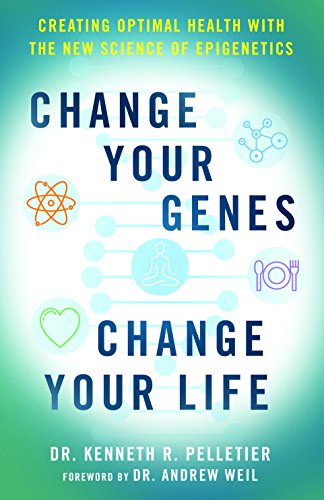
Change Your Genes, Change Your Life: Creating Optimal Health with the New Science of Epigenetics - Softcover
Inhaltsangabe
Our biology is no longer destiny. Our genes respond to everything we do, according to the revolutionary new science of epigenetics. In other words, our inherited DNA doesn't rigidly determine our health and disease prospects as the previous generation of geneticists believed. Especially in the last ten years, scientists have confirmed that the vast majority of our genes are actually fluid and dynamic. An endless supply of new studies prove that our health is an expression of how we live our lives--that what we eat and think and how we handle daily stress, plus the toxicity of our immediate environment--creates an internal biochemistry that can actually turn genes on or off. Managing these biochemical effects on our genome is the new key to radiant wellness and healthy longevity.
Now gaining broad credibility among scientists, the study of epigenetics is at the forefront of modern medicine. According to the author, the real upshot of the epigenetic revolution is that it opens the door to what futurists call personalized medicine. For the first time in a trade book, Dr. Pelletier explains in layperson's language the genetic biomarkers that will become the standard reference for measuring which specific lifestyle changes are required to optimize a given individual's health. In the very near future, each person's state-of-the-art genetic and epigenetic profile--matched with other precise indicators such as assays of the gut microbiome--will guide their daily health practices.
This short but profound book by a world-renowned pioneer in integrative medicine introduces readers to this exciting new field, and reveals the steps that each of us can take today to change our genetic expression and thereby optimize our health for a lifetime.
Die Inhaltsangabe kann sich auf eine andere Ausgabe dieses Titels beziehen.
Über die Autorin bzw. den Autor
Kenneth R. Pelletier, PhD, MD is a clinical professor of medicine and psychiatry at the University of California School of Medicine in San Francisco. He is a medical consultant to the US Department of Health and Human Services, the World Health Organization, the Federation of State Medical Boards, and major corporations. Kenneth also serves as chairman of the American Health Association and is a founding board member of the American Board of Integrative Medicine. His research, clinical practice, and publications have been the subject of numerous national television programs including appearances on the ABC World News, the Today show, Good Morning America, the CBS Evening News, the MacNeil-Lehrer NewsHour, CNN, numerous PBS specials on his books, and the award-winning BBC series The Long Search. Kenneth is the author of ten books including the international bestseller Mind as Healer, Mind as Slayer and has published over 300 medical and professional journal articles.
Auszug. © Genehmigter Nachdruck. Alle Rechte vorbehalten.
Change Your Genes, Change Your Life
Creating Optimal Health with the New Science of Epigenetics
By Kenneth R. PelletierOrigin Press
Copyright © 2019 Kenneth R. Pelletier
All rights reserved.
ISBN: 978-1-57983-056-4All rights reserved.
Contents
Foreword by Dr. Andrew Weil,
Introduction,
Chapter 1: NEW REASONS TO HOPE What We've Learned about Genes,
Chapter 2: KEYS TO WELLNESS Biomarkers That Govern Your Health,
Chapter 3: EPIGENESIS Seven Pathways to Optimal Health,
Chapter 4: NUTRIGENOMICS Your Genes and Biome Express What You Eat,
Chapter 5: MIND MATTERS Turn Off Genetic Vulnerabilities by Reducing Stress,
Chapter 6: THE ERA OF PERSONALIZED MEDICINE What the Future Holds,
A Selection of Sources Consulted,
Index,
CHAPTER 1
NEW REASONS TO HOPE
What We Have Learned about Our Genes
* * *
In May 2013, celebrity actress Angelina Jolie suddenly made headlines — not because she was starring in a new movie but because she had made a drastic medical decision. She announced to the world in a New York Times op-ed that she had undergone a preventive double mastectomy. Her decision to submit to such invasive surgery was, she wrote, the result of genetic tests that indicated she had an 87 percent likelihood of developing breast cancer. Jolie also shared that she had lost both her mother and grandmother to ovarian cancer, which is closely tied to breast cancer. As the mother of six young children, Jolie decided on their behalf "to be proactive and to minimize the risk as much as I could."
Jolie's dramatic story had worldwide impact. The New York Times later reported on how awareness of the breast cancer issue had exploded in Israel as a result of Jolie's announcement. Jolie is of Ashkenazi Jewish descent, and it is known that about half the Ashkenazi women in Israel and the majority of them in the United States are likely to have the same mutation as Jolie. As these susceptible women learned of their increased genetic risk, the Times noted that they face the same crisis that Jolie did before them.
Was the famed actress misguided in making such a drastic choice? Or is preventive mastectomy the only ethical and reasonable medical choice for women with Jolie's mutation? If the answer to the latter question is yes, should insurers cover this procedure for all women with this mutation?
Giving informed answers to questions like these requires a short course in the revolutionary new understanding of human biology that we examine in this book. The discovery early in this century of the significance of epigenetics — and more recently of the genetic role of our body's symbiotic cousin, the gut microbiome — was the tip-off to researchers that something far more complex was going on than had ever been imagined in twentieth-century medicine. Because of these developments, we can now safely say that Angelia Jolie had unwittingly based her decision on a model of genetic determinism that is on the brink of extinction — as you will soon learn.
The End Game for Genetic Determinism
Advances in genetics of the last few decades have been nothing short of astonishing. Scientists can now locate and map (or "sequence") every single gene in the human genome at an increasingly lower cost. The relative ease and precision of today's gene-sequencing technology now makes it commercially feasible to identify the biochemical makeup of every one of the over 20,000 genes in each person's DNA, as well as every other molecular feature of the DNA strand on their inherited genome.
The first effort at comprehensive gene sequencing in 2001, the Human Genome Project, cost about $100 million. Fifteen years later, the cost had dropped to about $500, and continues to fall from there. Impressively, these techniques allow us to zero in on the tiniest molecular units of our DNA, known as base pairs. Geneticists designate these biochemical units by a simple series of four letters. Sequencing techniques allow them to locate those genes that carry potentially harmful mutations — rogue base pairs whose letters are out of proper order. These unique variations in a standard base pair are also known as gene variants.
Is there a practical import for your health? Yes, indeed there is, because gene variants can often be correlated with some degree of risk for a specific disease. Such a statistical association of a variant with a particular disease makes you vulnerable to it; only rarely is it a certainty. The new science of epigenetics shows that many other crucial influences are at work in creating disease conditions in the body that may or may not activate this genetic predisposition. Plus, some variants can actually be beneficial adaptations — though again, rarely.
Because advances in gene-sequencing now make it easy to locate variants, a giant new industry for gene mapping is beginning to have wide influence in clinical medicine. And while it is a wonderful gift to become aware of our inherited genetic traits and possible disease vulnerabilities, putting such information in the wrong hands can also be dangerous and misleading.
According to the National Institutes of Health, the genetic testing industry will grow to about $20 billion by 2020. Most of these billions will be spent on promises to predict your risk of major diseases. But what the public doesn't know is that such genetic tests can predict with certainty only a few percent of all known diseases. All other cases of disease occurrence depend at least in part on factors outside your inherited genome, most notably your lifestyle and your particular life conditions.
Nevertheless, because of the persistence of the mechanistic paradigm of genetics inherited from the last two centuries, massive resources are being spent on predicting genetic diseases and matching drugs to such conditions. This can be a blessing to those millions of Americans who suffer from the inexorable expression of one of roughly 5,000 rare genetic diseases that afflict about ten percent of the population. But what about the vast majority of us who don't have such defective genes? An even greater blessing would be to refocus genetic research on optimizing the expression of our good genes! This book reveals the state-of-the-art of this more expansive and proactive approach to human biology.
The difficult case of Angelina Jolie illustrates the transitional state of the genetics industry, as we wait for clinical practice to catch up with the new biology. Jolie has a well-understood mutation in genes known as BRCA1 and BRCA2, which work as tumor suppressors. This relatively common mutation can make these genes incapable of performing their important function, giving women with these variants a high risk of both breast and ovarian cancer.
Brace yourself, because what follows is a graphic description of the aggressive intervention necessitated by Jolie's decision. Once she knew her test results, Ms. Jolie opted for a complex form of preventive surgery that requires three consecutive operations over several months. First, she underwent a procedure designed to spare the nipple and surrounding areola. Next, surgeons removed all the breast tissue while saving the skin that contains the breasts. In a third procedure, her breasts were reconstructed with implants. This procedure only targeted her breasts because, as she wrote, "my risk of breast cancer is higher than my risk of ovarian cancer." Jolie still has to face a decision about...
„Über diesen Titel“ kann sich auf eine andere Ausgabe dieses Titels beziehen.
Suchergebnisse für Change Your Genes, Change Your Life: Creating Optimal...

Beispielbild für diese ISBN
Change Your Genes, Change Your Life: Creating Optimal Health with the New Science of Epigenetics
Anbieter: World of Books (was SecondSale), Montgomery, IL, USA
Verkäuferbewertung 5 von 5 Sternen

Zustand: Good. Good condition ex-library book with usual library markings and stickers. Artikel-Nr. 00099144201
Gebraucht kaufen
EUR 3,66
Versand gratis
Versand innerhalb von USA
Versand innerhalb von USA
Anzahl: 1 verfügbar
Beispielbild für diese ISBN
Change Your Genes, Change Your Life: Creating Optimal Health with the New Science of Epigenetics
Anbieter: World of Books (was SecondSale), Montgomery, IL, USA
Verkäuferbewertung 5 von 5 Sternen
Zustand: Very Good. Item in very good condition! Textbooks may not include supplemental items i.e. CDs, access codes etc. Artikel-Nr. 00102076797
Gebraucht kaufen
EUR 3,66
Versand gratis
Versand innerhalb von USA
Versand innerhalb von USA
Anzahl: 1 verfügbar
Beispielbild für diese ISBN
Change Your Genes, Change Your Life: Creating Optimal Health with the New Science of Epigenetics
Anbieter: World of Books (was SecondSale), Montgomery, IL, USA
Verkäuferbewertung 5 von 5 Sternen
Zustand: Acceptable. Item in acceptable condition! Textbooks may not include supplemental items i.e. CDs, access codes etc. Artikel-Nr. 00098161052
Gebraucht kaufen
EUR 3,66
Versand gratis
Versand innerhalb von USA
Versand innerhalb von USA
Anzahl: 1 verfügbar
Beispielbild für diese ISBN
Change Your Genes, Change Your Life: Creating Optimal Health with the New Science of Epigenetics
Anbieter: BooksRun, Philadelphia, PA, USA
Verkäuferbewertung 5 von 5 Sternen
Paperback. Zustand: Very Good. It's a well-cared-for item that has seen limited use. The item may show minor signs of wear. All the text is legible, with all pages included. It may have slight markings and/or highlighting. Artikel-Nr. 1579830560-8-1
Gebraucht kaufen
EUR 4,64
Versand gratis
Versand innerhalb von USA
Versand innerhalb von USA
Anzahl: 1 verfügbar
Beispielbild für diese ISBN
Change Your Genes, Change Your Life: Creating Optimal Health with the New Science of Epigenetics
Anbieter: ThriftBooks-Atlanta, AUSTELL, GA, USA
Verkäuferbewertung 5 von 5 Sternen
Paperback. Zustand: Good. No Jacket. Pages can have notes/highlighting. Spine may show signs of wear. ~ ThriftBooks: Read More, Spend Less. Artikel-Nr. G1579830560I3N00
Gebraucht kaufen
EUR 6,61
Versand gratis
Versand innerhalb von USA
Versand innerhalb von USA
Anzahl: 1 verfügbar
Beispielbild für diese ISBN
Change Your Genes, Change Your Life: Creating Optimal Health with the New Science of Epigenetics
Anbieter: ThriftBooks-Dallas, Dallas, TX, USA
Verkäuferbewertung 5 von 5 Sternen
Paperback. Zustand: Very Good. No Jacket. Former library book; May have limited writing in cover pages. Pages are unmarked. ~ ThriftBooks: Read More, Spend Less. Artikel-Nr. G1579830560I4N10
Gebraucht kaufen
EUR 6,61
Versand gratis
Versand innerhalb von USA
Versand innerhalb von USA
Anzahl: 1 verfügbar
Beispielbild für diese ISBN
Change Your Genes, Change Your Life: Creating Optimal Health with the New Science of Epigenetics
Anbieter: ThriftBooks-Atlanta, AUSTELL, GA, USA
Verkäuferbewertung 5 von 5 Sternen
Paperback. Zustand: Very Good. No Jacket. May have limited writing in cover pages. Pages are unmarked. ~ ThriftBooks: Read More, Spend Less. Artikel-Nr. G1579830560I4N00
Gebraucht kaufen
EUR 6,61
Versand gratis
Versand innerhalb von USA
Versand innerhalb von USA
Anzahl: 2 verfügbar
Beispielbild für diese ISBN
Change Your Genes, Change Your Life: Creating Optimal Health with the New Science of Epigenetics
Anbieter: ThriftBooks-Reno, Reno, NV, USA
Verkäuferbewertung 5 von 5 Sternen
Paperback. Zustand: Very Good. No Jacket. May have limited writing in cover pages. Pages are unmarked. ~ ThriftBooks: Read More, Spend Less. Artikel-Nr. G1579830560I4N00
Gebraucht kaufen
EUR 6,61
Versand gratis
Versand innerhalb von USA
Versand innerhalb von USA
Anzahl: 1 verfügbar
Beispielbild für diese ISBN
Change Your Genes, Change Your Life: Creating Optimal Health with the New Science of Epigenetics
Anbieter: ThriftBooks-Dallas, Dallas, TX, USA
Verkäuferbewertung 5 von 5 Sternen
Paperback. Zustand: Very Good. No Jacket. May have limited writing in cover pages. Pages are unmarked. ~ ThriftBooks: Read More, Spend Less. Artikel-Nr. G1579830560I4N00
Gebraucht kaufen
EUR 6,61
Versand gratis
Versand innerhalb von USA
Versand innerhalb von USA
Anzahl: 1 verfügbar
Beispielbild für diese ISBN
Change Your Genes, Change Your Life: Creating Optimal Health with the New Science of Epigenetics
Anbieter: ThriftBooks-Atlanta, AUSTELL, GA, USA
Verkäuferbewertung 5 von 5 Sternen
Paperback. Zustand: Very Good. No Jacket. Former library book; May have limited writing in cover pages. Pages are unmarked. ~ ThriftBooks: Read More, Spend Less. Artikel-Nr. G1579830560I4N10
Gebraucht kaufen
EUR 6,61
Versand gratis
Versand innerhalb von USA
Versand innerhalb von USA
Anzahl: 1 verfügbar