
Verwandte Artikel zu Brilliant Food Tips and Cooking Tricks: 5,000 ingenious...
Brilliant Food Tips and Cooking Tricks: 5,000 ingenious Kitchen Hints, Secrets, Shortcuts, and Solutions - Softcover
Inhaltsangabe
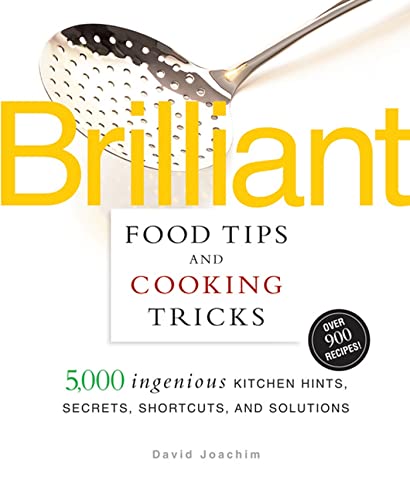
A definitive home cooking reference presents more than five thousand innovative tips and tricks that cover every aspect of cookery, in a handy guide that is alphabetically organized for easy access and includes step-by-step illustrations, informative sidebars, and more than nine hundred recipes. Reprint. 12,500 first printing.
Die Inhaltsangabe kann sich auf eine andere Ausgabe dieses Titels beziehen.
Über die Autorin bzw. den Autor
David Joachim is the best-selling author of A Man, A Can, A Plan and has written and edited more than 25 other cookbooks and health books. He has appeared widely on national television and radio, including the Discovery Channel, Television Food Network, QVC, and National Public Radio. He is former food editor at Vegetarian Gourmet magazine and lives in Center Valley, Pennsylvania.
Auszug. © Genehmigter Nachdruck. Alle Rechte vorbehalten.
How to Use This Book A good reference book is like a kaleidoscope of information. At every turn, it sparkles with new and interesting perspectives. And, hopefully, it provides some insight that is truly useful. My goal in these pages was to create such a book. Everything here is designed to help you develop a keener sense of food and cooking by revealing the little details that most cookbooks don't tell you. This book shows you how to buy, store, and prepare hundreds of common (and not-so- common) foods; how to fix food that goes kaflooey in the kitchen; how to cook smarter and faster; how to create and balance flavors; and how to cook more healthfully. Step-by-step illustrations demonstrate essential as well as lesser-known techniques such as the best way to crack an egg, how to seed a chile pepper without touching it, and two ways to carve a turkey. There are even tips on how to read a recipe, set up an efficient kitchen, and plan a party. And, of course, the book contains a broad selection of recipes--over 900 in all. The recipes are meant to address nearly every cooking occasion you may be faced with, from simple breakfasts and weeknight meals to more elaborate holiday meals and special occasions. Each recipe has been developed in a home kitchen and streamlined for home cooks. This book is organized from A to Z. Each entry (Apples, for instance) begins with a brief description followed by tips, recipes, illustrations, and other useful information. The tips within each entry are further organized under five categories: Basics, Prob- lem Solvers, Time Savers, Flavor Tips, and Healthy Hints. All entries are alphabetized by letter rather than by word. This means that if a space occurs between two words in an entry, it is alphabetized as if there were no space. For example, Cake Pans appear before Cakes. If you don't find what you're looking for, check the index. The information you're after may be in another entry. For instance, a tip on how much acid to add to a marinade is listed under Marinades rather than under Acidity. Likewise, the index is the best place to search for recipes because not every recipe will appear under its likely entry. Simple Red Pepper Sauce, for example, appears under Peppers, Sweet rather than under Sauces. Most of this book's recipes appear in a shorthand paragraph form, in which the ingredients and directions are mixed together, and the ingredients appear in boldface type for easy reference. Notice that a few dozen recipes do appear in a more traditional recipe format with an ingredient list followed by a set of cooking directions. These recipes have been given special treatment because they demonstrate the book's most practical tips. I've found that knowing your way around a kitchen comes mostly with practice. But good guidance helps. My hope is that these recipes and tips will make your life in the kitchen easier and more enjoyable; and that the little-known food facts will delight and surprise you along the way.
A Acidity Acidity in food imparts a sour (tart) taste on the tongue that is one of the four basic flavors. The most common forms are citrus juice, vinegar, wine, and tomatoes. Acidic ingredients (yogurt and buttermilk included) also affect the texture, color, and shelf life of foods. A bit of acid can make a pie crust more tender, stabilize whipped egg whites, and bring a shine to copper cookware. Basics To make acidulated water . For each quart (4 cups) of cold water, add 4 tablespoons lemon juice. Or add a different acidic ingredient, such as 2 teaspoons vinegar or 1/2 cup white wine. Problem Solver To prevent discoloration of low-acid foods . Toss the cut food with lemon juice or vinegar. This method will keep cut apples, potatoes, bananas, and other low-acid foods from turning brown. Or place the cut food in acidulated water until needed. Flavor Tips To enhance flavors . A bit of citrus juice or vinegar enhances the flavors of fruits, vegetables, poultry, and seafood by complementing natural sweetness. To decrease acidity . Add a sweet ingredient such as sugar, honey, or syrup. Start with a ratio of 1 part sweetener to 3 parts acidic ingredient (say, 1 teaspoon sugar to 1 tablespoon lemon juice). Increase the ratio as desired. Equal amounts give a pleasant sweet-and-sour flavor. Alcohol see also Beer; Flambé; Sherry; Wine An important ingredient in many recipes, alcohol adds flavor to sauces, soups, marinades, and even ice cream. When heated, some but not all of the alcohol evaporates. Basics To select . Match the type of alcohol to the food. For instance, flavor a raspberry sorbet with raspberry liqueur. There is no reason to use very expensive spirits for cooking, but keep in mind that if it's not worth drinking, it's not worth cooking with either. Avoid products labeled "cooking wine." These often contain salt, are of poor quality, and taste awful. To cook with alcohol . Be careful not to add too much. Many alcohol spirits have strong flavors that can easily overpower a dish. Begin by adding just a teaspoon or tablespoon, then taste the dish and add more if desired. To safely add alcohol to a hot pan . Remove the pan from the heat and slowly pour in the alcohol, swirling the pan to help keep the alcohol from heating too quickly. Return the pan to low heat and continue cooking as necessary. To give frozen desserts a smooth, creamy texture . Add 1 to 2 teaspoons alcohol to the base. Alcohol prevents ice crystals from forming, which helps keep frozen desserts creamy. But be careful. Too much alcohol will prevent your dessert from freezing at all, and you may end up with something best enjoyed with a straw rather than with a spoon. To boil off alcohol . Remove a hot skillet from the heat and add 1/2 to 1 cup liquor, wine, liqueur, or beer. Let the liquid in the pan boil until the vapors do not sting the inside of your nose when inhaled, about 1 minute for liquor, wine, or liqueur and 30 seconds for beer. Al Dente This Italian term translates to "to the tooth" and is used to describe the preferred texture for cooked pasta and some vegetables. Basics To check for al dente texture . Take a bite and look at the center of the food. Pasta should be completely cooked through with no white core but should still offer a bit of resistance. Vegetables should be tender yet crisp. Anchovies; Anchovy Paste These tiny, bold-flavored fish are most often available in their preserved form in tins. Anchovy paste is available in tubes. Basics To select . Go for whole anchovies packed in salt. They have the best flavor and are usually bigger and meatier than oil-packed anchovies. If you can't find salt-packed anchovies, glass jars of oil-packed fillets are the next best choice. Choose the jar with the meatiest fillets. Tins of oil- packed anchovies, which don't allow you to see what you're buying, are a poor third choice. Finally, buy anchovy paste only as a last resort for convenience. Anchovy paste is essentially the leftovers of the anchovy production plant packed into tubes. To store . After opening, transfer any unused anchovies to a container, cover with at least 1" of olive oil, seal the container, and refrigerate for up to 1 year. To fillet whole, salt-packed anchovies . Rinse off the salt with cold water. Working over a colander in the sink under slow running water, hold the fish belly-up and run a finger from the head down through the tail to separate the fillets and expose the backbone. Lift the backbone away from the fillet and discard. Soak the fillets in cold water for 20 to 30 minutes to reduce saltiness. Dry on paper towels before using or storing. Store as you would unfilleted anchovies. To cook . Keep the heat low and cook anchovies slowly, so that they dissolve gradually. Avoid high heat, which hardens anchovies and gives them a harsh, bitter flavor. Time...
„Über diesen Titel“ kann sich auf eine andere Ausgabe dieses Titels beziehen.
Suchergebnisse für Brilliant Food Tips and Cooking Tricks: 5,000 ingenious...

Beispielbild für diese ISBN
Brilliant Food Tips and Cooking Tricks
Anbieter: World of Books (was SecondSale), Montgomery, IL, USA
Verkäuferbewertung 5 von 5 Sternen

Paperback. Zustand: Fair. Artikel-Nr. 00102017650
Gebraucht kaufen
EUR 5,87
Versand gratis
Versand innerhalb von USA
Versand innerhalb von USA
Anzahl: 1 verfügbar
Beispielbild für diese ISBN
Brilliant Food Tips and Cooking Tricks
Anbieter: World of Books (was SecondSale), Montgomery, IL, USA
Verkäuferbewertung 5 von 5 Sternen
Paperback. Zustand: Good. Artikel-Nr. 00108873367
Gebraucht kaufen
EUR 5,87
Versand gratis
Versand innerhalb von USA
Versand innerhalb von USA
Anzahl: 2 verfügbar
Beispielbild für diese ISBN
Brilliant Food Tips and Cooking Tricks: 5,000 Ingenious Kitchen Hints, Secrets, Shortcuts, and Solutions
Anbieter: ThriftBooks-Atlanta, AUSTELL, GA, USA
Verkäuferbewertung 5 von 5 Sternen
Paperback. Zustand: Very Good. No Jacket. May have limited writing in cover pages. Pages are unmarked. ~ ThriftBooks: Read More, Spend Less. Artikel-Nr. G1579549837I4N00
Gebraucht kaufen
EUR 6,21
Versand gratis
Versand innerhalb von USA
Versand innerhalb von USA
Anzahl: 1 verfügbar
Beispielbild für diese ISBN
Brilliant Food Tips and Cooking Tricks: 5,000 Ingenious Kitchen Hints, Secrets, Shortcuts, and Solutions
Anbieter: ThriftBooks-Dallas, Dallas, TX, USA
Verkäuferbewertung 5 von 5 Sternen
Paperback. Zustand: Very Good. No Jacket. May have limited writing in cover pages. Pages are unmarked. ~ ThriftBooks: Read More, Spend Less. Artikel-Nr. G1579549837I4N00
Gebraucht kaufen
EUR 6,21
Versand gratis
Versand innerhalb von USA
Versand innerhalb von USA
Anzahl: 1 verfügbar
Beispielbild für diese ISBN
Brilliant Food Tips and Cooking Tricks : 5,000 Ingenious Kitchen Hints, Secrets, Shortcuts, and Solutions
Verlag:
Potter/Ten Speed/Harmony/Rodale, 2004
ISBN 10: 1579549837
ISBN 13: 9781579549831
Gebraucht
Softcover
Anbieter: Better World Books, Mishawaka, IN, USA
Verkäuferbewertung 5 von 5 Sternen
Zustand: Good. Reprint. Pages intact with minimal writing/highlighting. The binding may be loose and creased. Dust jackets/supplements are not included. Stock photo provided. Product includes identifying sticker. Better World Books: Buy Books. Do Good. Artikel-Nr. 5234715-6
Gebraucht kaufen
EUR 7,03
Versand gratis
Versand innerhalb von USA
Versand innerhalb von USA
Anzahl: 1 verfügbar
Beispielbild für diese ISBN
Brilliant Food Tips and Cooking Tricks : 5,000 Ingenious Kitchen Hints, Secrets, Shortcuts, and Solutions
Verlag:
Potter/Ten Speed/Harmony/Rodale, 2004
ISBN 10: 1579549837
ISBN 13: 9781579549831
Gebraucht
Softcover
Anbieter: Better World Books: West, Reno, NV, USA
Verkäuferbewertung 5 von 5 Sternen
Zustand: Very Good. Reprint. Pages intact with possible writing/highlighting. Binding strong with minor wear. Dust jackets/supplements may not be included. Stock photo provided. Product includes identifying sticker. Better World Books: Buy Books. Do Good. Artikel-Nr. 5153355-6
Gebraucht kaufen
EUR 7,03
Versand gratis
Versand innerhalb von USA
Versand innerhalb von USA
Anzahl: 1 verfügbar
Beispielbild für diese ISBN
Brilliant Food Tips and Cooking Tricks : 5,000 Ingenious Kitchen Hints, Secrets, Shortcuts, and Solutions
Verlag:
Potter/Ten Speed/Harmony/Rodale, 2004
ISBN 10: 1579549837
ISBN 13: 9781579549831
Gebraucht
Softcover
Anbieter: Better World Books, Mishawaka, IN, USA
Verkäuferbewertung 5 von 5 Sternen
Zustand: Good. Reprint. Former library copy. Pages intact with minimal writing/highlighting. The binding may be loose and creased. Dust jackets/supplements are not included. Includes library markings. Stock photo provided. Product includes identifying sticker. Better World Books: Buy Books. Do Good. Artikel-Nr. 10638149-6
Gebraucht kaufen
EUR 7,03
Versand gratis
Versand innerhalb von USA
Versand innerhalb von USA
Anzahl: 1 verfügbar
Beispielbild für diese ISBN
Brilliant Food Tips and Cooking Tricks: 5,000 Ingenious Kitchen Hints, Secrets, Shortcuts, and Solutions
Anbieter: Wonder Book, Frederick, MD, USA
Verkäuferbewertung 5 von 5 Sternen
Zustand: Very Good. Very Good condition. With remainder mark. A copy that may have a few cosmetic defects. May also contain light spine creasing or a few markings such as an owner's name, short gifter's inscription or light stamp. Artikel-Nr. Y03L-01210
Gebraucht kaufen
EUR 7,67
Versand gratis
Versand innerhalb von USA
Versand innerhalb von USA
Anzahl: 1 verfügbar
Beispielbild für diese ISBN
Brilliant Food Tips and Cooking Tricks: 5,000 Ingenious Kitchen Hints, Secrets, Shortcuts, and Solutions
Anbieter: Wonder Book, Frederick, MD, USA
Verkäuferbewertung 5 von 5 Sternen
Zustand: Good. Good condition. A copy that has been read but remains intact. May contain markings such as bookplates, stamps, limited notes and highlighting, or a few light stains. Artikel-Nr. Y07J-0903
Gebraucht kaufen
EUR 7,67
Versand gratis
Versand innerhalb von USA
Versand innerhalb von USA
Anzahl: 1 verfügbar
Beispielbild für diese ISBN
Brilliant Food Tips and Cooking Tricks: 5,000 Ingenious Kitchen Hints, Secrets, Shortcuts, and Solutions
Verlag:
Rodale Books (edition Reprint), 2004
ISBN 10: 1579549837
ISBN 13: 9781579549831
Gebraucht
Paperback
Anbieter: BooksRun, Philadelphia, PA, USA
Verkäuferbewertung 5 von 5 Sternen
Paperback. Zustand: Very Good. Reprint. It's a well-cared-for item that has seen limited use. The item may show minor signs of wear. All the text is legible, with all pages included. It may have slight markings and/or highlighting. Artikel-Nr. 1579549837-11-1
Gebraucht kaufen
EUR 8,11
Versand gratis
Versand innerhalb von USA
Versand innerhalb von USA
Anzahl: 1 verfügbar