
Verwandte Artikel zu The Weiser Field Guide to Ghosts: Apparitions, Spirits,...
The Weiser Field Guide to Ghosts: Apparitions, Spirits, Spectral Lights and Other Hauntings of History and Legend: Apparations, Spirits, Spectral Lights, and Other Hauntings of History and Legend - Softcover
Buch 1 von 6: The Weiser Field Guide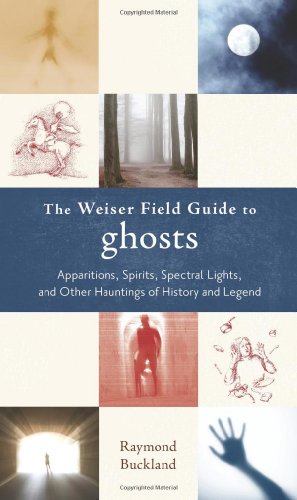
Inhaltsangabe
From battlefield and biblical ghosts to poltergeists and orbs, The Wesier Field Guide to Ghosts examines categories and subcategories of ghosts across time and cultures, including commonalities and misconceptions. Stories of encounters, legendary ghosts, and haunted places are all covered in this beautifully illustrated compendium, a veritable A-Z of the otherworld. The Wesier Field Guide to Ghosts is concise and comprehensive, complete with practical tips on ghost hunting and suggested further reading.
Die Inhaltsangabe kann sich auf eine andere Ausgabe dieses Titels beziehen.
Über die Autorin bzw. den Autor
Raymond Buckland's grandfather was the first of the Buckland Gypsies to give up traveling the roads in wagons and to settle into a permanent house. From his earliest years, Ray remembers listening to his father's and grandfather's tales of Romani life, and watching his grandmother read cards and tell fortunes. Ray is the author of more than fifty books on occult, magic, witchcraft, and paranormal subjects and is popularly known as "The Father of American Wicca." He lives in Ohio. Visit him on the web at: www.raybuckland.com.
Auszug. © Genehmigter Nachdruck. Alle Rechte vorbehalten.
The Weiser Field Guide to ghosts
Apparition, Spirits, Special Lights, and Other Hauntings of History and Legend
By Raymond BucklandRed Wheel/Weiser, LLC
Copyright © 2009 Raymond Buckland
All rights reserved.
ISBN: 978-1-57863-451-4All rights reserved.
Contents
| Introduction | |
| Ancestral Ghosts | |
| Animal Ghosts | |
| Apparitions | |
| Battlefield Ghosts | |
| Biblical Ghosts | |
| Celebrity Ghosts | |
| Deceiving Ghosts | |
| Fairies | |
| Guardian Ghosts | |
| Historic Ghosts | |
| Inhuman Ghosts | |
| Literary Ghosts | |
| Living Ghosts | |
| Materializations | |
| Monsters | |
| Mythical Ghosts; Folklore Ghosts | |
| Nature Ghosts | |
| Omen Ghosts; Prophetic Ghosts | |
| Poltergeists | |
| Possessive Ghosts | |
| Religious Ghosts | |
| Shadow Ghosts | |
| Spirits | |
| Spectral Lights | |
| Vampires | |
| Warning Ghosts | |
| Practical Ghost Hunting | |
| Further Reading | |
| Index |
CHAPTER 1
Ancestral Ghosts
As the name implies, ancestral ghosts are the spirits of departed familymembers. There are various reasons for ghosts to haunt the living world. It maybe that they are drawn to a particular area through a traumatic experience theyhad there (possibly the manner of their death) or through experiencing greathappiness in that location. There can also be the need to contact the living,either to give a message or simply to let the survivors know that the spirit isstill in existence, albeit on another plane. Many times the spirit is drawn backbecause of remorse for some actions or treatment of a relative or close friend.
Ancestral ghosts may watch over a new child and watch it grow and develop. Theymay be in attendance at weddings and other important events in the lives ofsurviving relatives. Deceased parents and grandparents have been seen inphotographs of such events, materializing to be a part of them.
Japanese Ghosts
In the Japanese religion of Shintoism, deceased ancestors acquire the power ofdeities with supernatural attributes. Surviving relatives worship them byhonoring their pictures, burning incense, and making offerings of food anddrink. In this way, the ancestors are propitiated and will bring good luck tothe family. They do have the potential for good or for evil, and their focus ison the same interests they held when alive. To the Japanese, the dead are noless than the living, taking part in the daily life of the family.
There are stories of ghosts of the ancestors materializing and remaining visiblefor years. For three days in July, there is the Festival of the Dead, at whichtime the deceased may return from the spirit world to look around at the countryand to visit with the family. New mats are placed at all the family shrines, andfresh food is prepared and laid out ready for the ghosts' return. Some Shintosects perform a rite in which a person is selected to be possessed by anancestral spirit. It is believed that then, with the spirit acting through theliving person, healings may be performed and prophecies made.
Traditional ghosts are the Yurei, which hang around after death mainly to seekvengeance for something that happened in life. Many of them are female. The namemeans "faint/dim/hazy spirit." The normal, non-vindictive spirit is the Reikon,which simply leaves the physical body and joins the other ancestors. Then thereare the Yokai, or "bewitching apparitions." These always appear at dawn or duskand include monsters and spirits like goblins. It's said that they sometimessteal small children. The Obake or Bakemono are general terms for preternaturalbeings of any sort and include the Yurei and Yokai but can also include anythingstrange and unusual.
In recent years, many ghosts have appeared in otherwise ordinary familyphotographs. These usually are seen as extra faces or—in a large number ofcases—extra hands in the picture. There have also been sightings in Japanesevideos. For example, an amateur video taken of a girl on a moving train, whenslowed, showed a partially transparent figure of a girl outside the window. Thesighting was at a section of track where more than one person had committedsuicide by jumping from the train.
Shinrei Shashin is a phrase used to describe photos where ghosts or spiritsdecide to show all or part of themselves when a photo is taken. Shinrei Shashinis a popular subject on Japanese TV.
Ka
Ka (sometimes ba) is the name given to the ancient Egyptian spirit or soul or,more correctly, to a "double" of that soul, similar to an astral body. It hasbeen referred to as an alter ego or guardian spirit. Not only humans but animalsand even inanimate objects had kas. At the tomb of a deceased person, therewould be built a "House of Ka"—a home for the double. The actual soul would makeperiodic visits to its counterpart at that house. The House of Ka is whereofferings of food and drink would be left. If there was neglect, then the kawould be forced to leave that house and roam, as a ghost, eating and drinkingwhatever could be found. Such a ghost might be encountered by the living.
Revenant
The word revenant is sometimes used interchangeably with ghost. Revenants may behuman or animal. "Revenant" covers the whole gamut of ghosts, apparitions,specters, poltergeists, phantoms, and so on. The word is from the Frenchrevenir, meaning "to return."
Animal Ghosts
Animals have spirits/souls, and they do go on to the afterlife, just as humansdo. Consequently, it's not unusual for some of those spirits to return—again aswith humans—in ghostly form. Animals of all types have been seen as ghosts in awide variety of locations. Not all reports of animal ghosts are sightings,however; some are sounds, such as animal footsteps on a tile floor, or a cat'smeow or a dog's bark. Deceased family pets show up in snapshots of familymembers, reuniting with their loved ones. For example, when Lady Hehir wasphotographed with her Irish wolfhound Tara, in 1926, there in the picture,behind Tara's rear end, was the face of Kathal, a Cairn terrier pet who had diedsix weeks before the photograph was taken. Kathal and Tara had been inseparablefriends before the terrier's demise.
Similarly, a family photograph of two ladies and their maid at tea, taken inTingewick, England, in 1916 shows a dark-colored dog standing beside one of theladies. The photograph was taken by a retired CID (Secret Service) inspector. Noone—photographer or sitters—saw anything of a dog there at the time. The dog ispartially transparent in the photo.
Another family group picture, taken at Clarens, Switzerland, in August 1925, isof a mother with her baby in a carriage and a young son standing beside thecarriage holding a toy kitten. But also visible in the picture, peeking aroundthe toy, is the head of a real white kitten—one that had belonged to the familybut that had died some weeks...
„Über diesen Titel“ kann sich auf eine andere Ausgabe dieses Titels beziehen.
Suchergebnisse für The Weiser Field Guide to Ghosts: Apparitions, Spirits,...

Beispielbild für diese ISBN
The Weiser Field Guide to Ghosts: Apparitions, Spirits, Spectral Lights and Other Hauntings of History and Legend
Anbieter: World of Books (was SecondSale), Montgomery, IL, USA
Verkäuferbewertung 5 von 5 Sternen

Zustand: Good. Item in good condition. Textbooks may not include supplemental items i.e. CDs, access codes etc. Artikel-Nr. 00106344910
Gebraucht kaufen
EUR 5,48
Versand gratis
Versand innerhalb von USA
Versand innerhalb von USA
Anzahl: 1 verfügbar
Beispielbild für diese ISBN
The Weiser Field Guide to Ghosts : Apparitions, Spirits, Spectral Lights and Other Hauntings of History and Legend
Anbieter: Better World Books, Mishawaka, IN, USA
Verkäuferbewertung 5 von 5 Sternen
Zustand: Very Good. Former library copy. Pages intact with possible writing/highlighting. Binding strong with minor wear. Dust jackets/supplements may not be included. Includes library markings. Stock photo provided. Product includes identifying sticker. Better World Books: Buy Books. Do Good. Artikel-Nr. 5010406-6
Gebraucht kaufen
EUR 7,18
Versand gratis
Versand innerhalb von USA
Versand innerhalb von USA
Anzahl: 1 verfügbar
Beispielbild für diese ISBN
The Weiser Field Guide to Ghosts: Apparitions, Spirits, Spectral Lights and Other Hauntings of History and Legend
Anbieter: Revaluation Books, Exeter, Vereinigtes Königreich
Verkäuferbewertung 5 von 5 Sternen
Paperback. Zustand: Brand New. 192 pages. 7.90x4.70x0.70 inches. In Stock. Artikel-Nr. __1578634512
Neu kaufen
EUR 19,09
EUR 11,77 Versand
Versand von Vereinigtes Königreich nach USA
Versand von Vereinigtes Königreich nach USA
Anzahl: 2 verfügbar
Beispielbild für diese ISBN
Weiser Field Guide to Ghosts: Apparations, Spirits, Spectral Lights, and Other Hauntings of History and Legend
Anbieter: medimops, Berlin, Deutschland
Verkäuferbewertung 5 von 5 Sternen
Zustand: good. Befriedigend/Good: Durchschnittlich erhaltenes Buch bzw. Schutzumschlag mit Gebrauchsspuren, aber vollständigen Seiten. / Describes the average WORN book or dust jacket that has all the pages present. Artikel-Nr. M01578634512-G
Gebraucht kaufen
EUR 21,32
EUR 10,00 Versand
Versand von Deutschland nach USA
Versand von Deutschland nach USA
Anzahl: 1 verfügbar
Beispielbild für diese ISBN
The Weiser Field Guide To Ghosts: Apparitions, Spirits, Spectral Lights And Other Hauntings Of History And Legend (weiser Field Guides)
Anbieter: Kennys Bookstore, Olney, MD, USA
Verkäuferbewertung 5 von 5 Sternen
Zustand: New. 2009. Illustrated. paperback. . . . . . Books ship from the US and Ireland. Artikel-Nr. V9781578634514
Neu kaufen
EUR 25,95
EUR 9,33 Versand
Versand innerhalb von USA
Versand innerhalb von USA
Anzahl: 17 verfügbar
Foto des Verkäufers
The Weiser Field Guide to Ghosts: Apparitions, Spirits, Spectral Lights and Other Hauntings of History and Legend
Anbieter: moluna, Greven, Deutschland
Verkäuferbewertung 5 von 5 Sternen
Zustand: New. Über den AutorRaymond Buckland s grandfather was the first of the Buckland Gypsies to give up traveling the roads in wagons and to settle into a permanent house. From his earliest years, Ray remembers listening to his father s and g. Artikel-Nr. 904358980
Neu kaufen
EUR 23,99
EUR 48,99 Versand
Versand von Deutschland nach USA
Versand von Deutschland nach USA
Anzahl: 3 verfügbar