
Verwandte Artikel zu The New Management: Bringing Democracy and Markets...
Inhaltsangabe
A guide to the parallel revolutions in technology, organizations, and leadership
This practical yet thought-provoking book presents a wealth of evidence to show that the two recurrent themes of democracy and enterprise are transforming our institutions. Organizations are becoming changing clusters of entrepreneurial units working together to form "internal markets," while this diversity is being integrated into a "corporate community" that unites the interests of investors, workers, clients, business partners, and the public. Even fierce competitors are cooperating.
o "Serving enterprises" make customers working partners in the creation of value
o "Knowledge entrepreneurs" form teams of self-managed internal enterprises
o "Internal markets" and "Corporate community" harness external forces to drive continuous change
o The power of "inner leadership" unites liberated workers, critical clients, and temporary business partners
o "Intelligent growth" offers strategic advantage that is ecologically benign
Illustrative examples, survey data, trends, anecdotes, and exercises offer original insights into the use of New Management principles. In addition, mini-case studies of MCI, Saturn, The Body Shop, Hewlett-Packard, Johnson & Johnson, Southwest Airlines, Home Depot, IKEA, Wal-Mart and other great companies illustrate vividly how creative managers design and lead organizations in an era of global competition, constant change, and empowered people. The author also analyzes critical issues, such as the nagging old conflict between profit and society, to provide managers a comprehensive, stimulating guide to where their craft is heading.
Halal argues that the transition to a New Management is almost inevitable because it is being driven not by altruism or even good leadership, but by the relentless advance of the Information Revolution. Only small entrepreneurial teams operating from the bottom-up can master today's exploding complexity, and gaining stakeholder support is now essential because a knowledge-based economy has made cooperation a competitive advantage. Rather than fussing over quick fixes, The New Management points the way toward more fundamental solutions to the massive changes that will confront all institutions as the transition to a knowledge society rolls on into the 21st century.
Die Inhaltsangabe kann sich auf eine andere Ausgabe dieses Titels beziehen.
Über die Autorin bzw. den Autor
Bill Halal discovered the interest that led to this book while working as an aerospace engineer on the Apollo program. He had obtained a B.S. in aerospace engineering from Purdue, served in Europe for three exciting years as an Air Force officer, and then joined Grumman when the company was awarded the NASA contract to build the Lunar Module. It was the thrill of a lifetime to see that first “spaceship” land on the Moon. But he felt a keen need to become engaged in something that concerned people and society, some as yet undefined interest closer to the heart of life.
Auszug. © Genehmigter Nachdruck. Alle Rechte vorbehalten.
From Capitalism to
Democratic Enterprise
Minding the Economic Imperatives of Knowledge
IN LATE 1997, Bernard Ebbers, CEO of WorldCom, a small, obscure firm in Mississippi, announced that he was buying MCI for $42 billion of his company’s stock. It was the largest takeover in history. How could this unknown man, a former gym teacher, emerge from nowhere with no capital to seize control of the second largest telecommunications company in America and gain immediate dominance over the global communications market?
Ebbers forged this empire with little more than a keen understanding of how a jumble of diverse companies could be integrated to deliver a complete stream of communication services around the world—a task that eluded AT&T, MCI, and foreign telecom giants.1 Because he grasped the underlying insight needed to create this system, all else followed.
Countless other examples show that today knowledge is the most powerful force on earth, primarily responsible for the collapse of communism, the restructuring of economies, and the unification of the world. After decades of glib talk about the Information Age, companies are becoming “learning organizations,” developing their “intellectual assets,” and hiring “chief knowledge officers” because we now see that knowledge is the source of all productivity, innovation, and competitive advantage. It is suddenly blindingly clear that knowledge is a boundless source of infinite power that promises to flood the world with creative progress. Bill Gates told a group of CEOs that information technology will “fulfill their wildest dreams.”2
THE CONTRADICTIONS BETWEEN CAPITAL AND KNOWLEDGE
The problem, however, is that this vast divide between a limited past and a boundless future has left business adrift in confusion—the flavor-of-the-month management fad syndrome—because we lack what economists call a workable “theory of the firm” for a knowledge-based economy. The “Old Management” of the Industrial Age is dying because it was based on capital-driven economics, and we now know that enterprise is no longer powered primarily by capital. Former Shell executive Arie De Geus says, “The critical resource is now people and the knowledge they possess.”3 This means that most corporate practices of today no longer make sense for the world we are entering.
Corporations comprise economic systems that are as large as entire nations, yet ironically our most admired companies remain committed to roughly the same type of centrally controlled hierarchy that failed in the Soviet economy. We have seen a few marginal changes, but the bulk of useful knowledge lies unused among employees at the bottom of the firm and scattered outside its walls among customers, suppliers, and other groups—while most decisions are made by executives at the top.
This yawning gap between promise and reality is merely a hint of the enormity of the upheaval that lies ahead. The entire social order is being uprooted by the move from a capital-centered past to a knowledge-centered future—even while we remain confused about what to do, where this is going, and what it all means. Without a theory of the firm based on the logic of knowledge, today’s struggle for survival will remain an endless exercise in bewildering change and management fads.
A NEW FOUNDATION BUILT ON AMERICAN IDEALS
I want to suggest that a well-established foundation for a “New Management” of the Knowledge Age is readily available if we would simply look in the right place. America’s heritage of democracy and free enterprise could serve us exceedingly well in this new frontier. Unfortunately, we tend to relegate these ideals to political elections and competition between firms. But if managers could extend the liberating power of democracy and markets inside business corporations, government agencies, and other social institutions that govern the daily flow of ordinary life, their widespread use would have a profound impact.
This is not some hopelessly utopian quest because, as I intend to illustrate, trends are moving rapidly in this direction.
To survive a world of constant change, massive diversity, and intense competition, leading corporations are dissolving their rigid hierarchies into fluid collections of self-managed units that use local knowledge to carve out successful market niches. As I will show later, this bottom-up approach should in time bring the power of enterprise to fruition as organizations melt into a churning sea of “internal markets” offering all of the creative dynamism of external markets—call it “the flowering of enterprise.”
The move to democracy is equally apparent in the way creative managers now work closely with tough competitors, empowered employees, and discriminating clients. After a long history of conflict, collaborative working relations have become one of the most powerful forces in business because companies have come to the hard realization that the mutual sharing of knowledge with other parties is beneficial. Some companies, such as GM Saturn, are uniting their stakeholders into complete “corporate communities”—think of it as “the extension of democracy.”
If managers could take a fresh look at these rich but misunderstood trends from the perspective of our traditions, the emerging pattern could guide our way ahead with confidence. As this book will demonstrate, the power of democracy and enterprise promises to transform institutions for a new era.
Why should we be surprised? This is the philosophy that gave birth to the United States and that has brought down dictatorship after dictatorship. Free markets and democratic governance are the twin pillars supporting modern civilization. They are proven methods that we have found most useful because they involve us all in making decisions that govern our society.
THE COMING PARALLEL REVOLUTIONS
This book describes leading-edge concepts and practices derived from my continuing study of the successful experiences of progressive companies. It’s a strategic plan, a guidebook, designed to help us figure out where we are going.
Follow me through the many examples, surveys, forecasts, and mini–case studies I’ve organized in the following chapters and you’ll learn about three parallel revolutions that make up this transition to knowledge-based organizations. The figure on the facing page sketches out the flow of revolutionary advances along three major paths:
1. the Information Revolution that is driving this transition
2. the resulting transformation of business, government, and other institutions
3. the creative new forms of leadership emerging to handle all this change
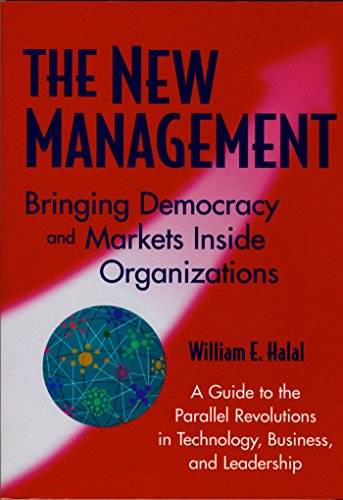
Note that these trends follow a rising exponential curve that is characteristic of all change today—the typical “J curve” depicted on the cover of this book. Whether it is the number of computers in use, strategic alliances, or new ventures, the trendline is curving sharply upward.
THE TECHNOLOGY REVOLUTION:
JUST THE BEGINNING OF UNSTOPPABLE CHANGE
Thus far we have seen only the first rumblings of the information technology (IT) explosion that is yet to come. The simple changes are over and the most innovative, wrenching innovations lie ahead. I conduct a forecast of technological advances every two years, and the latest study detailed the arrival of eighty-five revolutionary breakthroughs.4 This wave of technological change is poised to crash over society during the next few decades as the rising power of IT feeds back to improve itself. Technology is basically knowledge, and the widespread use of IT...
„Über diesen Titel“ kann sich auf eine andere Ausgabe dieses Titels beziehen.
Suchergebnisse für The New Management: Bringing Democracy and Markets...

Beispielbild für diese ISBN
The New Management: Democracy and Enterprise Are Transforming Organizations
Verlag:
Berrett-Koehler Pub, San Francisco, California, U.S.A., 1998
ISBN 10: 1576750329
ISBN 13: 9781576750322
Gebraucht
Paperback
Anbieter: The Yard Sale Store, Narrowsburg, NY, USA
Verkäuferbewertung 5 von 5 Sternen

Paperback. Zustand: Good. A NICE edition, USEFUL! Light scuff to the paperback cover and the page edge, this book is in PRESENTABLE condition. Artikel-Nr. TPBk102VII12
Gebraucht kaufen
EUR 3,03
EUR 5,33 Versand
Versand innerhalb von USA
Versand innerhalb von USA
Anzahl: 1 verfügbar
Beispielbild für diese ISBN
The New Management: Bringing Democracy and Markets Inside Organizations
Verlag:
Berrett-Koehler Publishers, 1998
ISBN 10: 1576750329
ISBN 13: 9781576750322
Gebraucht
Paperback
Anbieter: Robinson Street Books, IOBA, Binghamton, NY, USA
Verkäuferbewertung 4 von 5 Sternen

Paperback. Zustand: Very Good. Prompt Shipment, shipped in Boxes, Tracking PROVIDEDVery good. Some creasing. *. Artikel-Nr. ware51kr1743
Gebraucht kaufen
EUR 12,42
EUR 8,48 Versand
Versand innerhalb von USA
Versand innerhalb von USA
Anzahl: 1 verfügbar
Beispielbild für diese ISBN
The New Management: Bringing Democracy and Markets Inside Organizations
Verlag:
Berrett-Koehler Publishers, 1998
ISBN 10: 1576750329
ISBN 13: 9781576750322
Gebraucht
Paperback
Anbieter: Robinson Street Books, IOBA, Binghamton, NY, USA
Verkäuferbewertung 4 von 5 Sternen
Paperback. Zustand: As New. Prompt Shipment, shipped in Boxes, Tracking PROVIDEDFine. First edition. Artikel-Nr. graytrpb1816044
Gebraucht kaufen
EUR 12,42
EUR 8,48 Versand
Versand innerhalb von USA
Versand innerhalb von USA
Anzahl: 2 verfügbar
Beispielbild für diese ISBN
The New Management: Bringing Democracy & Markets Inside Organizations (AGENCY/DISTRIBUTED)
Verlag:
Berrett-Koehler Publishers, Incorporated, 1998
ISBN 10: 1576750329
ISBN 13: 9781576750322
Gebraucht
Softcover
Anbieter: Majestic Books, Hounslow, Vereinigtes Königreich
Verkäuferbewertung 4 von 5 Sternen
Zustand: Used. pp. xxxii + 284 + [iv]. Artikel-Nr. 7433318
Gebraucht kaufen
EUR 23,73
EUR 7,76 Versand
Versand von Vereinigtes Königreich nach USA
Versand von Vereinigtes Königreich nach USA
Anzahl: 1 verfügbar
Beispielbild für diese ISBN
The New Management: Bringing Democracy & Markets Inside Organizations (AGENCY/DISTRIBUTED)
Verlag:
Berrett-Koehler Publishers, Incorporated, 1998
ISBN 10: 1576750329
ISBN 13: 9781576750322
Gebraucht
Softcover
Anbieter: Biblios, Frankfurt am main, HESSE, Deutschland
Verkäuferbewertung 4 von 5 Sternen
Zustand: Used. pp. xxxii + 284 + [iv] Acknowledgements. Artikel-Nr. 18447411
Gebraucht kaufen
EUR 23,96
EUR 9,95 Versand
Versand von Deutschland nach USA
Versand von Deutschland nach USA
Anzahl: 1 verfügbar
Beispielbild für diese ISBN
The New Management: Bringing Democracy & Markets Inside Organizations
Anbieter: Romtrade Corp., STERLING HEIGHTS, MI, USA
Verkäuferbewertung 5 von 5 Sternen
Zustand: New. This is a Brand-new US Edition. This Item may be shipped from US or any other country as we have multiple locations worldwide. Artikel-Nr. ABBB-257615
Beispielbild für diese ISBN
The New Management: Bringing Democracy and Markets Inside Organizations
Anbieter: Kennys Bookstore, Olney, MD, USA
Verkäuferbewertung 5 von 5 Sternen
Zustand: New. Artikel-Nr. V9781576750322
Neu kaufen
EUR 28,08
EUR 9,37 Versand
Versand innerhalb von USA
Versand innerhalb von USA
Anzahl: 15 verfügbar
Beispielbild für diese ISBN
The New Management: Bringing Democracy and Markets Inside Organizations
Verlag:
Berrett-Koehler Publishers, 1998
ISBN 10: 1576750329
ISBN 13: 9781576750322
Gebraucht
Softcover
Anbieter: Phatpocket Limited, Waltham Abbey, HERTS, Vereinigtes Königreich
Verkäuferbewertung 5 von 5 Sternen
Zustand: Good. Your purchase helps support Sri Lankan Children's Charity 'The Rainbow Centre'. Ex-library, so some stamps and wear, but in good overall condition. Our donations to The Rainbow Centre have helped provide an education and a safe haven to hundreds of children who live in appalling conditions. Artikel-Nr. Z1-I-013-02222
Gebraucht kaufen
EUR 28,20
EUR 12,70 Versand
Versand von Vereinigtes Königreich nach USA
Versand von Vereinigtes Königreich nach USA
Anzahl: 2 verfügbar