
Verwandte Artikel zu A-Z Guide to Food Additives: Never Eat What You Can't...
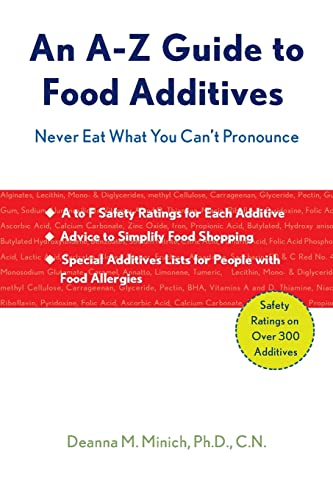
A-Z Guide to Food Additives: Never Eat What You Can't Pronounce (Meal Planner, Food Counter, Grocery List, Shopping for Healthy Food) - Softcover
Inhaltsangabe
Transform Your Diet from Heart-Pounding to Heart-Healthy
#1 Bestseller in Diet Therapy, Diet & Nutrition
A personal nutritionist right in the palm of your hand, this guide will transform your grocery list and encourage healthy eating habits that will have you selecting the best foods for your body.
Here’s a tongue twister. Say cochineal extract, diacetyl, teriary butylhydroquinone, BHA, HFCS, and MSG. It's not just knowing how to pronounce what's in your food, it's knowing what it does and how it can affect you. The average American consumes about 150 pounds of food additives per year. With so many processed foods on the supermarket shelves, it can be hard to navigate the waters to an additive free diet.
Change the way you eat and shop. A-Z Guide to Food Additives provides heart healthy tips while helping you avoid undesirable food additives. Also, get the rundown on which additives do no harm and may even be nutritious. Put this book in your purse or pocket and head down to your grocery store with a grocery list in one hand and your newfound knowledge in the other.
A-Z Guide to Food Additives delivers:
- Essential nutrition advice
- Hints on what to look for when reading those unreadable ingredient labels
- Tips on buying fresh produce in order to avoid pesticides
Designed with you in mind. This little book will serve as an "additive translator" when navigating through the minefield of additives that may cause allergic reactions. Certain ingredients can contribute to headaches, fatigue, breathing difficulties and bloating. Included are safety ratings for 300 ingredients and reference charts for additives that may cause cancer or allergic reactions or that should be limited for sodium sensitive individuals.
If you enjoyed heart healthy reads such as The Obesity Code, Lose Weight Like Crazy, or How Not to Die, then you’ll love A-Z Guide to Food Additives.
Die Inhaltsangabe kann sich auf eine andere Ausgabe dieses Titels beziehen.
Über die Autorin bzw. den Autor
Dr. Deanna Minich (www.drdeannaminich.com) is a wellness expert and author of five books. Having had health issues in her teens and twenties, she looked for solutions to feel better and understand her relationship with food. She embarked upon a scientific path to study nutritional biochemistry, while at the same time, explored other disciplines like psychology, spirituality, and philosophy. Her journey to find answers ultimately led her to combine her studies to develop an integrated, complete, lifestyle system called Food & Spirit™. Currently, she offers training to practitioners of all types to learn this color-coded method for full-spectrum health (www.foodandspirit.com).
She has applied this system to the practice of detox to create Whole Detox, a whole-life, whole-systems, whole-foods approach to feeling vital and renewed. In 2014, she led the Detox Summit, the world’s largest event on detox featuring 30 experts in the field. She offers online programs for those looking for guidance on healthy eating and living the Whole Detox way (www.whole-detox.com). Dr. Minich is a Fellow of the American College of Nutrition, a Certified Nutrition Specialist, a Certified Functional Medicine Practitioner, and faculty for the Institute for Functional Medicine and University of Western States. Her passion is teaching a whole-self approach to living and bringing together the gaps between science, spirit, and art in healing.
Von der hinteren Coverseite
An A-to-Z Guide to Food Additives will help consumers avoid undesirable food additives and show them which additives do no harm and may even be nutritious. Designed to fit in a purse or pocket, this little book will serve as an aadditive translatora when navigating through the landmine field of additives or ingredients that may cause allergic reactions like headaches, fatigue, and breathing difficulties or those that cause bloating or make one hyperactive. Included is a list of 300 ingredients to avoid.
Auszug. © Genehmigter Nachdruck. Alle Rechte vorbehalten.
An A-Z Guide to Food Additives
Never Eat What You Can't Pronounce
By Deanna M. MinichRed Wheel/Weiser, LLC
Copyright © 2009 Deanna M. Minich, Ph.D., C.N.
All rights reserved.
ISBN: 978-1-57324-403-9All rights reserved.
Contents
| Acknowledgments | |
| Introduction | |
| An A-Z List of Food Additives | |
| Allergies, Sensitivities, and Other Special Considerations | |
| Bibliography | |
| Consumer Resources |
CHAPTER 1
An A-Z List of Food Additives
Following is an alphabetical list of the most common food additives you willfind in products on your grocery shelves. I have rated them based on currentscience and regulations; they could change based on new findings. The followingscale rates their impact on your health:
A+ = Safe to eat; may be nutritious
A = Safe to eat
B = Most likely safe, but cut back
C = Reasonably safe, but limit quantities
D = Safety questionable, try to avoid
F = Do not eat foods with this additive
Acacia gum. See Gums
Ace K. See Acesulfame-potassium
Acesulfame K. See Acesulfame-potassium
Acesulfame-potassium (Acesulfame K, Ace K, Sunett®, Sweet One®, potassium 6methyl-2,2-dioxo-oxathiazin-4-olate). Artificial sweetener. White, crystallinesweetener discovered in 1967, used in foods in the United States since 1988.130–200 times sweeter than sugar; often blended with other artificial sweetenersto give a more true sugar taste. Heat stable and contributes no calories.According to FDA guidelines, it is a general purpose sweetener to be added to allfoods except meats. Found in thousands of foods, typically in soft drinks andother beverages, instant coffee and tea, gelatin and pudding desserts, syrups,baked goods, chewing gum. Acceptable daily intake set at 15 milligrams perkilogram body weight. Limited animal studies from more than two decades agoindicate it may cause cancer, although there is no definitive evidence tosuggest that it is a carcinogen in humans. The Center for Science in the PublicInterest (CSPI) has criticized the FDA for their lack of long-term animalstudies using higher levels of the sweetener. CPSI has a Web site dedicated toquotes from cancer experts on its testing:www.cspinet.org/reports/asekquot.html. Rating: F
Acetic acid. Acid, flavor enhancer, preservative. Found naturally in plant andanimal tissues as a product of carbohydrate fermentation. Added to a variety ofproducts including baked goods, cheese, condiments, dairy products, gravies,mayonnaise, meats, oils, salad dressings, and sauces. Can be used as a picklingagent. Safe to consume when diluted and in small amounts such as those found infoods. If ingested in its pure form can cause severe damage (bleeding, ulcers)in the intestines. Rating: A
Agar (agar-agar). Bulking agent, emulsifier, fiber, stabilizer, thickener.Mucilagenous substance from various seaweed sources used to thicken andstabilize desserts, soups, baked goods, frostings, and canned jellied meats.Used extensively in Asian foods and medicinally as a treatment for constipation.May have a laxative effect. Since it swells with water, may promote a feeling offullness when eaten. May cause allergic reactions in sensitive individuals.Avoid if allergic. Rating: A+
Algin. See Alginate
Alginate (alginic acid, algin, sodium alginate, pacific kelp). Bulking agent,emulsifier, fiber, stabilizer, thickener. Brown seaweed-derived ingredient thatcan stabilize foam and act as a thickener in products like jellies, saladdressings, beverages, custards, ice cream, soups, and cheese. Sodium alginate isthe sodium salt form. Theoretically, due to its ability to trap dietarycholesterol in its gel-like structure, it may have cholesterollowering effects.Limited studies suggest it may create fullness or satiety, although this conceptneeds further testing. May cause allergic reactions in sensitive individuals.Avoid if allergic. Rating: A+
Alginic acid. See Alginate
Alpha tocopherol. See Vitamin E
Aluminum ammonium sulfate. Buffer. Odorless crystals with astringent taste usedto purify drinking water and to manufacture baking powder. Two known cases ofhuman poisoning when high amounts (30 grams) were eaten. Excessive amounts maycause digestive upset and nausea. Contains small amount of aluminum—it isunknown whether there is a causal association between aluminum ingestion andAlzheimer's disease. Rating: B
Aluminum calcium silicate. Anti-caking agent. Used in table salt (at 2 percent)and in vanilla powder. Contains a small amount of aluminum—it is unknown whetherthere is a causal association between aluminum ingestion and Alzheimer'sdisease. Rating: B
Ammonium bicarbonate (bicarbonate of ammonia, ammonium hydrogen carbonate,hartshorn). Alkali, leavening agent. An alkali used in making baked goods,especially before baking soda was invented. Now sometimes used in conjunctionwith baking soda. Added to pesticides. Rating: A
Ammonium carrageenan. See Carrageenan
Ammonium chloride (Sal Ammoniac, salmiac). Dough conditioner, flavor enhancer,leavening agent. Clear, white salt made by reacting sodium chloride (salt) withan ammonium salt. Used in baked goods, condiments, dairy products, margarine,dried and processed vegetables. Found in European candies. Higher amounts thanthose typically used in foods (0.5 to 1 gram) can cause nausea and vomiting.Rating: B
Ammonium hydrogen carbonate. See Ammonium bicarbonate
Ammonium phosphate. See Phosphates
Annatto extract. Food coloring, flavoring agent. Red food coloring derived fromthe tropical achiote tree. Imparts sweet peppery flavor. Used in dairy products(butter, cheeses), rice, smoked fish, dessert powders. Has potential to causeallergic reactions in sensitive individuals. Avoid if allergic. Rating: A
Anthocyanins. See Grape color extract
Arabic gum. See Gums
Artificial colorings (FD&C Blue No. 1, FD&C Blue No. 2, FD&C Green No. 3, FD&CRed No. 3, FD&C Red No. 40, FD&C Yellow No. 5, FD&C Yellow No. 6, Orange B,Citrus Red No. 2). Food coloring. Added to food to change its color. Usuallyfound in low-nutrition foods; however, may also be added to "natural" foods likesalmon to provide a more consistent tone in case of natural color variability.Recent studies suggest that artificial colorings cause hyperactivity and/orattention deficit disorder (ADD) in children. Some of these chemicals have ledto formation of tumors in animals, but no proof exists that they do the same inhumans. Hives and asthma have been reported in a small number of individuals whoare particularly sensitive to FD&C Yellow No. 5. Allergic reactions are commonlyassociated with artificial colorings.
Researchers at the National College of Technology in Japan tested the toxicityof thirty-nine currently used food additives in eight mouse organs. Theyreported that dyes were most toxic, causing DNA damage in the stomach, colon,urinary bladder, and gut. Damage to the colon was with low doses of the dyes, inamounts comparable to the guidelines for acceptable intake. There are ninecertified colorings approved for used in the United States by the FDA. Seven arepermitted for use in foods: FD&C Blue No. 1 (Brilliant Blue FCF), FD&C Blue No.2 (Indigotine), FD&C Green No. 3...
„Über diesen Titel“ kann sich auf eine andere Ausgabe dieses Titels beziehen.
Suchergebnisse für A-Z Guide to Food Additives: Never Eat What You Can't...

Beispielbild für diese ISBN
A-Z Guide to Food Additives: Never Eat What You Can't Pronounce
Verlag:
Turner Publishing Company, 2009
ISBN 10: 1573244031
ISBN 13: 9781573244039
Gebraucht
Paperback
Anbieter: World of Books (was SecondSale), Montgomery, IL, USA
Verkäuferbewertung 5 von 5 Sternen

Paperback. Zustand: Good. An A-Z Guide to Food Additives will help consumers avoid undesirable food additives and show them which additives do no harm and may even be nutritious. Artikel-Nr. 00093569056
Gebraucht kaufen
EUR 3,97
Versand gratis
Versand innerhalb von USA
Versand innerhalb von USA
Anzahl: 7 verfügbar
Beispielbild für diese ISBN
A-Z Guide to Food Additives: Never Eat What You Can't Pronounce (Meal Planner, Food Counter, Grocery List, Shopping for Healthy Food)
Anbieter: ThriftBooks-Reno, Reno, NV, USA
Verkäuferbewertung 5 von 5 Sternen
Paperback. Zustand: Very Good. No Jacket. May have limited writing in cover pages. Pages are unmarked. ~ ThriftBooks: Read More, Spend Less. Artikel-Nr. G1573244031I4N00
Gebraucht kaufen
EUR 6,14
Versand gratis
Versand innerhalb von USA
Versand innerhalb von USA
Anzahl: 1 verfügbar
Beispielbild für diese ISBN
A-Z Guide to Food Additives: Never Eat What You Can't Pronounce (Meal Planner, Food Counter, Grocery List, Shopping for Healthy Food)
Anbieter: ThriftBooks-Dallas, Dallas, TX, USA
Verkäuferbewertung 5 von 5 Sternen
Paperback. Zustand: Good. No Jacket. Pages can have notes/highlighting. Spine may show signs of wear. ~ ThriftBooks: Read More, Spend Less. Artikel-Nr. G1573244031I3N00
Gebraucht kaufen
EUR 6,49
Versand gratis
Versand innerhalb von USA
Versand innerhalb von USA
Anzahl: 1 verfügbar
Beispielbild für diese ISBN
A-Z Guide to Food Additives: Never Eat What You Can't Pronounce (Meal Planner, Food Counter, Grocery List, Shopping for Healthy Food)
Anbieter: ThriftBooks-Dallas, Dallas, TX, USA
Verkäuferbewertung 5 von 5 Sternen
Paperback. Zustand: As New. No Jacket. Pages are clean and are not marred by notes or folds of any kind. ~ ThriftBooks: Read More, Spend Less. Artikel-Nr. G1573244031I2N00
Gebraucht kaufen
EUR 6,49
Versand gratis
Versand innerhalb von USA
Versand innerhalb von USA
Anzahl: 1 verfügbar
Beispielbild für diese ISBN
A-Z Guide to Food Additives: Never Eat What You Can't Pronounce (Meal Planner, Food Counter, Grocery List, Shopping for Healthy Food)
Anbieter: ThriftBooks-Atlanta, AUSTELL, GA, USA
Verkäuferbewertung 5 von 5 Sternen
Paperback. Zustand: Very Good. No Jacket. May have limited writing in cover pages. Pages are unmarked. ~ ThriftBooks: Read More, Spend Less. Artikel-Nr. G1573244031I4N00
Gebraucht kaufen
EUR 6,49
Versand gratis
Versand innerhalb von USA
Versand innerhalb von USA
Anzahl: 1 verfügbar
Beispielbild für diese ISBN
A-Z Guide to Food Additives: Never Eat What You Can't Pronounce (Meal Planner, Food Counter, Grocery List, Shopping for Healthy Food)
Anbieter: ThriftBooks-Atlanta, AUSTELL, GA, USA
Verkäuferbewertung 5 von 5 Sternen
Paperback. Zustand: Good. No Jacket. Pages can have notes/highlighting. Spine may show signs of wear. ~ ThriftBooks: Read More, Spend Less. Artikel-Nr. G1573244031I3N00
Gebraucht kaufen
EUR 6,49
Versand gratis
Versand innerhalb von USA
Versand innerhalb von USA
Anzahl: 1 verfügbar
Beispielbild für diese ISBN
A-Z Guide to Food Additives : Never Eat What You Can't Pronounce (Meal Planner, Food Counter, Grocery List, Shopping for Healthy Food)
Verlag:
Mango Media, 2009
ISBN 10: 1573244031
ISBN 13: 9781573244039
Gebraucht
Softcover
Erstausgabe
Anbieter: Better World Books, Mishawaka, IN, USA
Verkäuferbewertung 5 von 5 Sternen
Zustand: Good. 1st Edition. Pages intact with minimal writing/highlighting. The binding may be loose and creased. Dust jackets/supplements are not included. Stock photo provided. Product includes identifying sticker. Better World Books: Buy Books. Do Good. Artikel-Nr. 5206501-6
Gebraucht kaufen
EUR 6,57
Versand gratis
Versand innerhalb von USA
Versand innerhalb von USA
Anzahl: 1 verfügbar
Beispielbild für diese ISBN
A-Z Guide to Food Additives : Never Eat What You Can't Pronounce (Meal Planner, Food Counter, Grocery List, Shopping for Healthy Food)
Verlag:
Mango Media, 2009
ISBN 10: 1573244031
ISBN 13: 9781573244039
Gebraucht
Softcover
Erstausgabe
Anbieter: Better World Books, Mishawaka, IN, USA
Verkäuferbewertung 5 von 5 Sternen
Zustand: Good. 1st Edition. Former library copy. Pages intact with minimal writing/highlighting. The binding may be loose and creased. Dust jackets/supplements are not included. Includes library markings. Stock photo provided. Product includes identifying sticker. Better World Books: Buy Books. Do Good. Artikel-Nr. 4361948-6
Gebraucht kaufen
EUR 6,57
Versand gratis
Versand innerhalb von USA
Versand innerhalb von USA
Anzahl: 1 verfügbar
Beispielbild für diese ISBN
A-Z Guide To Food Additives: Never Eat What You Can't Pronounce: Never Eat What You Can't Pronounce (Meal Planner, Food Counter, Grocery List, Shopping for Healthy Food)
Anbieter: AwesomeBooks, Wallingford, Vereinigtes Königreich
Verkäuferbewertung 5 von 5 Sternen
Paperback. Zustand: Very Good. A-Z Guide To Food Additives: Never Eat What You Can't Pronounce: Never Eat What You Can't Pronounce (Meal Planner, Food Counter, Grocery List, Shopping for Healthy Food) This book is in very good condition and will be shipped within 24 hours of ordering. The cover may have some limited signs of wear but the pages are clean, intact and the spine remains undamaged. This book has clearly been well maintained and looked after thus far. Money back guarantee if you are not satisfied. See all our books here, order more than 1 book and get discounted shipping. Artikel-Nr. 7719-9781573244039
Gebraucht kaufen
EUR 11,49
EUR 4,92 Versand
Versand von Vereinigtes Königreich nach USA
Versand von Vereinigtes Königreich nach USA
Anzahl: 2 verfügbar
Beispielbild für diese ISBN
A-Z Guide to Food Additives: Never Eat What You Can't Pronounce (Meal Planner, Food Counter, Grocery List, Shopping for Healthy Food)
Anbieter: WorldofBooks, Goring-By-Sea, WS, Vereinigtes Königreich
Verkäuferbewertung 5 von 5 Sternen
Paperback. Zustand: Very Good. The book has been read, but is in excellent condition. Pages are intact and not marred by notes or highlighting. The spine remains undamaged. Artikel-Nr. GOR007505758
Gebraucht kaufen
EUR 11,34
EUR 6,69 Versand
Versand von Vereinigtes Königreich nach USA
Versand von Vereinigtes Königreich nach USA
Anzahl: 1 verfügbar