
Verwandte Artikel zu Islam for the Western Mind: Understanding Muhammad...
Inhaltsangabe
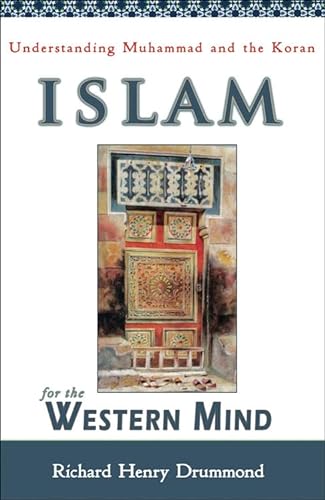
More than a billion people consider themselves Muslim. It is the world's second-largest religion. Yet Western portrayals of the Islamic mind are often flawed. Islam for the Western Mind is an intensive look--from a Christian perspective--at what inspires and motivates Muslims, namely Muhammad and the teaching of the Koran.
Dr. Drummond, an ordained Presbyterian minister and former professor, presents a balanced look at the life and teaching of Islam's founding Prophet, paying detailed attention to the religious and political community that existed during Muhammad's time as well as after his death.
Dr. Drummond also looks at the larger cultural impact of Islam, examining what he calls the lightning-like spread of the new religion across much of the Middle East, North Africa, and parts of Europe, and examines Muhammad's teaching about women, pagans, and Jesus, the Messiah, Son of Mary. He gives detailed attention to the ethical teaching of the Koran. All this is with primary emphasis upon God as Lord of the Worlds, yet merciful and compassionate, and upon prophecy as divine revelation.
Islam for the Western Mind is an essential text for anyone wanting an unbiased look at Muhammad, the Koran, and the religion they inspired.
Die Inhaltsangabe kann sich auf eine andere Ausgabe dieses Titels beziehen.
Auszug. © Genehmigter Nachdruck. Alle Rechte vorbehalten.
Islam for the Western Mind
Understanding Muhammad and the Koran
By Richard Henry DrummondHampton Roads Publishing Company, Inc.
Copyright © 2005 Richard Henry Drummond
All rights reserved.
ISBN: 978-1-57174-424-1All rights reserved.
Contents
Preface,
Acknowledgments,
I. An Overview of Issues,
II. The Life of Muhammad, A Sketch,
III. The Teaching of the Koran,
IV. Historical and Theological Evaluation,
Endnotes,
Bibliography,
Index,
About the Author,
CHAPTER 1
AN OVERVIEW OF ISSUES
I begin this treatment of the issues leading to proper understanding of Islamwith a quotation from the American heartland. Leighton Ford was a long-timeassociate of Billy Graham in various Christian evangelistic ministries. He mayproperly be called a conservative evangelical Protestant, of moderate and irenicstance (that is, concerned with securing Christian unity), and, with BillyGraham himself, may be classified as a person of the highest integrity withinthis tradition of Christian faith and practice.
In these days of very great concern for the events and persons of the MiddleEast, Leighton Ford was trying to build bridges of understanding, especiallyamong his own constituency of supporters. He writes, in the modest report-periodicalregularly sent out to these supporters, as follows:
In truth, we who follow Christ have more than we realize in common with Muslimsand Jews. Our faiths were born in the Middle East. We all believe in one God.And ... we all look to Abraham as one of our great spiritual ancestors. Not onlyis Abraham the father of believers, in the New Testament he is strikingly called"the friend of God" (James 2:23).
So far, so good. But then Leighton Ford goes on to do what many in Western landshave long been accustomed to do, move into a kind of "put-down" of Islam basedon incorrect information. Ford continues:
Few Muslims, however, would call themselves God's "friends." For the MuslimAllah is totally apart from sinful humans. In contrast, the God of the Bible isnot remote but one who has drawn near.
Are these latter statements correct? Not entirely, not even for the Bible. Wemust remind ourselves that the Bible itself is by no means a seamless robe ofmonochromatic sameness in moral and spiritual content or tone. Taken as a whole,the Bible shows us images of God our Creator, now near, now far. So does theKoran, the Holy Book of Islamic faith.
Now, the content of the Koran, its nuances of style, and its religious emphasesare both similar and dissimilar to those of the Bible. It is not easy to makecomparative statements about these two great collections of religious faith andaffirmation. But in the tenth chapter, or surah, of the Koran, significantlyentitled "Jonah," we find a striking affirmation that believers—not just Muslimsin the historical sense but apparently all authentic believers in one God—arefriends of God:
Surely God's friends—no fear shall be on them, neither shall they sorrow. Thosewho believe, and are god-fearing—for them is good tidings in the present lifeand in the world to come (K 10:64–65).
The Koran is an exceedingly practical book, vitally concerned from its earliestmaterials with the whole life of humans in this world. It puts that life,however, in a transcendent setting and makes its primary orientation the fact ofGod, the Creator, the Merciful, the Compassionate, and of the reality of theunseen world. We may even note at this point that, for all the Koranic emphasison the unity and uniqueness of God (called by the ancient Arabic word for "God,"Allah), it portrays an unseen world replete with angels and archangels, Withjinn, shaytan, and other spirits, not to mention the spirits of humans afterphysical death on earth. For Muhammad, the spiritual world was richly peopledand was, like the world on the plane of human history, under the lordly controland providential disposition of the Maker of all, the Lord of the Worlds.
The Koran, however, is also concerned with aspects of intimate personalreligion. We find many verses that express a vivid sense of the presence of God.These verses seem to have had central meaning for Muhammad himself in hispersonal life as a religious man and in his public role as God's Messenger andProphet. God is indeed cited as "the Protector of the believers" (K 2:258). Buta verse that is frequently recited by devout Muslims is the famouspronouncement: "We [Allah] indeed created man: and we know what his soulwhispers within him, and we are nearer to him than the jugular vein" (K 50:15).
We are reminded of Alfred Tennyson: "Closer is He than breathing, and nearerthan hands and feet." Another Koranic verse of similar import is "He [Allah] iswith you wherever you are" (K 57:4).
But the text that has appealed to devout Muslims in a special way, to those inparticular who may be classed as participating in that great stream of Muslimspirituality known as the Sufi movement, is the Koranic verse that reveals God'sgreat goal to bring forth "a people He loves and who love Him" (K 5:59).
Admittedly, the Koranic term (hubb, or the mahabbah of the Sufis) that iscommonly translated into English as the word "love" is not totally consonantwith the nuances of meaning of the New Testament terms for love (agape, philia).It often seems to emphasize approval from God's side and, from the human side,is more akin to "adoration" (ibadah). As Frithjof Schuon has put it, theessential virtues of the ideal Muslim life of faith are rooted in a blending offear, love, and knowledge of God. Indeed, Islam itself claims to be a"manifestation of truth, of beauty and of power." But Islam is more than thereligion of the Absolute, and the Koran teaches more than obedience to the willof God. It teaches not only submission to what may at first appear as aninfinitely distant God, or sheerly overwhelming Power, but also commitment tothe goodness of God and a return for refuge to "God within us, at the deepestlevel of our heart," one who is "infinitely near."
It is important to realize that the previous is not representative merely of asmall elite in the course of the history of Islam. As Bishop Kenneth Cragg, thenoted British specialist in Islamic studies, reminds us, "Sufism ... has oftenbeen the major element in the religious history and the popular experience ofIslam. It served over long centuries to interiorize the terms of Islamicdogma." And Louis Massignon, the distinguished Roman Catholic scholar whodevoted 55 years to the study of Muslim spirituality, said that "Muslim theologywas essentially a mystical structure deriving from the Koran itself as theprimary source of its development." Influences from pre-Islamic PersianZoroastrianism and Eastern Christian monasticism probably played significantroles in the development of historic Sufism, but powerful elements of religiousinteriority lie within the Koran itself—and in the life of Muhammad.
This also means that the more obvious aspects of the Koran and of the Prophet'spublic ministry, especially in his last ten years in Medina—aspects that KennethCragg denotes as "dogmatism, autocracy, power"—are by no means the whole storyof either the Book or the career. It is indeed remarkable and historically verysignificant that what Cragg calls "a system so instinctively authoritarian andabsolutist as Islam, and so essentially confident about political sanctions inreligion," should bear within it this stream of religious interiority andvitality that seems to give...
„Über diesen Titel“ kann sich auf eine andere Ausgabe dieses Titels beziehen.
Suchergebnisse für Islam for the Western Mind: Understanding Muhammad...

Beispielbild für diese ISBN
Islam for the Western Mind: Understanding Muhammad and the Koran
Verlag:
Hampton Roads Publishing (edition ), 2005
ISBN 10: 157174424X
ISBN 13: 9781571744241
Gebraucht
Paperback
Anbieter: BooksRun, Philadelphia, PA, USA
Verkäuferbewertung 5 von 5 Sternen

Paperback. Zustand: Fair. The item might be beaten up but readable. May contain markings or highlighting, as well as stains, bent corners, or any other major defect, but the text is not obscured in any way. Artikel-Nr. 157174424X-7-1
Gebraucht kaufen
EUR 7,08
Versand gratis
Versand innerhalb von USA
Versand innerhalb von USA
Anzahl: 1 verfügbar
Beispielbild für diese ISBN
Islam for the Western Mind : Understanding Muhammad and the Koran
Verlag:
Hampton Roads Publishing Company, Incorporated, 2005
ISBN 10: 157174424X
ISBN 13: 9781571744241
Gebraucht
Softcover
Anbieter: Better World Books, Mishawaka, IN, USA
Verkäuferbewertung 5 von 5 Sternen
Zustand: Good. Former library copy. Pages intact with minimal writing/highlighting. The binding may be loose and creased. Dust jackets/supplements are not included. Includes library markings. Stock photo provided. Product includes identifying sticker. Better World Books: Buy Books. Do Good. Artikel-Nr. 6409511-75
Gebraucht kaufen
EUR 7,08
Versand gratis
Versand innerhalb von USA
Versand innerhalb von USA
Anzahl: 1 verfügbar
Beispielbild für diese ISBN
Islam for the Western Mind : Understanding Muhammad and the Koran
Verlag:
Hampton Roads Publishing Company, Incorporated, 2005
ISBN 10: 157174424X
ISBN 13: 9781571744241
Gebraucht
Softcover
Anbieter: Better World Books, Mishawaka, IN, USA
Verkäuferbewertung 5 von 5 Sternen
Zustand: Good. Pages intact with minimal writing/highlighting. The binding may be loose and creased. Dust jackets/supplements are not included. Stock photo provided. Product includes identifying sticker. Better World Books: Buy Books. Do Good. Artikel-Nr. 4376266-6
Gebraucht kaufen
EUR 7,08
Versand gratis
Versand innerhalb von USA
Versand innerhalb von USA
Anzahl: 1 verfügbar
Beispielbild für diese ISBN
Islam for the Western Mind: Understanding Muhammad and the Koran
Verlag:
Hampton Roads Publishing Company, 2005
ISBN 10: 157174424X
ISBN 13: 9781571744241
Gebraucht
Paperback
Anbieter: ThriftBooks-Atlanta, AUSTELL, GA, USA
Verkäuferbewertung 5 von 5 Sternen
Paperback. Zustand: Good. No Jacket. Former library book; Pages can have notes/highlighting. Spine may show signs of wear. ~ ThriftBooks: Read More, Spend Less. Artikel-Nr. G157174424XI3N10
Gebraucht kaufen
EUR 9,08
Versand gratis
Versand innerhalb von USA
Versand innerhalb von USA
Anzahl: 1 verfügbar
Beispielbild für diese ISBN
Islam for the Western Mind: Understanding Muhammad and the Koran
Verlag:
Hampton Roads Publishing Company, 2005
ISBN 10: 157174424X
ISBN 13: 9781571744241
Gebraucht
Paperback
Anbieter: ThriftBooks-Dallas, Dallas, TX, USA
Verkäuferbewertung 5 von 5 Sternen
Paperback. Zustand: Very Good. No Jacket. Former library book; May have limited writing in cover pages. Pages are unmarked. ~ ThriftBooks: Read More, Spend Less. Artikel-Nr. G157174424XI4N10
Gebraucht kaufen
EUR 9,08
Versand gratis
Versand innerhalb von USA
Versand innerhalb von USA
Anzahl: 1 verfügbar
Beispielbild für diese ISBN
Islam for the Western Mind: Understanding Muhammad and the Koran
Verlag:
Hampton Roads Publishing Company, 2005
ISBN 10: 157174424X
ISBN 13: 9781571744241
Gebraucht
Paperback
Anbieter: ThriftBooks-Atlanta, AUSTELL, GA, USA
Verkäuferbewertung 5 von 5 Sternen
Paperback. Zustand: Very Good. No Jacket. Missing dust jacket; May have limited writing in cover pages. Pages are unmarked. ~ ThriftBooks: Read More, Spend Less. Artikel-Nr. G157174424XI4N01
Gebraucht kaufen
EUR 9,08
Versand gratis
Versand innerhalb von USA
Versand innerhalb von USA
Anzahl: 1 verfügbar
Beispielbild für diese ISBN
Islam for the Western Mind: Understanding Muhammad and the Koran
Verlag:
Hampton Roads Publishing, 2005
ISBN 10: 157174424X
ISBN 13: 9781571744241
Gebraucht
paperback
Anbieter: Books From California, Simi Valley, CA, USA
Verkäuferbewertung 4 von 5 Sternen

paperback. Zustand: Fine. Artikel-Nr. mon0004117765
Gebraucht kaufen
EUR 13,01
EUR 4,38 Versand
Versand innerhalb von USA
Versand innerhalb von USA
Anzahl: 1 verfügbar
Beispielbild für diese ISBN
Islam for the Western Mind: Understanding Muhammad and the Koran
Anbieter: Revaluation Books, Exeter, Vereinigtes Königreich
Verkäuferbewertung 5 von 5 Sternen
Paperback. Zustand: Brand New. new title edition. 253 pages. 8.25x5.50x0.75 inches. In Stock. Artikel-Nr. __157174424X
Neu kaufen
EUR 16,42
EUR 11,63 Versand
Versand von Vereinigtes Königreich nach USA
Versand von Vereinigtes Königreich nach USA
Anzahl: 2 verfügbar
Beispielbild für diese ISBN
Islam for the Western Mind: Understanding Muhammad and the Koran
Verlag:
Hampton Roads Publishing Co, 2005
ISBN 10: 157174424X
ISBN 13: 9781571744241
Neu
Softcover
Erstausgabe
Anbieter: Zardoz Books, Westbury, WILTS, Vereinigtes Königreich
Verkäuferbewertung 4 von 5 Sternen
Zustand: new. 1st edition Hampton Roads Publishing Co 2005 trade paperback new condition book In stock shipped from our UK warehouse. Artikel-Nr. 89406
Neu kaufen
EUR 5,93
EUR 23,20 Versand
Versand von Vereinigtes Königreich nach USA
Versand von Vereinigtes Königreich nach USA
Anzahl: 1 verfügbar
Beispielbild für diese ISBN
Islam for the Western Mind: Understanding Muhammad and the Koran
Verlag:
Hampton Roads Publishing Co, 2005
ISBN 10: 157174424X
ISBN 13: 9781571744241
Gebraucht
paperback
Anbieter: Pearlydewdrops, Streat, Vereinigtes Königreich
Verkäuferbewertung 5 von 5 Sternen
paperback. Zustand: Fine. New & unread, however may have light shelf wear to cover face, edges or corners. Shipped from the UK within 2 business days of order being placed. Artikel-Nr. mon0000322051
Gebraucht kaufen
EUR 8,07
EUR 25,58 Versand
Versand von Vereinigtes Königreich nach USA
Versand von Vereinigtes Königreich nach USA
Anzahl: 1 verfügbar