
Verwandte Artikel zu Death in Springtime (A Florentine Mystery, Band 3)
Inhaltsangabe
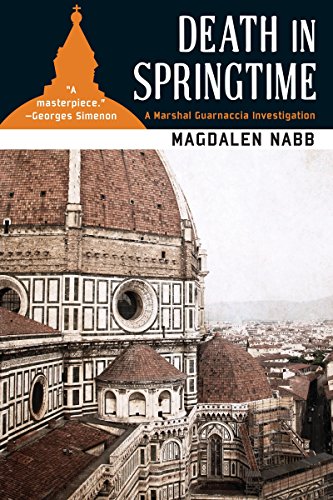
Italian law forbids paying ransom to criminals, and Marshal Guarnaccia must find the missing girl before her kidnappers decide to end her life.
Two foreign girls are abducted from a Florence piazza in broad daylight. The unusual March snowfall has distracted everyone, even the marshal, who is unsure of what he has actually witnessed. One of the girls turns up in a village in the Chianti, claiming the kidnappers have released her to propose a ransom for the other victim. But the marshal thinks she’s lying.
Die Inhaltsangabe kann sich auf eine andere Ausgabe dieses Titels beziehen.
Über die Autorin bzw. den Autor
Magdalen Nabb was born in Lancashire and trained as a potter. In 1975, she left her old life behind and moved with her son to Florence, where she knew no one and even though she didn't speak any Italian, but where she fell in love with the local setting. Her Marshal Guarnaccia series, which has been translated into ten languages, was inspired by a real local marshal she befriended in the tiny pottery town of Montelupo Fiorentino. Nabb wrote children's fiction and crime novels until her death in 2007.
Auszug. © Genehmigter Nachdruck. Alle Rechte vorbehalten.
“It can’t be. Today’s the first of March . . .”
“But it is, look!”
“Must be some sort of seed blowing on the wind.”
“What wind? I tell you it’s snow!”
The entire population of Florence had woken up blinking in amazement and consternation. Shutters had banged open and people had exclaimed to one another across courtyards and narrow streets.
“It’s snowing!”
Only once in the last fifteen years or so had it snowed in the city, and that had been in the middle of winter when an icy blast from the Russian Steppes had swept across the whole Italian peninsula, covering even the motorways with a paralysing blanket of white. But today was the first of March. And to make it even more incredible the weather during the past two weeks had been exceptionally warm, and the first tourists, always the ones from Germany, had been going about in light-coloured clothing, the women baring plump white arms to the feverish February sun. The Florentines themselves never shed their green loden overcoats until the end of April, but even so, a few people had been sufficiently deceived to put the first potted geraniums out on their windowsills, and in the mild evenings brown slatted shutters had been left half-open to reveal bands of yellow light and silhouetted figures looking out to watch the goings on in the piazza, giving the impression of a summer night.
Then it had only been the vine and wheat growers in the surrounding hills who had complained about the weather. After all, at that time of year it ought to have been raining. Now, to cap everything, it was snowing, and people couldn’t have been more surprised if carnival confetti had been falling out of the sky.
The eight o’clock rush hour had started under the stare of a pale cold light. Toddlers pressed their noses against windows high up in lighted apartments making patches of steam which they rubbed away or drew in with one finger.
The sky was so blank that the snow seemed to be falling down from nowhere, appearing between the great stone buildings, big wet flakes that floated into the road and vanished, leaving only a mottled damp strip between the dry pavements and gutters which were sheltered by the overhanging eaves.
People queuing for the bus in the tiny Piazza San Felice turned up their collars and looked anxiously at the sky, wondering if perhaps they should have worn a scarf or gloves. But it wasn’t even cold! There was no explanation for it at all. Opposite them, Marshal Guarnaccia of the Carabinieri was standing on the corner as he often did after having a coffee at the bar. He stood on the edge of a group of gossiping mothers who had just given their children over to the care of a nun who ushered them into the infant school next to the church, and he alone, although he turned up the collar of his black greatcoat with an automatic gesture, was not staring at the snow but at the trattoria across the street. Over there the lights were on in clusters of hanging globes, and the owner’s son, wrapped in a dirty white apron, was sweeping up in a desultory fashion, scattering sawdust just behind the glass door, staring out vacantly at the weather all the while. The boy, thin and pimply with a shock of black hair, was only sixteen, but already Marshal Guarnaccia had caught sight of him injecting himself on the steps of Santo Spirito church, sitting on the edge of the usual huddled group and glancing furtively about him in a way that only very new users do.
The number 15 bus came along and stopped, blocking the Marshal’s view. The bus, too, was lit up, and every face along its length was gazing out as if hypnotized by the big flakes floating slowly down past the windows. The Marshal, preoccupied with the problem of what, if anything, to say to the boy’s father, and with a case that was coming up in Appeal Court in a few days, continued to ignore the snow, even though, as a Sicilian, he might well have been more amazed by it than the Florentines. Nevertheless, he was destined to remember it only too well and to be driven to exasperation by witness after witness repeating the same infuriating phrase with the same apologetic smile:
“I didn’t notice anything, to be honest. I don’t know if you remember but it was snowing that morning . . . Just fancy, snowing in the centre of Florence, and in March, too . . .”
The bus signalled and moved off. The boy had parked his broom and disappeared into the back of the trattoria. The first big logs had been put on to the fire where they roasted the meat and long flames were beginning to lick at them. Above the high building, blue woodsmoke drifted about uncertainly among the loose snowflakes, adding its sweet smell to the prevailing morning odours of coffee and exhaust fumes.
The Marshal looked at his watch. There was no time to do anything about the boy now if he was going to visit the prison as he wanted to. In any case it might be better to try talking to the lad himself first and leave the father out of it. And then it was more than likely that either or both of them would tell him to mind his own business. He sighed and made to cross the road. A car was coming along from his left and signalling intermittently in the face of the one-way traffic coming relentlessly towards it up Via Romana. Two girls were in the front and someone in the back was leaning forward between them, evidently trying to give directions from behind an enormous map.
More tourists. The invasion got earlier and earlier every year, making it impossible to go about normal business in the overcrowded narrow streets. Only the day before somebody had written to the editor of the Nazione suggesting ruefully that the mayor should provide a campsite somewhere out in the hills for the Florentines since there was no longer any room for them in their own city. However profitable tourism was supposed to be, they resented the annual invasion.
It was early, too, for the Sardinian bagpipers who didn’t often appear between Christmas and Easter. But as the Marshal walked over towards Piazza Pitti and his Station he saw one coming towards him, enveloped in a long black shepherd’s cloak, the white sheepskin airbag tucked under his arm. He was playing disjointedly and rather discordantly and no one took any notice of him or gave him any money. The Marshal automatically glanced across at the other side of the street expecting to see the second piper who played the melody on a small, oboe-like pipe, but he was nowhere in sight. Probably gone into one of the shops to beg. There was no time to linger and the Marshal went up the sloping forecourt of the Pitti Palace, squeezing his decidedly overweight bulk between the closely parked cars, and disappearing under the stone archway on the left.
When he poked his head into the office to say that he was taking the van he added, as an afterthought: “It’s snowing . . .”
Just outside Florence in the Chianti hills it snowed harder and the sky remained low and white all day. The loose flakes melted quickly on the stony, ochre-coloured roads but managed to cling to the newly sprouting wheat. The stiff little leaves on the olive trees each held a wafer of snow. There was no frost and evidently no danger of it, and the country people looking out of the barred windows of castles, villas and farmhouses regarded this unexpected but harmless weather with scant interest, only remarking with a doubtful look at the pale sky:
“It’s rain we need . . .”
But the snow went on falling throughout the day. In the early evening it turned to sleet and by midnight it was raining hard, filling dark ditches, furrows and potholes and rinsing the small trees free of their burden. At four in the morning the lights of a van shone through the heavy rain,...
„Über diesen Titel“ kann sich auf eine andere Ausgabe dieses Titels beziehen.
Suchergebnisse für Death in Springtime (A Florentine Mystery, Band 3)

Beispielbild für diese ISBN
Death in Springtime (A Florentine Mystery)
Anbieter: World of Books (was SecondSale), Montgomery, IL, USA
Verkäuferbewertung 5 von 5 Sternen

Zustand: Good. Item in good condition. Textbooks may not include supplemental items i.e. CDs, access codes etc. Artikel-Nr. 00096799597
Gebraucht kaufen
EUR 4,35
Versand gratis
Versand innerhalb von USA
Versand innerhalb von USA
Anzahl: 1 verfügbar
Beispielbild für diese ISBN
Death in Springtime (A Florentine Mystery)
Anbieter: World of Books (was SecondSale), Montgomery, IL, USA
Verkäuferbewertung 5 von 5 Sternen
Zustand: Acceptable. Item in acceptable condition! Textbooks may not include supplemental items i.e. CDs, access codes etc. Artikel-Nr. 00110531267
Gebraucht kaufen
EUR 4,35
Versand gratis
Versand innerhalb von USA
Versand innerhalb von USA
Anzahl: 1 verfügbar
Beispielbild für diese ISBN
Death in Springtime (A Florentine Mystery)
Verlag:
Soho Crime (edition (3rd)), 2005
ISBN 10: 156947415X
ISBN 13: 9781569474150
Gebraucht
Paperback
Anbieter: BooksRun, Philadelphia, PA, USA
Verkäuferbewertung 5 von 5 Sternen
Paperback. Zustand: Very Good. (3rd). It's a well-cared-for item that has seen limited use. The item may show minor signs of wear. All the text is legible, with all pages included. It may have slight markings and/or highlighting. Artikel-Nr. 156947415X-11-1
Gebraucht kaufen
EUR 4,36
Versand gratis
Versand innerhalb von USA
Versand innerhalb von USA
Anzahl: 1 verfügbar
Beispielbild für diese ISBN
Death in Springtime
Verlag:
Soho Press, Incorporated, 2005
ISBN 10: 156947415X
ISBN 13: 9781569474150
Gebraucht
Softcover
Anbieter: Better World Books, Mishawaka, IN, USA
Verkäuferbewertung 5 von 5 Sternen
Zustand: Good. (3rd). Pages intact with minimal writing/highlighting. The binding may be loose and creased. Dust jackets/supplements are not included. Stock photo provided. Product includes identifying sticker. Better World Books: Buy Books. Do Good. Artikel-Nr. 6197950-6
Gebraucht kaufen
EUR 6,04
Versand gratis
Versand innerhalb von USA
Versand innerhalb von USA
Anzahl: 1 verfügbar
Beispielbild für diese ISBN
Death in Springtime
Verlag:
Soho Press, Incorporated, 2005
ISBN 10: 156947415X
ISBN 13: 9781569474150
Gebraucht
Softcover
Anbieter: Better World Books: West, Reno, NV, USA
Verkäuferbewertung 5 von 5 Sternen
Zustand: Good. (3rd). Former library copy. Pages intact with minimal writing/highlighting. The binding may be loose and creased. Dust jackets/supplements are not included. Includes library markings. Stock photo provided. Product includes identifying sticker. Better World Books: Buy Books. Do Good. Artikel-Nr. GRP75812193
Gebraucht kaufen
EUR 6,04
Versand gratis
Versand innerhalb von USA
Versand innerhalb von USA
Anzahl: 2 verfügbar
Beispielbild für diese ISBN
Death in Springtime (A Florentine Mystery)
Anbieter: Wonder Book, Frederick, MD, USA
Verkäuferbewertung 5 von 5 Sternen
Zustand: Good. Good condition. A copy that has been read but remains intact. May contain markings such as bookplates, stamps, limited notes and highlighting, or a few light stains. Artikel-Nr. R02B-03473
Gebraucht kaufen
EUR 6,27
Versand gratis
Versand innerhalb von USA
Versand innerhalb von USA
Anzahl: 2 verfügbar
Beispielbild für diese ISBN
Death in Springtime (A Florentine Mystery)
Anbieter: ThriftBooks-Reno, Reno, NV, USA
Verkäuferbewertung 5 von 5 Sternen
Paperback. Zustand: Good. No Jacket. Pages can have notes/highlighting. Spine may show signs of wear. ~ ThriftBooks: Read More, Spend Less. Artikel-Nr. G156947415XI3N00
Gebraucht kaufen
EUR 6,29
Versand gratis
Versand innerhalb von USA
Versand innerhalb von USA
Anzahl: 1 verfügbar
Beispielbild für diese ISBN
Death in Springtime (A Florentine Mystery)
Anbieter: ThriftBooks-Phoenix, Phoenix, AZ, USA
Verkäuferbewertung 5 von 5 Sternen
Paperback. Zustand: Good. No Jacket. Pages can have notes/highlighting. Spine may show signs of wear. ~ ThriftBooks: Read More, Spend Less. Artikel-Nr. G156947415XI3N00
Gebraucht kaufen
EUR 6,29
Versand gratis
Versand innerhalb von USA
Versand innerhalb von USA
Anzahl: 1 verfügbar
Beispielbild für diese ISBN
Death in Springtime (A Florentine Mystery)
Anbieter: ThriftBooks-Atlanta, AUSTELL, GA, USA
Verkäuferbewertung 5 von 5 Sternen
Paperback. Zustand: Good. No Jacket. Pages can have notes/highlighting. Spine may show signs of wear. ~ ThriftBooks: Read More, Spend Less. Artikel-Nr. G156947415XI3N00
Gebraucht kaufen
EUR 6,29
Versand gratis
Versand innerhalb von USA
Versand innerhalb von USA
Anzahl: 1 verfügbar
Beispielbild für diese ISBN
Death in Springtime (A Florentine Mystery)
Anbieter: ThriftBooks-Atlanta, AUSTELL, GA, USA
Verkäuferbewertung 5 von 5 Sternen
Paperback. Zustand: Very Good. No Jacket. Former library book; May have limited writing in cover pages. Pages are unmarked. ~ ThriftBooks: Read More, Spend Less. Artikel-Nr. G156947415XI4N10
Gebraucht kaufen
EUR 6,29
Versand gratis
Versand innerhalb von USA
Versand innerhalb von USA
Anzahl: 1 verfügbar