
Verwandte Artikel zu The Darkest Child
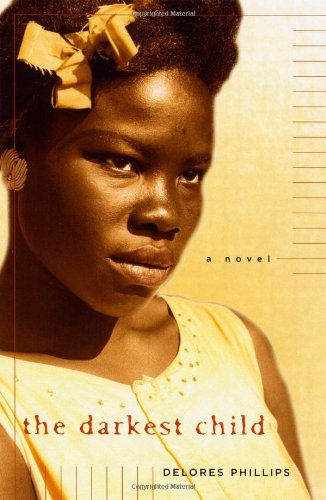
Inhaltsangabe
Fourteen-year-old Tangy Mae tells of the brutal physical and mental abuse that her mother inflicts on her and her ten siblings.
Die Inhaltsangabe kann sich auf eine andere Ausgabe dieses Titels beziehen.
Über die Autorin bzw. den Autor
Delores Phillips was born in Bartow County, Georgia in 1950, the second of four children. She graduated from Cleveland State University with a bachelor of arts in English and worked as a nurse at a state psychiatric hospital in Cleveland. Her work has appeared in Jean’s Journal, Black Times, and The Crisis. She passed away in 2014; The Darkest Child was her only novel.
Auszug. © Genehmigter Nachdruck. Alle Rechte vorbehalten.
Chapter one
Pakersfield, Georgia 1958
Mama washed the last dish she ever intended to wash. I alone witnessed the event, in silence. It was on a Friday—a school day—but instead of sitting in a classroom, I was standing in unfamiliar surroundings, the home of my mother’s employers, stunned by the wealth around me. As I regarded my mother through unwavering peripheral vision, something in her glances at me seemed to say, “Tangy Mae, this will be your life. Grab an apron and enjoy it.”
Domestic servitude was not what I desired for myself, but she had only to speak and I would do anything she asked. It was my obligation to obey her though I did not want to be like my older brothers, Harvey and Sam, who seemed to breathe at our mother’s command. They were men, and their lack of initiative disturbed me, although I knew they could not just leave our mother’s house. Departure required consideration of consequences and a carefully planned escape.
At the age of thirty-five, our mother was tall and slender with a head of thick reddish-brown hair. Her face, with its cream-colored skin and high cheekbones beneath dark gray eyes, was set off by a gleaming white smile accented by dimples. I thought she was beautiful, despite my acquaintance with the demon that hibernated beneath her elegant surface.
She had worked seven years cleaning house for the Munford family. Now she stood at their kitchen sink holding a dish under running water longer than necessary before handing it to me to wipe. She finally dried her hands on her apron, took a seat at the table, and waited for her pain to subside. She had spent most of the day complaining of her misery while instructing me on the proper way to make a bed, scrub a floor, polish silverware, use a washing machine, and on and on.
According to Mama, her pain—something like gas—had begun during the wee hours of the morning. It balled up in her chest, rolled through her stomach, between her thighs, and into her knees. It did a slow dribble in her swollen ankles, then just like that—her finger snapped—it bounced back to her chest and started all over again, taking her breath away.
On the table, beneath a crystal saltshaker, was an envelope. She picked it up and fanned it before her face. “Fifteen dollars,” she said indignantly. “I don’t care what I do ’round here, it’s always the same fifteen dollars. Never mind that I stayed late on Tuesday evening when Mister Frederick’s mother came for dinner. Never mind that I walked to the Colonial for flour that Miss Arlisa forgot to pick up. Week in, week out, always the same fifteen dollars.”
She removed the bills and tucked them inside the pocket of her dress, then slid the envelope and a pencil across the table. “Sit down,” she said, “I want you to write me a note to Miss Arlisa.”
My obedience, as always, was swift.
“Dear Miss Arlisa,” Mama started as soon as I was seated across from her. “Tangy Mae can do just as good a job as I can. She is my child and I learned her good. She can start work for you on Monday. I will be dead.”
My hand trembled slightly, but I wrote the note exactly as she dictated. She snatched the envelope from the table, scanned the words, then passed it back to me. “Sign it, Rozelle Quinn,” she said.
“Miss Arlisa probably won’t even know who that is. All they know
’round here is Rosie. Rosie do this and Rosie do that.”
I sat there dumbfounded. Loss traveled through my body, pulsed at my temples, and numbed my fingertips. I wanted to wail, to one-up her moans, believing my pain to be more severe than anything she could be feeling.
“You got something you wanna say?” she asked.
“No, ma’am,” I answered, forcing myself to look at her. There was plenty I wanted to say. Words were choking me. I covered my mouth with my hand so that Mama could not hear the words that might seep out. Mama, you promised Mr. Pace that you would let me go to school one more year. You promised me the ninth grade. You promised! Mr. Pace thinks I’m smart. Please, Mama, let me go to school!
But I had nothing with which to bargain and I knew it. Already I had attended school longer than any of my siblings. I was in ninth grade, which in itself was miraculous, considering I had never set foot in an eighth-grade classroom. Academically, I surpassed my peers, but at home I was a complete failure. At the age of twelve, my mother’s children were expected to drop out of school, get a job, and help support the family. I fell short of expectations.
“We gotta get on home,” Mama said. “Put me a bit of coffee and sugar in some wax paper. And, Tangy Mae, don’t make it noticeable.”
“Yes, ma’am,” I said, and thought how calm my mother appeared for a woman who planned to be dead come Monday morning.
Holding onto the table with one hand and supporting her back with the other, she heaved herself to her feet, then removed her apron and hung it in the broom closet. She checked the house one last time to make sure everything was in order, retrieved yesterday’s newspaper from a basket beside the trash bin, then ushered me out by way of the back door.
The bitter cold January afternoon seemed to freeze my mother’s face into a mask of disdain. “They done seen the last of me,” she grumbled. “They don’t give a damn if I freeze to death. They don’t care nothing ’bout me, and I don’t care nothing ’bout them.”
I knew she was talking to herself, so I walked along beside her, keeping my mouth and my coat tightly closed. Sometimes Mama would come home from work and talk about the Munfords for hours. Miss Arlisa, she opined, was a fat, lazy white woman who had no idea how to keep house or satisfy a man. Mr. Frederick was a show-off, who drove his automobile around town, honking the horn, and bragging about everything he possessed, including his ugly wife.
I had seen them only once, the time they brought Mama home with a load of old clothes they had given her. The only things I knew about the Munfords were that they owned the hardware store in town and that Mrs. Munford was not nearly as ugly as Mama had described her. She was not nearly as pretty as Mama, either.
“I been watching you,” Mama said, as we walked along the paved street that led out of East Grove and toward the Cherokee Creek Bridge that would take us into Stump Town. “You think them Munfords is rich white folk, don’t you? Well, they ain’t rich. If you wanna see rich, you gotta go up there on Meadow Hill. That’s where the really classy white folks live. They got mansions up there that take from morning to night to clean, and that’s wit’ five and six people working. These East Grove whites bow down to them on Meadow Hill, and you better believe it.”
I had long been familiar with the Pakersfield hierarchy which ranked Meadow Hill supreme. Everybody bowed to somebody, but, all in all, Pakersfield was a decent place to live. The Negroes had Stump Town, the flats, and Plymouth,...
„Über diesen Titel“ kann sich auf eine andere Ausgabe dieses Titels beziehen.
Suchergebnisse für The Darkest Child

Beispielbild für diese ISBN
The Darkest Child
Verlag:
Soho Press, Incorporated, 2005
ISBN 10: 1569473781
ISBN 13: 9781569473788
Gebraucht
Softcover
Anbieter: Better World Books, Mishawaka, IN, USA
Verkäuferbewertung 5 von 5 Sternen

Zustand: Good. Pages intact with minimal writing/highlighting. The binding may be loose and creased. Dust jackets/supplements are not included. Stock photo provided. Product includes identifying sticker. Better World Books: Buy Books. Do Good. Artikel-Nr. 4035978-6
Gebraucht kaufen
EUR 11,24
Versand gratis
Versand innerhalb von USA
Versand innerhalb von USA
Anzahl: 1 verfügbar
Beispielbild für diese ISBN
The Darkest Child
Verlag:
Soho Press, Incorporated, 2005
ISBN 10: 1569473781
ISBN 13: 9781569473788
Gebraucht
Softcover
Anbieter: Better World Books: West, Reno, NV, USA
Verkäuferbewertung 5 von 5 Sternen
Zustand: Very Good. Pages intact with possible writing/highlighting. Binding strong with minor wear. Dust jackets/supplements may not be included. Stock photo provided. Product includes identifying sticker. Better World Books: Buy Books. Do Good. Artikel-Nr. 4176695-6
Gebraucht kaufen
EUR 11,24
Versand gratis
Versand innerhalb von USA
Versand innerhalb von USA
Anzahl: 1 verfügbar
Beispielbild für diese ISBN
Darkest Child, The - No UK Rights - Marion Boyars
Anbieter: WorldofBooks, Goring-By-Sea, WS, Vereinigtes Königreich
Verkäuferbewertung 5 von 5 Sternen
Paperback. Zustand: Very Good. The book has been read, but is in excellent condition. Pages are intact and not marred by notes or highlighting. The spine remains undamaged. Artikel-Nr. GOR003122555
Gebraucht kaufen
EUR 24,74
EUR 6,72 Versand
Versand von Vereinigtes Königreich nach USA
Versand von Vereinigtes Königreich nach USA
Anzahl: 1 verfügbar