
Verwandte Artikel zu Tamarind Woman
Inhaltsangabe
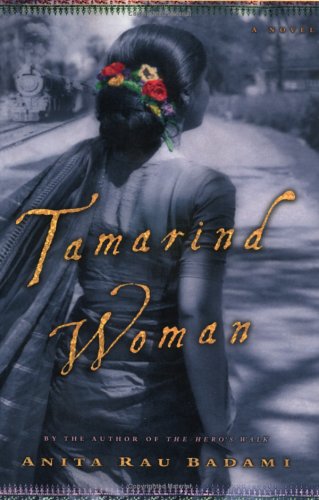
Set in the railway colonies of India, Tamarind Woman tells a sweeping story of two generations of women. Kamini, an overachiever, lives in a self-imposed exile in Canada. Her mother, Saroja, nicknamed Tamarind Woman due to her sour tongue, is trapped by the customs of traditional Indian life. When Saroja informs her daughter that she has sold their house and is going on a journey across India alone by train, both women are plunged into the past, confronting their dreams and disappointments as well as their long-held secrets.
At the center of both their lives is Kamini's elusive father, an officer for the India Railway System. Often away from home working on the railroads, he is unaware of the secrets of his own household. He doesn't know that his wife disappears for days at a time, leaving Kamini and her favored younger sister in the care of their superstitious servant. Nor does he know the gossip surrounding his wife and the local mechanic. Nothing, however, escapes Kamini's notice. Only now, living in Canada, is she able to make sense of the eccentric family she's left behind. Only now, with her children grown and her husband long deceased, is Saroja able to make peace with her past.
Lyrical, compassionate, and wise, Tamarind Woman is a powerful novel about family, memory, and the traditions that tear us apart and bring us together.
At the center of both their lives is Kamini's elusive father, an officer for the India Railway System. Often away from home working on the railroads, he is unaware of the secrets of his own household. He doesn't know that his wife disappears for days at a time, leaving Kamini and her favored younger sister in the care of their superstitious servant. Nor does he know the gossip surrounding his wife and the local mechanic. Nothing, however, escapes Kamini's notice. Only now, living in Canada, is she able to make sense of the eccentric family she's left behind. Only now, with her children grown and her husband long deceased, is Saroja able to make peace with her past.
Lyrical, compassionate, and wise, Tamarind Woman is a powerful novel about family, memory, and the traditions that tear us apart and bring us together.
Die Inhaltsangabe kann sich auf eine andere Ausgabe dieses Titels beziehen.
Von der hinteren Coverseite
Set in the railway colonies of India, Tamarind Woman tells a sweeping story of two generations of women. Kamini, an overachiever, lives in a self-imposed exile in Canada. Her mother, Saroja, nicknamed Tamarind Woman due to her sour tongue, is trapped by the customs of traditional Indian life. When Saroja informs her daughter that she has sold their house and is going on a journey across India alone by train, both women are plunged into the past, confronting their dreams and disappointments as well as their long-held secrets.
At the center of both their lives is Kamini's elusive father, an officer for the India Railway System. Often away from home working on the railroads, he is unaware of the secerts of his own household. He doesn't know that his wife disappears for days at a time, leaving Kamini and her favored younger sister in the care of their superstitious servant. Nor does he know the gossip surrouding his wife and the local mechanic. Nothing, however, escapes Kamini's notice. Only now, living in Canada, is she able to make sense of the eccentric family she's left behind. Only now, with her children grown and her husband long deceased, is Saroja able to make peace with her past.
Lyrical, compassionate, and wise, Tamarind Woman is a powerful novel about family, memory, and the traditions that tear us apart and bring us together.
Aus dem Klappentext
Set in the railway colonies of India, Tamarind Woman tells a sweeping story of two generations of women. Kamini, an overachiever, lives in a self-imposed exile in Canada. Her mother, Saroja, nicknamed Tamarind Woman due to her sour tongue, is trapped by the customs of traditional Indian life. When Saroja informs her daughter that she has sold their house and is going on a journey across India alone by train, both women are plunged into the past, confronting their dreams and disappointments as well as their long-held secrets.
At the center of both their lives is Kamini's elusive father, an officer for the India Railway System. Often away from home working on the railroads, he is unaware of the secerts of his own household. He doesn't know that his wife disappears for days at a time, leaving Kamini and her favored younger sister in the care of their superstitious servant. Nor does he know the gossip surrouding his wife and the local mechanic. Nothing, however, escapes Kamini's notice. Only now, living in Canada, is she able to make sense of the eccentric family she's left behind. Only now, with her children grown and her husband long deceased, is Saroja able to make peace with her past.
Lyrical, compassionate, and wise, Tamarind Woman is a powerful novel about family, memory, and the traditions that tear us apart and bring us together.
Auszug. © Genehmigter Nachdruck. Alle Rechte vorbehalten.
I called my mother every Sunday from the silence of my basement apartment, reluctant to tell her how I yearned to get away from this freezing cold city where even the traffic sounds were muffled by the snow.
"Well, who asked you to go?" Ma would have demanded. "Did somebody tie your hands behind your back and say 'Go-go to that Calgary North Pole place'?"
So instead I said, "Ma, there are mountains in the distance, all covered with snow. I can see them gleaming like silver cones in the sunlight when I go outside my apartment."
"You sound like a travel brochure," said Ma. "I hope you wear that sweater your Aunty Lalli knit for you, you catch cold so easily."
"These mountains are almost as tall as the Eastern Ghats. Do you remember that trip with Dadda in his inspection saloon?"
"The Western Ghats."
"We never went up the Western Ghats, Ma. You are talking about the Eastern Ghats."
"Don't tell me what I am talking about," snapped Ma. "We went up Bhore Ghat and you started crying when the engine had to reverse downhill because you thought we were going to crash off the cliffs. Roopa had an asthmatic attack--your father left us nothing but a legacy of sickness--and that foolish office peon we had then, what was his name?"
"Bhurey Lal," I said. "But Ma, that was not on Bhore Ghat. You are inventing your memories."
"Yes, Bhurey Lal, he was loyal though, do you remember, he stayed up all night leaning against the fridge door because every time the train jerked the door flew open and all the food fell out? Do you remember now?"
"Ma, I remember perfectly, but it was on the Araku Valley section. Where we stopped in the middle of the Dandakaranya forest and Dadda told us that this was the same forest in the Ramayana where Sita was kidnapped by the demon Ravana. And we got fresh honey from the tribals in the forest."
"Kamini, what tribals? You are making up stories."
"Why do you always believe that I am making up stories? I don't, I never have."
"There you go again," said Ma, triumphant. "What did I tell you? Hanh?"
I sighed and changed the subject. Ma still wanted to win every argument, she would never-ever change.
The year that I turned six, I began to sense a strange movement deep inside Ma's body, a pulsing beneath the skin. Yes, certainly there was a difference. I, who was so sensitive to every nuance in my mother, could feel it every time I climbed into her lap. Ma sat motionless in the verandah, and her hands, normally busy with knitting or hemming, darning or cutting, lay quiet on the folds of her sari. She barely spoke, and I felt that if I had missed my mother before, when she disappeared into one of her moody silences, now I had lost her completely.
She wouldn't allow me on her lap, pushed me gently away, pleading in a distant voice,
"Baby, I am tired, go and play."
I was suffused with a helpless jealousy against this thing that had stolen Ma. Not even my father's hug, his stories about the man-eater of Kantabhanji, the elephant who fell in love with a steam engine, the beehives hanging like upside-down palaces beneath a forest bridge, none of these stories diminished my hurt.
"Noni," said Dadda, "come, I will tell you about the Lakshman-jhoola bridge. That bridge is hundreds of years old, it is said, made of rope and wood and prayers. It swings thin as a dream over the River Ganga thundering down a rocky gorge, and on the underside of the bridge is a city of bees. You can hear their buzzing over the sound of rushing water, and you have to walk across the Lakshman-jhoola without shaking it even a bit, for then the queen bee wakes up from her sleep and sends her armies after you. Noni, are you listening?"
I closed my ears to my father's tale and asked instead, "Dadda, why is Ma so quiet?"
Perhaps I would run away, then Ma would rise from her silence and wail after me, "My darling, come back." I packed my Meenu doll, a toothbrush and the chocolate bar Dadda had bought from Billimoria Uncle's petrol bunk.
"Where are you going, my kishmish?" asked Linda Ayah absently.
Even Linda had no time for me, so busy was she fussing over Ma, who was now beginning to look like a taut and lustrous mango.
"Nowhere," I said, shifting my bag to the other hand.
Linda Ayah looked up sharply. "Uh-huh, what mischief are you up to, monkey-child?" she asked.
I burst into tears and immediately Linda Ayah became all attentive and sweet. "My kanmani, my baby, Linda will hoof-hoof everything away," she said, wiping my face with the end of her sari, stroking my hair. "Now what is happening, tell me?"
It all tumbled out. Ma had gone away somewhere, only a ghost lived in her body. When Dadda went out of town on line duty I was allowed to sleep in Ma's room, and when I woke in the night for water or pee-pee, she was not there. The verandah door was open, and when I thought I was going to dry up from thirst, the ghost wandered in pretending to be my mother.
"You dream too much," said Linda Ayah, her veined arms tight about my body. "Your Ma is not a ghost. She loves you still but you are too heavy for her. She has a baby inside her tummy now, my sugar bit."
I had three months to get used to the idea of having another child in the house.
When it came time for the baby to be born, Ma went back to her mother's home in Mandya. My grandmother's house was full of people, some of whom lived there and others who visited for a couple of days, caught up on all the family gossip and left. I liked the house, for unlike the Railway colony house we lived in, there seemed to be no secrets lurking in the corners of rooms, and best of all, none of the ghosts and goblins about which Linda Ayah told me. Ma was a different person here, giggling with her sisters, allowing her aunts and cousins to pamper her. I wished we could live in that house forever.
When my sister was born, all the relatives were surprised at how dark she was.
"Where did this one come from?" remarked Chinna, Ma's widowed aunt, who was a permanent member of my grandmother's household. She cupped the baby's head with one gnarled hand and cradled its tiny bottom with the other.
"No one in our family is as black as this child. Must be from your husband's side," said Ajji, my grandmother. "She looks like a sweeper-caste child."
How cruel Ajji was, I thought. I glanced at Ma, lying in bed refusing to comment, watching dreamily as the baby was oiled and massaged, bathed and rocked to sleep by Chinna or Ajji. She took my sister from them only to feed her, allowing me to watch the infant suck and snort at the plump nipple. She let me touch the baby's cheek, smiling as the creature left the breast to suck blindly in the direction of my wondering finger.
"Seesee, she likes you already," she laughed. "She knows that her big sister is going to look after her."
"Meghna, that's what we will name her," suggested Ajji. "She is like a dark, rain-filled cloud."
Ma did not agree. "No," she said, "her name is Roopa."
Afterwards, people looked at the two of us and said that we looked like the sun and its shadow. Ma held Roopa against her breast and said, "No, not the sun and its shadow. You have it all wrong. Kamini and Roopa--wealth and beauty--that is what my two daughters are."
And some people raised their eyebrows as if to say, "That darkblack thing, a beauty? Only a fond mother's eyes can see beauty where it does not lie. After all, if you ask a crow who sings the best in the world, won't she point to her own chick?"
Ma and Roopa and I stayed for three months at Ajji's house. That was the amount of time a daughter stayed with her parents after the birth of a child.
"Time enough to be pampered and washed, to rest from the pain of bearing life," said Ajji firmly, making sure that Ma heard, because she wasn't willing to keep a married daughter in the house for longer than...
„Über diesen Titel“ kann sich auf eine andere Ausgabe dieses Titels beziehen.
Suchergebnisse für Tamarind Woman

Beispielbild für diese ISBN
Tamarind Woman
Anbieter: ThriftBooks-Dallas, Dallas, TX, USA
Verkäuferbewertung 5 von 5 Sternen

Hardcover. Zustand: As New. No Jacket. Pages are clean and are not marred by notes or folds of any kind. ~ ThriftBooks: Read More, Spend Less. Artikel-Nr. G1565123352I2N00
Gebraucht kaufen
EUR 6,15
Versand gratis
Versand innerhalb von USA
Versand innerhalb von USA
Anzahl: 1 verfügbar
Beispielbild für diese ISBN
Tamarind Woman
Anbieter: ThriftBooks-Atlanta, AUSTELL, GA, USA
Verkäuferbewertung 5 von 5 Sternen
Hardcover. Zustand: Very Good. No Jacket. May have limited writing in cover pages. Pages are unmarked. ~ ThriftBooks: Read More, Spend Less. Artikel-Nr. G1565123352I4N00
Gebraucht kaufen
EUR 6,15
Versand gratis
Versand innerhalb von USA
Versand innerhalb von USA
Anzahl: 1 verfügbar
Beispielbild für diese ISBN
Tamarind Woman
Anbieter: ThriftBooks-Dallas, Dallas, TX, USA
Verkäuferbewertung 5 von 5 Sternen
Hardcover. Zustand: Very Good. No Jacket. May have limited writing in cover pages. Pages are unmarked. ~ ThriftBooks: Read More, Spend Less. Artikel-Nr. G1565123352I4N00
Gebraucht kaufen
EUR 6,15
Versand gratis
Versand innerhalb von USA
Versand innerhalb von USA
Anzahl: 1 verfügbar
Beispielbild für diese ISBN
Tamarind Woman
Anbieter: Wonder Book, Frederick, MD, USA
Verkäuferbewertung 5 von 5 Sternen
Zustand: Very Good. Very Good condition. Very Good dust jacket. A copy that may have a few cosmetic defects. May also contain light spine creasing or a few markings such as an owner's name, short gifter's inscription or light stamp. Artikel-Nr. X03C-01263
Gebraucht kaufen
EUR 6,28
Versand gratis
Versand innerhalb von USA
Versand innerhalb von USA
Anzahl: 2 verfügbar
Beispielbild für diese ISBN
Tamarind Woman
Anbieter: World of Books (was SecondSale), Montgomery, IL, USA
Verkäuferbewertung 5 von 5 Sternen
Zustand: Very Good. Item in very good condition! Textbooks may not include supplemental items i.e. CDs, access codes etc. Artikel-Nr. 00103642988
Gebraucht kaufen
EUR 6,72
Versand gratis
Versand innerhalb von USA
Versand innerhalb von USA
Anzahl: 1 verfügbar
Beispielbild für diese ISBN
Tamarind Woman
Anbieter: World of Books (was SecondSale), Montgomery, IL, USA
Verkäuferbewertung 5 von 5 Sternen
Zustand: Good. Good condition ex-library book with usual library markings and stickers. Artikel-Nr. 00086104266
Gebraucht kaufen
EUR 6,72
Versand gratis
Versand innerhalb von USA
Versand innerhalb von USA
Anzahl: 2 verfügbar
Beispielbild für diese ISBN
Tamarind Woman
Anbieter: World of Books (was SecondSale), Montgomery, IL, USA
Verkäuferbewertung 5 von 5 Sternen
Zustand: Acceptable. Item in acceptable condition! Textbooks may not include supplemental items i.e. CDs, access codes etc. Artikel-Nr. 00107822252
Gebraucht kaufen
EUR 6,72
Versand gratis
Versand innerhalb von USA
Versand innerhalb von USA
Anzahl: 1 verfügbar
Beispielbild für diese ISBN
Tamarind Woman
Verlag:
Algonquin Books, 2002
ISBN 10: 1565123352
ISBN 13: 9781565123359
Gebraucht
Hardcover
Erstausgabe
Anbieter: Books Do Furnish A Room, Durham, NC, USA
Verkäuferbewertung 3 von 5 Sternen

Hardcover. Zustand: Very Good. First Edition. Pages unmarked. Minor spine slant. Lower edges of boards moderately worn. Glossy dust jacket lightly worn. Binding firm. Artikel-Nr. 76651
Gebraucht kaufen
EUR 5,39
EUR 4,71 Versand
Versand innerhalb von USA
Versand innerhalb von USA
Anzahl: 1 verfügbar
Beispielbild für diese ISBN
Tamarind Woman
Verlag:
Algonquin Books, 2002
ISBN 10: 1565123352
ISBN 13: 9781565123359
Gebraucht
Hardcover
Erstausgabe
Anbieter: Wonder Book, Frederick, MD, USA
Verkäuferbewertung 5 von 5 Sternen
Zustand: As New. First edition copy. . Like New dust jacket. (India, Civil Engineers, Mothers and Daughters, Fiction). Artikel-Nr. NC02C-00216
Gebraucht kaufen
EUR 11,86
Versand gratis
Versand innerhalb von USA
Versand innerhalb von USA
Anzahl: 1 verfügbar
Beispielbild für diese ISBN
Tamarind Woman
Anbieter: WorldofBooks, Goring-By-Sea, WS, Vereinigtes Königreich
Verkäuferbewertung 5 von 5 Sternen
Paperback. Zustand: Very Good. The book has been read, but is in excellent condition. Pages are intact and not marred by notes or highlighting. The spine remains undamaged. Artikel-Nr. GOR007179941
Gebraucht kaufen
EUR 13,74
EUR 6,53 Versand
Versand von Vereinigtes Königreich nach USA
Versand von Vereinigtes Königreich nach USA
Anzahl: 1 verfügbar