
Inhaltsangabe
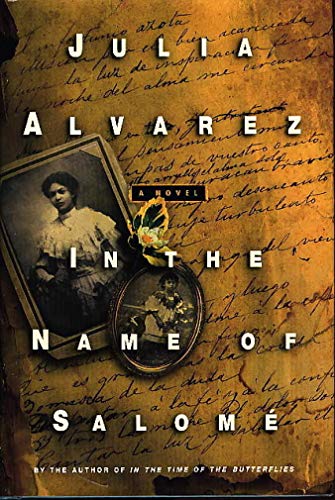
In her most ambitious work since In the Time of Butterflies, Julia Alvarez tells the story of a woman whose poetry inspired one Caribbean revolution and of her daughter whose dedication to teaching strengthened another.
Camila Henriquez Urena is about to retire from her longtime job teaching Spanish at Vassar College. Only now as she sorts through family papers does she begin to know the woman behind the legend of her mother, the revered Salome Urena, who died when Camila was three.
In stark contrast to Salome, who became the Dominican Republic's national poet at the age of seventeen, Camila has spent most of her life trying not to offend anybody. Her mother dedicated her life to educating young women to give them voice in their turbulent new nation; Camila has spent her life quietly and anonymously teaching the Spanish pluperfect to upper-class American girls with no notion of revolution, no knowledge of Salome Urena.
Now, in 1960, Camila must choose a final destination for herself. Where will she spend the rest of her days? News of the revolution in Cuba mirrors her own internal upheaval. In the process of deciding her future, Camila uncovers the truth of her mother's tragic personal life and, finally, finds a place for her own passion and commitment.
Julia Alvarez has won a large and devoted audience by brilliantly illuminating the history of modern Caribbean America through the personal stories of its people. As a Latina, as a poet and novelist, and as a university professor, Julia Alvarez brings her own experience to this exquisite story.
Die Inhaltsangabe kann sich auf eine andere Ausgabe dieses Titels beziehen.
Von der hinteren Coverseite
This novel tells the story of two women--mother and daughter--and how they confronted the machismo in two Caribbean revolutions. Set in the politically chaotic Dominican Republic of the late nineteenth century, on the campuses of three American universities, and in the idealistic Communist Cuba of the 1960s, this story is based on the real lives of a volatile, opinionated, romantic, intrigue-loving family.
Salome Urena's fervent patriotic poems turned her--at seventeen--into the Dominican Republic's national icon. In stark contrast, her daughter, Camila, shy and self-effacing, bent to accommodate the demands of her father and brothers (a president, an ambassador, an international literary star)--trying to hide her preference for women, to stay out of the spotlight, and to offend no one. Whereas her mother dedicated her brief life to educating Dominican girls to serve their turbulent new nation, Camila spent her career anonymously explaining the Spanish pluperfect to upper-class American girls.
We meet Camila in 1960 when she is sixty-five years old and about to retire from Vassar College in Poughkeepsie, New York. This is Camila's last chance to choose a final destiny for herself. In the process of deciding, Camila uncovers first the reality of her mother's tragic personal life and, finally, where she must place her own kind of passion and commitment.
Latina poet and university professor Alvarez brings many common bonds to this novel based on "la musa de la patra," Salome Urena, and her daughter, Profesora Camila Henriquez-Urena. Not the least of these is an undaunted female stance from inside a powerful Caribbean family.
Aus dem Klappentext
This novel tells the story of two women--mother and daughter--and how they confronted the machismo in two Caribbean revolutions. Set in the politically chaotic Dominican Republic of the late nineteenth century, on the campuses of three American universities, and in the idealistic Communist Cuba of the 1960s, this story is based on the real lives of a volatile, opinionated, romantic, intrigue-loving family.
Salome Urena's fervent patriotic poems turned her--at seventeen--into the Dominican Republic's national icon. In stark contrast, her daughter, Camila, shy and self-effacing, bent to accommodate the demands of her father and brothers (a president, an ambassador, an international literary star)--trying to hide her preference for women, to stay out of the spotlight, and to offend no one. Whereas her mother dedicated her brief life to educating Dominican girls to serve their turbulent new nation, Camila spent her career anonymously explaining the Spanish pluperfect to upper-class American girls.
We meet Camila in 1960 when she is sixty-five years old and about to retire from Vassar College in Poughkeepsie, New York. This is Camila's last chance to choose a final destiny for herself. In the process of deciding, Camila uncovers first the reality of her mother's tragic personal life and, finally, where she must place her own kind of passion and commitment.
Latina poet and university professor Alvarez brings many common bonds to this novel based on "la musa de la patra," Salome Urena, and her daughter, Profesora Camila Henriquez-Urena. Not the least of these is an undaunted female stance from inside a powerful Caribbean family.
Auszug. © Genehmigter Nachdruck. Alle Rechte vorbehalten.
Prologue
Departing Poughkeepsie
June 1960
She stands by the door, a tall, elegant woman with a soft brown color to her skin (southern Italian? a Mediterranean Jew? a light-skinned negro woman who has been allowed to pass by virtue of her advanced degrees?), and reviews the empty rooms that have served as home for the last eighteen years.
Now in the full of June, the attic is hot. Years back, when she earned tenure, the dean offered her a more modern apartment, nearer to the campus. But she refused. She has always loved attics, their secretiveness, their niches and nooks, where those never quite at home in the house can hide. And this one has wonderful light. Shafts of sunlight swarm with dust motes, as if the air were coming alive.
It is time for fresh blood in this old house. On the second floor, right below her, Vivian Lafleur from the Music Department is getting on in years and going a bit deaf, too. Every year the piano gets more fortissimo, her foot heavy on the pedal. Her older sister, Dot, has already retired from Admissions and moved in with her "baby" sister. "Come quickly, Viv," she sometimes hollers from her bedroom. The music stops. Could this be it for Dot? On the ground floor, Florence from History has been called back from her retirement after the young medievalist from Yale stumbled into a manhole and broke her ankle. "I'm so grateful." Flo cornered her one day downstairs by their mailboxes. "I was beginning to go batty in that cottage in Maine."
She herself is worried about the emptiness that lies ahead. Childless and motherless, she is a bead unstrung from the necklace of the generations. All she leaves behind here are a few close colleagues, also about to retire, and her students, those young immortals with, she hopes, the Spanish subjunctive filed away in their heads.
She must not let herself get morbid. It is 1960. In Cuba, Castro and his bearded boys are saying alarming, wonderful things about the new patria they are creating. The Dalai Lama, who fled Tibet last year on a yak with the Chinese at his heels, has issued a statement: One must love one's enemies, or else all is lost. (But you have lost everything, she thinks.) This winter she read of an expedition to Antarctica led by Vivian Fuchs. Sir Vivian has asked the world to agree not to dump its nuclear waste there. (Why dump it anywhere? Camila wonders.) But these are positive signs, she reminds herself, positive signs. It is not a new habit of hers: these efforts to rouse herself from a depressive turn of mind she inherited from her mother. Of course, sometimes the bigger picture is rather grim. So? Use your subjunctive (she reminds herself). Make a wish. Contrary to possibility, contrary to fact.
Most of her things have already been sent ahead, several trunks and boxes, years of accumulation, sorted with her friend Marion's help, down to the essentials. She is taking only her suitcase and the trunk of her mother's papers and poems carried down just now by the school grounds crew to the waiting car. To think that only a few months ago, she was consulting those poems for signs! She smiles at the easy gimmick she thought would resolve the big question in her life. Now, playfully, she imagines the many lives she has lived as captioned by the title of one or another of her mother's poems. How should this new life be titled? "Faith in the Future"? "The Arrival of Winter"? or (why not?) "Love and Yearning"?
The horn honks again. It will probably be titled "Ruins" if she doesn't get downstairs soon! Marion is impatient to go, red-faced and swearing, jerking the steering wheel as she turns the car around. "Lady driver," one of the men mutters under his breath.
Marion and Les, her new husband, have flown up to help with the move. (Marion's companion of ten years finally proposed marriage.) Now the two best friends will head down to Florida in a rental car. Les has already been deposited (Marion's verb) in New Hampshire at his daughter's door, so that Marion and Camila can have this last trip together. All the way down to Baltimore and Jacksonville and on to Key West and her ferry to Havana, Marion will try talking her out of her plans.
"Everyone who is anyone is getting out."
"Well then, I'll have no problem. 'I'm Nobody--Who are you?'" She loves to quote Miss Dickinson, whose home she once visited, whose fierce talent reminds her of her own mother's. Emily Dickinson is to the United States of America as Salome Urena is to the Dominican Republic--something like that. One of her nieces--is it Lupe?--loves those analogies in the game books Camila takes them when she goes to visit. But she herself always feels nervous when she is asked to put things exactly where they belong. Look at my life, she thinks, hither and yon, hither and yon.
But now--"Shall we have a drumroll, shall we blow the trumpet, and pipe a ditty on the flute?" Marion teases--she is heading home, or as close to home as she can get. Trujillo has made her own country an impossible choice. Perhaps it will all turn out well, perhaps, perhaps.
"You are not nobody, Camila," her friend scolds. "Don't be modest now!" Marion loves to brag. She is from the midwestern part of the country, and so she is easily impressed by somebodies, especially when they come from either coast or from foreign countries. ("Camila's mother was a famous poet." "Her father was president." "Her brother was the Norton Lecturer at Harvard.") Perhaps Marion thinks that such reflected importance will stem the tide of prejudice that often falls on the foreign and colored in this country. She should know better. How can Marion forget the cross burning on her front lawn that long ago summer Camila visited the Reed family in North Dakota?
"You need a hand with anything else, Miss Henry?" one of the burly janitorial crew calls up. Her name is HenrIquez ("accent on the i"), she has told them more than once, and they have repeated her name slowly, but the next time she requires their assistance, they have forgotten. Miss Henry, Miss Henriette.
Beyond them on College Street, in their pastel shirtwaist dresses, a group of young graduates hurries by on the way to some last gathering. They look like blossoms released from their stems.
One of them turns suddenly, a hand at her brow, shielding her eyes from the sun, a flag of red hair. "Hasta luego, Profesora," she calls out to the flashing attic windows.
She couldn't possibly see me, the professor is thinking. I am already gone from this place.
Before she leaves, she makes the sign of the cross--an old habit she has not been able to shake since her mother's death sixty-three years ago.
In the name of the Father and of the Son and of my mother, SalomE.
Her aunt Ramona, her mother's only sister, taught her to do this. Dear old Mon, round and brown with a knot of black hair on top of her head, a Dominican Buddha but with none of the bodhisattva's calm. Mon was more superstitious than religious and more cranky than anything else. Back then, it was a habit to kiss each parent's hand and ask their blessing before leaving the house. La bendición, Mamá. La bendición, Papá.
(The American girls made faces in class when she told them about this old tradition. "What a drag," the plump, freckled girl from Cooperstown said, lifting one corner of her mouth as if the old-world practice had a bad smell.)
When her mother died, Mon thought up this way for her to ask for SalomE's blessing. To summon strength from a fading memory that every year became less and less real until all that was left of her mother was the story of her mother.
Sometimes the phrase is part prayer, part curse--as now when she hears the loud, rude honk from down below and mutters it under her breath. Marion will be the death of Dot yet. The two sisters have always been kind to their quiet upstairs neighbor, that condescending...
„Über diesen Titel“ kann sich auf eine andere Ausgabe dieses Titels beziehen.
Weitere beliebte Ausgaben desselben Titels

Suchergebnisse für In the Name of Salome: A Novel

Beispielbild für diese ISBN
In the Name of Salome: A Novel
Anbieter: World of Books (was SecondSale), Montgomery, IL, USA
Verkäuferbewertung 5 von 5 Sternen

Zustand: Very Good. Item in very good condition! Textbooks may not include supplemental items i.e. CDs, access codes etc. Artikel-Nr. 00095033341
Gebraucht kaufen
EUR 4,98
Versand gratis
Versand innerhalb von USA
Versand innerhalb von USA
Anzahl: 1 verfügbar
Beispielbild für diese ISBN
In the Name of Salome: A Novel
Anbieter: World of Books (was SecondSale), Montgomery, IL, USA
Verkäuferbewertung 5 von 5 Sternen
Zustand: Good. Item in good condition. Textbooks may not include supplemental items i.e. CDs, access codes etc. Artikel-Nr. 00083643916
Gebraucht kaufen
EUR 4,98
Versand gratis
Versand innerhalb von USA
Versand innerhalb von USA
Anzahl: 5 verfügbar
Beispielbild für diese ISBN
In the Name of SalomÃ
Verlag:
Algonquin Books of Chapel Hill, 2000
ISBN 10: 1565122763
ISBN 13: 9781565122765
Gebraucht
Hardcover
Erstausgabe
Anbieter: Better World Books, Mishawaka, IN, USA
Verkäuferbewertung 5 von 5 Sternen
Zustand: Good. 1st ed. Pages intact with minimal writing/highlighting. The binding may be loose and creased. Dust jackets/supplements are not included. Stock photo provided. Product includes identifying sticker. Better World Books: Buy Books. Do Good. Artikel-Nr. GRP73178032
Gebraucht kaufen
EUR 6,35
Versand gratis
Versand innerhalb von USA
Versand innerhalb von USA
Anzahl: 2 verfügbar
Beispielbild für diese ISBN
In the Name of SalomÃÂ
Verlag:
Algonquin Books of Chapel Hill, 2000
ISBN 10: 1565122763
ISBN 13: 9781565122765
Gebraucht
Hardcover
Erstausgabe
Anbieter: Better World Books: West, Reno, NV, USA
Verkäuferbewertung 5 von 5 Sternen
Zustand: Very Good. 1st ed. Pages intact with possible writing/highlighting. Binding strong with minor wear. Dust jackets/supplements may not be included. Stock photo provided. Product includes identifying sticker. Better World Books: Buy Books. Do Good. Artikel-Nr. 9632345-6
Gebraucht kaufen
EUR 6,35
Versand gratis
Versand innerhalb von USA
Versand innerhalb von USA
Anzahl: 2 verfügbar
Beispielbild für diese ISBN
In the Name of SalomÃ
Verlag:
Algonquin Books of Chapel Hill, 2000
ISBN 10: 1565122763
ISBN 13: 9781565122765
Gebraucht
Hardcover
Erstausgabe
Anbieter: Better World Books, Mishawaka, IN, USA
Verkäuferbewertung 5 von 5 Sternen
Zustand: Good. 1st ed. Former library copy. Pages intact with minimal writing/highlighting. The binding may be loose and creased. Dust jackets/supplements are not included. Includes library markings. Stock photo provided. Product includes identifying sticker. Better World Books: Buy Books. Do Good. Artikel-Nr. 6484969-6
Gebraucht kaufen
EUR 6,35
Versand gratis
Versand innerhalb von USA
Versand innerhalb von USA
Anzahl: 1 verfügbar
Beispielbild für diese ISBN
In the Name of Salome
Verlag:
Algonquin Books (edition First Edition), 2000
ISBN 10: 1565122763
ISBN 13: 9781565122765
Gebraucht
Hardcover
Erstausgabe
Anbieter: BooksRun, Philadelphia, PA, USA
Verkäuferbewertung 5 von 5 Sternen
Hardcover. Zustand: Very Good. First Edition. It's a well-cared-for item that has seen limited use. The item may show minor signs of wear. All the text is legible, with all pages included. It may have slight markings and/or highlighting. Artikel-Nr. 1565122763-11-1
Gebraucht kaufen
EUR 6,50
Versand gratis
Versand innerhalb von USA
Versand innerhalb von USA
Anzahl: 1 verfügbar
Beispielbild für diese ISBN
In the Name of Salome: A Novel
Anbieter: ThriftBooks-Dallas, Dallas, TX, USA
Verkäuferbewertung 5 von 5 Sternen
Hardcover. Zustand: Very Good. No Jacket. May have limited writing in cover pages. Pages are unmarked. ~ ThriftBooks: Read More, Spend Less. Artikel-Nr. G1565122763I4N00
Gebraucht kaufen
EUR 7,64
Versand gratis
Versand innerhalb von USA
Versand innerhalb von USA
Anzahl: 1 verfügbar
Beispielbild für diese ISBN
In the Name of Salome: A Novel
Anbieter: ThriftBooks-Dallas, Dallas, TX, USA
Verkäuferbewertung 5 von 5 Sternen
Hardcover. Zustand: Very Good. No Jacket. Former library book; May have limited writing in cover pages. Pages are unmarked. ~ ThriftBooks: Read More, Spend Less. Artikel-Nr. G1565122763I4N10
Gebraucht kaufen
EUR 7,64
Versand gratis
Versand innerhalb von USA
Versand innerhalb von USA
Anzahl: 1 verfügbar
Beispielbild für diese ISBN
In the Name of Salome: A Novel
Anbieter: ThriftBooks-Atlanta, AUSTELL, GA, USA
Verkäuferbewertung 5 von 5 Sternen
Hardcover. Zustand: Very Good. No Jacket. May have limited writing in cover pages. Pages are unmarked. ~ ThriftBooks: Read More, Spend Less. Artikel-Nr. G1565122763I4N00
Gebraucht kaufen
EUR 7,64
Versand gratis
Versand innerhalb von USA
Versand innerhalb von USA
Anzahl: 1 verfügbar
Beispielbild für diese ISBN
In the Name of Salome: A Novel
Anbieter: ThriftBooks-Reno, Reno, NV, USA
Verkäuferbewertung 5 von 5 Sternen
Hardcover. Zustand: Very Good. No Jacket. May have limited writing in cover pages. Pages are unmarked. ~ ThriftBooks: Read More, Spend Less. Artikel-Nr. G1565122763I4N00
Gebraucht kaufen
EUR 7,64
Versand gratis
Versand innerhalb von USA
Versand innerhalb von USA
Anzahl: 1 verfügbar