
Verwandte Artikel zu Tea: A Novel
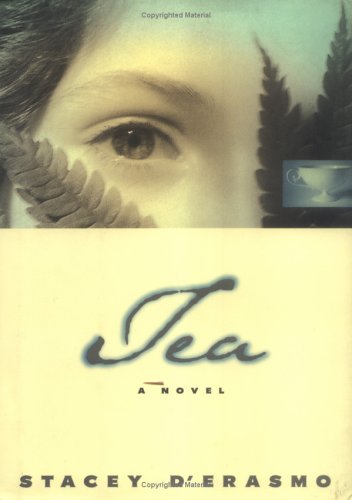
Inhaltsangabe
On a spring day in 1968, eight-year-old Isabel Gold sets out tea, just so, for her unpredictable, ever-moody mother, and sits down to wait, certain that this will do it: her mother will drink the tea Isabel has made and recover from her mysterious sadness.
But the tea goes untouched. Isabel's mother remains out of reach, a kind of melancholy stranger Isabel struggles to understand.
Then, her mother kills herself.
As Isabel comes of age, that incomprehensible act haunts her. Isabel grows up, yearns to become an actress, and falls in and out of love: at eight, with born-again Ann, who proclaims happily, "I love Jesus"; at sixteen, listening to Joni Mitchell records and smoking dope with Lottie, who "never apologizes and never explains"; at seventeen, with theatrical feminist Rebecca; and at twenty-two, with avant-garde Thea, in whose experimental film Isabel is starring-or trying to-as the goddess Diana.
Of all the women in her life, however, the one who still eludes her is herself.
Funny, poignant, and sexy, Tea speaks to those who grew up listening to the Monkees and Peter Frampton, culling marijuana seeds on album covers, but who fled the suburbs for the glamorous squalor of the city. It speaks to those who discovered they were gay and had to find a way to tell the rest of the world. And it speaks to anyone who has struggled to carve out a space for themselves against a tragic family history.
Die Inhaltsangabe kann sich auf eine andere Ausgabe dieses Titels beziehen.
Über die Autorin bzw. den Autor
Stacey D'Erasmo was a Senior Editor at the Voice Literal Supplement for seven years and currently is a contributing writer to Out.
Von der hinteren Coverseite
The Golds were not an exceptional family in suburban Philadelphia. Mr. Gold ran a dry-cleaning business, and his wife, Cassie, was a nurse. They had two daughters, Isabel and Jeannie. Mrs. Gold was unpredictable and moody, prone to napping and taking long baths, but it was nothing that couldn't be soothed with a good cup of tea.
Until she killed herself.
Haunted by her mother's incomprehensible act, Isabel Gold tests out identity after identity, role after role, trying to inhabit the space left by Cassie and to crack the mystery of her death. Tea tells Isabel's story as she yearns to become an actress and falls in and out of love: at eight, with born-again Ann; at sixteen, with the self-assured Lottie, listening to Joni Mitchell records and smoking dope; at seventeen, with theatrical, feminist Rebecca; and at twenty-two, with avant-garde Thea, in whose experimental film Isabel is starring.
Darkly poignant, sincerely funny and erotic, Tea is about struggling to carve out a space for oneself against a calamitous family history.
Aus dem Klappentext
The Golds were not an exceptional family in suburban Philadelphia. Mr. Gold ran a dry-cleaning business, and his wife, Cassie, was a nurse. They had two daughters, Isabel and Jeannie. Mrs. Gold was unpredictable and moody, prone to napping and taking long baths, but it was nothing that couldn't be soothed with a good cup of tea.
Until she killed herself.
Haunted by her mother's incomprehensible act, Isabel Gold tests out identity after identity, role after role, trying to inhabit the space left by Cassie and to crack the mystery of her death. Tea tells Isabel's story as she yearns to become an actress and falls in and out of love: at eight, with born-again Ann; at sixteen, with the self-assured Lottie, listening to Joni Mitchell records and smoking dope; at seventeen, with theatrical, feminist Rebecca; and at twenty-two, with avant-garde Thea, in whose experimental film Isabel is starring.
Darkly poignant, sincerely funny and erotic, Tea is about struggling to carve out a space for oneself against a calamitous family history.
Auszug. © Genehmigter Nachdruck. Alle Rechte vorbehalten.
On Saturday, they found a house. They drove far past Philadelphia, into the country, the newspaper with the circled ad between them on the seat, the radio playing. On the news, the talk was of Vietnam.
"Will Dad have to go in the army?" asked Isabel.
"No," said her mother. "He has a family." A wide headband held her hair back, and she had pushed her sleeves up as she drove. She sipped from the mug of tea she always brought with her in the car. She seemed almost happy, as the countryside spun by. "This is like where I grew up," she said. "Look for cows, Isabel."
Isabel counted several cows, not a single one walking anywhere. They turned down a road, then another, passed a little store, then rumbled onto a road that led to the top of a hill, where the house was. The agent's name was Madge, and she met them at the peeling front door, seeming cheery. Everything about Madge was wrinkled except her feet, which were beautiful in white slingbacks. She led them around, pointing things out in her raspy voice. She was skinny as a piece of celery.
The house wasn't particularly nice, in Isabel's opinion. There was an enormous water stain cascading down the living room wall, and the kitchen wallpaper was peeling. Pairs of boots of different sizes sat up on a muddy shelf in the kitchen, close to the floor. The living room was full of books stacked up like firewood, none on shelves. There was an intriguing small door cut into the side of the staircase. Isabel rattled the handle, but it wouldn't open.
Madge sent them up the steep wooden stairs alone. "You break it, you buy it!" she rasped out, then laughed a deep laugh, as if she had told a very hilarious joke indeed. Isabel wanted to tell Madge how stupid that was, that they weren't going to break anything, but didn't, following her mother up the stairs.
"Oh, look at this," her mother said when they reached a narrow room with a painted floor and a small desk set all by itself in the middle, like an island. Against one wall was a mattress on the floor, covered by a chenille bedspread. From the desk, out the odd, oblong window, Isabel could see a field. In the field, there was a car up on cinder blocks. All its doors were gone. There wasn't anything else in the room but the bed, the desk, the desk chair, and the window with the field and the car in it. Beyond the car, the land sloped and fell away into woods. Isabel, squinting, took a picture of it with her mind so she could think about it later.
Isabel's mother sat down at the desk; her knees didn't quite fit under it. She lifted the lid.
"Mom," said Isabel.
"I'm just peeking," she said. Inside, there were maps, a messy notebook, pens, pencils, some thread. A yo-yo. A book about the birds of South America. "They must travel," said Isabel's mother, opening to a photograph of a bright lime-green bird that seemed to be hugely tall, with bulging eyes. "The people here travel." The bird's eye bulged unpleasantly at Isabel.
Isabel sat down at the very edge of the mattress. Why, she wondered, was there no furniture in this room besides the bed, the little desk, and the matching chair? "Are we near Springston?" she said.
"Springston?" said Isabel's mother, dropping the lid back down with a hollow bang. She leaned back in her chair, stretching out one long leg. "We're not moving to Springston. That's your father's big idea. What do you think of this house?"
"It's okay," said Isabel. She passed her hand over the country of the bedspread. There were the mountains. There was the sea. There was a farm where she lived with her friend Ann. "Mom. Have you heard of The Doors?"
She wrinkled her forehead. "Who?"
"The Doors. It's a group."
"Chiggy-wiggy music?"
"Yes," Isabel giggled.
"What kind of group?"
"I just told you. Rock-and-roll music. They're really good."
Her mother was quiet for a minute. Her lime-green bird mood seemed to have passed suddenly. She leaned her head in her hand at the little desk. Her two rings shone in her hair. "You know, Isabel," she said, "sometimes I want to die."
Isabel retied a shoelace, light-headed. The room seemed to get brighter for an instant, then faded to normal again. Maybe that was a sunspot. The sea roiled as the sunspot blazed, overturning a ship sailing over the sea past the farm where she and Ann lived. "Why?" she said, staring at the sea.
Isabel's mother pressed her long fingers into the corners of her eyes, squeezed her eyes shut, shaking her head. "I just do," she said. "I just want to die."
Isabel flicked the farm off the planet. "I don't know what you're talking about," she said, and she tried to sound cold, like a cold girl in a book. "It's Saturday. We're looking for a new house. You drove us here in our car. You'll drive us back. It isn't that hard."
Isabel's mother shook her head again, as if in response to a silent question. She looked like a stranger to Isabel for a moment, and that was worse than seeing her get upset. "How would you know what's hard?" she said quietly, her dark blue eyes wet, turning in the small chair to face Isabel. "How would you know, Isabel?"
Isabel had no reply. She picked at the chenille bumps, which were in a feather outline. What town were they in, then, she wondered, if they weren't in Springston. Several minutes went by. Isabel's mother stood up, and looked out the window.
"Hey," called Madge from downstairs. "Look out that window. Do you see the rosebushes?"
"Madge," said Isabel's mother loudly. "I'm in love with this house. It's perfect. What are they asking?" She turned around, no longer crying, and gave Isabel the little pinch that meant I'm back.
Madge came up the stairs, slingbacks making a fast Morse code Isabel couldn't quite read. "Twenty-five," she said, lighting up a cigarette and opening the window. "They'd probably take less."
"Oh, let me sneak a puff," said Isabel's mother.
Madge handed her the pack. "I've gotta quit anyway."
"Who lives here?" said Isabel.
"Renters," said Madge. "Three or four girls all live out here together. Hippies. One of them's a mechanic, if you believe that. The owners are in Florida."
"A lady mechanic?" said Isabel's mother, blowing smoke up into the air.
Madge shrugged, tapped her ash out the window. "She's the only one I've dealt with. Big friendly girl."
Isabel stood up. "How are the schools?"
Madge laughed, exhanging a glance with Isabel's mother, who shrugged. "The schools?" said Madge. "They're all right, honey." She stubbed out her cigarette on the windowsill, closed the window. "They're just fine."
Isabel decided that she would never smoke as long as she lived. "I'd like to see the rosebushes, Madge," she said.
The three of them went back down the loud wooden stairs, Isabel in the lead, the winner. Outside, on the tilting porch, there was an orange cat with one chewed ear.
"What's his name?" said Isabel.
"Kitty," said Madge. Isabel, despising Madge, resolved to be superpolite to her for the rest of the day.
Madge walked them through the backyard, proudly pointing out the rosebushes, which were little more than a few stringy bundles of thorns. "How lovely," said Isabel loudly to Madge.
They walked past the car, Madge, in her slingbacks, giving it a wide berth. "They'll take that with them," she said. Isabel peered at the car, wondering if there was anything interesting left in the glove compartment. She attempted to excavate it with X-ray vision, but nothing happened. These people, she thought, were poor, and not nearly as smart as the Romans, who built aqueducts.
The March air tipped all of their noses with red as they walked, bit their cheeks. The marks of Isabel's mother's tears faded away into a general flush. She put her arm around Isabel, and Isabel held her breath. Then she couldn't help it. She moved closer, hard. "Whoa," said her mother, stumbling. They walked together into the wind, awkwardly, hip to hip. Isabel...
„Über diesen Titel“ kann sich auf eine andere Ausgabe dieses Titels beziehen.
Suchergebnisse für Tea: A Novel

Beispielbild für diese ISBN
Tea: A Novel
Anbieter: World of Books (was SecondSale), Montgomery, IL, USA
Verkäuferbewertung 5 von 5 Sternen

Zustand: Very Good. Item in very good condition! Textbooks may not include supplemental items i.e. CDs, access codes etc. Artikel-Nr. 00079292713
Gebraucht kaufen
EUR 4,98
Versand gratis
Versand innerhalb von USA
Versand innerhalb von USA
Anzahl: 3 verfügbar
Beispielbild für diese ISBN
Tea: A Novel
Verlag:
Algonquin Books (edition First Edition), 2000
ISBN 10: 1565122437
ISBN 13: 9781565122437
Gebraucht
Hardcover
Erstausgabe
Anbieter: BooksRun, Philadelphia, PA, USA
Verkäuferbewertung 5 von 5 Sternen
Hardcover. Zustand: Very Good. First Edition. It's a well-cared-for item that has seen limited use. The item may show minor signs of wear. All the text is legible, with all pages included. It may have slight markings and/or highlighting. Artikel-Nr. 1565122437-11-1
Gebraucht kaufen
EUR 4,99
Versand gratis
Versand innerhalb von USA
Versand innerhalb von USA
Anzahl: 2 verfügbar
Beispielbild für diese ISBN
Tea
Verlag:
Algonquin Books of Chapel Hill, 2000
ISBN 10: 1565122437
ISBN 13: 9781565122437
Gebraucht
Hardcover
Anbieter: Better World Books, Mishawaka, IN, USA
Verkäuferbewertung 5 von 5 Sternen
Zustand: Good. Pages intact with minimal writing/highlighting. The binding may be loose and creased. Dust jackets/supplements are not included. Stock photo provided. Product includes identifying sticker. Better World Books: Buy Books. Do Good. Artikel-Nr. 38576721-6
Gebraucht kaufen
EUR 6,04
Versand gratis
Versand innerhalb von USA
Versand innerhalb von USA
Anzahl: 1 verfügbar
Beispielbild für diese ISBN
Tea
Verlag:
Algonquin Books of Chapel Hill, 2000
ISBN 10: 1565122437
ISBN 13: 9781565122437
Gebraucht
Hardcover
Anbieter: Better World Books, Mishawaka, IN, USA
Verkäuferbewertung 5 von 5 Sternen
Zustand: Good. Former library copy. Pages intact with minimal writing/highlighting. The binding may be loose and creased. Dust jackets/supplements are not included. Includes library markings. Stock photo provided. Product includes identifying sticker. Better World Books: Buy Books. Do Good. Artikel-Nr. 38529437-75
Gebraucht kaufen
EUR 6,04
Versand gratis
Versand innerhalb von USA
Versand innerhalb von USA
Anzahl: 1 verfügbar
Beispielbild für diese ISBN
Tea: A Novel
Anbieter: ThriftBooks-Atlanta, AUSTELL, GA, USA
Verkäuferbewertung 5 von 5 Sternen
Hardcover. Zustand: Good. No Jacket. Former library book; Pages can have notes/highlighting. Spine may show signs of wear. ~ ThriftBooks: Read More, Spend Less. Artikel-Nr. G1565122437I3N10
Gebraucht kaufen
EUR 6,46
Versand gratis
Versand innerhalb von USA
Versand innerhalb von USA
Anzahl: 1 verfügbar
Beispielbild für diese ISBN
Tea: A Novel
Anbieter: ThriftBooks-Atlanta, AUSTELL, GA, USA
Verkäuferbewertung 5 von 5 Sternen
Hardcover. Zustand: As New. No Jacket. Pages are clean and are not marred by notes or folds of any kind. ~ ThriftBooks: Read More, Spend Less. Artikel-Nr. G1565122437I2N00
Gebraucht kaufen
EUR 6,46
Versand gratis
Versand innerhalb von USA
Versand innerhalb von USA
Anzahl: 1 verfügbar
Beispielbild für diese ISBN
Tea: A Novel
Verlag:
Algonquin Books, 2000
ISBN 10: 1565122437
ISBN 13: 9781565122437
Gebraucht
Hardcover
Erstausgabe
Anbieter: Powell's Bookstores Chicago, ABAA, Chicago, IL, USA
Verkäuferbewertung 5 von 5 Sternen
Hardcover. Zustand: Used-Very Good. Zustand des Schutzumschlags: dj. First Edition. Cloth, dj. Minor shelf-wear. Artikel-Nr. 1785618
Gebraucht kaufen
EUR 7,18
EUR 6,53 Versand
Versand innerhalb von USA
Versand innerhalb von USA
Anzahl: 1 verfügbar
Beispielbild für diese ISBN
Tea : a novel
Verlag:
Algonquin Books of Chapel Hi, 2000
ISBN 10: 1565122437
ISBN 13: 9781565122437
Gebraucht
Hardcover
Anbieter: Robinson Street Books, IOBA, Binghamton, NY, USA
Verkäuferbewertung 4 von 5 Sternen

Mass Market Pa. Zustand: good. Prompt Shipment, shipped in Boxes, Tracking PROVIDEDGeneral; Good mass market paperback with creasing, first edition, nicked cover, staining edges and back cover, and prompt shipping with tracking. Artikel-Nr. ware359psd006
Gebraucht kaufen
EUR 12,12
EUR 8,28 Versand
Versand innerhalb von USA
Versand innerhalb von USA
Anzahl: 1 verfügbar
Beispielbild für diese ISBN
Tea: A Novel
Anbieter: Robinson Street Books, IOBA, Binghamton, NY, USA
Verkäuferbewertung 4 von 5 Sternen
Hardcover. Zustand: As New. Prompt Shipment, shipped in Boxes, Tracking PROVIDEDLiterature & Fiction. Artikel-Nr. ware20bb181
Gebraucht kaufen
EUR 12,12
EUR 8,28 Versand
Versand innerhalb von USA
Versand innerhalb von USA
Anzahl: 1 verfügbar
Beispielbild für diese ISBN
Tea: A Novel
Anbieter: WorldofBooks, Goring-By-Sea, WS, Vereinigtes Königreich
Verkäuferbewertung 5 von 5 Sternen
Paperback. Zustand: Very Good. The book has been read, but is in excellent condition. Pages are intact and not marred by notes or highlighting. The spine remains undamaged. Artikel-Nr. GOR006541332
Gebraucht kaufen
EUR 26,34
EUR 6,53 Versand
Versand von Vereinigtes Königreich nach USA
Versand von Vereinigtes Königreich nach USA
Anzahl: 1 verfügbar