
Verwandte Artikel zu Mobile Learning Mindset: The Teacher's Guide to...
Inhaltsangabe
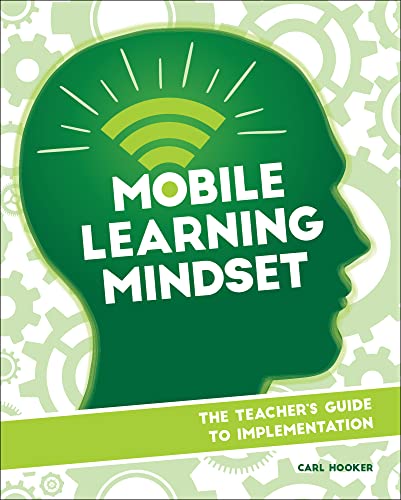
Mobile Learning Mindset: The Teacher’s Guide to Implementation offers insight and inspiration to teachers who are about to participate in a mobile device initiative or already have.
The six-book Mobile Learning Mindset series shares practical knowledge and strategies for successful implementation of K-12 BYOD programs and 1:1 initiatives. The collection provides district leaders, principals, teachers, IT staff, educational coaches and parents with the information they need to make any mobile learning program a success.
The next generation of learners must be able to think critically about real-world problems and come up with creative solutions. While technology can help facilitate these goals, teachers must understand how to effectively integrate technology to drive deeper learning. That’s where The Teacher's Guide to Implementation comes in.
Through practical examples, the book addresses how to leverage mobile technology to:
- Center learning around the student.
- Provide efficient formative assessments.
- Facilitate parent communication and professional development.
This fourth book in the series is an in-depth look at how mobile devices affect the classroom and what teachers can do both right out of the box and further down the road to sustain a successful student-led learning environment.
Audience: K-12 classroom teachers
Die Inhaltsangabe kann sich auf eine andere Ausgabe dieses Titels beziehen.
Über die Autorinnen und Autoren
Carl Hooker has been part of a strong educational shift with technology integration in schools since 1998. His education background, technical expertise and humor make him a driving force for this change. As director of innovation and digital learning at Eanes ISD in Texas, he helped spearhead a mobile learning program that put iPads in the hands of all 8,000 students across the district. He is also the founder of “iPadpalooza” (ipadpalooza.com), a three-day learning festival in celebration of the shift iPads have brought about in education and beyond. Hooker was named Tech & Learning magazine’s 2014 Leader of the Year, and he is a member of the Apple Distinguished Educator class of 2013.
Carl Hooker has been part of a strong educational shift with technology integration in schools since 1998. His unique blend of educational background, technical expertise, and humor make him a driving force for this change. As director of innovation and digital learning at Eanes ISD in Texas, he helped spearhead a mobile learning program that put iPads in the hands of all 8,000 students across the district. He is also the founder of “iPadpalooza” (http://ipadpalooza.com), a three-day learning festival in celebration of the shift iPads have brought about in education and beyond. Hooker was named Tech & Learning Magazine’s 2014 Leader of the Year and he is a member of the Apple Distinguished Educator class of 2013.
Auszug. © Genehmigter Nachdruck. Alle Rechte vorbehalten.
Chapter 1: Changing the Center
The role of the teacher has evolved in many ways through the years. In 370 B.C., Greek philoso- pher Socrates popularized a version of teachingthat has stood the test of time. His lecture formats were designed so that one person was the sole source of all knowledge and information. This single person would distribute “learning” by passing on knowledge, thoughts, and philosophies to those who were within earshot. The skill of listening, and interpreting what was said, was crucial to becoming a successful student during this time. Learning happened in isolation, with a few select students having access to the knowledge-
bearer and working independently to comprehend what they had learned. That model was effective at the time, but innovation through the centuries has made infor- mation and knowledge much more freely available.
The role of the teacher has evolved in many ways through the years. In 370 B.C., Greek philoso- pher Socrates popularized a version of teachingthat has stood the test of time. His lecture formats were designed so that one person was the sole source of all knowledge and information. This single person would distribute “learning” by passing on knowledge, thoughts, and philosophies to those who were within earshot. The skill of listening, and interpreting what was said, was crucial to becoming a successful student during this time. Learning happened in isolation, with a few select students having access to the knowledge-
bearer and working independently to comprehend what they had learned. That model was effective at the time, but innovation through the centuries has made infor- mation and knowledge much more freely available.
The first significant innovation to affect education and knowledge dissemina- tion came in the 1400s when Gutenberg invented the printing press. All of a sudden, information from a single source could be replicated on a large scale and distributed to the masses. The relationship of teacher and pupil shifted from passing down information to more of a master-apprentice relationship. With information in book form becoming widely available, the teacher needed to make sure the student not only understood the information, but also knew how to apply it in some form. Reading became the most essential skill for
any student hoping to succeed in the future world. Teaching style was still largely stylized in the Socratic-lecture method, because students needed help decoding exactly what they were reading in books and how to take the infor- mation from a knowledge level to higher understanding and application. (See the lower level of Bloom’s taxonomy.)
We are now in the midst of a second significant innovation in education with the introduction of mobile devices and the internet in classrooms. Information has now become nearly ubiquitous, accessible by all with a mobile phone and
a 3G connection. However, if you look in the classroom, most of the same lecture- and book-focused formats remain. This shift in knowledge has not translated to a different teaching approach. Although listening and reading remain important skills in the classroom, in order to achieve higher-order thinking skills, our students must move past the application phase of their learning. Essential skills for this next generation of learners now includes the ability to think critically about real-world problems and come up with creative solutions. Students must be able to work both independently and collabora- tively to effectively communicate their understanding. Continuing to teach
in a lecture-style format, day in and day out, doesn’t allow for this higher level of interaction and creativity. As you’ll see in the following chapters of this book (and yes, there is some irony that this is in book format), there are many different ways of shifting this style of learning from teacher-centric to student-driven.
any student hoping to succeed in the future world. Teaching style was still largely stylized in the Socratic-lecture method, because students needed help decoding exactly what they were reading in books and how to take the infor- mation from a knowledge level to higher understanding and application. (See the lower level of Bloom’s taxonomy.)
We are now in the midst of a second significant innovation in education with the introduction of mobile devices and the internet in classrooms. Information has now become nearly ubiquitous, accessible by all with a mobile phone and
a 3G connection. However, if you look in the classroom, most of the same lecture- and book-focused formats remain. This shift in knowledge has not translated to a different teaching approach. Although listening and reading remain important skills in the classroom, in order to achieve higher-order thinking skills, our students must move past the application phase of their learning. Essential skills for this next generation of learners now includes the ability to think critically about real-world problems and come up with creative solutions. Students must be able to work both independently and collabora- tively to effectively communicate their understanding. Continuing to teach
in a lecture-style format, day in and day out, doesn’t allow for this higher level of interaction and creativity. As you’ll see in the following chapters of this book (and yes, there is some irony that this is in book format), there are many different ways of shifting this style of learning from teacher-centric to student-driven.
Making the Shift
To anyone who was trained in the Madeline Hunter (http://mrhook.it/hunter) model of instruction, shifting to something more project-based may seem like letting go of the reins of the horse. The Hunter model of lesson design empha- sizes knowledge repetition (sometimes called “drill and kill”) for students. In an era where standardized test scores can make or break a school, this model might seem to be the most appropriate for educating our students. But there is one major flaw with this method of teaching: it’s highly prescriptive. The only questions asked are those in the plans, and the goal of every lesson is to get to the end. When students get through the standards and expectations, they are then given directions or modeled what to do next. When I taught using this method, I would often find 22 examples of student work that looked strangely similar to my model example.
God forbid a student should ask a question that wasn’t exactly aligned with the objectives of the lesson, or maybe seek some deeper understanding. There was a finite amount of time to make it through this type of instruction, and rarely did that allow for differentiation, with the exception of “independent practice” time. For me, shifting off of this method took a long hard look in the mirror. Were students truly learning with this method of instruction? Or were they just able to regurgitate what I had taught them on the test?
Late in my teaching career I began to see the errors in this method of instruc- tion. In 2003, which would be my last year in the classroom as a full-time teacher, I decided to abandon this method for the most part. I was teaching first grade at the time, and rather than going through a standard scope and sequence, I decided to work with others on my team and play to our strengths as well as to the interests of the students. We designed our lessons to be much more centered around student outcomes rather than knowledge regurgita- tion. We expanded our activities from a single stand-alone math activity to ones that would encompass multiple layers of subject matter. It was essentially inquiry-based learning before that was a thing.
By the time we entered the final nine weeks of that school year, my students had reached all the goals and checkpoints required of first graders in the state of Texas. The problem? I still had nine weeks of school left. Although I would have loved to give them a head start on second grade, I knew that wouldn’t be fair to all the other teachers at my grade level, and it would makes life tougher for the next-level teachers. (That’s an entirely different issue, which I won’t tackle here.)
To anyone who was trained in the Madeline Hunter (http://mrhook.it/hunter) model of instruction, shifting to something more project-based may seem like letting go of the reins of the horse. The Hunter model of lesson design empha- sizes knowledge repetition (sometimes called “drill and kill”) for students. In an era where standardized test scores can make or break a school, this model might seem to be the most appropriate for educating our students. But there is one major flaw with this method of teaching: it’s highly prescriptive. The only questions asked are those in the plans, and the goal of every lesson is to get to the end. When students get through the standards and expectations, they are then given directions or modeled what to do next. When I taught using this method, I would often find 22 examples of student work that looked strangely similar to my model example.
God forbid a student should ask a question that wasn’t exactly aligned with the objectives of the lesson, or maybe seek some deeper understanding. There was a finite amount of time to make it through this type of instruction, and rarely did that allow for differentiation, with the exception of “independent practice” time. For me, shifting off of this method took a long hard look in the mirror. Were students truly learning with this method of instruction? Or were they just able to regurgitate what I had taught them on the test?
Late in my teaching career I began to see the errors in this method of instruc- tion. In 2003, which would be my last year in the classroom as a full-time teacher, I decided to abandon this method for the most part. I was teaching first grade at the time, and rather than going through a standard scope and sequence, I decided to work with others on my team and play to our strengths as well as to the interests of the students. We designed our lessons to be much more centered around student outcomes rather than knowledge regurgita- tion. We expanded our activities from a single stand-alone math activity to ones that would encompass multiple layers of subject matter. It was essentially inquiry-based learning before that was a thing.
By the time we entered the final nine weeks of that school year, my students had reached all the goals and checkpoints required of first graders in the state of Texas. The problem? I still had nine weeks of school left. Although I would have loved to give them a head start on second grade, I knew that wouldn’t be fair to all the other teachers at my grade level, and it would makes life tougher for the next-level teachers. (That’s an entirely different issue, which I won’t tackle here.)
We had just received two major pieces of technology in our school that I had been dabbling with. One was a digital projector (there were only two in the building back then, and they were about the size of a small aircraft carrier). This meant the days of coming home with smeared overhead marker on my hand were over, but it also meant that I could present information and ideas in a much more dynamic way. The other major new piece of technology were called COWs (Computers on Wheels). These COWs had 12 Apple iBooks in them, which I could use to supplement the four Compaq desktop computers I already had in my class.
Having access to this technology meant I could do some different things with my students and perhaps teach them some computer literacy along the way (which would actually lead to my next career as a computer lab teacher). I decided to get out of the way and let the students choose what they would like to learn about in greater depth for the final weeks of the year. I set some parameters: regardless of topic, the learning must contain some portion of writing, math, science and social studies. I also made the students present their work in a capstone demonstration at the end to their parents, peers, and myself. And, I insisted that they use technology for some part of their project (believe me, this part wasn’t hard to sell).
Students picked topics from sharks to tornadoes to, for one particular student who was obsessed with the actress, Rachel Weisz. Along with their technology component, students needed to create some sort of demonstration or model to show what they had learned. When all the final projects were finished, I asked the students to evaluate and reflect on all they had learned. I was amazed at the higher level of thinking that was taking place in my classroom. The scary thing was, I actually felt like I wasn’t doing that much...
„Über diesen Titel“ kann sich auf eine andere Ausgabe dieses Titels beziehen.
Suchergebnisse für Mobile Learning Mindset: The Teacher's Guide to...

Beispielbild für diese ISBN
Mobile Learning Mindset: The Teacher's Guide to Implementation
Verlag:
International Society for Technology in Educa, 2016
ISBN 10: 1564843769
ISBN 13: 9781564843760
Gebraucht
Paperback
Anbieter: ThriftBooks-Dallas, Dallas, TX, USA
Verkäuferbewertung 5 von 5 Sternen

Paperback. Zustand: Very Good. No Jacket. May have limited writing in cover pages. Pages are unmarked. ~ ThriftBooks: Read More, Spend Less. Artikel-Nr. G1564843769I4N00
Gebraucht kaufen
EUR 12,64
Versand gratis
Versand innerhalb von USA
Versand innerhalb von USA
Anzahl: 1 verfügbar
Beispielbild für diese ISBN
Mobile Learning Mindset
Verlag:
International Society for Technology in Education, 2016
ISBN 10: 1564843769
ISBN 13: 9781564843760
Neu
Softcover
Anbieter: Majestic Books, Hounslow, Vereinigtes Königreich
Verkäuferbewertung 4 von 5 Sternen

Zustand: New. Artikel-Nr. 407437336
Neu kaufen
EUR 20,01
EUR 7,56 Versand
Versand von Vereinigtes Königreich nach USA
Versand von Vereinigtes Königreich nach USA
Anzahl: 1 verfügbar