
Verwandte Artikel zu Mobile Learning Mindset: The Coach's Guide to Implementa...
Inhaltsangabe
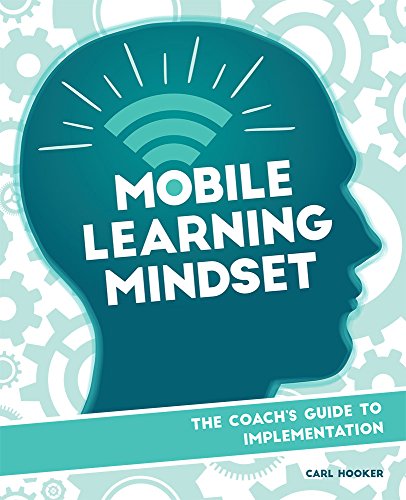
Mobile Learning Mindset: The Coach’s Guide to Implementation offers staff development activities to help education coaches prepare teachers participating in a mobile device initiative in their school.
The six-book Mobile Learning Mindset series shares practical knowledge and strategies for successful implementation of K-12 BYOD programs and 1:1 initiatives. The collection provides district leaders, principals, teachers, IT staff, educational coaches and parents with the information they need to make any mobile learning program a success. This book also features an interview with educational technology trainer and consultant Kathy Schrock.
Tools and activities throughout the book will help coaches:
- Effectively model technology use.
- Identify stakeholders and cultivate buy-in.
- Build a culture of creativity and shared ownership.
- Evaluate and adjust a mobile device program.
This book, the third in the series, focuses on best practices for professional development around a 1:1 initiative, with ideas on how to make learning more engaging for your staff.
Audience: Tech Coaches/Coordinators
Die Inhaltsangabe kann sich auf eine andere Ausgabe dieses Titels beziehen.
Über die Autorinnen und Autoren
Carl Hooker has been part of a strong educational shift with technology integration in schools since 1998. His education background, technical expertise and humor make him a driving force for this change. As director of innovation and digital learning at Eanes ISD in Texas, he helped spearhead a mobile learning program that put iPads in the hands of all 8,000 students across the district. He is also the founder of “iPadpalooza” (ipadpalooza.com), a three-day learning festival in celebration of the shift iPads have brought about in education and beyond. Hooker was named Tech & Learning magazine’s 2014 Leader of the Year, and he is a member of the Apple Distinguished Educator class of 2013.
Carl Hooker has been part of a strong educational shift with technology integration in schools since 1998. His unique blend of educational background, technical expertise, and humor make him a driving force for this change. As director of innovation and digital learning at Eanes ISD in Texas, he helped spearhead a mobile learning program that put iPads in the hands of all 8,000 students across the district. He is also the founder of “iPadpalooza” (http://ipadpalooza.com), a three-day learning festival in celebration of the shift iPads have brought about in education and beyond. Hooker was named Tech & Learning Magazine’s 2014 Leader of the Year and he is a member of the Apple Distinguished Educator class of 2013.
Auszug. © Genehmigter Nachdruck. Alle Rechte vorbehalten.
Chapter 6: Finding Learning Opportunities
As a classroom teacher, I always felt like time was continually being compressed. I would always start the year with the best of intentions interms of teaching content, but then at some point in the middle of year things would become unraveled. Maybe it was a particularly challenging student added to my class, some extra job duties thrown at me, or a new initiative by the district that ended up eating up a majority of my time with my students.
Knowing that time is finite with students, most districts (including ours for the most part) try to cram all of their professional learning into either the beginning of summer or the end. This practice has been tried and true for those districts on the traditional calendar. Schools that have adopted
year-round calendars see the benefit of year-round schooling in not only the students’ capacity to learn but also the increase in opportunities for adult learning. But what do you do if you are on a traditional school calendar? How do you find opportunities for learning throughout the year? Let’s look at these questions and others that may arise when planning professional learning, as well as some ideas and solutions.
Where Does Learning Happen?
One of my favorite questions to ask a group of adults is to identify places where learning happens or where they go to create. Many will identify a soft chair at home, sitting on their porch, or visiting the local coffee shop. Our classrooms and professional learning spaces are not necessarily environments that are conducive to learning. The traditional “desks in rows” design was great for disseminating information to individuals and an efficient way for custodial staff to clean in between the desks.
The “all-in-one” desk itself is really isolating and uncomfortable in its design. I’ll get more into learning spaces and the classroom in book 4, but we need to consider learning spaces when we train adults. too. I’ve visited a few districts that have designed professional learning rooms with comfortable chairs on wheels and movable tables. However, many districts don’t have that luxury and use whatever space available to them (usually a library, cafeteria. or classroom) to host teacher inservice.
I think we as educators can be trapped by our own past experiences when it comes to where learning takes place. Since our last years of learning as adults happened in a college classroom, usually lasting for a 3-hour chunk, we do the same thing as professionals—having professional development from 8:30 to 11:30, with a break for lunch, followed by another 3-hour chunk starting around 12:30. The only indicator that teachers are getting professional learning is a sign-in sheet, generally in the morning and afternoon, that indicates their presence in the room. It’s almost as if just being the room means they are getting the training they need. Having attended and presented hundreds of professional learning sessions, I can tell you that for some people, while they may be physically present in the room, they aren’t really active learners.
Where Does Learning Happen?
One of my favorite questions to ask a group of adults is to identify places where learning happens or where they go to create. Many will identify a soft chair at home, sitting on their porch, or visiting the local coffee shop. Our classrooms and professional learning spaces are not necessarily environments that are conducive to learning. The traditional “desks in rows” design was great for disseminating information to individuals and an efficient way for custodial staff to clean in between the desks.
The “all-in-one” desk itself is really isolating and uncomfortable in its design. I’ll get more into learning spaces and the classroom in book 4, but we need to consider learning spaces when we train adults. too. I’ve visited a few districts that have designed professional learning rooms with comfortable chairs on wheels and movable tables. However, many districts don’t have that luxury and use whatever space available to them (usually a library, cafeteria. or classroom) to host teacher inservice.
I think we as educators can be trapped by our own past experiences when it comes to where learning takes place. Since our last years of learning as adults happened in a college classroom, usually lasting for a 3-hour chunk, we do the same thing as professionals—having professional development from 8:30 to 11:30, with a break for lunch, followed by another 3-hour chunk starting around 12:30. The only indicator that teachers are getting professional learning is a sign-in sheet, generally in the morning and afternoon, that indicates their presence in the room. It’s almost as if just being the room means they are getting the training they need. Having attended and presented hundreds of professional learning sessions, I can tell you that for some people, while they may be physically present in the room, they aren’t really active learners.
How Do You Know They Are Learning If They Aren’t in the Room?
Knowing that learning can happen anywhere and anytime, I proposed an idea that I had learned about from some other innovative school districts— that teachers could get credit online in a couple of different formats. One was taking an online iTunes U course where they created actual classroom projects to turn in as proof of learning. The other was the idea that teachers could attend online Twitter chats for professional development credit. After proposing both of these ideas, I was approached by a fellow administrator
(who oversaw much of the professional learning in the district), who asked me, “How do you know they are learning if they aren’t in the room?” My response quite simply was, “How do you know they are learning if they are in the room?”
Simply being somewhat attentive during a 6-hour workshop means that you have learned something just by being there. I’ve seen teachers in the back
of rooms cutting our letters for a bulletin board, grading papers, checking Facebook, and even shopping online. I’m not sure that in those cases being present guarantees any learning is taking place. Adults can still get learning done while doing all of these things, but I’d hazard a guess that your profes- sional development isn’t that compelling if someone in your audience just spent 30 minutes updating their latest Pinterest board with birthday party ideas for a 4-year old.
Online Courses for PD
I’ve tried the online course model a couple of different ways. The first was very much intended to be a “flipped” concept for professional development.
Teachers would watch a series of videos on various topics and tools, and then we would convene in a physical space as group to spend time applying what we had learned. Although well intended, this ended up being a failure, as many teachers didn’t watch the videos before attending the workshop as I had hoped. As a result, we spent most of the workshop going over what the training videos went over, frustrating those who had done their preparation. Although I gave teachers credit for attending and taking part in the “flipped PD” experiment, I’d say this method for professional learning wasn’t very effective for those who attended.
For my second iteration, I decided to stick with a solely online concept. I’ve had some experiences with these courses using iTunes U, with the parents in the community taking my “Digital Parenting 101” course (http://mrhook. it/101—must be on an iOS device to view). However, there were negatives attached to that course: All you had to do was pass a quiz at the end of each section and participate in the community forums to qualify for credit.
To truly make the learning embedded, the course enrollees must demonstrate their learning of the topic or tool in a variety of formats. These series of chal- lenges would be open-ended in terms of content but intended to showcase a particular tool or app while enabling and encouraging the enrollees to inte- grate their own curriculum into the completed projects. I found a far greater success rate in terms of completion using this model, and the feedback from those who completed the course indicated that they felt that they learned quite a bit more because they were forced to demonstrate understanding, rather than sitting and listening to someone tell them about a particular tool. While there is still some room for improvement on this model (there was virtually no collaboration between the students), it was a good next step into the realm of online professional learning.
I’ve tried the online course model a couple of different ways. The first was very much intended to be a “flipped” concept for professional development.
Teachers would watch a series of videos on various topics and tools, and then we would convene in a physical space as group to spend time applying what we had learned. Although well intended, this ended up being a failure, as many teachers didn’t watch the videos before attending the workshop as I had hoped. As a result, we spent most of the workshop going over what the training videos went over, frustrating those who had done their preparation. Although I gave teachers credit for attending and taking part in the “flipped PD” experiment, I’d say this method for professional learning wasn’t very effective for those who attended.
For my second iteration, I decided to stick with a solely online concept. I’ve had some experiences with these courses using iTunes U, with the parents in the community taking my “Digital Parenting 101” course (http://mrhook. it/101—must be on an iOS device to view). However, there were negatives attached to that course: All you had to do was pass a quiz at the end of each section and participate in the community forums to qualify for credit.
To truly make the learning embedded, the course enrollees must demonstrate their learning of the topic or tool in a variety of formats. These series of chal- lenges would be open-ended in terms of content but intended to showcase a particular tool or app while enabling and encouraging the enrollees to inte- grate their own curriculum into the completed projects. I found a far greater success rate in terms of completion using this model, and the feedback from those who completed the course indicated that they felt that they learned quite a bit more because they were forced to demonstrate understanding, rather than sitting and listening to someone tell them about a particular tool. While there is still some room for improvement on this model (there was virtually no collaboration between the students), it was a good next step into the realm of online professional learning.
Twitter Chats for PD Credit
One of the more innovative ideas I’ve heard districts try is the idea that staff participate in six twitter chats to earn their 6 hours of credit. I first learned about this from our neighboring district in Manor, Texas, who regularly hosted a weekly twitter chat using the #ManorISD hashtag. In the spring of 2014, a small group of teachers offered to participate in a six-part series of twitter chats using the #EanesChat hashtag. We had multiple people moderate the chat based on their area of expertise and had a wide range of teachers from kindergarten to AP Calculus participating in the chat.
This was a great first model, but it lacked some of the flexibility that comes with online...
One of the more innovative ideas I’ve heard districts try is the idea that staff participate in six twitter chats to earn their 6 hours of credit. I first learned about this from our neighboring district in Manor, Texas, who regularly hosted a weekly twitter chat using the #ManorISD hashtag. In the spring of 2014, a small group of teachers offered to participate in a six-part series of twitter chats using the #EanesChat hashtag. We had multiple people moderate the chat based on their area of expertise and had a wide range of teachers from kindergarten to AP Calculus participating in the chat.
This was a great first model, but it lacked some of the flexibility that comes with online...
„Über diesen Titel“ kann sich auf eine andere Ausgabe dieses Titels beziehen.
Suchergebnisse für Mobile Learning Mindset: The Coach's Guide to Implementa...

Beispielbild für diese ISBN
Mobile Learning Mindset: The Coach's Guide to Implementation
Verlag:
International Society for Technology in Education, 2016
ISBN 10: 1564843750
ISBN 13: 9781564843753
Gebraucht
Softcover
Anbieter: World of Books (was SecondSale), Montgomery, IL, USA
Verkäuferbewertung 5 von 5 Sternen

Zustand: Good. Item in good condition. Textbooks may not include supplemental items i.e. CDs, access codes etc. Artikel-Nr. 00088285610
Gebraucht kaufen
EUR 3,21
Versand gratis
Versand innerhalb von USA
Versand innerhalb von USA
Anzahl: 1 verfügbar