
Verwandte Artikel zu The Way of the Explorer, Revised Edition: An Apollo...
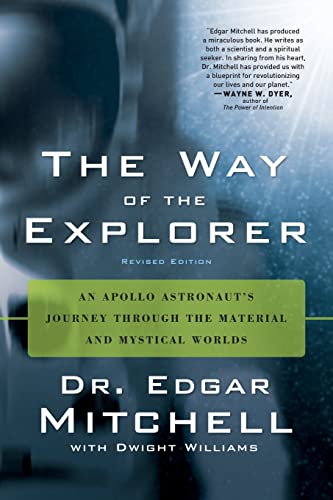
The Way of the Explorer, Revised Edition: An Apollo Astronaut's Journey Through the Material and Mystical Worlds - Softcover
Inhaltsangabe
In February 1971, as Apollo 14 astroanaut Edgar Mitchell hurtled Earthward through space, he was engulfed by a profound sense of universal connectedness. He intuitively sensed that his presence and that of the planet in the window were all part of a deliberate, universal process and that the glittering cosmos itself was in some way conscious. The experience was so overwhelming, Mitchell knew his life would never be the same.
Die Inhaltsangabe kann sich auf eine andere Ausgabe dieses Titels beziehen.
Über die Autorin bzw. den Autor
Dr. Edgar Mitchell, a graduate of MIT with a doctorate in aeronautics and astronautics, is the founder of the Institute of Noetic Sciences and cofounder of the Association of Space Explorers. As an astronaut, he was backup Lunar Module Pilot on Apollo 10 and 16, and flew as Lunar Module Pilot on Apollo 14. He has spent 35 years studying human consciousness and psychic and paranormal phenomena in the search for a common ground between science and spirit. Mitchell lectures regularly at dozens of conferences across the world. He lives in Florida.
Dwight Williams, recipient of the 1989 Jovanovich Award for short fiction, is the author of Raising Lazarus. He lives in Colorado.
Auszug. © Genehmigter Nachdruck. Alle Rechte vorbehalten.
The Way of the Explorer
An Apollo Astronaut's Journey Through the Material and Mystical worlds
By Edgar Mitchell, Dwight WilliamsRed Wheel/Weiser LLC
Copyright © 2008 Edgar Mitchell
All rights reserved.
ISBN: 978-1-56414-977-0All rights reserved.
Contents
View From the Velvet Blackness: An Inspiration,
Sea of Grass: The Early Years,
Sea of Sky: Preparation,
Into the Vacuum: The Mission,
Down and In: The New Journey,
Invisible Realities,
A Dyadic Model: Interconnections,
Portraits of Reality: Interpretation and Paradox,
Synthesis,
Toward the Future,
Epilogue,
Notes,
Bibliography,
Index,
About the Author,
CHAPTER 1
In January of 1971, I boarded a spacecraft and traveled to an airless world of brilliant clarity. The soil there is barren and gray, and the horizon always further than it appears. It is a static world that has only known silence. Upon its landscape human perspective is altered.
During the 15 years prior to the moment my friend Alan Shepard and I opened the door to the lunar module and descended the ladder to the dusty surface of the moon, my days had progressed more or less as I'd planned. But this wasn't the achievement of an individual, a space agency, or even a country. This was, rather, the achievement of our species, our civilization. Life had come a long way since it first sprang from the Earth's rock and water. And now, hundreds of thousands of miles away on that small blue and white sphere, millions of human beings were watching two men walk about the surface of another world for the third time in our history. These were momentous days, extraordinary for their audacity, extraordinary for the coordination of minds and skills that made them possible. A lot of hard work by some of the most brilliant men and women on the planet had culminated in making us a space-faring species. But what I did not know as Alan and I worked on that waterless world, in a mountainous region known as Fra Mauro, was that I had yet to grasp what would prove most extraordinary about the journey.
It wasn't until after we had made rendezvous with our friend Stu Roosa in The Kittyhawk command module and were hurtling Earthward at several miles per second, that I had time to relax in weightlessness and contemplate that blue jewel-like home planet suspended in the velvety blackness from which we had come. What I saw out the window was all I had ever known, all I had ever loved and hated, all that I had longed for, all that I once thought had ever been and ever would be. It was all there suspended in the cosmos on that fragile little sphere. What I experienced was a grand epiphany accompanied by exhilaration, an event I would later refer to in terms that could not be more foreign to my upbringing in west Texas, and later, New Mexico. From that moment on my life would take a radically different course.
What I experienced during that three-day trip home was nothing short of an overwhelming sense of universal connectedness. I actually felt what has been described as an ecstasy of unity. It occurred to me that the molecules of my body and the molecules of the spacecraft itself were manufactured long ago in the furnace of one of the ancient stars that burned in the heavens about me. And there was the sense that our presence as space travelers, and the existence of the universe itself, was not accidental, but that there was an intelligent process at work. I perceived the universe as in some way conscious. The thought was so large it seemed at the time inexpressible, and to a large degree it still is. Perhaps all I have gained is a greater sense of understanding, and perhaps a more articulate means of expressing it. But even in the midst of epiphany I did not attach mystical or otherworldly origin to the phenomenon. Rather, I thought it curious and exciting that the brain could spontaneously reorganize information to produce such a fantastically strange experience.
By the time the red-and-white parachutes blossomed in the life-giving atmosphere of Earth three days later and our capsule splashed into the ocean, my life's direction was about to change. I didn't know it then, but it was. What lay in store was an entirely different kind of journey, one that would occupy more than 40 years of my life. I have often likened that experience to a game of pick-up sticks: Within a few days my beliefs about life were thrown into the air and scattered about. It took me 20 years to pick up those sticks and make some kind of sense of it all, and I now believe I can describe it with an adequate degree of comprehensibility and scientific validity. I like to think that this book is the result of both journeys.
* * *
Shortly after returning from the moon I was often invited to speak at various occasions. In lecture halls and auditoriums across the country two questions were inevitably asked. The first was, how do you go to the bathroom in space? The second was, what did it feel like to walk on the moon? The first was usually asked by children because they really wanted to know, and are less inhibited than adults. The second quickly became irritating simply because I didn't know the answer. It was certainly a sensible question — I was an astronaut, after all, one of 12 men to have walked upon the surface of the moon. People would naturally want to know. But when I finally asked myself why the question was so bothersome, it occurred to me that there were emotional realms lodged deep in my own psyche that I hadn't fully explored. I now find it interesting and a bit amusing that it bothered me at all. But it did, and for a very particular reason: Somehow I couldn't resurrect the feelings I had while there, though my thoughts and actions were easily summoned.
Years ago I began my flying career as a Navy pilot. On heaving black seas in the middle of the night I have landed large jet aircraft on rather small, converted World War II aircraft carriers — a situation in which, quite literally, your life depends on the cumulative experience you have acquired through many years of practice. It was intuition you depended on, it was feel adding to normal sensory data with which you guided your aircraft as you carefully tried to avoid a collision with the deck. But it wasn't a feeling that created emotion in the moment. Out of necessity, emotion had to be suppressed. What I lacked in my early years was an understanding of how intuition, emotion, and intellect all interrelate.
Not long after entering the lecture circuit, I asked two friends, Dr. Jean Houston and Robert Masters, to regress me under hypnosis so that I might learn a few things about myself. I wanted to know both why I didn't remember my feelings while on the moon, and why the question irritated me so much. Ultimately I wanted to understand what psychic-sensitive and highly intuitive people were aware of, and what they experienced. But first I had to examine myself — to examine all my wants and needs and flaws, and honestly describe myself to the point that I could say, yes, I am like that. Thus began an arduous study of my own inner experiences.
After leaving NASA in 1972, I founded the Institute of Noetic Sciences in California. This would fund much of the scientific research that I wanted to see accomplished to help me better resolve the complex insights from my experiences in space. Since then the institute has thrived, but it has been a bit of a challenge, at times, to keep it from becoming a church. Some of the folks I've come across in my lifetime have held some eccentric...
„Über diesen Titel“ kann sich auf eine andere Ausgabe dieses Titels beziehen.
Suchergebnisse für The Way of the Explorer, Revised Edition: An Apollo...

Beispielbild für diese ISBN
The Way of the Explorer, Revised Edition : An Apollo Astronaut's Journey Through the Material and Mystical Worlds
Anbieter: Better World Books: West, Reno, NV, USA
Verkäuferbewertung 5 von 5 Sternen

Zustand: Very Good. Pages intact with possible writing/highlighting. Binding strong with minor wear. Dust jackets/supplements may not be included. Stock photo provided. Product includes identifying sticker. Better World Books: Buy Books. Do Good. Artikel-Nr. 12399429-6
Gebraucht kaufen
EUR 13,49
Versand gratis
Versand innerhalb von USA
Versand innerhalb von USA
Anzahl: 2 verfügbar
Beispielbild für diese ISBN
The Way of the Explorer, Revised Edition : An Apollo Astronaut's Journey Through the Material and Mystical Worlds
Anbieter: Better World Books, Mishawaka, IN, USA
Verkäuferbewertung 5 von 5 Sternen
Zustand: Good. Pages intact with minimal writing/highlighting. The binding may be loose and creased. Dust jackets/supplements are not included. Stock photo provided. Product includes identifying sticker. Better World Books: Buy Books. Do Good. Artikel-Nr. 9979934-6
Gebraucht kaufen
EUR 13,49
Versand gratis
Versand innerhalb von USA
Versand innerhalb von USA
Anzahl: 1 verfügbar
Beispielbild für diese ISBN
The Way of the Explorer, Revised Edition: An Apollo Astronaut's Journey Through the Material and Mystical Worlds
Anbieter: ThriftBooks-Reno, Reno, NV, USA
Verkäuferbewertung 5 von 5 Sternen
Paperback. Zustand: Very Good. No Jacket. May have limited writing in cover pages. Pages are unmarked. ~ ThriftBooks: Read More, Spend Less. Artikel-Nr. G1564149773I4N00
Gebraucht kaufen
EUR 18,89
Versand gratis
Versand innerhalb von USA
Versand innerhalb von USA
Anzahl: 1 verfügbar
Beispielbild für diese ISBN
The Way of the Explorer, Revised Edition: An Apollo Astronaut's Journey Through the Material and Mystical Worlds
Anbieter: ThriftBooks-Phoenix, Phoenix, AZ, USA
Verkäuferbewertung 5 von 5 Sternen
Paperback. Zustand: Good. No Jacket. Pages can have notes/highlighting. Spine may show signs of wear. ~ ThriftBooks: Read More, Spend Less. Artikel-Nr. G1564149773I3N00
Gebraucht kaufen
EUR 18,89
Versand gratis
Versand innerhalb von USA
Versand innerhalb von USA
Anzahl: 1 verfügbar
Beispielbild für diese ISBN
The Way of the Explorer, Revised Edition: An Apollo Astronaut's Journey Through the Material and Mystical Worlds
Anbieter: ThriftBooks-Phoenix, Phoenix, AZ, USA
Verkäuferbewertung 5 von 5 Sternen
Paperback. Zustand: Very Good. No Jacket. May have limited writing in cover pages. Pages are unmarked. ~ ThriftBooks: Read More, Spend Less. Artikel-Nr. G1564149773I4N00
Gebraucht kaufen
EUR 18,89
Versand gratis
Versand innerhalb von USA
Versand innerhalb von USA
Anzahl: 1 verfügbar
Beispielbild für diese ISBN
The Way of the Explorer, Revised Edition: An Apollo Astronaut's Journey Through the Material and Mystical Worlds
Anbieter: ThriftBooks-Reno, Reno, NV, USA
Verkäuferbewertung 5 von 5 Sternen
Paperback. Zustand: Good. No Jacket. Pages can have notes/highlighting. Spine may show signs of wear. ~ ThriftBooks: Read More, Spend Less. Artikel-Nr. G1564149773I3N00
Gebraucht kaufen
EUR 18,89
Versand gratis
Versand innerhalb von USA
Versand innerhalb von USA
Anzahl: 1 verfügbar
Beispielbild für diese ISBN
The Way of the Explorer, Revised Edition: An Apollo Astronaut's Journey Through the Material and Mystical Worlds
Anbieter: ThriftBooks-Phoenix, Phoenix, AZ, USA
Verkäuferbewertung 5 von 5 Sternen
Paperback. Zustand: Fair. No Jacket. Readable copy. Pages may have considerable notes/highlighting. ~ ThriftBooks: Read More, Spend Less. Artikel-Nr. G1564149773I5N00
Gebraucht kaufen
EUR 18,89
Versand gratis
Versand innerhalb von USA
Versand innerhalb von USA
Anzahl: 1 verfügbar
Beispielbild für diese ISBN
The Way of the Explorer, Revised Edition: An Apollo Astronaut's Journey Through the Material and Mystical Worlds
Anbieter: ThriftBooks-Atlanta, AUSTELL, GA, USA
Verkäuferbewertung 5 von 5 Sternen
Paperback. Zustand: Good. No Jacket. Pages can have notes/highlighting. Spine may show signs of wear. ~ ThriftBooks: Read More, Spend Less. Artikel-Nr. G1564149773I3N00
Gebraucht kaufen
EUR 18,94
Versand gratis
Versand innerhalb von USA
Versand innerhalb von USA
Anzahl: 1 verfügbar
Beispielbild für diese ISBN
The Way of the Explorer, Revised Edition: An Apollo Astronaut's Journey Through the Material and Mystical Worlds
Anbieter: ThriftBooks-Dallas, Dallas, TX, USA
Verkäuferbewertung 5 von 5 Sternen
Paperback. Zustand: Very Good. No Jacket. May have limited writing in cover pages. Pages are unmarked. ~ ThriftBooks: Read More, Spend Less. Artikel-Nr. G1564149773I4N00
Gebraucht kaufen
EUR 18,94
Versand gratis
Versand innerhalb von USA
Versand innerhalb von USA
Anzahl: 1 verfügbar
Beispielbild für diese ISBN
The Way of the Explorer, Revised Edition: An Apollo Astronaut's Journey Through the Material and Mystical Worlds
Anbieter: ThriftBooks-Dallas, Dallas, TX, USA
Verkäuferbewertung 5 von 5 Sternen
Paperback. Zustand: Good. No Jacket. Pages can have notes/highlighting. Spine may show signs of wear. ~ ThriftBooks: Read More, Spend Less. Artikel-Nr. G1564149773I3N00
Gebraucht kaufen
EUR 18,94
Versand gratis
Versand innerhalb von USA
Versand innerhalb von USA
Anzahl: 1 verfügbar