
Verwandte Artikel zu Road Ecology: Science and Solutions
Inhaltsangabe
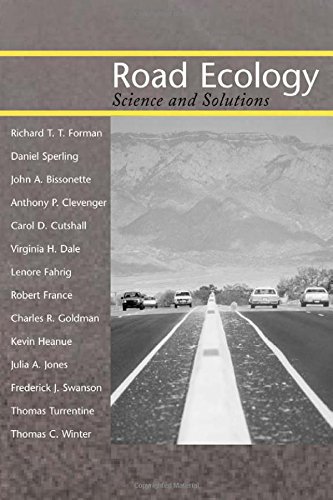
A central goal of transportation is the delivery of safe and efficient services with minimal environmental impact. In practice, though, human mobility has flourished while nature has suffered. Awareness of the environmental impacts of roads is increasing, yet information remains scarce for those interested in studying, understanding, or minimizing the ecological effects of roads and vehicles. Road Ecology addresses that shortcoming by elevating previously localized and fragmented knowledge into a broad and inclusive framework for understanding and developing solutions. The book brings together fourteen leading ecologists and transportation experts to articulate state-of-the-science road ecology principles, and presents specific examples that demonstrate the application of those principles. Diverse theories, concepts, and models in the new field of road ecology are integrated to establish a coherent framework for transportation policy, planning, and projects. Topics examined include:foundations of road ecology roads, vehicles, and transportation planning vegetation and roadsides wildlife populations and mitigation water, sediment, and chemical flows aquatic ecosystems wind, noise, and atmospheric effects road networks and landscape fragmentation Road Ecology links ecological theories and concepts with transportation planning, engineering, and travel behavior. With more than 100 illustrations and examples from around the world, it is an indispensable and pioneering work for anyone involved with transportation, including practitioners and planners in state and province transportation departments, federal agencies, and nongovernmental organizations. The book also opens up an important new research frontier for ecologists.
Die Inhaltsangabe kann sich auf eine andere Ausgabe dieses Titels beziehen.
Über die Autorin bzw. den Autor
Richard T.T. Forman, Kevin Heanue, Julia Jones, Frederick Swanson, Thomas Turrentine, Thomas C. Winter, Daniel Sperling, John Bissonette, Anthony P. Clevenger, Carol D. Cutshall, Virginia H. Dale, Lenore Fahrig, Robert France, and Charles R. Goldman
Auszug. © Genehmigter Nachdruck. Alle Rechte vorbehalten.
Road Ecology
Science and Solutions
By Richard T.T. Forman, Daniel Sperling, John A. BissonetteISLAND PRESS
Copyright © 2003 Island Press
All rights reserved.
ISBN: 978-1-55963-933-0All rights reserved.
Contents
About Island Press,
About the Federal Highway Administration,
About the California Department of Transportation,
About The Nature Conservancy,
Title Page,
Copyright Page,
Foreword,
Preface,
Acknowledgments,
The Metric System in North America,
PART I - Roads, Vehicles, and Ecology,
CHAPTER 1 - Foundations of Road Ecology,
CHAPTER 2 - Roads,
CHAPTER 3 - Vehicles and Planning,
PART II - Vegetation and Wildlife,
CHAPTER 4 - Roadsides and Vegetation,
CHAPTER 5 - Wildlife Populations,
CHAPTER 6 - Mitigation for Wildlife,
PART III - Water, Chemicals, and Atmosphere,
CHAPTER 7 - Water and Sediment Flows,
CHAPTER 8 - Chemicals along Roads,
CHAPTER 9 - Aquatic Ecosystems,
CHAPTER 10 - Wind and Atmospheric Effects,
PART IV - Road Systems and Further Perspectives,
CHAPTER 11 - Road Systems Linked with the Land,
CHAPTER 12 - The Four Landscapes with Major Road Systems,
CHAPTER 13 - Roads and Vehicles in Natural Landscapes,
CHAPTER 14 - Further Perspectives,
Bibliography,
About the Authors,
Index,
Island Press Board of Directors,
CHAPTER 1
Foundations of Road Ecology
What is the use of running when we are not on the right road?
—German proverb
... great technical advances occurred in the technology of pavement structures and surfacings during the nineteenth century. Almost in their entirety, these advances predated the development of the motorcar.... Communities at last saw an alternative to a life full of mud, stench, dust, and noise.
—M. G. Lay, Ways of the World, 1992
Transportation lies at the core of society. It is what links us together. Both businesses and individuals depend on safe and efficient mobility. In the past century in North America, roads and vehicles have enlarged the spiderweb of our interactions and activities. Now we routinely use vehicles on roads to visit a friend, go shopping, travel to school, or dine out.
Unfortunately, with this dependence on roads and vehicles comes deep and widespread environmental damage. As a result, environmental protection now plays a key role in transportation policy and decisions. Ever-increasing resources are devoted to minimizing the adverse impacts of roads and vehicles on species and ecological systems.
Environmental protection is viewed and approached from many perspectives. The engineer seeks technical solutions and designs technical devices to abate damages. The economist seeks the best use of societal resources and identifies actions that yield the highest return. Legislators and lawyers craft sharply defined rules to preclude certain behaviors. Ecologists emphasize that we are too human centered in our responses and seek to elevate the importance of plants and animals. They seek to maintain the diverse characteristics and services of intact, or undegraded, nature and to maintain or reestablish relatively natural ecological systems in human-imprinted areas. Meshing this goal with the economic and social activities of our busy highways remains a daunting challenge.
In market economies, prices are a primary mechanism for allocating resources and guiding behavior. Environmental impacts remain largely outside the marketplace. When we drive a car, we degrade the quality of everyone's air. But we do not pay for damage to health or vegetation. If we did, we would probably pollute less. Although conceptual models exist, no effective mechanism in society ensures a proper balance between supply and demand for clean air. The same basic problem exists for noise and water pollution, climate change, aesthetics, loss of wetlands, and loss of biological diversity. The absence of a pricing mechanism has led to regulatory approaches.
Environmental protection is complex yet more easily regulated in transportation than in most other sectors of society because transportation networks are mainly in the public domain. Governments at various levels build and maintain most roads and largely own, operate, and subsidize transit services. Governments also own and manage many ecologically important lands where public roads exist (Figure 1.1). Entwinement of transportation with the public domain means that public goals, such as environmental protection, play a more direct role in investments and institutional behavior. Public pressure can translate directly into action by elected leaders and public officials.
Environmental protection came to the forefront of public discourse in the 1960s. Such environmental disasters as London's "killer smog," which killed scores of people, and the Cuyahoga River in Ohio (USA), which caught fire, galvanized worldwide attention. The realization that newly developed and widely used chemicals could decimate ecosystems and poison humans on an extensive scale, a discovery highlighted by Rachel Carson's Silent Spring, catalyzed public action.
In the transportation sector, air pollution proved the initial and most compelling call to action, first in California and then elsewhere. Widespread pollution in the USA culminated with the federal 1970 Clean Air Act, which accelerated the process of eliminating lead from gasoline and reducing vehicular pollution. This law was followed in the mid-1970s by fuel economy rules and "gas guzzler" disincentives. Japan pursued roughly the same track in reducing emissions and fuel consumption, as did Western Europe somewhat later.
In a larger sense, many nations were becoming more environmentally conscious as the 1960s ended. Rules and laws were passed to reduce noise and decrease air and water pollution. Greater concern for aesthetics was emerging. In the USA, the National Environmental Policy Act (NEPA) became law, which required that environmental impacts be documented for new projects using federal funds. By the 1970s, environmental and aesthetic concerns were beginning to play an important, if not always well informed, role in the design, construction, and operation of roads.
But even as environmental consciousness evolved, knowledge and political will lagged. As one concern was addressed, another would emerge. As road-side aesthetics received greater emphasis, concerns about non-native and invasive species grew. A phalanx of new rules and institutions emerged to control a carefully specified set of air and water pollutants. But new threats from new pollutants kept appearing. As four-wheel-drive and other high-clearance vehicles tended to replace cars, remote natural areas became accessible to recreational vehicles, and telecommuting from rural areas gained appeal, the threat to ecologically sensitive land increased.
Furthermore, environmental impacts have become global in nature, through the cascading accumulation of ecological stresses and altering of ecological interactions of the earth system itself. The pervasiveness of roads and their cumulative effect on the environment are now of increasing concern for habitat fragmentation, rare species, and aquatic ecosystems.
What Is Road Ecology?
In 1994, a lone ecologist slowly drove a long, winding road up a canyon in the Rocky Mountains. Front views, like an ancient movie, flashed back and forth from towering granite cliffs to precipitous forest slopes. The road, an engineering...
„Über diesen Titel“ kann sich auf eine andere Ausgabe dieses Titels beziehen.
Suchergebnisse für Road Ecology: Science and Solutions

Beispielbild für diese ISBN
Road Ecology: Science and Solutions
Verlag:
Island Press (edition ), 2002
ISBN 10: 1559639334
ISBN 13: 9781559639330
Gebraucht
Paperback
Anbieter: BooksRun, Philadelphia, PA, USA
Verkäuferbewertung 5 von 5 Sternen

Paperback. Zustand: Fair. The item might be beaten up but readable. May contain markings or highlighting, as well as stains, bent corners, or any other major defect, but the text is not obscured in any way. Artikel-Nr. 1559639334-7-1
Gebraucht kaufen
EUR 6,44
Versand gratis
Versand innerhalb von USA
Versand innerhalb von USA
Anzahl: 1 verfügbar
Beispielbild für diese ISBN
Road Ecology : Science and Solutions
Anbieter: Better World Books: West, Reno, NV, USA
Verkäuferbewertung 5 von 5 Sternen
Zustand: Very Good. 1 Edition. Former library copy. Pages intact with possible writing/highlighting. Binding strong with minor wear. Dust jackets/supplements may not be included. Includes library markings. Stock photo provided. Product includes identifying sticker. Better World Books: Buy Books. Do Good. Artikel-Nr. 13983417-20
Gebraucht kaufen
EUR 6,92
Versand gratis
Versand innerhalb von USA
Versand innerhalb von USA
Anzahl: 2 verfügbar
Beispielbild für diese ISBN
Road Ecology : Science and Solutions
Anbieter: Better World Books, Mishawaka, IN, USA
Verkäuferbewertung 5 von 5 Sternen
Zustand: Very Good. 1 Edition. Pages intact with possible writing/highlighting. Binding strong with minor wear. Dust jackets/supplements may not be included. Stock photo provided. Product includes identifying sticker. Better World Books: Buy Books. Do Good. Artikel-Nr. 5531421-75
Gebraucht kaufen
EUR 6,92
Versand gratis
Versand innerhalb von USA
Versand innerhalb von USA
Anzahl: 1 verfügbar
Beispielbild für diese ISBN
Road Ecology : Science and Solutions
Anbieter: Better World Books Ltd, Dunfermline, Vereinigtes Königreich
Verkäuferbewertung 5 von 5 Sternen
Zustand: Good. 1 Edition. Former library copy. Pages intact with minimal writing/highlighting. The binding may be loose and creased. Dust jackets/supplements are not included. Includes library markings. Stock photo provided. Product includes identifying sticker. Better World Books: Buy Books. Do Good. Artikel-Nr. 13104228-6
Gebraucht kaufen
EUR 9,21
EUR 5,97 Versand
Versand von Vereinigtes Königreich nach USA
Versand von Vereinigtes Königreich nach USA
Anzahl: 1 verfügbar
Beispielbild für diese ISBN
Road Ecology: Science and Solutions
Anbieter: Phatpocket Limited, Waltham Abbey, HERTS, Vereinigtes Königreich
Verkäuferbewertung 5 von 5 Sternen
Zustand: Good. Your purchase helps support Sri Lankan Children's Charity 'The Rainbow Centre'. Ex-library, so some stamps and wear, but in good overall condition. Our donations to The Rainbow Centre have helped provide an education and a safe haven to hundreds of children who live in appalling conditions. Artikel-Nr. Z1-K-013-02053
Gebraucht kaufen
EUR 5,72
EUR 12,71 Versand
Versand von Vereinigtes Königreich nach USA
Versand von Vereinigtes Königreich nach USA
Anzahl: 1 verfügbar
Beispielbild für diese ISBN
Road Ecology: Science and Solutions
Anbieter: Ria Christie Collections, Uxbridge, Vereinigtes Königreich
Verkäuferbewertung 5 von 5 Sternen
Zustand: New. In English. Artikel-Nr. ria9781559639330_new
Neu kaufen
EUR 84,40
EUR 13,49 Versand
Versand von Vereinigtes Königreich nach USA
Versand von Vereinigtes Königreich nach USA
Anzahl: Mehr als 20 verfügbar
Beispielbild für diese ISBN
Road Ecology Science and Solutions
Anbieter: Revaluation Books, Exeter, Vereinigtes Königreich
Verkäuferbewertung 5 von 5 Sternen
Paperback. Zustand: Brand New. 1st edition. 481 pages. 8.75x6.00x1.50 inches. In Stock. Artikel-Nr. x-1559639334
Neu kaufen
EUR 83,80
EUR 14,93 Versand
Versand von Vereinigtes Königreich nach USA
Versand von Vereinigtes Königreich nach USA
Anzahl: 2 verfügbar