
Verwandte Artikel zu Marine Conservation Biology: The Science Of Maintaining...
Inhaltsangabe
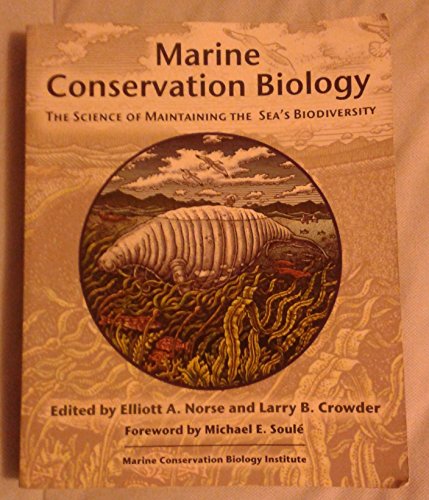
Humans are terrestrial animals, and our capacity to see and understand the importance and vulnerability of life in the sea has trailed our growing ability to harm it. While conservation biologists are working to address environmental problems humans have created on land, loss of marine biodiversity, including extinctions and habitat degradation, has received much less attention. At the same time, marine sciences such as oceanography and fisheries biology have largely ignored issues of conservation.
Marine Conservation Biology brings together for the first time in a single volume, leading experts from around the world to apply the lessons and thinking of conservation biology to marine issues. Contributors including James M. Acheson, Louis W. Botsford, James T. Carlton, Kristina Gjerde, Selina S. Heppell, Ransom A. Myers, Julia K. Parrish, Stephen R. Palumbi, and Daniel Pauly offer penetrating insights on the nature of marine biodiversity, what threatens it, and what humans can and must do to recover the biological integrity of the world's estuaries, coastal seas, and oceans.
Sections examine: distinctive aspects of marine populations and ecosystems; threats to marine biological diversity, singly and in combination; place-based management of marine ecosystems; the often-neglected human dimensions of marine conservation.
Marine Conservation Biology breaks new ground by creating the conceptual framework for the new field of marine conservation biology -- the science of protecting, recovering, and sustainably using the living sea. It synthesizes the latest knowledge and ideas from leading thinkers in disciplines ranging from larval biology to sociology, making it a must-read for research and teaching faculty, postdoctoral fellows, and graduate and advanced undergraduate students (who share an interest in bringing conservation biology to marine issues). Likewise, its lucid scientific examinations illuminate key issues facing environmental managers, policymakers, advocates, and funders concerned with the health of our oceans.
Die Inhaltsangabe kann sich auf eine andere Ausgabe dieses Titels beziehen.
Über die Autorin bzw. den Autor
Elliott A. Norse is the founder and president of Marine Conservation Biology Institute in Redmond, Washington. His books include Global Marine Biological Diversity (Island Press, 1993). Larry B. Crowder is Stephen Toth Professor of Marine Biology at Duke University Marine Laboratory in Beaufort, North Carolina.
Auszug. © Genehmigter Nachdruck. Alle Rechte vorbehalten.
Marine Conservation Biology
The Science of Maintaining the Sea's Biodiversity
By Elliott A. Norse, Larry B. CrowderISLAND PRESS
Copyright © 2005 Island Press
All rights reserved.
ISBN: 978-1-55963-662-9All rights reserved.
Contents
Title Page,
Copyright Page,
Dedication,
Foreword,
Preface: A New Science for a New Century,
Acknowledgments,
Acknowledgments,
1 - Why Marine Conservation Biology?,
2 - Back to the Future in Marine Conservation,
PART ONE - Marine Populations: The Basics,
3 - The Life of the Sea,
4 - The Allee Effect in the Sea,
5 - Extinction Risk in Marine Species,
6 - Behavioral Approaches to Marine Conservation,
PART TWO - Threats to Marine Biological Diversity,
7 - The Potential for Nutrient Overenrichment to Diminish Marine Biodiversity,
8 - The Magnitude and Consequences of Bioinvasions in Marine Ecosystems,
9 - Diseases and the Conservation of Marine Biodiversity,
10 - Multiple Stressors in Marine Systems,
PART THREE - The Greatest Threat: Fisheries,
11 - Global Fisheries and Marine Conservation: Is Coexistence Possible?,
12 - The Global Destruction of Bottom Habitats by Mobile Fishing Gear,
13 - Effects of Fishing on Long-Lived Marine Organisms,
14 - Evolutionary Impacts of Fishing on Target Populations,
15 - Sustainable Fisheries Achievable?,
PART FOUR - Place-Based Management of Marine Ecosystems,
16 - Protected Areas and Biodiversity Conservation,
17 - Marine Reserve Function and Design for Fisheries Management,
18 - Place-Based Ecosystem Management in the Open Ocean,
19 - Metapopulation Structure and Marine Reserves,
PART FIVE - Human Dimensions,
20 - Developing Rules to Manage Fisheries: A Cross-Cultural Perspective,
21 - The Role of Legal Regimes in Marine Conservation,
22 - Uncertainty in Marine Management,
23 - Recovering Populations and Restoring Ecosystems:,
24 - Toward a Sea Ethic,
25 - Ending the Range Wars on the Last Frontier: Zoning the Sea,
About the Editors,
Contributors,
Index,
Species Index,
CHAPTER 1
Why Marine Conservation Biology?
Elliott A. Norse and Larry B. Crowder
Nature provides a free lunch, but only if we control our appetites.
WILLIAM D. RUCKELSHAUS, member of the US Commission on Ocean Policy
For many people old enough to remember, 1962 was the year of the Cuban Missile Crisis, when the world came very close to nuclear self-immolation. The missiles and bombers were ready to launch, but—just barely—people in positions of power made difficult choices, and sanity prevailed. That same year, marine biologist Rachel Carson alerted the world to another crisis that we humans had made for ourselves. Before then, humankind had largely overlooked our impact on our environment. But Carson's (1962) best-selling Silent Spring demonstrated that "progress" (in this case, from new synthetic chemical pesticides) is threatening the integrity of our natural world. In 1969, widely televised footage of dying seabirds from an oil well blowout in California's Santa Barbara Channel quickly catalyzed a broad-based environmental movement that led to passage of a flood of new and strengthened environmental laws in the United States and beyond. A decade later, Lovejoy (1980), Myers (1979), and Norse and McManus (1980) showed that our planet is losing its biological diversity, and Soulé and Wilcox (1980) called upon the world's scientists to join forces to work to stop the accelerating erosion of life on Earth. These were wake-up calls that society could no longer afford to ignore. Yet, ironically, the visionary and courageous Rachel Carson, who had written three best-selling books about the wonders of the sea as well as Silent Spring, said almost nothing in these books about human impacts on the sea. And despite the Santa Barbara oil spill's role in mobilizing the public, decision makers, and scientists, environmental consciousness focused mainly on land and freshwaters. Having been jolted into awareness by a marine biologist and mobilized by an offshore oil spill, the environmental movement nonetheless shifted its attention away from the sea.
Of course, our species evolved on land, and we tend to focus on what we can readily see. Although our Paleozoic ancestors were marine animals, they left the sea hundreds of millions of years ago, and humans' physiological mechanisms and senses are ill-suited for acquiring knowledge beneath the sea's wavy, mirrored surface. This profoundly affects marine conservation because, on land, people can see at least some of the consequences of our activities on ecosystems and species. Such understanding forms a basis for social, economic, and legal processes that can protect biodiversity. But judging the integrity of marine ecosystems and their species is far more difficult because most people never go below the sea surface and cannot gauge the health of a marine ecosystem. Rather, the general public and key decision makers (including legislators, agency officials, industrialists, funders, and environmental advocates) depend on those with information about what occurs beneath the surface, especially fishermen, offshore oil drillers, and marine scientists. And because people who extract commodities from the sea have strong economic incentive to minimize public concerns about marine biodiversity loss, marine scientists are by far the most credible providers of information.
It is difficult even for scientists to appreciate how the sea has changed. On that Pleistocene day when our ancestors first stood on an African shore and looked seaward, they must have been stunned by the wealth of marine life they saw. Were the mudflats paved with mollusks? Did the sea surface boil with fishes? Could dugongs and green sea turtles have filled the shallows like wildebeests and zebras on the plains? We cannot know for certain, but scientific information increasingly coming to light from around the world suggests that the sea was home to an astounding diversity and abundance of life as recently as hundreds, even tens of years ago (Crowder, Chapter 2). It was only in the 1990s (Butman and Carlton 1995; Norse 1993; Thorne-Miller and Catena 1991) that scientists assembled compelling information showing that biological diversity in the sea is imperiled worldwide. And not until the International Year of the Ocean did 1,605 the world's scientists join forces to publicly voice their concern about marine biodiversity loss in a statement called Troubled Waters: A Call for Action (MCBI 1998) (Box 1.1).
The land and freshwaters are anything but safe, and no knowledgeable person would suggest that we can afford to reduce our commitment to them, but it is also time to focus much more attention on the sea. The sea's vital signs are disquieting: most everywhere scientists look—in tropical and polar waters, urban estuaries and remote oceans, the sunlit epipelagic zone and seamounts in the black depths—we are seeing once-abundant species disappearing, noxious species proliferating, ecosystem functions changing, and fisheries collapsing. And although nature is always changing, these changes are without precedent in 65 million years, since a giant meteorite smashed into Earth, causing the extinction of dinosaurs, mosasaurs, ammonites, and countless other species (Ward 1994). Moreover, this time it is not a mindless mass of rock that threatens the sea's biodiversity. It is our...
„Über diesen Titel“ kann sich auf eine andere Ausgabe dieses Titels beziehen.
Suchergebnisse für Marine Conservation Biology: The Science Of Maintaining...

Beispielbild für diese ISBN
Marine Conservation Biology: The Science of Maintaining the Sea's Biodiversity
Verlag:
Princeton University Press, 2005
ISBN 10: 1559636629
ISBN 13: 9781559636629
Gebraucht
Paperback
Anbieter: World of Books (was SecondSale), Montgomery, IL, USA
Verkäuferbewertung 5 von 5 Sternen

Paperback. Zustand: Good. Humans are terrestrial animals, and our capacity to see and understand the importance and vulnerability of life in the sea has trailed our growing ability to harm it. While conservation biologists are working to address environmental problems humans have created on land, loss of marine biodiversity, including extinctions and habitat degradation, has received much less attention. At the same time, marine sciences such as oceanography and fisheries biology have largely ignored issues of conservation. Marine Conservation Biology brings together for the first time in a single volume leading experts from around the world to apply the lessons and thinking of conservation biology to marine issues. Contributors including James M. Acheson, Louis W. Botsford, James T. Carlton, Kristina Gjerde, Selina S. Heppell, Ransom A. Myers, Julia K. Parrish, Stephen R. Palumbi, and Daniel Pauly offer penetrating insights on the nature of marine biodiversity, what threatens it, and what humans can and must do to recover the biological integrity of the world's estuaries, coastal seas, and oceans. Artikel-Nr. 00108112235
Gebraucht kaufen
EUR 6,97
Versand gratis
Versand innerhalb von USA
Versand innerhalb von USA
Anzahl: 1 verfügbar
Beispielbild für diese ISBN
Marine Conservation Biology : The Science of Maintaining the Sea's Biodiversity
Anbieter: Better World Books: West, Reno, NV, USA
Verkäuferbewertung 5 von 5 Sternen
Zustand: Good. Former library copy. Pages intact with minimal writing/highlighting. The binding may be loose and creased. Dust jackets/supplements are not included. Includes library markings. Stock photo provided. Product includes identifying sticker. Better World Books: Buy Books. Do Good. Artikel-Nr. GRP70214812
Gebraucht kaufen
EUR 7,54
Versand gratis
Versand innerhalb von USA
Versand innerhalb von USA
Anzahl: 1 verfügbar
Beispielbild für diese ISBN
Marine Conservation Biology : The Science of Maintaining the Sea's Biodiversity
Anbieter: Better World Books, Mishawaka, IN, USA
Verkäuferbewertung 5 von 5 Sternen
Zustand: Good. Former library copy. Pages intact with minimal writing/highlighting. The binding may be loose and creased. Dust jackets/supplements are not included. Includes library markings. Stock photo provided. Product includes identifying sticker. Better World Books: Buy Books. Do Good. Artikel-Nr. GRP70214812
Gebraucht kaufen
EUR 7,54
Versand gratis
Versand innerhalb von USA
Versand innerhalb von USA
Anzahl: 1 verfügbar
Beispielbild für diese ISBN
Marine Conservation Biology : The Science of Maintaining the Sea's Biodiversity
Anbieter: Better World Books, Mishawaka, IN, USA
Verkäuferbewertung 5 von 5 Sternen
Zustand: Very Good. Former library copy. Pages intact with possible writing/highlighting. Binding strong with minor wear. Dust jackets/supplements may not be included. Includes library markings. Stock photo provided. Product includes identifying sticker. Better World Books: Buy Books. Do Good. Artikel-Nr. 18860805-6
Gebraucht kaufen
EUR 7,54
Versand gratis
Versand innerhalb von USA
Versand innerhalb von USA
Anzahl: 2 verfügbar
Beispielbild für diese ISBN
Marine Conservation Biology: The Science of Maintaining the Sea's Biodiversity
Verlag:
Island Press (edition 1), 2005
ISBN 10: 1559636629
ISBN 13: 9781559636629
Gebraucht
Paperback
Anbieter: BooksRun, Philadelphia, PA, USA
Verkäuferbewertung 5 von 5 Sternen
Paperback. Zustand: Very Good. 1. It's a well-cared-for item that has seen limited use. The item may show minor signs of wear. All the text is legible, with all pages included. It may have slight markings and/or highlighting. Artikel-Nr. 1559636629-11-1
Gebraucht kaufen
EUR 9,25
Versand gratis
Versand innerhalb von USA
Versand innerhalb von USA
Anzahl: 1 verfügbar
Beispielbild für diese ISBN
Marine Conservation Biology: The Science of Maintaining the Sea's Biodiversity
Anbieter: ThriftBooks-Dallas, Dallas, TX, USA
Verkäuferbewertung 5 von 5 Sternen
Paperback. Zustand: Good. No Jacket. Pages can have notes/highlighting. Spine may show signs of wear. ~ ThriftBooks: Read More, Spend Less. Artikel-Nr. G1559636629I3N00
Gebraucht kaufen
EUR 10,59
Versand gratis
Versand innerhalb von USA
Versand innerhalb von USA
Anzahl: 1 verfügbar
Beispielbild für diese ISBN
Marine Conservation Biology: The Science of Maintaining the Sea's Biodiversity
Anbieter: Phatpocket Limited, Waltham Abbey, HERTS, Vereinigtes Königreich
Verkäuferbewertung 5 von 5 Sternen
Zustand: Good. Your purchase helps support Sri Lankan Children's Charity 'The Rainbow Centre'. Ex-library, so some stamps and wear, but in good overall condition. Our donations to The Rainbow Centre have helped provide an education and a safe haven to hundreds of children who live in appalling conditions. Artikel-Nr. Z1-F-011-02112
Gebraucht kaufen
EUR 9,90
EUR 12,46 Versand
Versand von Vereinigtes Königreich nach USA
Versand von Vereinigtes Königreich nach USA
Anzahl: 1 verfügbar
Beispielbild für diese ISBN
Marine Conservation Biology: The Science of Maintaining the Sea's Biodiversity
Anbieter: N. Fagin Books, Chicago, IL, USA
Verkäuferbewertung 5 von 5 Sternen
Zustand: Near Fine. 2005. Natural History, Conservation. Island Press. 470p., near fine paperback. 8/26. Artikel-Nr. 1585743322
Gebraucht kaufen
EUR 22,73
EUR 5,30 Versand
Versand innerhalb von USA
Versand innerhalb von USA
Anzahl: 1 verfügbar
Beispielbild für diese ISBN
Marine Conservation Biology
Anbieter: Romtrade Corp., STERLING HEIGHTS, MI, USA
Verkäuferbewertung 5 von 5 Sternen
Zustand: New. This is a Brand-new US Edition. This Item may be shipped from US or any other country as we have multiple locations worldwide. Artikel-Nr. ABBB-203009
Beispielbild für diese ISBN
Marine Conservation Biology
Anbieter: Majestic Books, Hounslow, Vereinigtes Königreich
Verkäuferbewertung 4 von 5 Sternen

Zustand: New. pp. 496. Artikel-Nr. 6702759
Neu kaufen
EUR 59,75
EUR 7,61 Versand
Versand von Vereinigtes Königreich nach USA
Versand von Vereinigtes Königreich nach USA
Anzahl: 1 verfügbar