
Verwandte Artikel zu The Complete ACOA Sourcebook: Adult Children of Alcoholics...
Inhaltsangabe
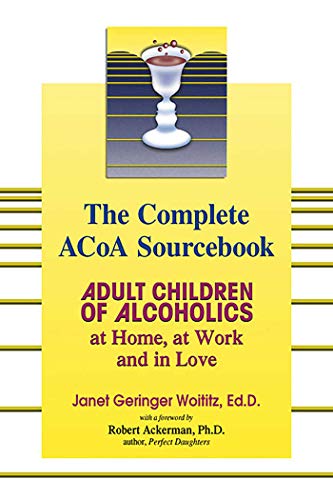
When they were first released in the 1980s, Janet Woititz's groundbreaking works, Adult Children of Alcoholics, Struggle for Intimacy and The Self-Sabotage Syndrome, provided a new message of hope to adult children who had grown up in the shadow of alcoholic parents. Their message today is as profound and timeless as it was two decades ago.
Now, in this complete collection, readers will learn again the insight and healing power of Janet Wotitiz's words. The Complete ACoA Sourcebook is a compilation of three of Dr. Woititz's classic books, addressing head-on the symptoms of The Adult Children of Alcoholics syndrome and providing strategies for living a normal life as an adult. Readers will find help for themselves: at home, in intimate relationships and on the job. They will discover the reasons for the way they think, believe and feel about themselves; ACoAs often feel isolated, have difficulty in relationships, in the workplace and in feeling good about themselves.
Readers who are familiar with Woititz's work will find wisdom once again in this classic collection. Those new to ACoA will gain fresh insight into their behavior patterns and find an avenue for self-love and healing. Noted ACoA expert Dr. Robert Ackerman, author of the best-selling Perfect Daughters and Silent Sons, provides a foreword and explains why Janet Woititz's message will continue to help millions of readers for generations to come.
Die Inhaltsangabe kann sich auf eine andere Ausgabe dieses Titels beziehen.
Über die Autorin bzw. den Autor
Janet Woititz (1938-1994) is the author of Adult Children of Alcoholics, which was on the New York Times bestseller list for over a year. She wrote several other books, including Lifeskills for Adult Children; The Self-Sabotage Syndrome; The Struggle for Intimacy; Marriage on the Rocks; Healing Your Sexual Self and many others. Woititz was the director and founder of the Institute for Counseling and Training in West Caldwell, New Jersey.
Auszug. © Genehmigter Nachdruck. Alle Rechte vorbehalten.
Chapter 5
Recovery Hints
It is important to be clear what recovery means for adult children. Alcoholism is a disease. People recovering from alcoholism are recovering from a disease. The medical model is accepted by all responsible folks working in alcoholism treatment.
Being the child of an alcoholic is not a disease. It is a fact of your history. Because of the nature of this illness and the family response to it, certain things occur that influence your self-feelings, attitudes and behaviors in ways that cause you pain and concern. The object of ACOA recovery is to overcome those aspects of your history that cause you difficulty today and to learn a better way.
To the degree that none of us have ideal childhoods and to the degree that even an ideal childhood may be a cause for some concern, we are all recovering to some extent or other, in some way or other. Because there are so many alcoholic families and because we have been fortunate in being able to study them, it is possible to describe in general terms what happens to children who grow up in that environment.
To the degree that other families have similar dynamics, individuals who have grown up in other "dysfunctional" systems identify with and recover in very much the same way.
RECOVERY HINTS FOR ADULT CHILDREN
Reading the book Adult Children of Alcoholics is the first step toward recovery. This section addresses the questions "What now?" and "How can I protect the quality of my recovery?"
For those recovering from addiction to alcohol and/or drugs.
If you have been in recovery for a year or more, you are ready to proceed to the next step. Many folks who are doing well staying sober experience the nagging feeling that there is a piece missing. Addressing the ways in which your past impacts on your present and filling in those empty spaces will enrich the quality of your sobriety.
If you have been in recovery for less than a year, give yourself the rest of the year to concentrate on staying sober or clean. That has to be your first priority. There will be plenty of time to go on from there, but it has to be first things first, and sobriety comes first.
If you keep relapsing or can't put ninety days together . . .
Many times folks find themselves unable to maintain sobriety because they are using the substance in order not to feel the pain of their secret. "You are as sick as your secrets" is an expression that makes a lot of sense. Keeping the secret keeps you stuck. The alcoholic family system is a place of lots of secrets. You may need, if this is your situation, to work first with a professional who understands substance abuse and understands what it means to be an ACOA. The purpose of this is to expose your secret—:if only to you and your therapist—:and drain some of the pus out. (Some folks are able to use the fifth step of AA to do this, but it doesn't work for everyone.)
Most of the secrets in my experience relate to shame. Many men and women have been sexually molested or were unable to stop the abuse of siblings. Others are gay or lesbian and, because of parental, religious or societal attitudes, believe that is not an okay way to be.
Once the secret, whatever it is, is exposed and the weight of keeping that buried is no longer present, your next chore is to get clean or sober and maintain that for a year. Then it will be time to go on to the next step.
For those recovering from addictions that are not alcohol or drug related, such as gambling, food or sex, it is possible to combine that Twelve-Step recovery and ACOA recovery.
Any recovery program should work well alongside ACOA recovery. If it doesn't, you need to discover what is going on. Read the pamphlet "Guidelines for Self-Help Groups."
For folks not in recovery from addiction.
Go first to Al-Anon and learn the principles of a Twelve-Step program and how to work the steps. Not all ACOA support groups follow the steps, but since so many of their members belong to other Twelve-Step programs, the principles are followed and the language is used.
For everyone.
All folks in ACOA recovery need to learn the Al-Anon principle of detachment regardless of whether or not they are recovering from addiction or are living with an addict. Until you do this, you can go no further. Detachment is the key. Because of the inconsistent nature of the nurture a child receives in an alcoholic family system and the child's hunger for nurture, many of you are still joined to your parents at the emotional hip. Even if you are no longer with them, you continue to seek their approval and are strongly influenced by their attitudes and behaviors. You will need to learn to separate yourself from them in a way that will not add to your stress. This is one of the primary goals of the Al-Anon program.
Once you have learned how to detach (it will take six months to a year), you may now be ready to join an ACOA support group. Keep in mind that the goal of a support group is to share experience, strength and hope. Many groups do this very well, and by identification and example, members learn how to make healthy choices.
If the group you attend does this—:wonderful, but if the group you attend spends its time sharing horror stories and blaming parents, be warned: You may not be in the best place for you. Living in the past and blaming parents are ways to avoid living in the present and taking responsibility for your own behavior. They are ways to stay stuck. It doesn't mean that your life wasn't a horror show and that your parents didn't do terrible things. What it does mean is that you are now an adult: You create your own horror show and you must be accountable for your behavior. You are also the only one who can make you feel better about yourself.
Talking about the past is appropriate in a beginners meeting or with a professional but not in the meeting itself. Folks in recovery from addiction need to keep their memory green but folks recovering from the behaviors of others do not share the same benefit. People recovering from the behaviors of others need to change their response to other behaviors, and that can best be done by focusing on the present.
What you learn about yourself as you are growing up becomes a part of who you are and how you feel about yourself. No one can change that but you. Your parents, even if they recover and treat you differently, cannot fix what makes you feel bad about yourself. You may start a new and healthy relationship with them in the present but no amount of amends on their part will fix the past. That is why dwelling on their part in your ongoing pain will not get you through it or past it. Your present difficulties are your problem. To put the focus outside yourself is to delay your recovery.
Emotions that have been held down for years and years will come to surface. That is why it is suggested that if you are recovering from an addiction, you need to focus on that first so that you will not be tempted to relieve those feelings in destructive ways. You will go through a number of powerful emotions in your recovery. It is part of the process.
Not everyone goes through the stages of the process in the same sequence, and many of you may block some of those feelings. There is no "right" way. I just tell you about the process because those feelings may surface without your conscious direction and...
„Über diesen Titel“ kann sich auf eine andere Ausgabe dieses Titels beziehen.
Suchergebnisse für The Complete ACOA Sourcebook: Adult Children of Alcoholics...

Beispielbild für diese ISBN
The Complete ACOA Sourcebook: Adult Children of Alcoholics at Home, at Work and in Love
Anbieter: World of Books (was SecondSale), Montgomery, IL, USA
Verkäuferbewertung 5 von 5 Sternen

Paperback. Zustand: Good. Examines behaviors typical of those who grew up with alcoholism, and offers advice on dealing with stress. This handbook for and about the adult children of alcoholics helps them recognize and change unhealthy behaviors learned early in life. Artikel-Nr. 00080379511
Gebraucht kaufen
EUR 4,05
Versand gratis
Versand innerhalb von USA
Versand innerhalb von USA
Anzahl: Mehr als 20 verfügbar
Beispielbild für diese ISBN
The Complete ACOA Sourcebook: Adult Children of Alcoholics at Home, at Work and in Love
Anbieter: World of Books (was SecondSale), Montgomery, IL, USA
Verkäuferbewertung 5 von 5 Sternen
Paperback. Zustand: Fair. Examines behaviors typical of those who grew up with alcoholism, and offers advice on dealing with stress. This handbook for and about the adult children of alcoholics helps them recognize and change unhealthy behaviors learned early in life. Artikel-Nr. 00092310446
Gebraucht kaufen
EUR 4,05
Versand gratis
Versand innerhalb von USA
Versand innerhalb von USA
Anzahl: 1 verfügbar
Foto des Verkäufers
The Complete ACOA Sourcebook: Adult Children of Alcoholics at Home, at Work and in Love
Verlag:
Health Communications Inc, 2002
ISBN 10: 1558749608
ISBN 13: 9781558749603
Gebraucht
Softcover
Anbieter: Dream Books Co., Denver, CO, USA
Verkäuferbewertung 5 von 5 Sternen
Zustand: good. Gently used with minimal wear on the corners and cover. A few pages may contain light highlighting or writing, but the text remains fully legible. Dust jacket may be missing, and supplemental materials like CDs or codes may not be included. May be ex-library with library markings. Ships promptly! Artikel-Nr. DBV.1558749608.G
Gebraucht kaufen
EUR 4,19
Versand gratis
Versand innerhalb von USA
Versand innerhalb von USA
Anzahl: 3 verfügbar
Foto des Verkäufers
The Complete ACOA Sourcebook: Adult Children of Alcoholics at Home, at Work and in Love
Verlag:
Health Communications Inc, 2002
ISBN 10: 1558749608
ISBN 13: 9781558749603
Gebraucht
Softcover
Anbieter: Dream Books Co., Denver, CO, USA
Verkäuferbewertung 5 von 5 Sternen
Zustand: acceptable. This copy has clearly been enjoyedâ"expect noticeable shelf wear and some minor creases to the cover. Binding is strong, and all pages are legible. May contain previous library markings or stamps. Artikel-Nr. 4EKGY3008G2D_ns
Gebraucht kaufen
EUR 4,37
Versand gratis
Versand innerhalb von USA
Versand innerhalb von USA
Anzahl: 2 verfügbar
Beispielbild für diese ISBN
The Complete ACOA Sourcebook: Adult Children of Alcoholics at Home, at Work and in Love
Anbieter: ThriftBooks-Phoenix, Phoenix, AZ, USA
Verkäuferbewertung 5 von 5 Sternen
Paperback. Zustand: Good. No Jacket. Pages can have notes/highlighting. Spine may show signs of wear. ~ ThriftBooks: Read More, Spend Less. Artikel-Nr. G1558749608I3N00
Gebraucht kaufen
EUR 6,19
Versand gratis
Versand innerhalb von USA
Versand innerhalb von USA
Anzahl: 3 verfügbar
Beispielbild für diese ISBN
The Complete ACOA Sourcebook: Adult Children of Alcoholics at Home, at Work and in Love
Anbieter: ThriftBooks-Reno, Reno, NV, USA
Verkäuferbewertung 5 von 5 Sternen
Paperback. Zustand: Good. No Jacket. Pages can have notes/highlighting. Spine may show signs of wear. ~ ThriftBooks: Read More, Spend Less. Artikel-Nr. G1558749608I3N00
Gebraucht kaufen
EUR 6,19
Versand gratis
Versand innerhalb von USA
Versand innerhalb von USA
Anzahl: 3 verfügbar
Beispielbild für diese ISBN
The Complete ACOA Sourcebook: Adult Children of Alcoholics at Home, at Work and in Love
Anbieter: ThriftBooks-Reno, Reno, NV, USA
Verkäuferbewertung 5 von 5 Sternen
Paperback. Zustand: Fair. No Jacket. Readable copy. Pages may have considerable notes/highlighting. ~ ThriftBooks: Read More, Spend Less. Artikel-Nr. G1558749608I5N00
Gebraucht kaufen
EUR 6,19
Versand gratis
Versand innerhalb von USA
Versand innerhalb von USA
Anzahl: 1 verfügbar
Beispielbild für diese ISBN
The Complete ACOA Sourcebook: Adult Children of Alcoholics at Home, at Work and in Love
Anbieter: ThriftBooks-Phoenix, Phoenix, AZ, USA
Verkäuferbewertung 5 von 5 Sternen
Paperback. Zustand: Fair. No Jacket. Readable copy. Pages may have considerable notes/highlighting. ~ ThriftBooks: Read More, Spend Less. Artikel-Nr. G1558749608I5N00
Gebraucht kaufen
EUR 6,19
Versand gratis
Versand innerhalb von USA
Versand innerhalb von USA
Anzahl: 1 verfügbar
Beispielbild für diese ISBN
The Complete ACOA Sourcebook: Adult Children of Alcoholics at Home, at Work and in Love
Anbieter: ThriftBooks-Atlanta, AUSTELL, GA, USA
Verkäuferbewertung 5 von 5 Sternen
Paperback. Zustand: Good. No Jacket. Pages can have notes/highlighting. Spine may show signs of wear. ~ ThriftBooks: Read More, Spend Less. Artikel-Nr. G1558749608I3N00
Gebraucht kaufen
EUR 6,21
Versand gratis
Versand innerhalb von USA
Versand innerhalb von USA
Anzahl: 4 verfügbar
Beispielbild für diese ISBN
The Complete ACOA Sourcebook: Adult Children of Alcoholics at Home, at Work and in Love
Anbieter: ThriftBooks-Dallas, Dallas, TX, USA
Verkäuferbewertung 5 von 5 Sternen
Paperback. Zustand: Fair. No Jacket. Readable copy. Pages may have considerable notes/highlighting. ~ ThriftBooks: Read More, Spend Less. Artikel-Nr. G1558749608I5N00
Gebraucht kaufen
EUR 6,21
Versand gratis
Versand innerhalb von USA
Versand innerhalb von USA
Anzahl: 2 verfügbar