
Verwandte Artikel zu George Washington for Kids: His Life and Times: 21...
George Washington for Kids: His Life and Times: 21 Activities: His Life and Times with 21 Activities - Softcover
Buch 7 von 26: For Kids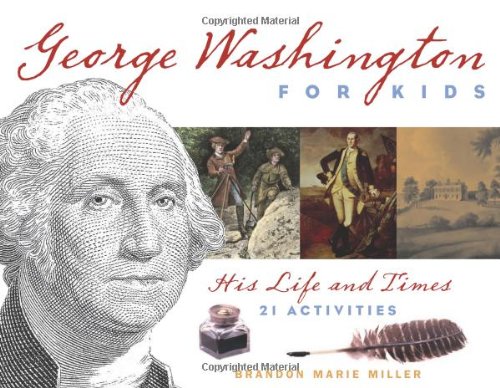
Inhaltsangabe
George Washington comes alive in this fascinating activity book that introduces the leader to whom citizens turned again and again—to lead them through eight long years of war, to guide them as they wrote a new Constitution, and to act as the new nation’s first executive leader. Children will learn how, shortly after his death in 1799, people began transforming George Washington from a man into a myth. But Washington was a complex individual who, like everyone, had hopes and fears, successes and failures. In his early 20s, for instance,Washington’s actions helped plunge Great Britain and France into war. He later fought for liberty and independence, yet owned slaves himself (eventually freeing them in his will). This book weaves a rich tapestry of Washington’s life, allowing kids to connect with his story in 21 hands-on projects based on his experiences and the times in which he lived. Children will learn how to tie a cravat, write with a quill pen, follow animal tracks, sew a lady’s cap, plant a garden, roll a beeswax candle, play a game of Quoits, and make a replica of Washington’s commander-in-chief flag. The text includes a time line, glossary, websites, travel resources, and a reading list for further study.
Die Inhaltsangabe kann sich auf eine andere Ausgabe dieses Titels beziehen.
Über die Autorin bzw. den Autor
Brandon Marie Miller is the author of Declaring Independence, Growing Up in Revolution and the New Nation, and Good Women of a Well-Blessed Land.
Auszug. © Genehmigter Nachdruck. Alle Rechte vorbehalten.
George Washington for Kids
His Life and Times with 21 Activities
By Brandon Marie MillerChicago Review Press Incorporated
Copyright © 2007 Brandon Marie Miller
All rights reserved.
ISBN: 978-1-55652-655-8All rights reserved.
Contents
Acknowledgments,
Time Line,
Note to Readers,
Preface: A Young Virginian Sets the World on Fire,
1 • "Began My Journey",
2 • "I Heard the Bullets Whistle",
3 • A Virginia Gentleman,
4 • "The Momentous Duty",
5 • "Summoned by My Country",
6 • First in Their Hearts,
Glossary,
Places to Visit and Web Resources,
Resource Books for Kids,
Selected Additional Resources,
Index,
CHAPTER 1
"Began My Journey"
February winds blew across Virginia's Potomac River and ruffled the waters of Popes Creek. Augustine Washington's home, nestled among tall trees, overlooked the creek. Gus had built the small house near lands first owned by his grandfather John Washington 75 years before.
Four generations of Washingtons lay buried nearby. Gus's first wife, Jane, rested there, too, beneath a gravestone already scoured by the wind. Jane's death had left Gus with two sons and a daughter to raise. He needed a new wife to help manage Lawrence, Austin, Jane, and Popes Creek farm.
A year after Jane's death Gus married Mary Ball. Around ten o'clock in the morning on February 11, 1732, Mary gave birth to another Washington son they named George.
Mary and Gus's family grew year by year. George, their oldest child, welcomed a sister named Betty and three brothers, Samuel, John Augustine, and Charles. George's half sister, Jane, died. When George was three Gus moved the family up the Potomac River to another farm, Little Hunting Creek Plantation. George's two half brothers, Lawrence and Austin, had left Virginia for school in England.
Home at Ferry Farm
Like most Virginians, Gus Washington earned his living as a farmer, or "planter." But he also worked as a partner in an iron works. In 1738 the family packed their wagons and moved again, this time closer to the Accokeek Iron Furnace. From his new home, called the Home Farm and later Ferry Farm, six-year-old George scampered down to the Rappahannock River, a playground for fishing, swimming, and skipping stones across the water. Beyond the river lay Fredericksburg, a growing village with a tobacco warehouse, a stone prison, a half-built church, a courthouse, and a few homes. Ships from England anchored along the wooden wharf that jutted into the river.
Two blows hit the Washington family in 1740. George's baby sister, Mildred, died and the family's home burned to the ground. Like most houses at this time, Ferry Farm's kitchen stood separate from the main house as a fire precaution. But with large open fireplaces providing a home's only heat and candle flames the only light, fire loomed as a constant hazard. With their home destroyed, George and his family crowded into the one-room kitchen while the house was rebuilt.
The Washingtons' new house had four rooms downstairs and two more above. They lived a comfortable life, but Gus was not considered a man of wealth, influence, or power. George Washington lived in a society where every person knew his or her place. The British king ruled at the top of society dressed in rich velvets and silks. A slave stood at the very bottom clad in rough-woven cloth. People believed a "gentleman of good fortune" or a "man of quality" or a "lady of the highest rank" were better than common folk. Colonists lived in a world where masters ruled over servants, men ruled over women, and parents ruled over children.
George must have gazed into one of the family's prized possessions — a mirror, or "looking glass." The looking glass in Ferry Farm's hall, the home's finest room, reflected a tall boy with reddish-brown hair, steely blue eyes, and a long, straight nose.
Only wealthy Virginians could afford real privacy. In most homes a family shared bedrooms and beds, and even a servant or two might snooze with the family. The Washingtons owned 11 bedsteads they could set up in any room, especially when visitors arrived. Three beds stood in the parlor. One four-poster bed sported long curtains that could be closed for warmth and a little privacy. To dress their beds, the family owned 6 pairs of good sheets, 10 "lesser" pairs of sheets, and 16 pillowcases.
Tobacco and Slave Culture
Virginians raised tobacco, the colony's main crop. People even used the dried leaves in place of money; Gus paid 5,500 pounds of tobacco to build Ferry Farm. Tobacco required hours of labor to baby the tender seedlings, weed the fields, pick greedy worms off the plants, then harvest and dry the tobacco leaves.
Once a year, workers packed the dried leaves into large barrels, called hogsheads. The hogsheads were then rolled or carted to waiting ships and transported to English markets. Planters hired London agents to sell their tobacco, order goods for them, and ship the merchandise and any leftover money back to Virginia. Barrels and crates of clothing, toys, dishes, books, food, farm tools, and even carriages, arrived in the colony the following year. But agents often cheated the colonists by charging for top-quality goods and then shipping cheap items back to their clients.
As planters cleared more acres to grow tobacco, the demand for field workers grew, too. Virginians first used British and African indentured servants to work the tobacco fields. An indentured servant worked in exchange for the cost of travel to America. Indentured men and women worked long hours grubbing in the tobacco fields. Cruel masters and mistresses often mistreated them. But after about seven years of labor the indentured servant earned his or her freedom.
By the 1670s African slaves carried more of the work burden. White Virginians viewed slavery as an economic bargain. An enslaved human being, once purchased, never gained his or her freedom but worked for life. A slave, like any piece of property, could be sold for quick cash or rented to another farm. Unlike indentured servants, who had some rights in court, a slave had no rights or protection. And a slave owner could acquire more slaves without any expense since a slave woman's child was also enslaved.
In young George Washington's world, Virginia's work and wealth depended on enslaved human beings. Gus Washington owned 20 slaves at Ferry Farm. Every day George saw African men and women planting, hoeing, and harvesting under the hot sun. Other enslaved people worked as house servants, washing clothes, cooking, or tending farm animals. For George, the enslaved workers living at Ferry Farm belonged to his father just like the looking glass in the hall.
Family Matters
George greeted the return of Lawrence and Austin from England with great excitement. About 20 years old, dark-haired Lawrence especially captivated his younger brother. Everyone thought George, like his father and older brothers, would enroll at Appleby School in England to finish his education. In the meantime, George probably did lessons at home with his father or a traveling teacher. He may also have attended a neighborhood school.
The year George turned eight Lawrence joined an American regiment in the British army. With England and Spain at war, Lawrence prepared to sail with 400 Virginians under British admiral Edward Vernon to the Caribbean. The sight of his brother — now Captain Washington! — in his scarlet uniform with...
„Über diesen Titel“ kann sich auf eine andere Ausgabe dieses Titels beziehen.
Suchergebnisse für George Washington for Kids: His Life and Times: 21...

Beispielbild für diese ISBN
George Washington for Kids: His Life and Times with 21 Activities (22) (For Kids series)
Anbieter: World of Books (was SecondSale), Montgomery, IL, USA
Verkäuferbewertung 5 von 5 Sternen

Zustand: Acceptable. Item in acceptable condition! Textbooks may not include supplemental items i.e. CDs, access codes etc. Artikel-Nr. 00110264447
Gebraucht kaufen
EUR 5,32
Versand gratis
Versand innerhalb von USA
Versand innerhalb von USA
Anzahl: 1 verfügbar
Beispielbild für diese ISBN
George Washington for Kids: His Life and Times with 21 Activities (22) (For Kids series)
Anbieter: World of Books (was SecondSale), Montgomery, IL, USA
Verkäuferbewertung 5 von 5 Sternen
Zustand: Good. Item in good condition. Textbooks may not include supplemental items i.e. CDs, access codes etc. Artikel-Nr. 00110280105
Gebraucht kaufen
EUR 5,32
Versand gratis
Versand innerhalb von USA
Versand innerhalb von USA
Anzahl: 1 verfügbar
Beispielbild für diese ISBN
George Washington for Kids: His Life and Times with 21 Activities (22) (For Kids series)
Verlag:
Chicago Review Press (edition 1), 2007
ISBN 10: 1556526555
ISBN 13: 9781556526558
Gebraucht
Paperback
Anbieter: BooksRun, Philadelphia, PA, USA
Verkäuferbewertung 5 von 5 Sternen
Paperback. Zustand: Very Good. 1. It's a well-cared-for item that has seen limited use. The item may show minor signs of wear. All the text is legible, with all pages included. It may have slight markings and/or highlighting. Artikel-Nr. 1556526555-11-22
Gebraucht kaufen
EUR 5,45
Versand gratis
Versand innerhalb von USA
Versand innerhalb von USA
Anzahl: 1 verfügbar
Beispielbild für diese ISBN
George Washington for Kids: His Life and Times with 21 Activities Volume 22
Anbieter: ThriftBooks-Dallas, Dallas, TX, USA
Verkäuferbewertung 5 von 5 Sternen
Paperback. Zustand: Fair. No Jacket. Readable copy. Pages may have considerable notes/highlighting. ~ ThriftBooks: Read More, Spend Less. Artikel-Nr. G1556526555I5N00
Gebraucht kaufen
EUR 5,87
Versand gratis
Versand innerhalb von USA
Versand innerhalb von USA
Anzahl: 1 verfügbar
Beispielbild für diese ISBN
George Washington for Kids: His Life and Times with 21 Activities Volume 22
Anbieter: ThriftBooks-Atlanta, AUSTELL, GA, USA
Verkäuferbewertung 5 von 5 Sternen
Paperback. Zustand: Good. No Jacket. Former library book; Pages can have notes/highlighting. Spine may show signs of wear. ~ ThriftBooks: Read More, Spend Less. Artikel-Nr. G1556526555I3N10
Gebraucht kaufen
EUR 5,87
Versand gratis
Versand innerhalb von USA
Versand innerhalb von USA
Anzahl: 1 verfügbar
Beispielbild für diese ISBN
George Washington for Kids : His Life and Times with 21 Activities
Verlag:
Chicago Review Press, Incorporated, 2007
ISBN 10: 1556526555
ISBN 13: 9781556526558
Gebraucht
Softcover
Erstausgabe
Anbieter: Better World Books, Mishawaka, IN, USA
Verkäuferbewertung 5 von 5 Sternen
Zustand: Good. 1st Edition. Former library copy. Pages intact with minimal writing/highlighting. The binding may be loose and creased. Dust jackets/supplements are not included. Includes library markings. Stock photo provided. Product includes identifying sticker. Better World Books: Buy Books. Do Good. Artikel-Nr. 2680968-6
Gebraucht kaufen
EUR 6,14
Versand gratis
Versand innerhalb von USA
Versand innerhalb von USA
Anzahl: 4 verfügbar
Beispielbild für diese ISBN
George Washington for Kids : His Life and Times with 21 Activities
Verlag:
Chicago Review Press, Incorporated, 2007
ISBN 10: 1556526555
ISBN 13: 9781556526558
Gebraucht
Softcover
Erstausgabe
Anbieter: Better World Books, Mishawaka, IN, USA
Verkäuferbewertung 5 von 5 Sternen
Zustand: Good. 1st Edition. Pages intact with minimal writing/highlighting. The binding may be loose and creased. Dust jackets/supplements are not included. Stock photo provided. Product includes identifying sticker. Better World Books: Buy Books. Do Good. Artikel-Nr. 4355538-6
Gebraucht kaufen
EUR 6,14
Versand gratis
Versand innerhalb von USA
Versand innerhalb von USA
Anzahl: 1 verfügbar
Beispielbild für diese ISBN
George Washington for Kids : His Life and Times with 21 Activities
Verlag:
Chicago Review Press, Incorporated, 2007
ISBN 10: 1556526555
ISBN 13: 9781556526558
Gebraucht
Softcover
Erstausgabe
Anbieter: Better World Books, Mishawaka, IN, USA
Verkäuferbewertung 5 von 5 Sternen
Zustand: Very Good. 1st Edition. Former library copy. Pages intact with possible writing/highlighting. Binding strong with minor wear. Dust jackets/supplements may not be included. Includes library markings. Stock photo provided. Product includes identifying sticker. Better World Books: Buy Books. Do Good. Artikel-Nr. 4504326-6
Gebraucht kaufen
EUR 6,14
Versand gratis
Versand innerhalb von USA
Versand innerhalb von USA
Anzahl: 1 verfügbar
Beispielbild für diese ISBN
George Washington for Kids Volume 22: His Life and Times with 21 Activities (For Kids series)
Anbieter: WorldofBooks, Goring-By-Sea, WS, Vereinigtes Königreich
Verkäuferbewertung 5 von 5 Sternen
Paperback. Zustand: Very Good. The book has been read, but is in excellent condition. Pages are intact and not marred by notes or highlighting. The spine remains undamaged. Artikel-Nr. GOR015054452
Gebraucht kaufen
EUR 22,06
EUR 6,53 Versand
Versand von Vereinigtes Königreich nach USA
Versand von Vereinigtes Königreich nach USA
Anzahl: 1 verfügbar
Beispielbild für diese ISBN
George Washington for Kids: His Life and Times with 21 Activities
Anbieter: Revaluation Books, Exeter, Vereinigtes Königreich
Verkäuferbewertung 5 von 5 Sternen
Paperback. Zustand: Brand New. 1st edition. 130 pages. 8.50x11.00x0.25 inches. In Stock. Artikel-Nr. 1556526555
Neu kaufen
EUR 34,56
EUR 11,67 Versand
Versand von Vereinigtes Königreich nach USA
Versand von Vereinigtes Königreich nach USA
Anzahl: 1 verfügbar