
Verwandte Artikel zu Forever Amber (Rediscovered Classics)
Inhaltsangabe
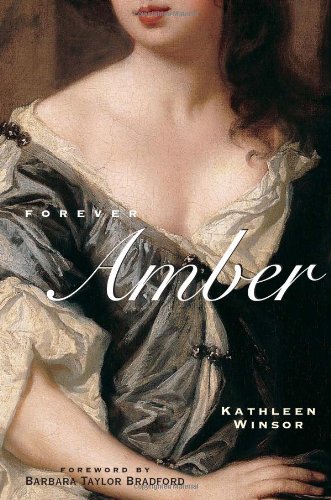
Abandoned pregnant and penniless on the teeming streets of London, 16-year-old Amber St. Clare manages, by using her wits, beauty, and courage, to climb to the highest position a woman could achieve in Restoration England--that of favorite mistress of the Merry Monarch, Charles II. From whores and highwaymen to courtiers and noblemen, from events such as the Great Plague and the Fire of London to the intimate passions of ordinary--and extraordinary--men and women, Amber experiences it all. But throughout her trials and escapades, she remains, in her heart, true to the one man she really loves, the one man she can never have. Frequently compared to Gone with the Wind, Forever Amber is the other great historical romance, outselling every other American novel of the 1940s--despite being banned in Boston for its sheer sexiness. A book to read and reread, this edition brings back to print an unforgettable romance and a timeless masterpiece.
Die Inhaltsangabe kann sich auf eine andere Ausgabe dieses Titels beziehen.
Über die Autorin bzw. den Autor
Kathleen Winsor has written a number of historical romances, including The Lovers and Robert and Arabella.
Auszug. © Genehmigter Nachdruck. Alle Rechte vorbehalten.
Forever Amber
By Kathleen WinsorChicago Review Press Incorporated
Copyright © 1971 Kathleen Winsor
All rights reserved.
ISBN: 978-1-55652-404-2All rights reserved.
CHAPTER 1
MARYGREEN DID NOT change in sixteen years. It had changed little enough in the past two hundred.
The church of St. Catherine stood at the northern end of the road, like a benevolent godfather, and from it the houses ran down either side — half-timbered cottages, with overhanging upper stories, and thatched with heather or with straw that had been golden when new, then had turned slowly to a rich brown, and now was emerald green with moss and lichen. Tiny dormer windows looked out, wreathed with honeysuckle and ivy. Thick untrimmed hedges fenced the houses off from the road and there were small wooden gates, some of them spanned by arches of climbing roses. Above the hedges could be seen the confusion of blooming flowers, delphinium and lilacs, both purple and white, hollyhocks that reached almost to the eaves, an apple or plum or cherry tree in full blossom.
At the far end from the church was the green, where on festive occasions the young men played football and held wrestling matches and all the village danced.
There was an inn built of soft red brick and showing the aged silver-grey oaken timbers of its frame; a great sign painted with a crude golden lion swung out over the street on an elaborate wrought-iron arm. Nearby was the blacksmith's cottage with his adjoining shop and the homes and places of business of the apothecary, the carpenter, and another tradesman or two. The rest of the cottages were occupied by husbandmen who divided their time between working on their own small holdings and on the large neighbouring farms. For there was no manor or squire's estate near Marygreen, and the economic existence of the village depended upon the well-to-do yeomen farmers.
The day was quiet and warm, the sky blue with long streaks of white clouds, which seemed to have been put there by a paintbrush drawn across wet water-colour; the air was full of spring moisture and a rich loamy smell of damp earth. Chickens and geese and tiny sparrows had taken possession of the road. A little girl stood before one of the gates, holding a pet rabbit in her arms.
There were few people in sight, for it was late afternoon and each person had his own work to do, so that the only idlers were dogs, a playful kitten or two, and children too young to have learned a useful task. A woman with a basket on her arm walked along the street, pausing for a few moments to talk to another housewife, who threw open an upstairs casement window and leaned out, surrounded as though in a frame with wandering clematis and morning glories. Grouped about the village cross, which had somehow escaped Cromwell's soldiers, were eight or ten young girls — cottagers' daughters who were sent every day to watch their parents' cattle on the common and make sure that no single goat, cow, or sheep should stray or be stolen.
Some of the younger ones were playing "How many miles to Babylon?" — but the three oldest girls talked among themselves, full of indignation and bad humour. With hands on their hips they glared across the common to where two young men, thumbs hooked awkwardly in their breeches, shifting their weight from one foot to another, stood deep in conversation with someone who apparently upset their not too well established poise. But their combined bulk hid whoever it was from view.
"That Amber St. Clare!" muttered the eldest girl with a furious toss of her long blonde hair. "If ever there's a man about, you may be sure she'll come along! I think she can smell 'em out!"
"She should 've been married and bedded a year ago — that's what my mother says!"
The third girl smiled slyly and said in a knowing sing-song: "Well, maybe she an't married yet, but she's already been —"
"Hush!" interrupted the first, nodding toward the younger children.
"Just the same," she insisted, though she had lowered her voice to a hiss, "my brother says Bob Starling told him he had his way with her on Mothering Sunday!"
But Lisbeth, who had started the conversation, gave a contemptuous snap of her fingers. "Uds Lud, Gartrude! Jack Clarke said the same thing six months ago — and she's no bigger now than she was then."
Gartrude had an answer. "And d'ye want to know why, Lisbeth Morton? B'cause she can spit three times in a frog's mouth, that's why. Maggie Littlejohn seen her do it!"
"Pooh! My mother says nobody can spit three times in a frog's mouth!"
But the argument was cut short. For suddenly a sound of galloping hoofs echoed through the quiet little valley and a body of men on horseback rounded the turn of the road above St. Catherine's and came rushing headlong up the narrow street toward them. One of the six-year-olds gave a scream of terror and ran to hide behind Lisbeth's skirts.
"It's Old Noll! Come back from the Devil to get us!" Even dead, Oliver Cromwell had not lost his salutary effect on disobedient youngsters.
The men reined in their horses, bringing them to a prancing nervous halt not more than ten yards from where the girls stood in a close group, their earlier fright and apprehension giving way now to frank admiring interest. There were perhaps fourteen men in all but more than half of them were either serving-men or guides, for they wore plain clothes and kept at a discreet distance from the others. The half-dozen in the lead were obviously gentlemen.
They wore their hair in the shoulder-length cut of the Cavaliers, and their dress was magnificent. Their suits were black velvet, dark red velvet, green satin, with broad white linen collars and white linen shirts. On their heads were wide brimmed hats with swirling plumes, and long riding capes hung from their shoulders. Their high leather boots were silver-spurred and each man wore a sword at his hip. They had evidently been riding hard for some considerable distance for their clothes were dusty and their faces streaked with dirt and sweat, but in the girls' eyes they had an almost terrifying grandeur.
Now one of the men took off his hat and spoke to Lisbeth, presumably because she was the prettiest. "My services, madame," he said, his voice and eyes lazily good-humoured, and as he looked her over slowly from head to foot Lisbeth blushed crimson and found it difficult to breathe. "We're looking for a place to eat. Have you a good tavern in these parts?"
Lisbeth stared at him, temporarily speechless, while he continued to smile down at her, his hands resting easily on the saddle before him. His suit was black velvet with a short doublet and wide knee-length breeches, finished with golden braid. He had dark hair and green-grey eyes and a narrow black mustache lined his upper lip. His good looks were spectacular — but they were not the most important thing about him. For his face had an uncompromising ruthlessness and strength which marked him, in spite of his obvious aristocracy, as an adventurer and gambler, a man free from bonds and ties.
Lisbeth swallowed and made a little curtsy. "Ye mun like the Three Cups in Heathstone, m'lord." She was afraid to recommend her own poor little village to these splendid strangers.
"Where's Heathstone from here?"
"Heathstone be damned!" protested one of the men. "What's wrong with your own ordinary? I'll fall off this jade if I go another mile without food!" He was a handsome blonde red-faced young man and in spite of his scowl he was obviously happy and good-natured. As he spoke the others laughed and one of them leaned over to clap him on the...
„Über diesen Titel“ kann sich auf eine andere Ausgabe dieses Titels beziehen.
Suchergebnisse für Forever Amber (Rediscovered Classics)

Beispielbild für diese ISBN
Forever Amber Volume 1 (Redisc
Anbieter: World of Books (was SecondSale), Montgomery, IL, USA
Verkäuferbewertung 5 von 5 Sternen

Zustand: Good. Item in good condition. Textbooks may not include supplemental items i.e. CDs, access codes etc. Artikel-Nr. 00106710002
Gebraucht kaufen
EUR 5,28
Versand gratis
Versand innerhalb von USA
Versand innerhalb von USA
Anzahl: 7 verfügbar
Beispielbild für diese ISBN
Forever Amber Volume 1 (Redisc
Anbieter: World of Books (was SecondSale), Montgomery, IL, USA
Verkäuferbewertung 5 von 5 Sternen
Zustand: Acceptable. Item in acceptable condition! Textbooks may not include supplemental items i.e. CDs, access codes etc. Artikel-Nr. 00105797973
Gebraucht kaufen
EUR 5,28
Versand gratis
Versand innerhalb von USA
Versand innerhalb von USA
Anzahl: 3 verfügbar
Foto des Verkäufers
Forever Amber (1) (Rediscovered Classics)
Anbieter: Dream Books Co., Denver, CO, USA
Verkäuferbewertung 5 von 5 Sternen
Zustand: acceptable. This copy has clearly been enjoyedâ"expect noticeable shelf wear and some minor creases to the cover. Binding is strong, and all pages are legible. May contain previous library markings or stamps. Artikel-Nr. DBV.1556524048.A
Gebraucht kaufen
EUR 5,29
Versand gratis
Versand innerhalb von USA
Versand innerhalb von USA
Anzahl: 2 verfügbar
Beispielbild für diese ISBN
Forever Amber (Rediscovered Classics)
Anbieter: Books From California, Simi Valley, CA, USA
Verkäuferbewertung 4 von 5 Sternen

Paperback. Zustand: Fine. Artikel-Nr. mon0003966692
Gebraucht kaufen
EUR 11,85
EUR 4,31 Versand
Versand innerhalb von USA
Versand innerhalb von USA
Anzahl: 2 verfügbar
Beispielbild für diese ISBN
Forever Amber Volume 1 (Rediscovered Classics)
Verlag:
A Cappella Books, United States, Los Angeles, CA, 2000
ISBN 10: 1556524048
ISBN 13: 9781556524042
Gebraucht
Paperback
Anbieter: WorldofBooks, Goring-By-Sea, WS, Vereinigtes Königreich
Verkäuferbewertung 5 von 5 Sternen
Paperback. Zustand: Very Good. The book has been read, but is in excellent condition. Pages are intact and not marred by notes or highlighting. The spine remains undamaged. Artikel-Nr. GOR001818279
Gebraucht kaufen
EUR 15,92
EUR 6,54 Versand
Versand von Vereinigtes Königreich nach USA
Versand von Vereinigtes Königreich nach USA
Anzahl: 4 verfügbar
Beispielbild für diese ISBN
Forever Amber
Anbieter: Robinson Street Books, IOBA, Binghamton, NY, USA
Verkäuferbewertung 4 von 5 Sternen
trade paperbac. Zustand: used: good. Prompt Shipment, shipped in Boxes, Tracking PROVIDEDHistorical Romance; good trade paperback, tips bumped, PROMPT SHIPPING WITH TRACKING. Artikel-Nr. ware853ES051
Gebraucht kaufen
EUR 16,46
EUR 8,20 Versand
Versand innerhalb von USA
Versand innerhalb von USA
Anzahl: 1 verfügbar
Beispielbild für diese ISBN
Forever Amber Volume 1
Anbieter: PBShop.store UK, Fairford, GLOS, Vereinigtes Königreich
Verkäuferbewertung 5 von 5 Sternen
PAP. Zustand: New. New Book. Shipped from UK. Established seller since 2000. Artikel-Nr. IB-9781556524042
Neu kaufen
EUR 30,82
EUR 7,90 Versand
Versand von Vereinigtes Königreich nach USA
Versand von Vereinigtes Königreich nach USA
Anzahl: 8 verfügbar
Beispielbild für diese ISBN
Forever Amber
Anbieter: Kennys Bookstore, Olney, MD, USA
Verkäuferbewertung 5 von 5 Sternen
Zustand: New. 2000. paperback. . . . . . Books ship from the US and Ireland. Artikel-Nr. V9781556524042
Neu kaufen
EUR 38,00
EUR 9,07 Versand
Versand innerhalb von USA
Versand innerhalb von USA
Anzahl: Mehr als 20 verfügbar
Beispielbild für diese ISBN
Forever Amber
Anbieter: Revaluation Books, Exeter, Vereinigtes Königreich
Verkäuferbewertung 5 von 5 Sternen
Paperback. Zustand: Brand New. 6th edition. 976 pages. 8.00x5.50x2.00 inches. In Stock. Artikel-Nr. xr1556524048
Neu kaufen
EUR 35,00
EUR 17,53 Versand
Versand von Vereinigtes Königreich nach USA
Versand von Vereinigtes Königreich nach USA
Anzahl: 2 verfügbar
Beispielbild für diese ISBN
Forever Amber
Anbieter: Whodunit Bookshop, Winnipeg, MB, Kanada
Verkäuferbewertung 5 von 5 Sternen
Paperback. Zustand: Very Good. Artikel-Nr. 978155652404U
Gebraucht kaufen
EUR 14,07
EUR 45,76 Versand
Versand von Kanada nach USA
Versand von Kanada nach USA
Anzahl: 1 verfügbar