
Verwandte Artikel zu Fen: Stories
Inhaltsangabe
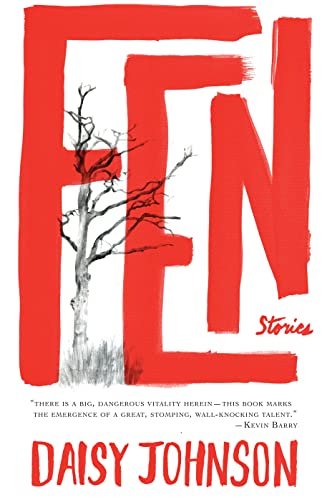
A singular debut that "marks the emergence of a great, stomping, wall-knocking talent" (Kevin Barry)
Daisy Johnson's Fen, set in the fenlands of England, transmutes the flat, uncanny landscape into a rich, brooding atmosphere. From that territory grow stories that blend folklore and restless invention to turn out something entirely new. Amid the marshy paths of the fens, a teenager might starve herself into the shape of an eel. A house might fall in love with a girl and grow jealous of her friend. A boy might return from the dead in the guise of a fox. Out beyond the confines of realism, the familiar instincts of sex and hunger blend with the shifting, unpredictable wild as the line between human and animal is effaced by myth and metamorphosis. With a fresh and utterly contemporary voice, Johnson lays bare these stories of women testing the limits of their power to create a startling work of fiction.Die Inhaltsangabe kann sich auf eine andere Ausgabe dieses Titels beziehen.
Über die Autorin bzw. den Autor
Daisy Johnson
Auszug. © Genehmigter Nachdruck. Alle Rechte vorbehalten.
Fen
Stories
By Daisy JohnsonGraywolf Press
Copyright © 2016 Daisy Johnson
All rights reserved.
ISBN: 978-1-55597-774-0All rights reserved.
Contents
I,
Starver,
Blood Rites,
A Bruise the Shape and Size of a Door Handle,
How to Lose It,
How to Fuck a Man you Don't Know,
Language,
The Superstition of Albatross,
A Heavy Devotion,
The Scattering: a story in three parts,
II,
Birthing Stones,
The Cull,
The Lighthouse Keeper,
CHAPTER 1
STARVER
The Land was drained. They caught eels in great wreaths, headless masses in the last puddles, trying to dig into the dirt to hide. They filled vats of water to the brim with them: the eels would feed the workforce brought in to build on the wilderness. There were enough eels to last months; there were enough eels to feed them all for years.
The eels would not eat. They tried them on river rats, sardines, fish food, milk-softened bread, the leftover parts of cows and sheep. It was no good: they reached into the water, scooped them out, slapped them down, slit them lengthwise. There were too many eels and not enough men. And eating eels barely more than bone was not really eating at all.
They burnt the eels they could not eat in piles, stood watching. It was, they were certain, a calling down of something upon the draining. Some said they heard words coming from the ground as the water was pumped away and that was what made the eels do it, starve themselves that way.
We were walking home from St Silvia's when Katy told me she wasn't going to eat any more. She'd stopped in the road. I turned back.
What do you mean?
There were three years between us and I was used to the look she gave me.
I'm stopping eating, she said. I started today.
Even that first night I thought I could see the shift in her. All the lights were on in her room: the lamps on her desk and her bedside table, the overhead, the glow from her computer screen. When she lifted her shirt to change, her spine was a heavy ridge along the middle of her back.
When she wasn't in lunch on Thursday I went to find her. Ducking down to look at feet beneath toilet-cubicle doors, behind the smoking shed; finding her, eventually, on the stile at the bottom of the school field. I'd brought an apple, rubbed it to a shine on my skirt, held it out to her. She was perched on the stile with her knees raised to her chin, not holding on. The fields were half flooded the way they often were.
I said her name but she didn't seem to see me or St Silvia's behind me or anything else until I tossed the apple to her, striking her leg. She almost lost her balance, made a hissing sound, then thumped down and grabbed my wrist.
I continued daily over that week to try and feed her, surprising her with peeled carrots chopped into mouthfuls, chunks of melon, halved avocados. When she ignored them I tried whitely iced doughnuts, chocolate bars, scoops of ice cream. I left the food in places I knew she would find it: on her bedside table, on the top of the cistern in the bathroom, in the drawers where she kept her clothes. I could smell the food rotting in the guttering from my window, did not need to look out to know what was there: doughnuts squashed to jam explosions, browning avocados, a slick stream of leafy raspberry-ripple.
Katy would rap her knuckles on our conjoining walls so I could go and hear how she'd refused biscuits, made clever excuses for missing lunch. At dinner she would kick me under the table so I could observe the ease with which she would appear to be eating. She'd perfected it: talking a lot, chopping everything on her plate once, putting down her knife and fork to talk more, and then chopping everything again and raising up her full fork and putting it down to say something else. Her movements were swift and jerking.
In her bedroom after dinner I watched her scooping food out of the pockets of her blazer, dropping it into the guttering. In a way she'd never done when I tailed her to netball practice or balanced on the edge of the sofa while she and her friends watched films, she included me in this: her starving.
The weekend was easy. We made our own lunches, ate in front of a film on Saturday night, were expected to help ourselves to the chocolate cake, the bananas in the fruit bowl, the freshly squeezed orange juice. She was mutely triumphant whenever I saw her, watching me as I ate two of everything and then rounding her shoulders in an exaggerated gag.
But then, Sunday. Our grandmother. Clipping in on high heels, balancing a mountain of almond meringue in one hand, a pot of cream in the other. The segments of roast came out of the oven one by one. Katy sidling in to watch, holding stiffly onto the back of a chair. The chicken was trussed, brown, cracked, steaming and sliced so legs fell akimbo and the stuffing unfurled. Katy's hands were curled to mounds on the table. She was sweating across her neck, chest and forehead, her mouth open a little as she breathed. She could not keep up her patter at all while we ate, only pushed the food from one side of the plate to the other.
What's wrong with you? Grandmother said when Katy emptied her plate into the bin, refused meringue.
Nothing. Just feel a bit sick.
I opened my mouth to speak; saw Katy's black pupils contracting, her tongue furious against the roof of her mouth.
Go upstairs if you're not hungry.
Katy passed close behind the back of my chair, the bottoms of her feet slapping the tiled floor.
She did not talk to me until after school the next day. Coming up and taking my hand, telling me we'd walk back the field way. She tugged me along. At the top of the stile she hesitated, pale with sharp points of red on her cheeks, knuckles whitening, panting a little. It was over a week now. I wondered what she was running on, air or determination or anger or something or nothing or someone.
We walked along the edge of the cornfield, past the canal and the tree-shadowed dirt where the older kids came to drink; earth dug down into a fire pit at one end, the beer cans, someone's white underwear floating in the beck.
You won't tell anyone, Katy said, not turning back. She took my bag from me, held it over the shorn-back ground. I thought about the sound the combine harvesters made, working through the night. Katy shook her arms so the books and pens and hairgrips fell, scattered. I shrugged, knelt to put everything back in.
You won't tell them, she said.
* * *
By the end of the second week she was falling asleep: pillowed on her arms at dinner, curled on a bench at lunchtime, drowsed so deep you had to shake her. I dreaded waking her, seeing her eyes rolling into focus. She missed classes, made me miss them too, grabbed me in corridors so we could go and sit on the stile at the bottom of the field.
At lunch Katy's friends, mobile phones jutting from the waistbands of their skirts, cornered me in the locker room. They were tall, more limb than body.
What's her problem? one of them said. There were streaks of blue highlighter in the girl's pale hair. She hasn't answered any of my phone calls.
She thinks she's better than us, said another, leaning on a locker, jigging her skirt up a notch higher at the waist.
Well. She's coming to Harris Ford's party, I presume, said the first, folding her arms across her ribcage.
I don't know.
They looked at me as if they didn't believe a word.
I dawdled at the end of school, not wanting to pass on their...
„Über diesen Titel“ kann sich auf eine andere Ausgabe dieses Titels beziehen.
Suchergebnisse für Fen: Stories

Beispielbild für diese ISBN
Fen: Stories
Anbieter: World of Books (was SecondSale), Montgomery, IL, USA
Verkäuferbewertung 5 von 5 Sternen

Paperback. Zustand: Good. A singular debut that marks the emergence of a great, stomping, wall-knocking talent (Kevin Barry)Daisy Johnson's Fen, set in the fenlands of England, transmutes the flat, uncanny landscape into a rich, brooding atmosphere. From that territory grow stories that blend folklore and restless invention to turn out something entirely new. Amid the marshy paths of the fens, a teenager might starve herself into the shape of an eel. A house might fall in love with a girl and grow jealous of her friend. A boy might return from the dead in the guise of a fox. Out beyond the confines of realism, the familiar instincts of sex and hunger blend with the shifting, unpredictable wild as the line between human and animal is effaced by myth and metamorphosis. With a fresh and utterly contemporary voice, Johnson lays bare these stories of women testing the limits of their power to create a startling work of fiction. Artikel-Nr. 00110130968
Gebraucht kaufen
EUR 4,99
Versand gratis
Versand innerhalb von USA
Versand innerhalb von USA
Anzahl: 1 verfügbar
Beispielbild für diese ISBN
Fen: Stories
Anbieter: ThriftBooks-Dallas, Dallas, TX, USA
Verkäuferbewertung 5 von 5 Sternen
Paperback. Zustand: Very Good. No Jacket. Former library book; May have limited writing in cover pages. Pages are unmarked. ~ ThriftBooks: Read More, Spend Less. Artikel-Nr. G155597774XI4N10
Gebraucht kaufen
EUR 6,95
Versand gratis
Versand innerhalb von USA
Versand innerhalb von USA
Anzahl: 1 verfügbar
Beispielbild für diese ISBN
Fen: Stories
Anbieter: ThriftBooks-Dallas, Dallas, TX, USA
Verkäuferbewertung 5 von 5 Sternen
Paperback. Zustand: Very Good. No Jacket. May have limited writing in cover pages. Pages are unmarked. ~ ThriftBooks: Read More, Spend Less. Artikel-Nr. G155597774XI4N00
Gebraucht kaufen
EUR 6,95
Versand gratis
Versand innerhalb von USA
Versand innerhalb von USA
Anzahl: 1 verfügbar
Beispielbild für diese ISBN
Fen : Stories
Verlag:
Graywolf Press, 2017
ISBN 10: 155597774X
ISBN 13: 9781555977740
Gebraucht
Softcover
Erstausgabe
Anbieter: Better World Books, Mishawaka, IN, USA
Verkäuferbewertung 5 von 5 Sternen
Zustand: Good. First Edition. Former library copy. Pages intact with minimal writing/highlighting. The binding may be loose and creased. Dust jackets/supplements are not included. Includes library markings. Stock photo provided. Product includes identifying sticker. Better World Books: Buy Books. Do Good. Artikel-Nr. 15254975-75
Gebraucht kaufen
EUR 7,20
Versand gratis
Versand innerhalb von USA
Versand innerhalb von USA
Anzahl: 1 verfügbar
Beispielbild für diese ISBN
Fen : Stories
Verlag:
Graywolf Press, 2017
ISBN 10: 155597774X
ISBN 13: 9781555977740
Gebraucht
Softcover
Erstausgabe
Anbieter: Better World Books, Mishawaka, IN, USA
Verkäuferbewertung 5 von 5 Sternen
Zustand: Very Good. First Edition. Former library copy. Pages intact with possible writing/highlighting. Binding strong with minor wear. Dust jackets/supplements may not be included. Includes library markings. Stock photo provided. Product includes identifying sticker. Better World Books: Buy Books. Do Good. Artikel-Nr. 14718054-6
Gebraucht kaufen
EUR 7,20
Versand gratis
Versand innerhalb von USA
Versand innerhalb von USA
Anzahl: 2 verfügbar
Beispielbild für diese ISBN
Fen: Stories
Anbieter: WorldofBooks, Goring-By-Sea, WS, Vereinigtes Königreich
Verkäuferbewertung 5 von 5 Sternen
Paperback. Zustand: Very Good. The book has been read, but is in excellent condition. Pages are intact and not marred by notes or highlighting. The spine remains undamaged. Artikel-Nr. GOR010971563
Gebraucht kaufen
EUR 24,54
EUR 6,67 Versand
Versand von Vereinigtes Königreich nach USA
Versand von Vereinigtes Königreich nach USA
Anzahl: 1 verfügbar
Beispielbild für diese ISBN
Fen: Stories
Anbieter: Kennys Bookstore, Olney, MD, USA
Verkäuferbewertung 5 von 5 Sternen
Zustand: New. 2017. First Edition. Paperback. . . . . . Books ship from the US and Ireland. Artikel-Nr. V9781555977740
Neu kaufen
EUR 22,36
EUR 9,35 Versand
Versand innerhalb von USA
Versand innerhalb von USA
Anzahl: 15 verfügbar
Beispielbild für diese ISBN
Fen: Stories
Anbieter: Revaluation Books, Exeter, Vereinigtes Königreich
Verkäuferbewertung 5 von 5 Sternen
Paperback. Zustand: Brand New. 208 pages. 8.25x5.50x0.50 inches. In Stock. Artikel-Nr. __155597774X
Neu kaufen
EUR 21,01
EUR 11,91 Versand
Versand von Vereinigtes Königreich nach USA
Versand von Vereinigtes Königreich nach USA
Anzahl: 1 verfügbar
Foto des Verkäufers
Fen : Stories
Anbieter: AHA-BUCH GmbH, Einbeck, Deutschland
Verkäuferbewertung 5 von 5 Sternen
Taschenbuch. Zustand: Neu. Neuware - A singular debut that 'marks the emergence of a great, stomping, wall-knocking talent' (Kevin Barry) Daisy Johnson's Fen, set in the fenlands of England, transmutes the flat, uncanny landscape into a rich, brooding atmosphere. From that territory grow stories that blend folklore and restless invention to turn out something entirely new. Amid the marshy paths of the fens, a teenager might starve herself into the shape of an eel. A house might fall in love with a girl and grow jealous of her friend. A boy might return from the dead in the guise of a fox. Out beyond the confines of realism, the familiar instincts of sex and hunger blend with the shifting, unpredictable wild as the line between human and animal is effaced by myth and metamorphosis. With a fresh and utterly contemporary voice, Johnson lays bare these stories of women testing the limits of their power to create a startling work of fiction. Artikel-Nr. 9781555977740
Neu kaufen
EUR 22,72
EUR 35,00 Versand
Versand von Deutschland nach USA
Versand von Deutschland nach USA
Anzahl: 1 verfügbar
Foto des Verkäufers
Fen
Anbieter: buchversandmimpf2000, Emtmannsberg, BAYE, Deutschland
Verkäuferbewertung 5 von 5 Sternen
Taschenbuch. Zustand: Neu. Neuware -A singular debut that 'marks the emergence of a great, stomping, wall-knocking talent' (Kevin Barry) Daisy Johnson's Fen, set in the fenlands of England, transmutes the flat, uncanny landscape into a rich, brooding atmosphere. From that territory grow stories that blend folklore and restless invention to turn out something entirely new. Amid the marshy paths of the fens, a teenager might starve herself into the shape of an eel. A house might fall in love with a girl and grow jealous of her friend. A boy might return from the dead in the guise of a fox. Out beyond the confines of realism, the familiar instincts of sex and hunger blend with the shifting, unpredictable wild as the line between human and animal is effaced by myth and metamorphosis. With a fresh and utterly contemporary voice, Johnson lays bare these stories of women testing the limits of their power to create a startling work of fiction.Libri GmbH, Europaallee 1, 36244 Bad Hersfeld Englisch. Artikel-Nr. 9781555977740
Neu kaufen
EUR 16,00
EUR 60,00 Versand
Versand von Deutschland nach USA
Versand von Deutschland nach USA
Anzahl: 1 verfügbar