
Verwandte Artikel zu Borders: A Novel (The Lannan Translation)
Inhaltsangabe
A sweeping novel of World War II, set in the Ardennes, from the acclaimed author of Child Wonder
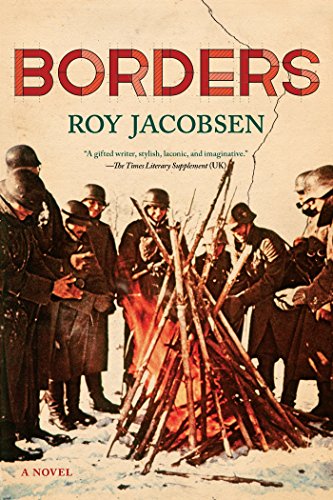
The Ardennes, a forested, mountainous borderland that spans France, Germany, Belgium, and Luxembourg, was crucial to Hitler's invasion of France and host to the Battle of the Bulge. In a small valley among these borders lives Robert, born of an affair between an American GI and the Belgian nurse who rescued him. In his father's absence, Robert finds a mentor in Markus Hebel, who has faked blindness ever since serving as a Wehrmacht radio operator in Russia. Markus, in turn, confides his secret to Robert--and then he tells the story of his own son, whose fanatical loyalty to Hitler left him trapped during the siege of Stalingrad. In Borders, Roy Jacobsen brilliantly layers these stories of impossible choices between familial love and national identity, culminating in a nuanced, probing novel of shifting wartime loyalties.
Die Inhaltsangabe kann sich auf eine andere Ausgabe dieses Titels beziehen.
Über die Autorin bzw. den Autor
Roy Jacobsen is one of the most celebrated and influential contemporary writers in Norway. Child Wonder was awarded the Norwegian Booksellers' Prize and The Burnt-Out Town of Miracles was short-listed for the International Dublin IMPAC Literary Award.
Auszug. © Genehmigter Nachdruck. Alle Rechte vorbehalten.
Borders
A Novel
By ROY JACOBSEN, Don Bartlett and Don ShawGRAYWOLF PRESS
Copyright © 1999 Cappelen Damm AS
All rights reserved.
ISBN: 978-1-55597-755-9All rights reserved.
CHAPTER 1
The Miller's Bridge
By the River Our – between Luxembourg and Germany – there is, on the German side, a mill barely a kilometre south of the village of Dasburg. It is known as Frankmühle, but the owner, Johann Holper, lives on the Luxembourg side, in the village of Rodershausen.
In late summer, when the water level is low, he can wade across the river – and the border – on his way to work, which takes him five minutes. In the winter months, when the river is high, he has to walk up to Dasburg, cross the bridge there and walk back along the German bank, which takes him about an hour. By horse and cart it takes the same time, because then he can't use the tracks through the forest.
As Johann Holper doesn't live a great deal further from his workplace than many a farmer does, he sits down at his desk on 26 November, 1893 and writes a letter to the Bürgermeister in Daleiden, the closest district to his home on the German side.
"... as I live in Rodershausen but own a mill on the German side, Frankmühle, and have to make a detour of about an hour to get there, I hereby most respectfully beg permission to make a path and construct a small wooden bridge by the mill in the Our Valley to fulfil my needs ..."
Since Johann Holper was born on the border and had learned at his mother's knee that national borders are not something to be taken lightly, he assures the Bürgermeister, twice in fact, that he is requesting only a "very small bridge", in other words not a major road between two nations which may be used for importing or exporting goods, for commercial ends, that is, which necessarily would require a customs office; nor was it to be built for wheeled vehicles, thus allowing it to be used for military purposes, which would necessitate a border-control point: all he wants is a footbridge, the sole function of which is to keep the feet dry of those who are already legally entitled to cross the border in the summer and to save them two, otherwise wasted, working hours in the winter.
The next day he takes the letter with him on his way to Frankmühle and posts it on the German side, so that it will only be en route two to three days up the mountain to Daleiden, rather than sending it from home, in which case it would have to go via Luxembourg, the capital city, constituting a detour of around 140 kilometres, which with checks and transport time would have meant a journey of at least seven days. It is tricks like this that Johann Holper has learned over a long life by the border, so he has German stamps in his desk drawer and in this way also saves on postage. Now, he reflects with a certain pleasure, his letter is taking the same welcome shortcut he himself has hopes of taking in the future, without breaking the law.
The Bürgermeister of Daleiden is also a seasoned border fox, who immediately recognises that this is far too big an issue for his office, so he passes the letter on to Kreis Prüm. But even this regional authority is not high enough, so the miller's application is passed up a level, to the provincial government in Trier. Here the matter is dealt with according to the usual procedures for bilateral state affairs and a copy is sent to the government in the Grand Duchy of Luxembourg, to the miller's own government, that is, with a request for comments and views.
The Luxembourg government is somewhat bemused that one of their subjects has taken the long way round the river with his application, instead of going straight to them, this approach only delays proceedings, but that is the miller's business. After the turn of the year a delegation, together with the corresponding authorities from Trier, is commissioned to examine the feasibility of coming to an agreement with regard to the "Frankmühle Case".
A number of points have to be clarified first. Who can use the bridge, apart from the miller himself? And as "use" is to some degree reflected in the size and design of the construction, a decision is taken to demand binding guarantees from the miller that the bridge will only be utilised by people travelling on foot.
And now the miller replies through "the official channels", for he has also Luxembourg stamps in his desk, and he repeats that of course it will be a very small bridge, a footbridge, as stated in his application, and since the River Our is so shallow that you can wade across in the summer and winter, such that the proposed construction could not possibly have much effect on any undesired or unmonitored crossings, which are hardly likely to be determined by whether one would get one's wet feet or not, I cannot see that there are any reasonable grounds for not allowing a bridge to be built ...
The officials dealing with the case in Luxembourg detect a tone of irritability in this letter but choose to ignore it. In the meantime their German counterparts suspect that with his private bridge initiative Holper is only trying to avoid paying the toll that a pedestrian has to pay to cross the official bridge at Dasburg. To which the miller responds that he does not pay a toll as he has land on each side and accordingly does not represent a source of income for either part under the present arrangement and so would not constitute any loss under a new arrangement.
The officials accept this too and can eventually get to grips with the main problem: who will have jurisdiction over the new bridge? Germany or Luxembourg?
This is a tougher nut to crack.
Ownership of – and therefore responsibility for – the other bridges over the Our is regulated according to a bilateral agreement, and even though there is nothing in principle to prevent the status of these bridges acting as a precedent for the miller's bridge, this would not solve the question of financial responsibility as neither the German nor the Luxembourg public can commit themselves to this kind of project since the construction will be of no benefit to anyone other than Johann Holper and his small family, who are the very people who made this unorthodox application in the first place.
Whereupon Johann Holper sits down and pens yet another letter, or rather two identically worded letters, one to Trier and one to the capital of the Grand Duchy, in which he unconditionally assumes responsibility for the bridge, both financially and in all other respects.
This proposition is accepted, with reservations, whereby in truth both parties sweep the legal complications under the carpet, concomitant with a private citizen not only owning property on two sides of a national border but also "owning and having responsibility for" the link between them, as it is well known that there are farmers along the Our with land on each side who wade over or cross by horse and cart when they have to mow or milk rather than using the official crossing points, but then the authorities have turned a blind eye to these goings-on from time immemorial.
So on 22 July, 1894 the authorities in Trier, in conjunction with the government of the Grand Duchy, "grant permission for an extremely small bridge – of wood – to be constructed over the River Our at Frankmühle ..."
By this time, however, Johann Holper has lost patience, or else assumed it would never occur to anyone to refuse him this bagatelle of a bridge, or couldn't care less, no-one knows, so he has already...
„Über diesen Titel“ kann sich auf eine andere Ausgabe dieses Titels beziehen.
Suchergebnisse für Borders: A Novel (The Lannan Translation)

Beispielbild für diese ISBN
Borders : A Novel
Verlag:
Graywolf Press, 2016
ISBN 10: 1555977553
ISBN 13: 9781555977559
Gebraucht
Softcover
Erstausgabe
Anbieter: Better World Books, Mishawaka, IN, USA
Verkäuferbewertung 5 von 5 Sternen

Zustand: Very Good. 1St Edition. Former library copy. Pages intact with possible writing/highlighting. Binding strong with minor wear. Dust jackets/supplements may not be included. Includes library markings. Stock photo provided. Product includes identifying sticker. Better World Books: Buy Books. Do Good. Artikel-Nr. 10650468-75
Gebraucht kaufen
EUR 5,94
Versand gratis
Versand innerhalb von USA
Versand innerhalb von USA
Anzahl: 1 verfügbar
Beispielbild für diese ISBN
Borders
Anbieter: ThriftBooks-Atlanta, AUSTELL, GA, USA
Verkäuferbewertung 5 von 5 Sternen
Paperback. Zustand: Good. No Jacket. Pages can have notes/highlighting. Spine may show signs of wear. ~ ThriftBooks: Read More, Spend Less. Artikel-Nr. G1555977553I3N00
Gebraucht kaufen
EUR 7,28
Versand gratis
Versand innerhalb von USA
Versand innerhalb von USA
Anzahl: 1 verfügbar
Beispielbild für diese ISBN
Borders
Anbieter: ThriftBooks-Atlanta, AUSTELL, GA, USA
Verkäuferbewertung 5 von 5 Sternen
Paperback. Zustand: Very Good. No Jacket. May have limited writing in cover pages. Pages are unmarked. ~ ThriftBooks: Read More, Spend Less. Artikel-Nr. G1555977553I4N00
Gebraucht kaufen
EUR 7,28
Versand gratis
Versand innerhalb von USA
Versand innerhalb von USA
Anzahl: 1 verfügbar
Beispielbild für diese ISBN
Borders
Anbieter: ThriftBooks-Dallas, Dallas, TX, USA
Verkäuferbewertung 5 von 5 Sternen
Paperback. Zustand: Very Good. No Jacket. Former library book; May have limited writing in cover pages. Pages are unmarked. ~ ThriftBooks: Read More, Spend Less. Artikel-Nr. G1555977553I4N10
Gebraucht kaufen
EUR 7,28
Versand gratis
Versand innerhalb von USA
Versand innerhalb von USA
Anzahl: 1 verfügbar
Beispielbild für diese ISBN
Borders
Anbieter: ThriftBooks-Dallas, Dallas, TX, USA
Verkäuferbewertung 5 von 5 Sternen
Paperback. Zustand: Good. No Jacket. Pages can have notes/highlighting. Spine may show signs of wear. ~ ThriftBooks: Read More, Spend Less. Artikel-Nr. G1555977553I3N00
Gebraucht kaufen
EUR 7,28
Versand gratis
Versand innerhalb von USA
Versand innerhalb von USA
Anzahl: 1 verfügbar
Beispielbild für diese ISBN
Borders: A Novel (The Lannan Translation)
Anbieter: Books From California, Simi Valley, CA, USA
Verkäuferbewertung 4 von 5 Sternen

paperback. Zustand: Good. Remainder mark. Cover edges have light shelf wear/creasing. Artikel-Nr. mon0003172797
Gebraucht kaufen
EUR 4,41
EUR 4,28 Versand
Versand innerhalb von USA
Versand innerhalb von USA
Anzahl: 1 verfügbar
Beispielbild für diese ISBN
Borders: A Novel (The Lannan Translation)
Anbieter: Books From California, Simi Valley, CA, USA
Verkäuferbewertung 4 von 5 Sternen
paperback. Zustand: Very Good. has a remainder mark. Artikel-Nr. mon0003169680
Gebraucht kaufen
EUR 4,41
EUR 4,28 Versand
Versand innerhalb von USA
Versand innerhalb von USA
Anzahl: 1 verfügbar
Beispielbild für diese ISBN
Borders: A Novel
Anbieter: Kennys Bookstore, Olney, MD, USA
Verkäuferbewertung 5 von 5 Sternen
Zustand: New. 2016. 1. Ausgabe. paperback. . . . . . Books ship from the US and Ireland. Artikel-Nr. V9781555977559
Neu kaufen
EUR 22,75
EUR 9,00 Versand
Versand innerhalb von USA
Versand innerhalb von USA
Anzahl: 15 verfügbar
Foto des Verkäufers
Borders
Anbieter: moluna, Greven, Deutschland
Verkäuferbewertung 5 von 5 Sternen
Zustand: New. Über den AutorrnrnRoy Jacobsen Translated from the Norwegian by Don Bartlett and Don ShawKlappentextrnrnA sweeping novel of World War II, set in the Ardennes, from the acclaimed author of Child Wonder. Artikel-Nr. 904305844
Neu kaufen
EUR 22,07
EUR 48,99 Versand
Versand von Deutschland nach USA
Versand von Deutschland nach USA
Anzahl: 3 verfügbar
Foto des Verkäufers
Borders
Anbieter: AHA-BUCH GmbH, Einbeck, Deutschland
Verkäuferbewertung 5 von 5 Sternen
Taschenbuch. Zustand: Neu. Neuware - A sweeping novel of World War II, set in the Ardennes, from the acclaimed author of Child Wonder The Ardennes, a forested, mountainous borderland that spans France, Germany, Belgium, and Luxembourg, was crucial to Hitler's invasion of France and host to the Battle of the Bulge. In a small valley among these borders lives Robert, born of an affair between an American GI and the Belgian nurse who rescued him. In his father's absence, Robert finds a mentor in Markus Hebel, who has faked blindness ever since serving as a Wehrmacht radio operator in Russia. Markus, in turn, confides his secret to Robert--and then he tells the story of his own son, whose fanatical loyalty to Hitler left him trapped during the siege of Stalingrad. In Borders, Roy Jacobsen brilliantly layers these stories of impossible choices between familial love and national identity, culminating in a nuanced, probing novel of shifting wartime loyalties. Artikel-Nr. 9781555977559
Neu kaufen
EUR 20,00
EUR 62,04 Versand
Versand von Deutschland nach USA
Versand von Deutschland nach USA
Anzahl: 2 verfügbar