
Verwandte Artikel zu Middlemarch: A Study of Provincial Life (Broadview...
Inhaltsangabe
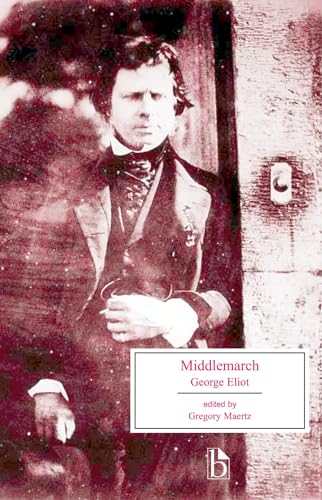
George Eliot’s Middlemarch (1871-72) is one of the classic novels of English literature and was admired by Virginia Woolf as “one of the few English novels written for grown-up people.” The complex main plot and many subplots revolve around Dorothea Brooke, an ardent young woman, and her relationship to three men: Casaubon, a clergyman and scholar twice her age; Lydgate, an ambitious young doctor who shares Dorothea’s enthusiasm for reform but whose flaws compromise his ambitions; and Will Ladislaw, a young man of mysterious origins, romantic temperament, and artistic inclinations. A female Bildungsroman and a study of character and society in the realistic mode pioneered by Balzac, Middlemarch is also an historical novel that offers a panorama of English society in an era of social reform and political agitation.
This Broadview edition includes a critical introduction and a rich selection of contextual materials, including contemporary reviews of the novel, other writings by George Eliot (essays, reviews, and criticism), and historical documents pertaining to medical reform, religious freedom, and the advent of the railroads.
Die Inhaltsangabe kann sich auf eine andere Ausgabe dieses Titels beziehen.
Über die Autorin bzw. den Autor
Gregory Maertz is an Associate Professor of English at Saint John’s University in New York City. He is the editor of Cultural Interactions in the Romantic Age (SUNY Press, 1998).
Von der hinteren Coverseite
George Eliot's Middlemarch (1871-72) is one of the classic novels of English literature and was admired by Virginia Woolf as "one of the few English novels written for grown-up people." The complex main plot and many subplots revolve around Dorothea Brooke, an ardent young woman, and her relationship to three men: Casaubon, a clergyman and scholar twice her age; Lydgate, an ambitious young doctor who shares Dorothea's enthusiasm for reform but whose flaws compromise his ambitions; and Will Ladislaw, a young man of mysterious origins, romantic temperament, and artistic inclinations. A female Bildungsroman and a study of character and society in the realistic mode pioneered by Balzac, Middlemarch is also an historical novel that offers a panorama of English society in an era of social reform and political agitation.
This Broadview edition includes a critical introduction and a rich selection of contextual materials, including contemporary reviews of the novel, other writings by George Eliot (essays, reviews, and criticism), and historical documents pertaining to medical reform, religious freedom, and the advent of the railroads.
Auszug. © Genehmigter Nachdruck. Alle Rechte vorbehalten.
Middlemarch
A Study of Provincial LifeBy George EliotBroadview Press
Copyright © 2004 George EliotAll right reserved.
ISBN: 9781551112336
Chapter One
Since I can do no good because a woman,
Reach constantly at something that is near it.
? Beaumont and Fletcher:
THE MAID'S TRAGEDY
MISS BROOKE had that kind of beauty which seems to bethrown into relief by poor dress. Her hand and wrist were so finelyformed that she could wear sleeves not less bare of style than those inwhich the Blessed Virgin appeared to Italian painters; and her profileas well as her stature and bearing seemed to gain the more dignity fromher plain garments, which by the side of provincial fashion gave her theimpressiveness of a fine quotation from the Bible, ? or from one of ourelder poets, ? in a paragraph of to-day's newspaper. She was usuallyspoken of as being remarkably clever, but with the addition that hersister Celia had more common-sense. Nevertheless, Celia wore scarcelymore trimmings; and it was only to close observers that her dressdiffered from her sister's, and had a shade of coquetry in itsarrangements; for Miss Brooke's plain dressing was due to mixedconditions, in most of which her sister shared. The pride of beingladies had something to do with it: the Brooke connections, though notexactly aristocratic, were unquestionably "good": if you inquiredbackward for a generation or two, you would not find any yard-measuringor parcel-tying forefathers ? anything lower than an admiral or aclergyman; and there was even an ancestor discernible as a Puritangentleman who served under Cromwell, but afterwards conformed, andmanaged to come out of all political troubles as the proprietor of arespectable family estate. Young women of such birth, living in a quietcountry-house, and attending a village church hardly larger than aparlour, naturally regarded frippery as the ambition of a huckster'sdaughter. Then there was well-bred economy, which in those days madeshow in dress the first item to be deducted from, when any margin wasrequired for expenses more distinctive of rank. Such reasons would havebeen enough to account for plain dress, quite apart from religiousfeeling; but in Miss Brooke's case, religion alone would have determinedit; and Celia mildly acquiesced in all her sister's sentiments, onlyinfusing them with that common-sense which is able to accept momentousdoctrines without any eccentric agitation. Dorothea knew many passagesof Pascal's Pensées and of Jeremy Taylor by heart; and toher the destinies of mankind, seen by the light of Christianity, madethe solicitudes of feminine fashion appear an occupation for Bedlam. Shecould not reconcile the anxieties of a spiritual life involving eternalconsequences, with a keen interest in guimp and artificial protrusionsof drapery. Her mind was theoretic, and yearned by its nature after somelofty conception of the world which might frankly include the parish ofTipton and her own rule of conduct there; she was enamoured of intensityand greatness, and rash in embracing whatever seemed to her to havethose aspects; likely to seek martyrdom, to make retractions, and thento incur martyrdom after all in a quarter where she had not sought it.Certainly such elements in the character of a marriageable girl tendedto interfere with her lot, and hinder it from being decided according tocustom, by good looks, vanity, and merely canine affection. With allthis, she, the elder of the sisters, was not yet twenty, and they hadboth been educated, since they were about twelve years old and had losttheir parents, on plans at once narrow and promiscuous, first in anEnglish family and afterwards in a Swiss family at Lausanne, theirbachelor uncle and guardian trying in this way to remedy thedisadvantages of their orphaned condition.
It was hardly a year since they had come to live at Tipton Grange withtheir uncle, a man nearly sixty, of acquiescent temper, miscellaneousopinions, and uncertain vote. He had travelled in his younger years, andwas held in this part of the country to have contracted a too ramblinghabit of mind. Mr. Brooke's conclusions were as difficult to predict asthe weather: it was only safe to say that he would act with benevolentintentions, and that he would spend as little money as possible incarrying them out. For the most glutinously indefinite minds enclosesome hard grains of habit; and a man has been seen lax about all his owninterests except the retention of his snuff-box, concerning which he waswatchful, suspicious, and greedy of clutch.
In Mr. Brooke the hereditary strain of Puritan energy was clearly inabeyance; but in his niece Dorothea it glowed alike through faults andvirtues, turning sometimes into impatience of her uncle's talk or hisway of "letting things be" on his estate, and making her long all themore for the time when she would be of age and have some command ofmoney for generous schemes. She was regarded as an heiress, for not onlyhad the sisters seven hundred a-year each from their parents, but ifDorothea married and had a son, that son would inherit Mr. Brooke'sestate, presumably worth about three thousand a-year ? a rental whichseemed wealth to provincial families, still discussing Mr. Peel's lateconduct on the Catholic Question, innocent of future gold-fields, and ofthat gorgeous plutocracy which has so nobly exalted the necessities ofgenteel life.
And how should Dorothea not marry? ? a girl so handsome and with suchprospects? Nothing could hinder it but her love of extremes, and herinsistence on regulating life according to notions which might cause awary man to hesitate before he made her an offer, or even might lead herat last to refuse all offers. A young lady of some birth and fortune,who knelt suddenly down on a brick floor by the side of a sick labourerand prayed fervidly as if she thought herself living in the time of theApostles ? who had strange whims of fasting like a Papist, and ofsitting up at night to read old theological books! Such a wife mightawaken you some fine morning with a new scheme for the application ofher income which would interfere with political economy and the keepingof saddle-horses: a man would naturally think twice before he riskedhimself in such fellowship. Women were expected to have weak opinions;but the great safeguard of society and of domestic life was, thatopinions were not acted on. Sane people did what their neighbours did,so that if any lunatics were at large, one might know and avoid them.
The rural opinion about the new young ladies, even among the cottagers,was generally in favour of Celia, as being so amiable andinnocent-looking, while Miss Brooke's large eyes seemed, like herreligion, too unusual and striking. Poor Dorothea! compared with her,the innocent-looking Celia was knowing and worldly-wise; so much subtleris a human mind than the outside tissues which make a sort of blazonryor clock-face for it.
Yet those who approached Dorothea, though prejudiced against her by thisalarming hearsay, found that she had a charm unaccountably reconcilablewith it. Most men thought her bewitching when she was on horseback. Sheloved the fresh air and the various aspects of the country, and when hereyes and cheeks glowed with mingled pleasure she looked very little likea devotee. Riding was an indulgence which she allowed herself in spiteof conscientious qualms; she felt that she enjoyed it in a pagansensuous way, and always looked forward to renouncing it.
She was open, ardent, and not in the least self-admiring; indeed, it waspretty to see how her imagination adorned her...
„Über diesen Titel“ kann sich auf eine andere Ausgabe dieses Titels beziehen.
Suchergebnisse für Middlemarch: A Study of Provincial Life (Broadview...

Beispielbild für diese ISBN
Middlemarch: A Study of Provincial Life
Anbieter: WorldofBooks, Goring-By-Sea, WS, Vereinigtes Königreich
Verkäuferbewertung 5 von 5 Sternen

Paperback. Zustand: Very Good. The book has been read, but is in excellent condition. Pages are intact and not marred by notes or highlighting. The spine remains undamaged. Artikel-Nr. GOR005375552
Gebraucht kaufen
EUR 17,86
EUR 6,69 Versand
Versand von Vereinigtes Königreich nach USA
Versand von Vereinigtes Königreich nach USA
Anzahl: 3 verfügbar
Beispielbild für diese ISBN
Middlemarch
Anbieter: PBShop.store US, Wood Dale, IL, USA
Verkäuferbewertung 5 von 5 Sternen
PAP. Zustand: New. New Book. Shipped from UK. Established seller since 2000. Artikel-Nr. GZ-9781551112336
Beispielbild für diese ISBN
Middlemarch
Anbieter: PBShop.store UK, Fairford, GLOS, Vereinigtes Königreich
Verkäuferbewertung 5 von 5 Sternen
PAP. Zustand: New. New Book. Shipped from UK. Established seller since 2000. Artikel-Nr. GZ-9781551112336
Neu kaufen
EUR 26,51
EUR 7,01 Versand
Versand von Vereinigtes Königreich nach USA
Versand von Vereinigtes Königreich nach USA
Anzahl: 9 verfügbar
Beispielbild für diese ISBN
Middlemarch
Anbieter: Majestic Books, Hounslow, Vereinigtes Königreich
Verkäuferbewertung 4 von 5 Sternen

Zustand: New. pp. 739 Illus. Artikel-Nr. 6714969
Neu kaufen
EUR 28,33
EUR 7,76 Versand
Versand von Vereinigtes Königreich nach USA
Versand von Vereinigtes Königreich nach USA
Anzahl: 3 verfügbar
Beispielbild für diese ISBN
Middlemarch
Anbieter: Revaluation Books, Exeter, Vereinigtes Königreich
Verkäuferbewertung 5 von 5 Sternen
Paperback. Zustand: Brand New. 1st edition. 744 pages. 9.00x6.00x1.50 inches. In Stock. Artikel-Nr. __1551112337
Neu kaufen
EUR 23,25
EUR 14,93 Versand
Versand von Vereinigtes Königreich nach USA
Versand von Vereinigtes Königreich nach USA
Anzahl: 1 verfügbar
Beispielbild für diese ISBN
Middlemarch: A Study of Provincial Life
Anbieter: Kennys Bookstore, Olney, MD, USA
Verkäuferbewertung 5 von 5 Sternen
Zustand: New. One of the classic novels of English literature which was admired by Virginia Woolf as one of the few English novels written for grown-up people. This edition includes a critical introduction, and a rich selection of contextual materials, including contemporary reviews of the novel, other writings by George Eliot and historical documents. Editor(s): Maertz, Gregory. Series: Broadview Editions. Num Pages: 739 pages, Illustrations. BIC Classification: DSA. Category: (G) General (US: Trade). Dimension: 229 x 154 x 27. Weight in Grams: 784. . 2004. 0th Edition. Paperback. . . . . Books ship from the US and Ireland. Artikel-Nr. V9781551112336
Neu kaufen
EUR 33,94
EUR 9,37 Versand
Versand innerhalb von USA
Versand innerhalb von USA
Anzahl: 2 verfügbar
Foto des Verkäufers
Middlemarch : A Study of Provincial Life
Verlag:
Broadview Press Ltd Aug 2004, 2004
ISBN 10: 1551112337
ISBN 13: 9781551112336
Neu
Taschenbuch
Anbieter: AHA-BUCH GmbH, Einbeck, Deutschland
Verkäuferbewertung 5 von 5 Sternen
Taschenbuch. Zustand: Neu. Neuware - George Eliot's Middlemarch (1871-72) is one of the classic novels of English literature and was admired by Virginia Woolf as 'one of the few English novels written for grown-up people.' The complex main plot and many subplots revolve around Dorothea Brooke, an ardent young woman, and her relationship to three men: Casaubon, a clergyman and scholar twice her age; Lydgate, an ambitious young doctor who shares Dorothea's enthusiasm for reform but whose flaws compromise his ambitions; and Will Ladislaw, a young man of mysterious origins, romantic temperament, and artistic inclinations. A female Bildungsroman and a study of character and society in the realistic mode pioneered by Balzac, Middlemarch is also an historical novel that offers a panorama of English society in an era of social reform and political agitation. Artikel-Nr. 9781551112336
Neu kaufen
EUR 44,62
EUR 35,00 Versand
Versand von Deutschland nach USA
Versand von Deutschland nach USA
Anzahl: 2 verfügbar
Foto des Verkäufers
Eliot, G: Middlemarch
Anbieter: moluna, Greven, Deutschland
Verkäuferbewertung 5 von 5 Sternen
Zustand: New. One of the classic novels of English literature which was admired by Virginia Woolf as one of the few English novels written for grown-up people. This edition includes a critical introduction, and a rich selection of contextual materials, including contempo. Artikel-Nr. 596309842
Neu kaufen
EUR 31,83
EUR 48,99 Versand
Versand von Deutschland nach USA
Versand von Deutschland nach USA
Anzahl: 5 verfügbar