
Verwandte Artikel zu How to Change Everything: The Young Human's Guide...
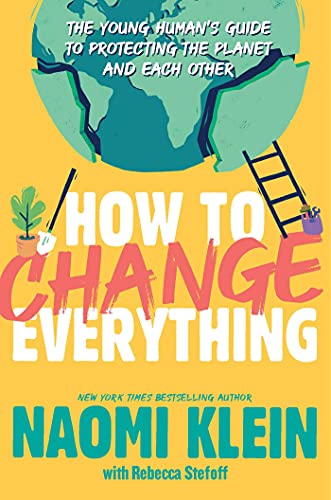
How to Change Everything: The Young Human's Guide to Protecting the Planet and Each Other - Softcover
Inhaltsangabe
“[A] uniquely inclusive perspective that will inspire conviction, passion, and action.” —Kirkus Reviews (starred review)
An empowering, engaging young readers guide to understanding and battling climate change from the expert and bestselling author of This Changes Everything and On Fire, Naomi Klein.
Warmer temperatures. Fires in the Amazon. Superstorms. These are just some of the effects of climate change that we are already experiencing.
The good news is that we can all do something about it. A movement is already underway to combat not only the environmental effects of climate change but also to fight for climate justice and make a fair and livable future possible for everyone. And young people are not just part of that movement, they are leading the way. They are showing us that this moment of danger is also a moment of great opportunity—an opportunity to change everything.
Full of empowering stories of young leaders all over the world, this information-packed book from award-winning journalist and one of the foremost voices for climate justice, Naomi Klein, offers young readers a comprehensive look at the state of the climate today and how we got here, while also providing the tools they need to join this fight to protect and reshape the planet they will inherit.
Die Inhaltsangabe kann sich auf eine andere Ausgabe dieses Titels beziehen.
Über die Autorinnen und Autoren
Naomi Klein is an award-winning journalist, columnist, and author of the New York Times and international bestsellers The Shock Doctrine, No Logo, This Changes Everything, and No Is Not Enough. A Senior Correspondent for The Intercept, reporter for Rolling Stone, and contributor for both The Nation and The Guardian, Klein is the inaugural Gloria Steinem Endowed Chair in Media, Culture, and Feminist Studies at Rutgers University. She is cofounder of the climate justice organization The Leap.
Rebecca Stefoff published her first books when she was in college and has been writing ever since. She has written many nonfiction books for children and young adults, with an emphasis on science and history. Through her books, teenage readers can explore topics as varied as ghosts, robots, bacteria, evolution, women pioneers, the ruins of Great Zimbabwe, forensic crime solving, and more. She lives in Portland, Oregon.
Auszug. © Genehmigter Nachdruck. Alle Rechte vorbehalten.
Chapter 1: Kids Take Action
CHAPTER 1 Kids Take Action
They streamed out of their schools, bubbling with excitement. Little trickles of them flowed from side streets into grand avenues, where they mingled with other streams of children and teens. Chanting, chatting, dressed in everything from crisp school uniforms to leopard leggings, the kids formed rushing rivers in dozens of cities around the world. They marched by the hundreds, thousands, and tens of thousands.
Did businesspeople gaze down from their office windows and wonder what so many kids were doing out of school? Were shoppers puzzled by the surging excitement on the streets? Signs carried by the marchers answered those questions:
One of New York City’s ten thousand young marchers was a girl who held up her painting of bumblebees, flowers, and jungle animals. The painting was lush, but the words with it were harsh: 45% OF INSECTS LOST TO CLIMATE CHANGE. 60% OF ANIMALS HAVE DISAPPEARED IN THE LAST 50 YEARS. At the center she had painted an hourglass running out of sand.
That day in March 2019 was the first global School Strike for Climate.
STUDENTS ON STRIKE
Organizers of the first school strike estimate that there were almost 2,100 youth climate strikes in 125 countries that day. More than a million and a half young people showed up. Most of them had walked out of school—some with permission, some without—either for an hour or for a whole day.
Many of them took to the streets because they recognized a deep conflict in what they were learning about the world. Schoolbooks and documentaries had shown them ancient glaciers, dazzling coral reefs, and other living things that make up our planet’s many marvels. But at almost the same time, they were finding out that much of this wonder has already disappeared because of climate change. Much more would be gone if they waited until they were grown up to do something.
Learning about climate change had convinced these kids that things could not continue on the same path. So, like many groups before them who had fought to transform the world, they took to marching.
But many of these young people went on strike not just to prevent losses in the future but because they were already living in a climate crisis. In Cape Town, South Africa, hundreds of young strikers chanted at their elected leaders to stop approving new projects that would contribute to our planet’s warming. A year earlier, the huge city had come desperately close to running out of water, after several years of low rainfall and severe drought that were likely caused—or at least made worse—by climate change.
In the Pacific island nation of Vanuatu, young strikers yelled, “Raise your voice, not the sea level!” Their Pacific neighbor, the Solomon Islands, had already seen five small islands covered by the sea, which is rising as higher temperatures cause water to expand and glaciers and ice sheets to melt.
“You sold our future, just for profit!” the students in Delhi, India, yelled through white medical masks. Delhi often has some of the worst pollution in the world, in part because India is a major user of coal, a fuel that produces pollution. But the clouds of smog that form visible air pollution are not the only problem with coal. Burning it also releases invisible substances called greenhouse gases into the air. And as the student marchers there knew, and as you will see, these gases are the reason our climate is changing.
Hope, determination, and a bouncing globe filled the air as young people filled the streets in Sydney, Australia, during the first School Strike for Climate.
That day was the first-ever worldwide climate strike—and it was created and run by kids. With that first school strike and those that have followed it, young people around the world are demanding a say in the future of their world.
“We Deserve Better”
One hundred and fifty thousand young people poured into the streets of Australia’s cities for the first School Strike for Climate. They knew that climate change was already damaging their nation. One of its effects, as you saw at the beginning of this book, is that warming ocean water is killing the Great Barrier Reef, a natural treasure of Australia and the world.
Yet Australia remains a major producer and seller of coal. And coal, when burned as fuel to power electrical plants and for other uses, produces the greenhouse gases that drive temperatures higher. Fifteen-year-old Nosrat Fareha, an Australian strike organizer, said to the country’s political class, “You have failed us all so terribly. We deserve better. Young people can’t even vote but will have to live with the consequences of your inaction.” Like other young people in other cities, Fareha was unafraid to speak the blunt truth to those in power. That fearlessness is one of the strengths of the youth movement for change.
A SCHOOLGIRL IN SWEDEN
The School Strike for Climate in March 2019 showed the world a youth movement that was large and growing. It had begun largely thanks to a fifteen-year-old girl in Stockholm, Sweden.
Greta Thunberg started learning about climate change when she was eight years old. She saw documentaries about melting glaciers and disappearing species. She learned that burning fossil fuels such as coal, oil, and natural gas emits—or releases—greenhouse gases into the atmosphere, and those gases contribute to climate change. Power plants, chimneys and smokestacks, cars, and planes all add greenhouse gas emissions to the air.
Meat-based diets also increase greenhouse gases, Greta learned. That’s because raising livestock, especially cattle, means cutting down large amounts of forest to create grazing lands. This deforestation removes trees, and trees absorb the harmful greenhouse gas known as carbon dioxide, taking it out of the atmosphere. In addition, cattle and their manure add methane, another greenhouse gas, to the air.
As Greta grew older and learned more, she focused on scientists’ predictions about what Earth will be like in 2040, 2060, and 2080 if humans do not change our ways. She thought about what this would mean to her own life—the disasters she would have to endure; the animals and plants that would disappear forever; the hardships in store for her own children, if she decided to become a parent.
But she also learned that the worst predictions of the climate scientists were not set in stone. By taking bold action now, humans can sharply increase the chances of a safe future. We can still save some of the glaciers. We can protect many island nations from being swallowed by the sea. We might avoid massive crop failures and unbearable heat that would send millions or even billions of people fleeing from their homes.
Why, Greta wondered, wasn’t everyone talking about preventing climate disaster? Why weren’t nations such as hers leading a dramatic charge to lower greenhouse gases? The world was on fire, yet everywhere Greta looked, people were still going about their lives, buying new cars and new clothes they didn’t need, as though nothing were wrong.
At around the age of eleven, Greta fell into a deep depression. One reason she could not shake off her depression is that Greta has a form of autism that causes her to focus intently on subjects that interest her. So...
„Über diesen Titel“ kann sich auf eine andere Ausgabe dieses Titels beziehen.
Suchergebnisse für How to Change Everything: The Young Human's Guide...

Beispielbild für diese ISBN
How to Change Everything: The Young Human's Guide to Protecting the Planet and Each Other
Verlag:
Atheneum Books for Young Readers, 2022
ISBN 10: 1534474536
ISBN 13: 9781534474536
Gebraucht
Softcover
Anbieter: World of Books (was SecondSale), Montgomery, IL, USA
Verkäuferbewertung 5 von 5 Sternen

Zustand: Good. Item in good condition. Textbooks may not include supplemental items i.e. CDs, access codes etc. Artikel-Nr. 00104061395
Gebraucht kaufen
EUR 4,10
Versand gratis
Versand innerhalb von USA
Versand innerhalb von USA
Anzahl: 9 verfügbar
Beispielbild für diese ISBN
How to Change Everything: The Young Human's Guide to Protecting the Planet and Each Other
Verlag:
Atheneum Books for Young Readers, 2022
ISBN 10: 1534474536
ISBN 13: 9781534474536
Gebraucht
Paperback
Anbieter: ThriftBooks-Dallas, Dallas, TX, USA
Verkäuferbewertung 5 von 5 Sternen
Paperback. Zustand: Very Good. No Jacket. Former library book; May have limited writing in cover pages. Pages are unmarked. ~ ThriftBooks: Read More, Spend Less. Artikel-Nr. G1534474536I4N10
Gebraucht kaufen
EUR 5,72
Versand gratis
Versand innerhalb von USA
Versand innerhalb von USA
Anzahl: 1 verfügbar
Beispielbild für diese ISBN
How to Change Everything: The Young Human's Guide to Protecting the Planet and Each Other
Verlag:
Atheneum Books for Young Readers, 2022
ISBN 10: 1534474536
ISBN 13: 9781534474536
Gebraucht
Paperback
Anbieter: ThriftBooks-Phoenix, Phoenix, AZ, USA
Verkäuferbewertung 5 von 5 Sternen
Paperback. Zustand: Good. No Jacket. Pages can have notes/highlighting. Spine may show signs of wear. ~ ThriftBooks: Read More, Spend Less. Artikel-Nr. G1534474536I3N00
Gebraucht kaufen
EUR 5,72
Versand gratis
Versand innerhalb von USA
Versand innerhalb von USA
Anzahl: 3 verfügbar
Beispielbild für diese ISBN
How to Change Everything: The Young Human's Guide to Protecting the Planet and Each Other
Verlag:
Atheneum Books for Young Readers, 2022
ISBN 10: 1534474536
ISBN 13: 9781534474536
Gebraucht
Paperback
Anbieter: ThriftBooks-Phoenix, Phoenix, AZ, USA
Verkäuferbewertung 5 von 5 Sternen
Paperback. Zustand: Very Good. No Jacket. May have limited writing in cover pages. Pages are unmarked. ~ ThriftBooks: Read More, Spend Less. Artikel-Nr. G1534474536I4N00
Gebraucht kaufen
EUR 5,72
Versand gratis
Versand innerhalb von USA
Versand innerhalb von USA
Anzahl: 3 verfügbar
Beispielbild für diese ISBN
How to Change Everything: The Young Human's Guide to Protecting the Planet and Each Other
Verlag:
Atheneum Books for Young Readers, 2022
ISBN 10: 1534474536
ISBN 13: 9781534474536
Gebraucht
Paperback
Anbieter: ThriftBooks-Reno, Reno, NV, USA
Verkäuferbewertung 5 von 5 Sternen
Paperback. Zustand: Very Good. No Jacket. May have limited writing in cover pages. Pages are unmarked. ~ ThriftBooks: Read More, Spend Less. Artikel-Nr. G1534474536I4N00
Gebraucht kaufen
EUR 5,72
Versand gratis
Versand innerhalb von USA
Versand innerhalb von USA
Anzahl: 4 verfügbar
Beispielbild für diese ISBN
How to Change Everything: The Young Human's Guide to Protecting the Planet and Each Other
Verlag:
Atheneum Books for Young Readers, 2022
ISBN 10: 1534474536
ISBN 13: 9781534474536
Gebraucht
Paperback
Anbieter: ThriftBooks-Reno, Reno, NV, USA
Verkäuferbewertung 5 von 5 Sternen
Paperback. Zustand: Good. No Jacket. Pages can have notes/highlighting. Spine may show signs of wear. ~ ThriftBooks: Read More, Spend Less. Artikel-Nr. G1534474536I3N00
Gebraucht kaufen
EUR 5,72
Versand gratis
Versand innerhalb von USA
Versand innerhalb von USA
Anzahl: 4 verfügbar
Beispielbild für diese ISBN
How to Change Everything: The Young Human's Guide to Protecting the Planet and Each Other
Verlag:
Atheneum Books for Young Readers, 2022
ISBN 10: 1534474536
ISBN 13: 9781534474536
Gebraucht
Paperback
Anbieter: ThriftBooks-Atlanta, AUSTELL, GA, USA
Verkäuferbewertung 5 von 5 Sternen
Paperback. Zustand: Fair. No Jacket. Readable copy. Pages may have considerable notes/highlighting. ~ ThriftBooks: Read More, Spend Less. Artikel-Nr. G1534474536I5N00
Gebraucht kaufen
EUR 5,72
Versand gratis
Versand innerhalb von USA
Versand innerhalb von USA
Anzahl: 1 verfügbar
Beispielbild für diese ISBN
How to Change Everything: The Young Human's Guide to Protecting the Planet and Each Other
Verlag:
Atheneum Books for Young Readers, 2022
ISBN 10: 1534474536
ISBN 13: 9781534474536
Gebraucht
Paperback
Anbieter: ThriftBooks-Dallas, Dallas, TX, USA
Verkäuferbewertung 5 von 5 Sternen
Paperback. Zustand: Good. No Jacket. Pages can have notes/highlighting. Spine may show signs of wear. ~ ThriftBooks: Read More, Spend Less. Artikel-Nr. G1534474536I3N00
Gebraucht kaufen
EUR 5,72
Versand gratis
Versand innerhalb von USA
Versand innerhalb von USA
Anzahl: 4 verfügbar
Beispielbild für diese ISBN
How to Change Everything: The Young Human's Guide to Protecting the Planet and Each Other
Verlag:
Atheneum Books for Young Readers, 2022
ISBN 10: 1534474536
ISBN 13: 9781534474536
Gebraucht
Paperback
Anbieter: ThriftBooks-Reno, Reno, NV, USA
Verkäuferbewertung 5 von 5 Sternen
Paperback. Zustand: Fair. No Jacket. Missing dust jacket; Readable copy. Pages may have considerable notes/highlighting. ~ ThriftBooks: Read More, Spend Less. Artikel-Nr. G1534474536I5N01
Gebraucht kaufen
EUR 5,72
Versand gratis
Versand innerhalb von USA
Versand innerhalb von USA
Anzahl: 1 verfügbar
Beispielbild für diese ISBN
How to Change Everything: The Young Human's Guide to Protecting the Planet and Each Other
Verlag:
Atheneum Books for Young Readers, 2022
ISBN 10: 1534474536
ISBN 13: 9781534474536
Gebraucht
Paperback
Anbieter: ThriftBooks-Atlanta, AUSTELL, GA, USA
Verkäuferbewertung 5 von 5 Sternen
Paperback. Zustand: Very Good. No Jacket. May have limited writing in cover pages. Pages are unmarked. ~ ThriftBooks: Read More, Spend Less. Artikel-Nr. G1534474536I4N00
Gebraucht kaufen
EUR 5,72
Versand gratis
Versand innerhalb von USA
Versand innerhalb von USA
Anzahl: 4 verfügbar