
Verwandte Artikel zu The Language of Kindness: A Nurse's Story
Inhaltsangabe
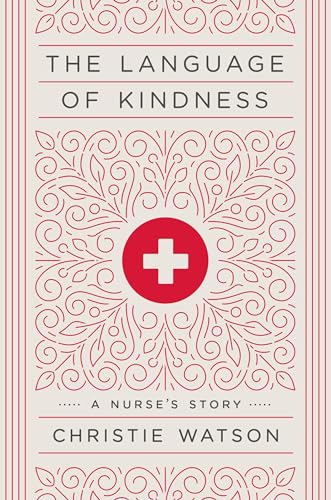
#1 INTERNATIONAL BESTSELLER • A moving, lyrical, beautifully-written portrait of a nurse and the lives she has touched
Christie Watson spent twenty years as a nurse, and in this intimate, poignant, and remarkably powerful book, she opens the doors of the hospital and shares its secrets. She takes us by her side down hospital corridors to visit the wards and meet her unforgettable patients.
In the neonatal unit, premature babies fight for their lives, hovering at the very edge of survival, like tiny Emmanuel, wrapped up in a sandwich bag. On the cancer wards, the nurses administer chemotherapy and, long after the medicine stops working, something more important--which Watson learns to recognize when her own father is dying of cancer. In the pediatric intensive care unit, the nurses wash the hair of a little girl to remove the smell of smoke from the house fire. The emergency room is overcrowded as ever, with waves of alcohol and drug addicted patients as well as patients like Betty, a widow suffering chest pain, frail and alone. And the stories of the geriatric ward--Gladys and older patients like her--show the plight of the most vulnerable members of our society.
Through the smallest of actions, nurses provide vital care and kindness. All of us will experience illness in our lifetime, and we will all depend on the support and dignity that nurses offer us; yet the women and men who form the vanguard of our health care remain unsung. In this age of fear, hate, and division, Christie Watson has written a book that reminds us of all that we share, and of the urgency of compassion.
Die Inhaltsangabe kann sich auf eine andere Ausgabe dieses Titels beziehen.
Über die Autorin bzw. den Autor
Christie Watson was a registered nurse for twenty years before writing full time. Her first novel, Tiny Sunbirds Far Away, won the Costa First Novel Award and her second novel, Where Women Are Kings, was also published to international critical acclaim. Her works have been translated to eighteen languages. She lives in London.
Auszug. © Genehmigter Nachdruck. Alle Rechte vorbehalten.
***This excerpt is from an advance uncorrected copy proof*** Copyright © 2018 Christie Watson
Nursing was left to “those who were too old, too weak, too drunken, too dirty, too stupid or too bad to do anything else.”
FLORENCE NIGHTINGALE
I didn’t always want to be a nurse. I went through a number of career possibilities and continually exasperated the careers advisor at my failing secondary school. “Marine biologist” was one career choice that I listed, having visions of wearing a swimsuit all day in a sunny climate and swimming with dolphins. When I discovered that much of the work of a marine biologist involved studying plankton off the coast of Wales, I had a rethink. During one summer in Swansea I spent time watching my great-great-aunt gutting catfish in the large kitchen sink; and once I went out on a boat with hairy, gruff and burly yellow-booted men who pissed in the sea and swore continually. I’d also eaten winkles and cockle-bread for break- fast. Marine biology was definitely out.
“Law,” a teacher remarked, when my parents, also exasperated with me by then, asked what I might be suited to. “She can argue all day long.” But I had no aptitude for focused study. Instead I looked toward other animals and conservation. I dreamed of doing photography for the National Geo- graphic, leading to travel in hot and exotic locations where the sun would shine and I would wear a swimsuit all day after all, and live in flip-flops. I joined marches and anti–animal cruelty campaigns, and gave out leaflets in the gray-brick town center of Stevenage showing pictures of dogs being tortured, rabbits having cosmetics tested on them until their eyes became red, and bloody, skeletal cats. I wore political badges that were outdoor-market cheap and came loose, stabbing me until one evening I found a tiny constellation of pin-prick bruises on my chest. I refused to go into the living room after my mum bought a stuffed chick from a flea market and placed it among her ornaments, and instead ate my vegetarian dinner on the stairs in protest, saying, “It’s me or the chick. I cannot be associated with murder.”
My mum, with endless patience, constantly forgave my teenage angst, removed the chick, made me another cheese sandwich and gave me a hug. It was she who taught me the language of kindness, though I didn’t appreciate it back then. The next day I stole a rat from school, to save it from dissection by the biology department. I called it Furter, and hoped it would live safely with my existing pet rat, Frank, which used to sit on my shoulder, its long tail swinging around me like a statement necklace. Of course, Frank ate Furter.
Swimmer, jazz trumpeter, travel agent, singer, scientist . . . Astronomy was a possibility until, at the age of twelve, I dis- covered that my dad, who had taught me the name of every constellation, had made it all up. I didn’t tell him, though; I still let him point upward and tell me his stories, with his enthusiasm for narrative bursting into the sky. “There—the shape of a hippo? You see it? That’s called Oriel’s Shoulder. And that is the Bluebell. You see the shape? The almost silver- blue color of those particular stars? Fishermen believe that if you look to the stars hard enough, they will whisper the secrets of the earth. Like hearing the secrets of the sea inside a shell. If you listen hard, you can hear nothing and everything, all at the same time.”
I spent hours and hours looking at the stars to hear the secrets of the earth. At night I pulled out a cardboard box full of treasures from underneath my bed: old letters, a broken key ring, my dead grandfather’s watch, a single drachma; chewing gum that I had retrieved from underneath a desk, and which had been in the mouth of a boy I liked; stones I had collected from various places, and a large shell. I would stand in my bed- room looking up toward the stars, holding the shell to my ear.
One night, burglars came to steal meat from our freezer, which we kept in the garden shed. Those were the days when people bought meat in bulk at flea markets, from men on giant lorries with loudspeakers and dirty white aprons. Those were the days when police would come at night to investigate frozen-chicken theft, and my star-watching was interrupted by police shouting. The universe had answered my shell-call: vegetarianism mattered. I am not sure which would have been a more unusual sight that night: a few young men carrying a frozen chicken and a giant packet of lamb chops, or a skinny teenager in a moonlit bedroom, with a large shell pressed against her ear.
What I would do—and who I would be—consumed me in a way that didn’t seem to worry my friends. I didn’t understand then that I wanted to live many lives, to experience different ways of living. I didn’t know then that I would find exactly what I searched for (minus the swimsuit and the sun): that both nursing and writing are about stepping into other shoes all the time.
From the age of twelve I always had part-time jobs. I worked in a café cleaning the ovens—a disgusting job, with mean women who used to make the teabags last three cups. I did a milk route, carrying milk during the freezing winter, until I could no longer feel my fingers. I did a paper route, until I was found dumping papers in dog-shit alley. I didn’t make any effort at school; I did no homework. My parents tried to expand my horizons, give me ideas about what I might do and a work ethic: “Education is a ticket to anywhere. You have a brilliant brain, but you don’t want to use it.” I was naturally bright but, despite the tools my parents gave me and their joie de vivre, my poor school-work ethic and my flightiness continued. They always encouraged me to read, and I was consumed by philosophy, looking for answers to my many questions: Sartre, Plato, Aristotle, Camus—I was hooked. A love of books was the best gift they ever gave me. I liked to roam and not be far from reading material; I hid books around the estate: Little Women in the Black Alley; Dostoevsky behind Catweazel’s bins; Dickens under Tinker’s broken-down car.
I left school at sixteen and moved in with my twenty-something boyfriend and his four twenty-something male lodgers. It was unbelievably chaotic, but I was blissfully content working a stint at a video shop, handing out VHS videos to the Chinese takeaway next door in exchange for chicken chow mein, my vegetarianism now beginning to wane, as I concentrated on putting on 18-rated films in the shop and filling the place with my friends. I went to agricultural college to become a farmer and lasted two weeks. A BTEC in travel and tourism lasted a week. To say that I had no direction was an understatement.
I was truly devastated when, after turning up late for an interview, I did not get the job of children’s entertainer at Pizza Hut. It was a shock when my relationship broke down, despite being only sixteen and completely naive. My pride meant that I would never go home. No job, no home. So I worked for Community Service Volunteers, which was the only agency I could find at the time that accepted sixteen-year-olds instead of eighteen-year-olds and provided accommodation. I was sent to a residential center run by the Spastics Society (now called Scope), earning £20 pocket money a week by looking after adults with severe physical disabilities: helping them to toilet, eat and dress. It was the first time I felt as if I was doing some- thing worthwhile. I had begun eating meat and I had a bigger cause. I shaved my head and lived in charity-shop clothes, spending all my pocket money on cider and tobacco. I had...
„Über diesen Titel“ kann sich auf eine andere Ausgabe dieses Titels beziehen.
Suchergebnisse für The Language of Kindness: A Nurse's Story

Beispielbild für diese ISBN
The Language of Kindness: A Nu
Anbieter: World of Books (was SecondSale), Montgomery, IL, USA
Verkäuferbewertung 5 von 5 Sternen

Zustand: Good. Good condition ex-library book with usual library markings and stickers. Artikel-Nr. 00104416997
Gebraucht kaufen
EUR 4,52
Versand gratis
Versand innerhalb von USA
Versand innerhalb von USA
Anzahl: 1 verfügbar
Beispielbild für diese ISBN
The Language of Kindness: A Nu
Anbieter: World of Books (was SecondSale), Montgomery, IL, USA
Verkäuferbewertung 5 von 5 Sternen
Zustand: Acceptable. Item in acceptable condition! Textbooks may not include supplemental items i.e. CDs, access codes etc. Artikel-Nr. 00101790005
Gebraucht kaufen
EUR 4,90
Versand gratis
Versand innerhalb von USA
Versand innerhalb von USA
Anzahl: 3 verfügbar
Beispielbild für diese ISBN
The Language of Kindness: A Nu
Anbieter: World of Books (was SecondSale), Montgomery, IL, USA
Verkäuferbewertung 5 von 5 Sternen
Zustand: Good. Item in good condition. Textbooks may not include supplemental items i.e. CDs, access codes etc. Artikel-Nr. 00097026215
Gebraucht kaufen
EUR 4,90
Versand gratis
Versand innerhalb von USA
Versand innerhalb von USA
Anzahl: 6 verfügbar
Beispielbild für diese ISBN
The Language of Kindness: A Nurse's Story
Verlag:
Crown Publishing Group (NY), 2018
ISBN 10: 152476163X
ISBN 13: 9781524761639
Gebraucht
Hardcover
Anbieter: ThriftBooks-Reno, Reno, NV, USA
Verkäuferbewertung 5 von 5 Sternen
Hardcover. Zustand: Very Good. No Jacket. May have limited writing in cover pages. Pages are unmarked. ~ ThriftBooks: Read More, Spend Less. Artikel-Nr. G152476163XI4N00
Gebraucht kaufen
EUR 5,86
Versand gratis
Versand innerhalb von USA
Versand innerhalb von USA
Anzahl: 1 verfügbar
Beispielbild für diese ISBN
The Language of Kindness: A Nurse's Story
Verlag:
Crown Publishing Group (NY), 2018
ISBN 10: 152476163X
ISBN 13: 9781524761639
Gebraucht
Hardcover
Anbieter: ThriftBooks-Reno, Reno, NV, USA
Verkäuferbewertung 5 von 5 Sternen
Hardcover. Zustand: Very Good. No Jacket. Former library book; May have limited writing in cover pages. Pages are unmarked. ~ ThriftBooks: Read More, Spend Less. Artikel-Nr. G152476163XI4N10
Gebraucht kaufen
EUR 5,86
Versand gratis
Versand innerhalb von USA
Versand innerhalb von USA
Anzahl: 1 verfügbar
Beispielbild für diese ISBN
The Language of Kindness: A Nurse's Story
Verlag:
Crown Publishing Group (NY), 2018
ISBN 10: 152476163X
ISBN 13: 9781524761639
Gebraucht
Hardcover
Anbieter: ThriftBooks-Atlanta, AUSTELL, GA, USA
Verkäuferbewertung 5 von 5 Sternen
Hardcover. Zustand: Very Good. No Jacket. May have limited writing in cover pages. Pages are unmarked. ~ ThriftBooks: Read More, Spend Less. Artikel-Nr. G152476163XI4N00
Gebraucht kaufen
EUR 5,87
Versand gratis
Versand innerhalb von USA
Versand innerhalb von USA
Anzahl: 1 verfügbar
Beispielbild für diese ISBN
The Language of Kindness: A Nurse's Story
Verlag:
Crown Publishing Group (NY), 2018
ISBN 10: 152476163X
ISBN 13: 9781524761639
Gebraucht
Hardcover
Anbieter: ThriftBooks-Dallas, Dallas, TX, USA
Verkäuferbewertung 5 von 5 Sternen
Hardcover. Zustand: Very Good. No Jacket. Missing dust jacket; May have limited writing in cover pages. Pages are unmarked. ~ ThriftBooks: Read More, Spend Less. Artikel-Nr. G152476163XI4N01
Gebraucht kaufen
EUR 5,87
Versand gratis
Versand innerhalb von USA
Versand innerhalb von USA
Anzahl: 1 verfügbar
Beispielbild für diese ISBN
The Language of Kindness: A Nurse's Story
Verlag:
Crown Publishing Group (NY), 2018
ISBN 10: 152476163X
ISBN 13: 9781524761639
Gebraucht
Hardcover
Anbieter: ThriftBooks-Atlanta, AUSTELL, GA, USA
Verkäuferbewertung 5 von 5 Sternen
Hardcover. Zustand: Good. No Jacket. Pages can have notes/highlighting. Spine may show signs of wear. ~ ThriftBooks: Read More, Spend Less. Artikel-Nr. G152476163XI3N00
Gebraucht kaufen
EUR 5,87
Versand gratis
Versand innerhalb von USA
Versand innerhalb von USA
Anzahl: 1 verfügbar
Beispielbild für diese ISBN
The Language of Kindness: A Nurse's Story
Verlag:
Crown Publishing Group (NY), 2018
ISBN 10: 152476163X
ISBN 13: 9781524761639
Gebraucht
Hardcover
Anbieter: ThriftBooks-Dallas, Dallas, TX, USA
Verkäuferbewertung 5 von 5 Sternen
Hardcover. Zustand: Fair. No Jacket. Former library book; Readable copy. Pages may have considerable notes/highlighting. ~ ThriftBooks: Read More, Spend Less. Artikel-Nr. G152476163XI5N10
Gebraucht kaufen
EUR 5,87
Versand gratis
Versand innerhalb von USA
Versand innerhalb von USA
Anzahl: 1 verfügbar
Beispielbild für diese ISBN
The Language of Kindness: A Nurse's Story
Verlag:
Crown Publishing Group (NY), 2018
ISBN 10: 152476163X
ISBN 13: 9781524761639
Gebraucht
Hardcover
Anbieter: ThriftBooks-Dallas, Dallas, TX, USA
Verkäuferbewertung 5 von 5 Sternen
Hardcover. Zustand: Very Good. No Jacket. May have limited writing in cover pages. Pages are unmarked. ~ ThriftBooks: Read More, Spend Less. Artikel-Nr. G152476163XI4N00
Gebraucht kaufen
EUR 5,87
Versand gratis
Versand innerhalb von USA
Versand innerhalb von USA
Anzahl: 1 verfügbar