
Verwandte Artikel zu The Underground Railroad (Oprah's Book Club): A...
Inhaltsangabe
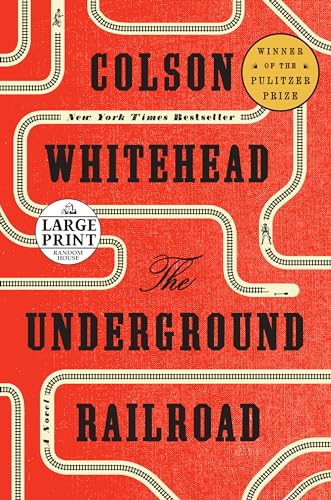
#1 NEW YORK TIMES BESTSELLER • PULITZER PRIZE WINNER • NATIONAL BOOK AWARD WINNER • A magnificent tour de force chronicling a young slave's adventures as she makes a desperate bid for freedom in the antebellum South. • Now an original Amazon Prime Video series directed by Barry Jenkins.
Cora is a slave on a cotton plantation in Georgia. Life is hell for all the slaves, but especially bad for Cora; an outcast even among her fellow Africans, she is coming into womanhood—where even greater pain awaits. When Caesar, a recent arrival from Virginia, tells her about the Underground Railroad, they decide to take a terrifying risk and escape. Matters do not go as planned—Cora kills a young white boy who tries to capture her. Though they manage to find a station and head north, they are being hunted.
In Whitehead’s ingenious conception, the Underground Railroad is no mere metaphor—engineers and conductors operate a secret network of tracks and tunnels beneath the Southern soil. Cora and Caesar’s first stop is South Carolina, in a city that initially seems like a haven. But the city’s placid surface masks an insidious scheme designed for its black denizens. And even worse: Ridgeway, the relentless slave catcher, is close on their heels. Forced to flee again, Cora embarks on a harrowing flight, state by state, seeking true freedom.
Like the protagonist of Gulliver’s Travels, Cora encounters different worlds at each stage of her journey—hers is an odyssey through time as well as space. As Whitehead brilliantly re-creates the unique terrors for black people in the pre–Civil War era, his narrative seamlessly weaves the saga of America from the brutal importation of Africans to the unfulfilled promises of the present day. The Underground Railroad is at once a kinetic adventure tale of one woman’s ferocious will to escape the horrors of bondage and a shattering, powerful meditation on the history we all share.
Look for Colson Whitehead’s new novel, Crook Manifesto, coming soon!
Die Inhaltsangabe kann sich auf eine andere Ausgabe dieses Titels beziehen.
Über die Autorin bzw. den Autor
COLSON WHITEHEAD is the #1 New York Times bestselling author of The Underground Railroad, winner of the 2016 Pulitzer Prize in Fiction, the 2016 National Book Award, and named one of the Ten Best Books of the Year by the New York Times Book Review, as well as The Noble Hustle, Zone One, Sag Harbor, The Intuitionist, John Henry Days, Apex Hides the Hurt, and The Colossus of New York. He is also a Pulitzer Prize finalist and a recipient of the MacArthur and Guggenheim fellowships. He lives in New York City.
Von der hinteren Coverseite
Winner of the Pulitzer Prize and the National Book Award, the #1 New York Times bestseller from Colson Whitehead, a magnificent tour de force chronicling a young slave's adventures as she makes a desperate bid for freedom in the antebellum South. Cora is a slave on a cotton plantation in Georgia. Life is hell for all the slaves, but especially bad for Cora; an outcast even among her fellow Africans, she is coming into womanhood-where even greater pain awaits. When Caesar, a recent arrival from Virginia, tells her about the Underground Railroad, they decide to take a terrifying risk and escape. Matters do not go as planned-Cora kills a young white boy who tries to capture her. Though they manage to find a station and head north, they are being hunted. In Whitehead's ingenious conception, the Underground Railroad is no mere metaphor-engineers and conductors operate a secret network of tracks and tunnels beneath the Southern soil. Cora and Caesar's first stop is South Carolina, in a city that initially seems like a haven. But the city's placid surface masks an insidious scheme designed for its black denizens. And even worse: Ridgeway, the relentless slave catcher, is close on their heels. Forced to flee again, Cora embarks on a harrowing flight, state by state, seeking true freedom. Like the protagonist of Gulliver's Travels, Cora encounters different worlds at each stage of her journey-hers is an odyssey through time as well as space. As Whitehead brilliantly re-creates the unique terrors for black people in the pre-Civil War era, his narrative seamlessly weaves the saga of America from the brutal importation of Africans to the unfulfilled promises of the present day. The Underground Railroad is at once a kinetic adventure tale of one woman's ferocious will to escape the horrors of bondage and a shattering, powerful meditation on the history we all share.
Auszug. © Genehmigter Nachdruck. Alle Rechte vorbehalten.
THE first time Caesar approached Cora about running north, she said no.
This was her grandmother talking. Cora’s grandmother had never seen the ocean before that bright afternoon in the port of Ouidah and the water dazzled after her time in the fort’s dungeon. The dungeon stored them until the ships arrived. Dahomeyan raiders kidnapped the men first, then returned to her village the next moon for the women and children, marching them in chains to the sea two by two. As she stared into the black doorway, Ajarry thought she’d be reunited with her father, down there in the dark. The survivors from her village told her that when her father couldn’t keep the pace of the long march, the slavers stove in his head and left his body by the trail. Her mother had died years before.
Cora’s grandmother was sold a few times on the trek to the fort, passed between slavers for cowrie shells and glass beads. It was hard to say how much they paid for her in Ouidah as she was part of a bulk purchase, eighty-eight human souls for sixty crates of rum and gunpowder, the price arrived upon after the standard haggling in Coast English. Able-bodied men and child- bearing women fetched more than juveniles, making an individual accounting difficult.
The Nanny was out of Liverpool and had made two previous stops along the Gold Coast. The captain staggered his purchases, rather than find himself with cargo of singular culture and disposition. Who knew what brand of mutiny his captives might cook up if they shared a common tongue. This was the ship’s final port of call before they crossed the Atlantic. Two yellow-haired sailors rowed Ajarry out to the ship, humming. White skin like bone.
The noxious air of the hold, the gloom of confinement, and the screams of those shackled to her contrived to drive Ajarry to madness. Because of her tender age, her captors did not immedi- ately force their urges upon her, but eventually some of the more seasoned mates dragged her from the hold six weeks into the pas- sage. She twice tried to kill herself on the voyage to America, once by denying herself food and then again by drowning. The sailors stymied her both times, versed in the schemes and inclinations of chattel. Ajarry didn’t even make it to the gunwale when she tried to jump overboard. Her simpering posture and piteous aspect, recognizable from thousands of slaves before her, betrayed her intentions. Chained head to toe, head to toe, in exponential misery.
Although they had tried not to get separated at the auction in Ouidah, the rest of her family was purchased by Portuguese trad- ers from the frigate Vivilia, next seen four months later drifting ten miles off Bermuda. Plague had claimed all on board. Authori- ties lit the ship on fire and watched her crackle and sink. Cora’s grandmother knew nothing about the ship’s fate. For the rest of her life she imagined her cousins worked for kind and generous masters up north, engaged in more forgiving trades than her own, weaving or spinning, nothing in the fields. In her stories, Isay and Sidoo and the rest somehow bought their way out of bondage and lived as free men and women in the City of Pennsylvania, a place she had overheard two white men discuss once. These fantasies gave Ajarry comfort when her burdens were such to splinter her into a thousand pieces.
The next time Cora’s grandmother was sold was after a month in the pest house on Sullivan’s Island, once the physicians certified her and the rest of the Nanny’s cargo clear of illness. Another busy day on the Exchange. A big auction always drew a colorful crowd. Traders and procurers from up and down the coast converged on Charleston, checking the merchandise’s eyes and joints and spines, wary of venereal distemper and other afflictions. Onlook- ers chewed fresh oysters and hot corn as the auctioneers shouted into the air. The slaves stood naked on the platform. There was a bidding war over a group of Ashanti studs, those Africans of renowned industry and musculature, and the foreman of a lime- stone quarry bought a bunch of pickaninnies in an astounding bargain. Cora’s grandmother saw a little boy among the gawk- ers eating rock candy and wondered what he was putting in his mouth.
Just before sunset an agent bought her for two hundred and twenty-six dollars. She would have fetched more but for that sea- son’s glut of young girls. His suit was made of the whitest cloth she had ever seen. Rings set with colored stone flashed on his fin- gers. When he pinched her breasts to see if she was in flower, the metal was cool on her skin. She was branded, not for the first or last time, and fettered to the rest of the day’s acquisitions. The coffle began their long march south that night, staggering behind the trader’s buggy. The Nanny by that time was en route back to Liverpool, full of sugar and tobacco. There were fewer screams belowdecks.
You would have thought Cora’s grandmother cursed, so many times was she sold and swapped and resold over the next few years. Her owners came to ruin with startling frequency. Her first mas- ter got swindled by a man who sold a device that cleaned cotton twice as fast as Whitney’s gin. The diagrams were convincing, but in the end Ajarry was another asset liquidated by order of the magistrate. She went for two hundred and eighteen dollars in a hasty exchange, a drop in price occasioned by the realities of the local market. Another owner expired from dropsy, whereupon his widow held an estate sale to fund a return to her native Europe, where it was clean. Ajarry spent three months as the property of a Welshman who eventually lost her, three other slaves, and two hogs in a game of whist. And so on.
Her price fluctuated. When you are sold that many times, the world is teaching you to pay attention. She learned to quickly adjust to the new plantations, sorting the nigger breakers from the merely cruel, the layabouts from the hardworking, the inform- ers from the secret-keepers. Masters and mistresses in degrees of wickedness, estates of disparate means and ambition. Sometimes the planters wanted nothing more than to make a humble living, and then there were men and women who wanted to own the world, as if it were a matter of the proper acreage. Two hundred and forty-eight, two hundred and sixty, two hundred and seventy dollars. Wherever she went it was sugar and indigo, except for a stint folding tobacco leaves for one week before she was sold again. The trader called upon the tobacco plantation looking for slaves of breeding age, preferably with all their teeth and of pliable disposi- tion. She was a woman now. Off she went.
She knew that the white man’s scientists peered beneath things to understand how they worked. The movement of the stars across the night, the cooperation of humors in the blood. The temper- ature requirements for a healthy cotton harvest. Ajarry made a science of her own black body and accumulated observations. Each thing had a value and as the value changed, everything else changed also. A broken calabash was worth less than one that held its water, a hook that kept its catfish more prized than one that relinquished its bait. In America the quirk was that people were things. Best to cut your losses on an old man who won’t survive a trip across the ocean. A young buck from strong tribal stock got customers into a froth. A slave girl squeezing out pups was like a mint, money that bred money. If you were a thing—a cart or a horse or a slave—your value determined your possibilities. She minded her place.
Finally, Georgia. A representative of the Randall plantation bought her for two hundred and ninety-two dollars, in spite of the new blankness behind her eyes, which made her look simple- minded. She never drew a breath off...
„Über diesen Titel“ kann sich auf eine andere Ausgabe dieses Titels beziehen.
Suchergebnisse für The Underground Railroad (Oprah's Book Club): A...

Beispielbild für diese ISBN
The Underground Railroad: A Novel
ISBN 10: 1524736309
ISBN 13: 9781524736309
Gebraucht
Paperback
Anbieter: BooksRun, Philadelphia, PA, USA
Verkäuferbewertung 5 von 5 Sternen

Paperback. Zustand: Fair. Large type / Large print. The item might be beaten up but readable. May contain markings or highlighting, as well as stains, bent corners, or any other major defect, but the text is not obscured in any way. Artikel-Nr. 1524736309-7-22-13
Gebraucht kaufen
EUR 5,31
Versand gratis
Versand innerhalb von USA
Versand innerhalb von USA
Anzahl: 1 verfügbar
Beispielbild für diese ISBN
The Underground Railroad (Oprah's Book Club): The Underground Railroad (Oprah's Book Club): A Novel
Anbieter: ThriftBooks-Atlanta, AUSTELL, GA, USA
Verkäuferbewertung 5 von 5 Sternen
Paperback. Zustand: Good. No Jacket. Pages can have notes/highlighting. Spine may show signs of wear. ~ ThriftBooks: Read More, Spend Less. Artikel-Nr. G1524736309I3N00
Gebraucht kaufen
EUR 5,92
Versand gratis
Versand innerhalb von USA
Versand innerhalb von USA
Anzahl: 1 verfügbar
Beispielbild für diese ISBN
The Underground Railroad (Oprah's Book Club): The Underground Railroad (Oprah's Book Club): A Novel
Anbieter: ThriftBooks-Atlanta, AUSTELL, GA, USA
Verkäuferbewertung 5 von 5 Sternen
Paperback. Zustand: Fair. No Jacket. Former library book; Readable copy. Pages may have considerable notes/highlighting. ~ ThriftBooks: Read More, Spend Less. Artikel-Nr. G1524736309I5N10
Gebraucht kaufen
EUR 5,92
Versand gratis
Versand innerhalb von USA
Versand innerhalb von USA
Anzahl: 1 verfügbar
Beispielbild für diese ISBN
The Underground Railroad (Oprah's Book Club): The Underground Railroad (Oprah's Book Club): A Novel
Anbieter: ThriftBooks-Dallas, Dallas, TX, USA
Verkäuferbewertung 5 von 5 Sternen
Paperback. Zustand: Very Good. No Jacket. May have limited writing in cover pages. Pages are unmarked. ~ ThriftBooks: Read More, Spend Less. Artikel-Nr. G1524736309I4N00
Gebraucht kaufen
EUR 5,92
Versand gratis
Versand innerhalb von USA
Versand innerhalb von USA
Anzahl: 1 verfügbar
Beispielbild für diese ISBN
The Underground Railroad (Oprah's Book Club): The Underground Railroad (Oprah's Book Club): A Novel
Anbieter: ThriftBooks-Dallas, Dallas, TX, USA
Verkäuferbewertung 5 von 5 Sternen
Paperback. Zustand: Good. No Jacket. Pages can have notes/highlighting. Spine may show signs of wear. ~ ThriftBooks: Read More, Spend Less. Artikel-Nr. G1524736309I3N00
Gebraucht kaufen
EUR 5,92
Versand gratis
Versand innerhalb von USA
Versand innerhalb von USA
Anzahl: 1 verfügbar
Beispielbild für diese ISBN
The Underground Railroad (Oprah's Book Club): The Underground Railroad (Oprah's Book Club): A Novel
Anbieter: ThriftBooks-Dallas, Dallas, TX, USA
Verkäuferbewertung 5 von 5 Sternen
Paperback. Zustand: Fair. No Jacket. Readable copy. Pages may have considerable notes/highlighting. ~ ThriftBooks: Read More, Spend Less. Artikel-Nr. G1524736309I5N00
Gebraucht kaufen
EUR 5,92
Versand gratis
Versand innerhalb von USA
Versand innerhalb von USA
Anzahl: 1 verfügbar
Beispielbild für diese ISBN
The Underground Railroad: A Novel (Random House Large Print)
Verlag:
Random House Large Print, 2016
ISBN 10: 1524736309
ISBN 13: 9781524736309
Gebraucht
Softcover
Anbieter: Wonder Book, Frederick, MD, USA
Verkäuferbewertung 5 von 5 Sternen
Zustand: Good. Good condition. A copy that has been read but remains intact. May contain markings such as bookplates, stamps, limited notes and highlighting, or a few light stains. Artikel-Nr. G04L-00444
Gebraucht kaufen
EUR 6,21
Versand gratis
Versand innerhalb von USA
Versand innerhalb von USA
Anzahl: 1 verfügbar
Beispielbild für diese ISBN
The Underground Railroad (Oprah's Book Club) : A Novel
Anbieter: Better World Books, Mishawaka, IN, USA
Verkäuferbewertung 5 von 5 Sternen
Zustand: Good. Pages intact with minimal writing/highlighting. The binding may be loose and creased. Dust jackets/supplements are not included. Stock photo provided. Product includes identifying sticker. Better World Books: Buy Books. Do Good. Artikel-Nr. 10037830-6
Gebraucht kaufen
EUR 6,52
Versand gratis
Versand innerhalb von USA
Versand innerhalb von USA
Anzahl: 2 verfügbar
Beispielbild für diese ISBN
The Underground Railroad (Oprah's Book Club) : A Novel
Anbieter: Better World Books: West, Reno, NV, USA
Verkäuferbewertung 5 von 5 Sternen
Zustand: Good. Former library copy. Pages intact with minimal writing/highlighting. The binding may be loose and creased. Dust jackets/supplements are not included. Includes library markings. Stock photo provided. Product includes identifying sticker. Better World Books: Buy Books. Do Good. Artikel-Nr. 12505261-6
Gebraucht kaufen
EUR 6,52
Versand gratis
Versand innerhalb von USA
Versand innerhalb von USA
Anzahl: 1 verfügbar
Beispielbild für diese ISBN
The Underground Railroad Oprah
Verlag:
Random House Large Print, 2016
ISBN 10: 1524736309
ISBN 13: 9781524736309
Gebraucht
Softcover
Anbieter: World of Books (was SecondSale), Montgomery, IL, USA
Verkäuferbewertung 5 von 5 Sternen
Zustand: Good. Item in good condition. Textbooks may not include supplemental items i.e. CDs, access codes etc. Artikel-Nr. 00109479756
Gebraucht kaufen
EUR 8,76
Versand gratis
Versand innerhalb von USA
Versand innerhalb von USA
Anzahl: 1 verfügbar