
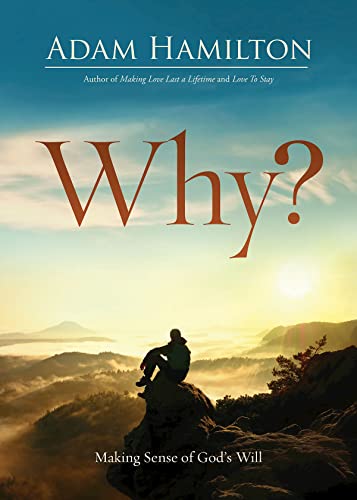
Verwandte Artikel zu Why?: Making Sense of God's Will
Inhaltsangabe
Where is God when tragedy and suffering strike?When the ground shakes, and a poor nation's economy is destroyed; when the waters rise, washing away a community's hopes and dreams; when a child suffers neglect and abuse; when violence tears apart nations where is God? If God is all powerful, and if each one of us is a beloved child of God, then how can God allow tragedy and suffering to mar his creation?In Why?, best-selling author Adam Hamilton brings fresh insight to the age-old question of how to understand the will of God. Rejecting simplistic answers and unexamined assumptions, he lays out core ideas for comprehending God's plan for the world, including: God will not take away our free will, even when we use it to grieve him.God will never abandon us, especially in the midst of our suffering.While God is not the author of suffering, God will bring blessing out of tragedy.
Die Inhaltsangabe kann sich auf eine andere Ausgabe dieses Titels beziehen.
Über die Autorin bzw. den Autor
Adam Hamilton is senior pastor of The United Methodist Church of the Resurrection in Leawood, Kansas, one of the fastest growing, most highly visible churches in the country. The Church Report named Hamilton’s congregation the most influential mainline church in America, and he preached at the National Prayer Service as part of the presidential inauguration festivities in 2013.Hamilton is the best-selling and award-winning author of The Walk, Simon Peter, Creed, Half Truths, The Call, The Journey, The Way, 24 Hours That Changed the World, John, Revival, Not a Silent Night, Enough, When Christians Get It Wrong, and Seeing Gray in a World of Black and White, all published by Abingdon Press. Learn more about Adam Hamilton at AdamHamilton.com.
Auszug. © Genehmigter Nachdruck. Alle Rechte vorbehalten.
Why?
Making Sense of God's Will
By Adam HamiltonAbingdon Press
Copyright © 2018 Abingdon Press
All rights reserved.
ISBN: 978-1-5018-5828-4All rights reserved.
Contents
Introduction: A Note from the Author,
Chapter 1: Why Do the Innocent Suffer?,
Chapter 2: Why Do My Prayers Go Unanswered?,
Chapter 3: Why Can't I See God's Will for My Life?,
Chapter 4: Why God's Love Prevails,
CHAPTER 1
Why Do the Innocent Suffer?
God created humankind in his image,
in the image of God he created them;
male and female he created them.
God blessed them, and God said to them, "Be fruitful and multiply, and fill the
earth and subdue it; and have dominion over the fish of the sea and over the
birds of the air and over every living thing that moves upon the earth."
GENESIS 1:27-28
Sitting in an airport, a woman looks up at the television screen to learn that a natural disaster has forced millions from their homes in a poor country. The camera crews show scenes of the devastation, and the reporter speaks of how many people lost their lives in a particular city. Speaking to no one in particular, but loud enough that those nearby can hear her, she says, "How can you still believe in God when you've seen something like that?"
A man who lost everything in the Great Recession of 2008 did not reject his faith, but he wanted to know, "Why is God punishing me? I prayed. I gave to the church. I volunteered to serve others. And I lost everything! I just want to know what I did that was so bad that God would do this to me?"
A young woman speaks to me, confused. Her husband had died leaving her a single mom to care for two small children. Several Christian friends suggested that she take comfort in the fact that "it must have been the will of God." Far from comforting her, it leaves her angry with God.
Suffering, unanswered prayers, and the unfairness of life naturally lead us to question God's goodness and sometimes to question God's very existence. Ask atheists why they reject the idea of God, and this will be among their answers. But ask thoughtful Christians and you will find that they, too, have wrestled with these questions throughout their lives.
The question is traditionally posed in this way, "If God is loving and just, then God must not be all powerful. Or, if God is all-powerful, God must not be loving and just." For if God were all-powerful and loving and just, then God would stop the evil, pain, and suffering in our world. Theologians have a special name for the attempt to resolve this quandary: they call it theodicy, from the Greek words for God and justice. Theodicy is the attempt to reconcile belief in a loving and powerful God with the suffering present in our world.
I have spent much of the last twenty-five years in ministry helping people wrestle with these questions. I've done this by inviting them to question the assumptions they have held about God and God's work in the world, and by helping them to see how the biblical authors and the leading characters of the Bible wrestled with and ultimately answered these questions.
In this chapter I'd like to invite you into a conversation about these issues. I don't propose that in these few pages we will completely resolve the issue, but my hope is to give you a bit of help as you seek to answer the questions for yourself. Then, in the following chapters, we'll consider questions related to unanswered prayer, questions related to God's will, and finally, God's ultimate triumph over evil and suffering.
The Bible and Suffering
Our disappointment with God in the face of suffering or tragedy or injustice typically stems from our assumptions about how God is supposed to work in our world. When God does not meet our expectations, we are disappointed, disillusioned, and confused. I'd like to invite you to challenge two commonly held but misguided assumptions before we attempt to reconcile God's goodness with suffering.
Among the assumptions I once held was that the Bible teaches that if I believe in God and try to be a good person, God will take care of me and bless me and nothing bad will happen to me. Because this is what I thought the Bible taught, every time something bad happened in my life (my parents divorced, our house burned down, two of my best friends were killed in an accident), I was left wondering if I was being punished by God because I had been bad, or if I simply did not have enough faith in God, or if, perhaps, there really was no God after all.
As I began to actually read the Bible I found that my assumptions about what the Bible taught were wrong. The sweeping message of the Bible is not a promise that those who believe and do good will not suffer. Instead the Bible is largely a book about people who refused to let go of their faith in the face of suffering.
Consider a few of the major stories of suffering in the Old Testament: Joseph (the son of Jacob) is sold into slavery by his brothers. The Israelites spend 400 years oppressed by the Egyptians. Moses does God's work and yet is so miserable at times he prays for God to kill him. Saul spends years attempting to kill the young David (during which time David writes many of the Bible's "complaint psalms"). The entire epic poem of Job is about a good man who suffers terribly yet refuses to give up his faith.
The prophets, too, include their share of complaints against God in the face of their own suffering or the suffering of Israel. The book of Lamentations is written after the destruction of Jerusalem, when the Babylonian army takes the city's inhabitants into exile. Shadrach, Meshach, and Abednego are thrown into a fiery furnace, and Daniel is thrown into a den of lions. Yet through all of this the Old Testament is the story of people who, in the face of their suffering, can claim with the writer of the Seventy-third Psalm, "My flesh and my heart may fail, / but God is the strength of my heart and my portion forever. ... I have made the Lord GOD my refuge" (verses 26, 28a).
At the center of the New Testament is the story of a man who is beaten and abused and finally nailed to a cross. His first disciples are nearly all put to death for their faith. Far from promising a life of bliss to those who believe, he promises that they will face persecution, hardship, and trouble, often because of their faith. And the most prolific writer of the New Testament, the Apostle Paul, is arrested, beaten, and abused on numerous occasions, and is ultimately put to death by the Romans. The Bible definitely does not teach that those who follow God will have a life of bliss. It describes the dogged faith of those who continue to trust in God despite their suffering, and the comfort, strength, and hope they find in the face of suffering.
Does Everything Happen for a Reason?
Recognizing that the Bible does not promise that if we believe in God we'll have safety, health, and wealth in this life, let's consider a second misguided assumption commonly held among Christians today. Usually offered as a word of encouragement by well-meaning friends to people going through suffering, Christians say, "Everything happens for a reason." What does that mean? Usually we mean, "God has a plan. We cannot yet see that plan, but somehow the suffering you are going through now is purposeful and God has a good reason for it. Just trust God."
That sounds pious, and it seems logical at first. But I encourage you to examine this idea carefully. If everything happens for a reason, and by that we mean it is...
„Über diesen Titel“ kann sich auf eine andere Ausgabe dieses Titels beziehen.
Suchergebnisse für Why?: Making Sense of God's Will

Foto des Verkäufers
Why?: Making Sense of God's Will
Anbieter: Dream Books Co., Denver, CO, USA
Verkäuferbewertung 5 von 5 Sternen

Zustand: good. Gently used with minimal wear on the corners and cover. A few pages may contain light highlighting or writing, but the text remains fully legible. Dust jacket may be missing, and supplemental materials like CDs or codes may not be included. May be ex-library with library markings. Ships promptly! Artikel-Nr. DBV.1501858289.G
Gebraucht kaufen
EUR 3,75
Versand gratis
Versand innerhalb von USA
Versand innerhalb von USA
Anzahl: 2 verfügbar
Beispielbild für diese ISBN
Why?: Making Sense of God's Will
Verlag:
Abingdon Press (edition Reprint), 2018
ISBN 10: 1501858289
ISBN 13: 9781501858284
Gebraucht
Paperback
Anbieter: BooksRun, Philadelphia, PA, USA
Verkäuferbewertung 5 von 5 Sternen
Paperback. Zustand: Very Good. Reprint. It's a well-cared-for item that has seen limited use. The item may show minor signs of wear. All the text is legible, with all pages included. It may have slight markings and/or highlighting. Artikel-Nr. 1501858289-8-1
Gebraucht kaufen
EUR 3,88
Versand gratis
Versand innerhalb von USA
Versand innerhalb von USA
Anzahl: 2 verfügbar
Foto des Verkäufers
Why?: Making Sense of God's Will
Anbieter: Dream Books Co., Denver, CO, USA
Verkäuferbewertung 5 von 5 Sternen
Zustand: very_good. Pages are clean with no markings. May show minor signs of wear or cosmetic defects marks, cuts, bends, or scuffs on the cover, spine, pages, or dust jacket. May have remainder marks on edges. Artikel-Nr. DBV.1501858289.VG
Gebraucht kaufen
EUR 5,43
Versand gratis
Versand innerhalb von USA
Versand innerhalb von USA
Anzahl: 1 verfügbar
Beispielbild für diese ISBN
Why Making Sense of Gods Will
Anbieter: World of Books (was SecondSale), Montgomery, IL, USA
Verkäuferbewertung 5 von 5 Sternen
Zustand: Good. Item in good condition. Textbooks may not include supplemental items i.e. CDs, access codes etc. Artikel-Nr. 00107947968
Gebraucht kaufen
EUR 5,45
Versand gratis
Versand innerhalb von USA
Versand innerhalb von USA
Anzahl: 4 verfügbar
Beispielbild für diese ISBN
Why?: Making Sense of God's Will
Anbieter: ThriftBooks-Phoenix, Phoenix, AZ, USA
Verkäuferbewertung 5 von 5 Sternen
Paperback. Zustand: Very Good. No Jacket. May have limited writing in cover pages. Pages are unmarked. ~ ThriftBooks: Read More, Spend Less. Artikel-Nr. G1501858289I4N00
Gebraucht kaufen
EUR 5,76
Versand gratis
Versand innerhalb von USA
Versand innerhalb von USA
Anzahl: 4 verfügbar
Beispielbild für diese ISBN
Why?: Making Sense of God's Will
Anbieter: ThriftBooks-Dallas, Dallas, TX, USA
Verkäuferbewertung 5 von 5 Sternen
Paperback. Zustand: Fair. No Jacket. Readable copy. Pages may have considerable notes/highlighting. ~ ThriftBooks: Read More, Spend Less. Artikel-Nr. G1501858289I5N00
Gebraucht kaufen
EUR 5,76
Versand gratis
Versand innerhalb von USA
Versand innerhalb von USA
Anzahl: 2 verfügbar
Beispielbild für diese ISBN
Why?: Making Sense of God's Will
Anbieter: ThriftBooks-Phoenix, Phoenix, AZ, USA
Verkäuferbewertung 5 von 5 Sternen
Paperback. Zustand: Fair. No Jacket. Readable copy. Pages may have considerable notes/highlighting. ~ ThriftBooks: Read More, Spend Less. Artikel-Nr. G1501858289I5N00
Gebraucht kaufen
EUR 5,76
Versand gratis
Versand innerhalb von USA
Versand innerhalb von USA
Anzahl: 2 verfügbar
Beispielbild für diese ISBN
Why?: Making Sense of God's Will
Anbieter: ThriftBooks-Reno, Reno, NV, USA
Verkäuferbewertung 5 von 5 Sternen
Paperback. Zustand: Fair. No Jacket. Readable copy. Pages may have considerable notes/highlighting. ~ ThriftBooks: Read More, Spend Less. Artikel-Nr. G1501858289I5N00
Gebraucht kaufen
EUR 5,76
Versand gratis
Versand innerhalb von USA
Versand innerhalb von USA
Anzahl: 2 verfügbar
Beispielbild für diese ISBN
Why?: Making Sense of God's Will
Anbieter: ThriftBooks-Dallas, Dallas, TX, USA
Verkäuferbewertung 5 von 5 Sternen
Paperback. Zustand: Very Good. No Jacket. May have limited writing in cover pages. Pages are unmarked. ~ ThriftBooks: Read More, Spend Less. Artikel-Nr. G1501858289I4N00
Gebraucht kaufen
EUR 5,76
Versand gratis
Versand innerhalb von USA
Versand innerhalb von USA
Anzahl: 5 verfügbar
Beispielbild für diese ISBN
Why?: Making Sense of God's Will
Anbieter: ThriftBooks-Atlanta, AUSTELL, GA, USA
Verkäuferbewertung 5 von 5 Sternen
Paperback. Zustand: Very Good. No Jacket. Former library book; May have limited writing in cover pages. Pages are unmarked. ~ ThriftBooks: Read More, Spend Less. Artikel-Nr. G1501858289I4N10
Gebraucht kaufen
EUR 5,76
Versand gratis
Versand innerhalb von USA
Versand innerhalb von USA
Anzahl: 1 verfügbar