
Verwandte Artikel zu Raising White Kids: Bringing Up Children in a Racially...
Inhaltsangabe
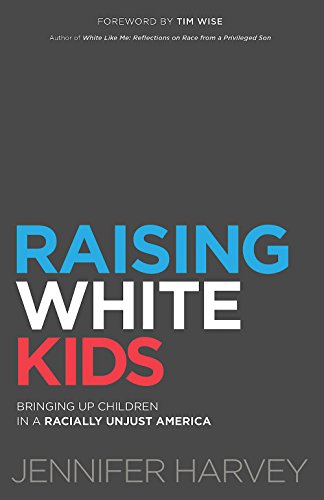
This New York Times best-selling book is a guide for families, educators, and communities to raise their children to be able and active anti-racist allies.With a foreword by Tim Wise, Raising White Kids is for families, churches, educators, and communities who want to equip their children to be active and able participants in a society that is becoming one of the most racially diverse in the world while remaining full of racial tensions. For white people who are committed to equity and justice, living in a nation that remains racially unjust and deeply segregated creates unique conundrums.These conundrums begin early in life and impact the racial development of white children in powerful ways. What can we do within our homes, communities and schools? Should we teach our children to be “colorblind”? Or, should we teach them to notice race? What roles do we want to equip them to play in addressing racism when they encounter it? What strategies will help our children learn to function well in a diverse nation?Talking about race means naming the reality of white privilege and hierarchy. How do we talk about race honestly, then, without making our children feel bad about being white? Most importantly, how do we do any of this in age-appropriate ways?While a great deal of public discussion exists in regard to the impact of race and racism on children of color, meaningful dialogue about and resources for understanding the impact of race on white children are woefully absent. Raising White Kids steps into that void."Most white Americans didn't get from our own families the concrete teaching and modeling we needed to be active in the work of racial justice ourselves, let alone to feel equipped now to talk about race with and teach anti-racism to our children. There is so much we need to learn and it's urgent that we do so. But the good news is: we can," says Jennifer Harvey.
Die Inhaltsangabe kann sich auf eine andere Ausgabe dieses Titels beziehen.
Über die Autorin bzw. den Autor
The Rev. Dr. Jennifer Harvey is a New York Times bestselling and award-winning author, educator and public speaker. Her work focuses on ethics and race, gender, sexuality, activism, spirituality and politics--with particular attention to how religion shows up in these dimensions of our shared social life. Her greatest passion and longtime work, however, persistently and pointedly return to racial justice and white anti-racism. Jen speaks and publishes with numerous academic and public outlets. Her essay Are We Raising Racists? spent nearly a week on the New York Times "ten most read pieces" list. She has written for and appeared on Good Morning America, CNN, NPR, Sojourners on-line, The Conversation and other national media outlets. Visit the author online at www.jenniferharvey.org.
Auszug. © Genehmigter Nachdruck. Alle Rechte vorbehalten.
Raising White Kids
Bringing Up Children in a Racially Unjust America
By Jennifer HarveyAbingdon Press
Copyright © 2017 Jennifer Harvey
All rights reserved.
ISBN: 978-1-5018-5642-6All rights reserved.
Contents
Foreword,
Introduction: Good Parents, Hard Conversations,
1. From Color-Blindness to Race-Conscious Parenting,
2. Where Do I Start?,
3. What Does a "Healthy" White Kid Look Like?,
4. Do We Have to Call It Racism?,
5. Our Bodies in Racial Scripts,
6. Diversity Is Confusing!,
7. What Does Resistance Look Like?,
Conclusion: A Just Racial Future,
Acknowledgments,
Other Resources,
Notes,
CHAPTER 1
From Color-Blindness to Race-Conscious Parenting
"I've always taught my children to treat everyone with kindness and fairness no matter who they are or what their circumstances and my kids do have friends of a lot of different races and from different cultures. They never seemed to notice or care what race someone was, until they came home from school after Martin Luther King Jr. Day last year. Then, all of a sudden, they were talking about people's race all the time, saying things like 'Our friend Joe ... he's Black, right?' And I felt like they actually might have been better off without that celebration. Because I really don't think it's good for them to focus on people's race and put them in boxes! Isn't that the opposite of what we should be trying to do?"
The concern this mother is expressing is not an uncommon one among white parents. Her suspicion about the move in school to emphasize difference comes from her sense that a color-blind approach might better support harmonious relationships among racially diverse children than an approach that emphasizes their differences and seems to put them in boxes — or even makes them start to put one another in boxes. This mother is not expressing resistance to difference, itself. Quite the contrary, she seems to value it. But she's afraid that teaching children to notice and name racial difference is backfiring. She wants her children to recognize human dignity, value equality, and embrace everyone. Rightly so!
Color-blindness became one of the most prominent ways to approach race and difference in the United States after the civil rights movement. The basic principles of color-blindness include the idea that we shouldn't notice race, should look past race, and/or, especially, should never use race as the basis for making decisions, policies, or judgments about people.
Such principles can obviously be used in a cynical way. Color-blindness can be used, for example, to shut down racial discussions before they even get started — that is, "We're all just human after all, so why don't we just get over it?"
Color-blindness can also be used to short-circuit attempts to respond to the long-term effects of racism. Namely, decade upon decade of racist policies and practices have created uneven playing fields. If we want to address such unevenness in the interest of creating equity, we have no choice but to notice race. We have to use it in some way to develop policies and practices aimed at leveling the playing field. Granted, there are legitimate discussions to be had in response to difficult questions and diverse perspectives on how we best do that. But if colorblindness is invoked at the start of such inquiry, any serious discussion about how to even out the field is shut down before it can even begin.
The motivations behind color-blindness are often genuine and full of good intentions, however, as is true in the case of this mother. Indeed, color-blindness is an outgrowth of a central moral message of the civil rights movement: we're one human family and race should never cause a difference in treatment. Many of us have rightly learned, moreover, that assuming someone's race can tell you anything meaningful about that person is the epitome of racial stereotyping. So the conclusion that a good way to teach our children tolerance and equality is to teach them to not notice or to look past race is actually really logical. Color-blindness seems to stand on sound moral reasoning.
Color-blindness doesn't work for the simple reason that we cannot not see race.
To top it all off, there is at least one more reason color-blindness can be so appealing. Many serious challenges do emerge when we start to name and notice race. This is especially the case as we teach children to do so. What does it mean to say Joe is "Black"? Does Joe identify that way? What are these children assuming they know about Joe or saying about him by debating whether or not he is Black? Obviously, it's a problem if white children run around loudly labeling other children, and especially if they do so in ways that don't feel good or accurate to those children so labeled.
Later in this book we'll return and dig in to these challenges and explore ways race-conscious parenting helps with them. At this point it's important to simply be clear: to "not see" or "not name" race is not a solution to the challenges this mother raises. So let's begin by understanding why color-blindness fails if the goal is to teach white children to value everyone and work for equity and justice, and why, in fact, color-blindness actually causes harm to white children's understanding of race. After that we'll explore some of the reasons teaching our children to value diversity as a primary parental strategy, although better, also falls short and what race-conscious parenting looks like in contrast to these two approaches.
Color-Blindness Doesn't Work
Even when the motivations are good, there are many reasons to reject color-blind approaches in our parenting. First, and most fundamentally, color-blindness doesn't work for the simple reason that we cannot not see race. In a society as thoroughly racialized as the United States, unless one has a visual impairment it is literally impossible for any human, past their first few months of life, to "not see" it.
Race is a social construction. This means that differences such as skin tone, hair texture, shapes of faces, and so on don't have any significance or meaning in and of themselves. None of these have any innate bearing on character traits. There is no racial DNA. Instead, such physical attributes are given meaning by society through a whole array of social practices.
Before going any further, let me emphasize a very important point. Even though it has no innate meaning, because race is given meaning — it has been and continues to be constructed — it is real. Sometimes realizing race is not biological leads people to conclude that race is only an illusion. Couldn't we get rid of some of the challenges it creates by just ignoring it?
But constructed realities are real and cannot be ignored. My house is constructed. Just because it was built at some point doesn't mean it doesn't exist. In fact, every time it rains I am especially aware that my house exists and am grateful it does. Further, my house could be remodeled, changed in some fundamental way, or differently constructed. And all of these descriptions of my house are analogous to race as well. (In fact, the understanding that a construction is something that has been built by people is a really helpful part of this analogy when thinking about raising white children. Parents, teachers, and other caregivers are part of the construction crew for children's embodiment of race.)
Because race is social and human beings are deeply social creatures,...
„Über diesen Titel“ kann sich auf eine andere Ausgabe dieses Titels beziehen.
Suchergebnisse für Raising White Kids: Bringing Up Children in a Racially...

Beispielbild für diese ISBN
Raising White Kids
Anbieter: World of Books (was SecondSale), Montgomery, IL, USA
Verkäuferbewertung 5 von 5 Sternen

Hardback. Zustand: Good. Living in a racially unjust and deeply segregated nation creates unique conundrums for white children that begin early in life and impact development in powerful ways. Raising White Kids offers age-appropriate insights for teaching children how to address racism when they encounter it and tackles tough questions about how to help white kids be mindful of racial relations while understanding their own identity and the role they can play for justice.Raising White Kids is a book for families, churches, educators, and communities who want to equip their children to be active and able allies in a society that is becoming one of the most racially diverse in the world while remaining full of racial tensions. Artikel-Nr. 00098040008
Gebraucht kaufen
EUR 3,85
Versand gratis
Versand innerhalb von USA
Versand innerhalb von USA
Anzahl: 3 verfügbar
Beispielbild für diese ISBN
Raising White Kids: Bringing Up Children in a Racially Unjust America
Verlag:
Abingdon Press (edition ), 2018
ISBN 10: 1501856421
ISBN 13: 9781501856426
Gebraucht
Hardcover
Anbieter: BooksRun, Philadelphia, PA, USA
Verkäuferbewertung 5 von 5 Sternen
Hardcover. Zustand: Very Good. It's a well-cared-for item that has seen limited use. The item may show minor signs of wear. All the text is legible, with all pages included. It may have slight markings and/or highlighting. Artikel-Nr. 1501856421-8-6
Gebraucht kaufen
EUR 5,32
Versand gratis
Versand innerhalb von USA
Versand innerhalb von USA
Anzahl: 1 verfügbar
Beispielbild für diese ISBN
Raising White Kids : Bringing up Children in a Racially Unjust America
Anbieter: Better World Books, Mishawaka, IN, USA
Verkäuferbewertung 5 von 5 Sternen
Zustand: Good. Pages intact with minimal writing/highlighting. The binding may be loose and creased. Dust jackets/supplements are not included. Stock photo provided. Product includes identifying sticker. Better World Books: Buy Books. Do Good. Artikel-Nr. 48318849-6
Gebraucht kaufen
EUR 6,36
Versand gratis
Versand innerhalb von USA
Versand innerhalb von USA
Anzahl: 1 verfügbar
Beispielbild für diese ISBN
Raising White Kids : Bringing up Children in a Racially Unjust America
Anbieter: Better World Books, Mishawaka, IN, USA
Verkäuferbewertung 5 von 5 Sternen
Zustand: Good. Former library copy. Pages intact with minimal writing/highlighting. The binding may be loose and creased. Dust jackets/supplements are not included. Includes library markings. Stock photo provided. Product includes identifying sticker. Better World Books: Buy Books. Do Good. Artikel-Nr. 40813955-6
Gebraucht kaufen
EUR 6,36
Versand gratis
Versand innerhalb von USA
Versand innerhalb von USA
Anzahl: 3 verfügbar
Beispielbild für diese ISBN
Raising White Kids: Bringing Up Children in a Racially Unjust America
Anbieter: Redux Books, Grand Rapids, MI, USA
Verkäuferbewertung 5 von 5 Sternen
Hardcover. Zustand: As New. APPEARS UNREAD. Hardcover with dust jacket. Dust Jacket shows minimal shelving wear, otherwise an UNBLEMISHED copy.; 100% Satisfaction Guaranteed! Ships same or next business day! Artikel-Nr. 142408220019
Gebraucht kaufen
EUR 6,40
Versand gratis
Versand innerhalb von USA
Versand innerhalb von USA
Anzahl: 1 verfügbar
Beispielbild für diese ISBN
Raising White Kids: Bringing Up Children in a Racially Unjust America
Anbieter: Wonder Book, Frederick, MD, USA
Verkäuferbewertung 5 von 5 Sternen
Zustand: Good. Good condition. Like New dust jacket. A copy that has been read but remains intact. May contain markings such as bookplates, stamps, limited notes and highlighting, or a few light stains. Artikel-Nr. A06L-00005
Gebraucht kaufen
EUR 6,43
Versand gratis
Versand innerhalb von USA
Versand innerhalb von USA
Anzahl: 1 verfügbar
Beispielbild für diese ISBN
Raising White Kids: Bringing Up Children in a Racially Unjust America
Anbieter: Wonder Book, Frederick, MD, USA
Verkäuferbewertung 5 von 5 Sternen
Zustand: Very Good. Very Good condition. Very Good dust jacket. A copy that may have a few cosmetic defects. May also contain light spine creasing or a few markings such as an owner's name, short gifter's inscription or light stamp. Artikel-Nr. M09E-02623
Gebraucht kaufen
EUR 6,43
Versand gratis
Versand innerhalb von USA
Versand innerhalb von USA
Anzahl: 1 verfügbar
Beispielbild für diese ISBN
Raising White Kids: Bringing Up Children in a Racially Unjust America
Verlag:
Abingdon Press January 2018, 2018
ISBN 10: 1501856421
ISBN 13: 9781501856426
Gebraucht
Hardcover
Anbieter: Eagle Eye Books, Decatur, GA, USA
Verkäuferbewertung 4 von 5 Sternen

Hardcover. Zustand: Used. Artikel-Nr. 891890
Gebraucht kaufen
EUR 9,52
EUR 3,56 Versand
Versand innerhalb von USA
Versand innerhalb von USA
Anzahl: 1 verfügbar
Beispielbild für diese ISBN
Raising White Kids: Bringing Up Children in a Racially Unjust America
Anbieter: WorldofBooks, Goring-By-Sea, WS, Vereinigtes Königreich
Verkäuferbewertung 5 von 5 Sternen
Paperback. Zustand: Very Good. The book has been read, but is in excellent condition. Pages are intact and not marred by notes or highlighting. The spine remains undamaged. Artikel-Nr. GOR012796491
Gebraucht kaufen
EUR 7,45
EUR 6,62 Versand
Versand von Vereinigtes Königreich nach USA
Versand von Vereinigtes Königreich nach USA
Anzahl: 1 verfügbar
Beispielbild für diese ISBN
Raising White Kids: Bringing Up Children in a Racially Unjust America
Anbieter: Revaluation Books, Exeter, Vereinigtes Königreich
Verkäuferbewertung 5 von 5 Sternen
Hardcover. Zustand: Brand New. 306 pages. 8.75x5.75x1.25 inches. In Stock. Artikel-Nr. 1501856421
Neu kaufen
EUR 30,48
EUR 11,82 Versand
Versand von Vereinigtes Königreich nach USA
Versand von Vereinigtes Königreich nach USA
Anzahl: 1 verfügbar