
Verwandte Artikel zu Leadership Directions from Moses: On the Way to a Promised...
Inhaltsangabe
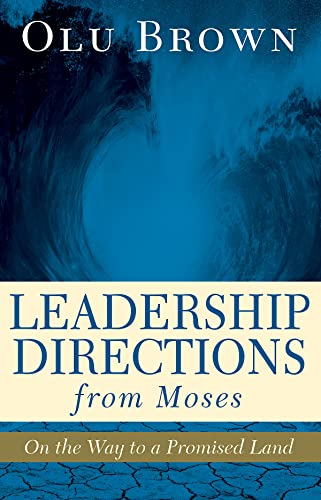
Author Olu Brown shares principles from the story of Moses, to guideleaders through some of the most gut-wrenching situations they willface. Leadership Directions from Moses answers the question, ‘How can Iremain effective in answering my own call, when people around me—some ofwhom are trusted friends and colleagues—will not (or cannot) stay onthe journey we’ve set out to complete? How can I keep moving forward,when the path suddenly becomes so difficult?’ The book covers topics like how to help others leave gracefully, how notto be upended when others choose to leave, how to have difficultconversations, and how to find unexpected opportunity in the challengeof new vacancies. It is full of practical help, including examples frompastors and churches across the US. It is also filled with compassionand wisdom—a pastoral book for pastors facing this difficult, nuanced,and often-emotional topic.
Die Inhaltsangabe kann sich auf eine andere Ausgabe dieses Titels beziehen.
Über die Autorin bzw. den Autor
Olu Brown is founding pastor (in 2007) of Impact Church Atlanta, one of the fastest growing UM church in the country - 85% growth over five years. He is a frequent speaker at events, especially among young clergy. He is the author of Leadership Directions from Moses.
Auszug. © Genehmigter Nachdruck. Alle Rechte vorbehalten.
Leadership Directions from Moses
On the Way to a Promised Land
By Olu BrownAbingdon Press
Copyright © 2017 Abingdon Press
All rights reserved.
ISBN: 978-1-5018-3253-6All rights reserved.
Contents
Introduction,
Chapter 1: Beginnings,
Questions for Discernment,
Reflection on "Beginnings" — Jacob Armstrong,
Chapter 2: Difficult Conversations,
Questions for Discernment,
Reflection on "Difficult Conversations" — Rodney Thomas Smothers,
Chapter 3: Your Promise, My Choice,
Questions for Discernment,
Reflection on "Your Promise, My Choice" — Telley Lynnette Gadson,
Chapter 4: Availability,
Questions for Discernment,
Reflection on "Availability" — Gregory C. Ellison II, PhD,
Conclusion,
Notes,
CHAPTER 1
BEGINNINGS
Moses was taking a brief leadership break on a rarely mild summer day, wonderfully cool and breezy, with no plans except to simply relax and enjoy time that was not committed to anything in particular. He'd decided to take advantage of a beautiful nearby water oasis by using the handcrafted fishing pole and personalized tackle box his wife, Zipporah, had given him for one of their wedding anniversaries. Moses was excited about taking some time for himself to enjoy one of his favorite pastimes and to reflect on the last few days.
What do you do to refresh yourself as a leader? "A study by a leading 'Christian think tank' has shown that stress and exhaustion in pastoral ministry causes as many as 70 percent of pastors to regularly consider leaving, and many of them actually quit."
As Moses was leaving his tent with his enviable fishing gear in tow, the leaders of the tribes of Reuben and Gad approached him. Moses noted the serious looks on their faces and immediately knew that his well-deserved break was coming to a really quick end. Isn't it funny how we can always tell by the ringtone, the text notification, or the incoming e-mail or voicemail that something serious — perhaps life-altering — is on the horizon?
Moses was familiar with life-altering moments, and he understood what it meant to have to adjust and shift quickly. His mother, Jochebed, taught him this lesson when she saved his life as described in Exodus 2, by placing him in the Nile River, hoping that he would be rescued by a caring family. Later in the same chapter, Moses experienced a significant life-shift when through his anger and immaturity he murdered an Egyptian. Having committed this crime, he ran for his life to Midian. As time passed, Moses transformed and began to live into the vision that God had for his life. He answered God's call to liberate his people from bondage and began to develop into the leader God knew he could be. All along the safari, Moses experienced life-altering moments and shifts. One of the most profound shifts came through his father-in-law, Jethro, who taught him to be less autocratic in his leadership and more democratic through delegation.
Moses's story is not unlike that of many leaders who have had to find their way through trial and error as they are leading, benefiting from those who were willing to mentor and guide them to the next level. Moses had been leading the people long enough to know when something was headed down the wrong path. Encountering the tribal leaders of Reuben and Gad reminded him of the way he felt when God surprised him in the wilderness, saying, "So get going. I'm sending you to Pharaoh to bring my people, the Israelites, out of Egypt" (Exod 3:10). Honestly, Moses somehow knew that his life would never be the same again. He'd been comfortable in Midian, thinking that he would live his life in the background, living down his past failures, including when he had allowed his anger to get the best of him. Being in the background of life seemed to be a suitable punishment for his crime. Moses was okay with inhabiting the part of the stage nearest the exit door. Why would God ask him to leave obscurity to do something so great and wonderful? How could God consider him to become known beyond his own lifetime, into eternity, to be revered by those who are God-followers? He experienced this same feeling when he was shaking in his boots, looking into the eyes of the most powerful person in the world, and demanding on behalf of God, "Let my people go so that they can hold a festival for [God] in the desert" (Exod 5:1).
This time, though, it wasn't God or Pharaoh whom Moses faced. He was facing the leaders of the Reubenites and the Gadites. Together, the Reubenite and Gadite tribes represented more than eighty thousand of the Israelites. Reuben was the firstborn son of Jacob and Leah. Gad was also a child of Jacob and Leah, but biblical scholars have documented less information about Gad. Like the men after whom these two tribes were named, these people were independent thinkers, always willing to risk it all for what they felt was best. Maybe you know a few Reubenites and Gadites in your circles and their passion for adventure and free will. I recall planting Impact Church in 2007 and being so sure about the people we wanted. As a matter of fact, these were the specific notes listed in our original vision documents about the people we wanted to reach each Sunday in our new church:
Description of the New Faith Community
The new faith community will attract people from all walks of life.
• Non-believers/pre-Christians who have had no prior connection to the Christian church.
• Believers in Christ who once were, but are no longer committed to the Christian faith.
• Committed Christians with the intention of helping them strengthen their faith and commitment to Christ.
• People of various races and cultures who are seeking a spiritual home.
• College students who are away from home.
• Homeless individuals who have no residence.
Call it stupidity or prophecy, but we were positive about the types of people God would send our way when we started worship, only to awaken to the reality that the majority of those who showed up were off our grid. I believe this is good because we always need to have hearts big enough to receive those people we may not be looking for but God intends to show up. The Reubenites and Gadites were likely not atop Moses's list of best individual tribes. The good news is Moses stayed the course and balanced his desire for the type of people he imagined with the type of people God sent him to lead to the promise.
These two tribal leaders approached Moses because of their boldness and willingness to follow their passion. They were actually requesting to stay in the wilderness and claim the land they felt was best for them. This request startled Moses, as it would any leader, because never before had anyone asked Moses this question. From Moses's perspective, these leaders were actually deciding to settle for land that was not a part of God's promise to them. Did they really comprehend what they were risking? Moses knew this would be a defining moment in his leadership legacy.
Do you recall having an experience when you realized the next decision or action would be a defining leadership moment for you? Our church hosted an evening midweek worship experience for one year. As we reached the end of the year, I clearly knew the worship experience was not right for our church and was draining resources and many of our leaders knew that we needed to discontinue the evening midweek worship experience and face the reality and risk of...
„Über diesen Titel“ kann sich auf eine andere Ausgabe dieses Titels beziehen.
Suchergebnisse für Leadership Directions from Moses: On the Way to a Promised...

Beispielbild für diese ISBN
Leadership Directions from Moses
Anbieter: World of Books (was SecondSale), Montgomery, IL, USA
Verkäuferbewertung 5 von 5 Sternen

Paperback. Zustand: Fair. Author Olu Brown shares principles from the story of Moses, to guide leaders through some of the most gut-wrenching situations they will face. Leadership Directions from Moses answers the question, 'How can I remain effective in answering my own call, when people around me--some of whom are trusted friends and colleagues--will not (or cannot) stay on the journey we've set out to complete? How can I keep moving forward, when the path suddenly becomes so difficult?' The book covers topics like how to help others leave gracefully, how not to be upended when others choose to leave, how to have difficult conversations, and how to find unexpected opportunity in the challenge of new vacancies. It is full of practical help, including examples from pastors and churches across the US. It is also filled with compassion and wisdom--a pastoral book for pastors facing this difficult, nuanced, and often-emotional topic. Artikel-Nr. 00107523440
Gebraucht kaufen
EUR 4,58
Versand gratis
Versand innerhalb von USA
Versand innerhalb von USA
Anzahl: 1 verfügbar
Beispielbild für diese ISBN
Leadership Directions from Moses
Anbieter: World of Books (was SecondSale), Montgomery, IL, USA
Verkäuferbewertung 5 von 5 Sternen
Paperback. Zustand: Good. Author Olu Brown shares principles from the story of Moses, to guide leaders through some of the most gut-wrenching situations they will face. Leadership Directions from Moses answers the question, 'How can I remain effective in answering my own call, when people around me--some of whom are trusted friends and colleagues--will not (or cannot) stay on the journey we've set out to complete? How can I keep moving forward, when the path suddenly becomes so difficult?' The book covers topics like how to help others leave gracefully, how not to be upended when others choose to leave, how to have difficult conversations, and how to find unexpected opportunity in the challenge of new vacancies. It is full of practical help, including examples from pastors and churches across the US. It is also filled with compassion and wisdom--a pastoral book for pastors facing this difficult, nuanced, and often-emotional topic. Artikel-Nr. 00110636944
Gebraucht kaufen
EUR 4,58
Versand gratis
Versand innerhalb von USA
Versand innerhalb von USA
Anzahl: 2 verfügbar
Beispielbild für diese ISBN
Leadership Directions from Moses: On the Way to a Promised Land
Verlag:
Abingdon Press (edition ), 2017
ISBN 10: 1501832530
ISBN 13: 9781501832536
Gebraucht
Paperback
Anbieter: BooksRun, Philadelphia, PA, USA
Verkäuferbewertung 5 von 5 Sternen
Paperback. Zustand: Very Good. It's a well-cared-for item that has seen limited use. The item may show minor signs of wear. All the text is legible, with all pages included. It may have slight markings and/or highlighting. Artikel-Nr. 1501832530-11-1
Gebraucht kaufen
EUR 5,43
Versand gratis
Versand innerhalb von USA
Versand innerhalb von USA
Anzahl: 1 verfügbar
Beispielbild für diese ISBN
Leadership Directions from Moses: On the Way to a Promised Land
Anbieter: ThriftBooks-Phoenix, Phoenix, AZ, USA
Verkäuferbewertung 5 von 5 Sternen
Paperback. Zustand: Good. No Jacket. Pages can have notes/highlighting. Spine may show signs of wear. ~ ThriftBooks: Read More, Spend Less. Artikel-Nr. G1501832530I3N00
Gebraucht kaufen
EUR 6,65
Versand gratis
Versand innerhalb von USA
Versand innerhalb von USA
Anzahl: 1 verfügbar
Beispielbild für diese ISBN
Leadership Directions from Moses: On the Way to a Promised Land
Anbieter: ThriftBooks-Dallas, Dallas, TX, USA
Verkäuferbewertung 5 von 5 Sternen
Paperback. Zustand: Fair. No Jacket. Readable copy. Pages may have considerable notes/highlighting. ~ ThriftBooks: Read More, Spend Less. Artikel-Nr. G1501832530I5N00
Gebraucht kaufen
EUR 6,65
Versand gratis
Versand innerhalb von USA
Versand innerhalb von USA
Anzahl: 1 verfügbar
Beispielbild für diese ISBN
Leadership Directions from Moses: On the Way to a Promised Land
Anbieter: ThriftBooks-Atlanta, AUSTELL, GA, USA
Verkäuferbewertung 5 von 5 Sternen
Paperback. Zustand: Good. No Jacket. Pages can have notes/highlighting. Spine may show signs of wear. ~ ThriftBooks: Read More, Spend Less. Artikel-Nr. G1501832530I3N00
Gebraucht kaufen
EUR 6,65
Versand gratis
Versand innerhalb von USA
Versand innerhalb von USA
Anzahl: 1 verfügbar
Beispielbild für diese ISBN
Leadership Directions from Moses: On the Way to a Promised Land
Anbieter: ThriftBooks-Atlanta, AUSTELL, GA, USA
Verkäuferbewertung 5 von 5 Sternen
Paperback. Zustand: Fair. No Jacket. Readable copy. Pages may have considerable notes/highlighting. ~ ThriftBooks: Read More, Spend Less. Artikel-Nr. G1501832530I5N00
Gebraucht kaufen
EUR 6,65
Versand gratis
Versand innerhalb von USA
Versand innerhalb von USA
Anzahl: 1 verfügbar
Beispielbild für diese ISBN
Leadership Directions from Moses: On the Way to a Promised Land
Anbieter: ThriftBooks-Dallas, Dallas, TX, USA
Verkäuferbewertung 5 von 5 Sternen
Paperback. Zustand: Very Good. No Jacket. May have limited writing in cover pages. Pages are unmarked. ~ ThriftBooks: Read More, Spend Less. Artikel-Nr. G1501832530I4N00
Gebraucht kaufen
EUR 6,65
Versand gratis
Versand innerhalb von USA
Versand innerhalb von USA
Anzahl: 1 verfügbar
Beispielbild für diese ISBN
Leadership Directions from Moses : On the Way to a Promised Land
Anbieter: Better World Books, Mishawaka, IN, USA
Verkäuferbewertung 5 von 5 Sternen
Zustand: Good. Pages intact with minimal writing/highlighting. The binding may be loose and creased. Dust jackets/supplements are not included. Stock photo provided. Product includes identifying sticker. Better World Books: Buy Books. Do Good. Artikel-Nr. 39954342-6
Gebraucht kaufen
EUR 7,01
Versand gratis
Versand innerhalb von USA
Versand innerhalb von USA
Anzahl: 2 verfügbar
Beispielbild für diese ISBN
Leadership Directions from Moses: On the Way to a Promised Land
Anbieter: Revaluation Books, Exeter, Vereinigtes Königreich
Verkäuferbewertung 5 von 5 Sternen
Paperback. Zustand: Brand New. 96 pages. 8.50x5.50x0.50 inches. In Stock. Artikel-Nr. 1501832530
Neu kaufen
EUR 38,40
EUR 11,87 Versand
Versand von Vereinigtes Königreich nach USA
Versand von Vereinigtes Königreich nach USA
Anzahl: 1 verfügbar