
Verwandte Artikel zu Switch Off: The Clergy Guide to Preserving Energy and...
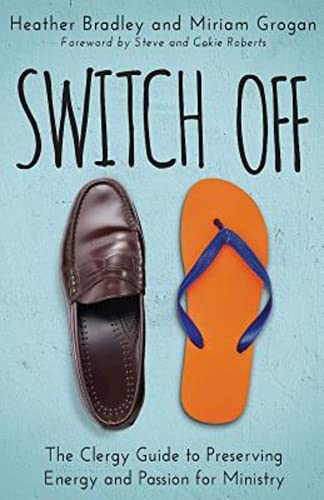
Inhaltsangabe
Many members of the clergy are committed to their vocation, yet struggle to remain engaged and energized. The pressures of congregational and family commitments take their toll. Clergy are part of a profession like no other. However you define it, the label "clergy" represents a collection of roles that come together in various combinations based on religion, congregational size and congregational structure. Frustration can build when clergy think they are delivering what is expected of them and feedback (formal or informal) is received to indicate expectations are not being met. Worse, in the absence of feedback, clergy can be caught off guard if they assume everything is fine only to learn unexpectedly everything is not fine. This book will help you examine the roles you inhabit and the roles of others around you. You will also be challenged to look at old problems in a new way and offered tools to unwind the complexities of your personal situation and develop new habits to manage expectations.
Die Inhaltsangabe kann sich auf eine andere Ausgabe dieses Titels beziehen.
Über die Autorin bzw. den Autor
Heather Bradley is a retired elementary school teacher and award-winning author. She has written four books, When We All Get Together (silver medal in the 2022 Moonbeam Children's Book Award, the 2022 Royal Dragonfly Certificate of Excellence in Literature), We Both Speak English but... (2024 Royal Dragonfly, 2024 Next Generation Indie Book Awards Finalist, 2024 Mom's Choice Gold Award), Albert Einswine is One Smart Pig (2024 Friesen Press Staff Pick), and My Apple (2024). Heather likes to joke that she got into writing because she ran out of books to read. She loves spending time riding her motorcycle, gardening, playing with her dogs, and birdwatching. She lives in Lindsay, Ontario, with her three small rescue dogs.
Auszug. © Genehmigter Nachdruck. Alle Rechte vorbehalten.
Switch Off
The Clergy Guide to Preserving Energy and Passion for Ministry
By Heather Bradley, Miriam Bamberger GroganAbingdon Press
Copyright © 2016 Abingdon Press
All rights reserved.
ISBN: 978-1-5018-1046-6All rights reserved.
Contents
Foreword: Controlling the Chaos By Steve and Cokie Roberts,
Preface,
Introduction,
PART I What Is the Off Switch?,
PART II The Off-Switch Retreat,
PART III Your Personal Action Plan,
Conclusion,
Acknowledgments,
CHAPTER 1
What Is the Off Switch?
I lie awake at night thinking of my congregants. How are they doing? How can I help them?
My friends are uncomfortable with my role — they grew up thinking the pastor is untouchable. I have to make them feel comfortable.
No one taught us to read contracts or manage staff in seminary.
Sound familiar? As we began interviewing members of the clergy about this book, a few concerns began to emerge.
The Challenge
As a member of the clergy, you occupy a special place in our society. You come to the role to serve, and in many cases, you may be asked to serve twenty-four hours a day, seven days a week. This passion and caring are inspiring but potentially exhausting.
Even the most energetic congregational leader has limited energy. Structured free time, such as a weekly day off or a periodic sabbatical, are a great start, but they may not always be practical. And even if you are able to enjoy time off the clock, now and then your mind can drift back to your role!
The Solution: The Off Switch
Like a lightbulb, if you don't allow yourself to turn off from time to time, burnout will catch up with you. Finding your Off Switch means identifying the issues that keep you On, examining them in a fresh light, and giving yourself permission to address them in a way that will allow you to relax and refresh. To re-soul, if you will.
As we sifted through our interview notes, we came to the Off Switch metaphor as we noticed three themes floating in the background of every conversation.
• My work never ends.
• Whatever I do, it's never enough.
• I have to do it all.
The Off-Switch Questions
As coaches, we've seen over and over how useful questions lead us to challenge our assumptions and open up new possibilities. So we've flipped the identified themes into questions to consider.
1. Where am I taking on stuff that isn't mine?
2. How much is enough?
3. What do I need to say yes to? What do I need to say no to?
The Off-Switch questions create an opportunity to address these concerns, allowing you to shine your light on a greater vision of what is possible from your pulpit.
Question #1 : Where Am I Taking on Stuff That Isn't Mine?
Where does a minister's job begin and end? This is not the beginning of a joke. It's a serious question, often with no clear answers. Each congregation and each congregant are different, with different ideas of what their spiritual leader should be doing. With unclear boundaries and often incompatible expectations, it's no wonder clergy and congregants can be confused about the pastor's role!
It's nice to think that as educated adults, we know truth from fiction; we see situations as they are, not as we'd like them to be. In reality, we all make things up.
In the absence of clear, agreed-upon expectations for a minister, all the players — congregants, staff, the minister's family, even the minister himself! — make up different interpretations of what is expected. Many of the clergy we spoke to were taking on other people's work, either others' formal responsibilities or the nice little extras that weren't really anybody's job. Without a clear of sense of where their jobs began and ended, our interviewees had no idea how to find an Off Switch and when to use it. Most felt a level of frustration; many reported suffering from lack of sleep and other health issues.
The first tool for finding the Off Switch is to clarify where you're taking on stuff that isn't yours. With new insights from using these tools, you may still decide to take on some stuff that isn't yours, but it will happen by choice, not by accident.
What It Takes to Support a Congregation
The job of clergy is complicated: Spiritual leader. Preacher. Teacher. Manager. Employer. Employee. Spouse. Parent. Child. Mentor. Student. Fund-raiser. Visionary. Person who mops up the puddles when the roof leaks.
We could probably spend the whole book listing roles and barely scratch the surface. Rather than attempt to come up with a comprehensive list, let's talk about three categories of roles that most affect the group dynamics. We see these types of roles in project teams, corporations, families, interpersonal conflict — in other words, just about everywhere. We will use the term system in this discussion to apply to any group of two or more; primarily, but not limited to, a congregation.
Key Roles
Outer roles define the structure of a system and are often identified by job title, such as executive director, rector, or treasurer. Outer roles may also reference a set of tasks, such as note-taker or snack provider. Outer roles dictate our job functions and are important for clarity and efficiency.
Inner roles point to the emotional functioning of the system and may or may not have anything to do with individuals' outer roles. They often express values needed by the system. Examples of inner roles are devil's advocate, cheerleader, initiator, peacemaker.
Ghost roles are third-party presences that come and go. They can be positive or negative. While not physically present, ghosts exert a powerful influence, whether or not the system members address them. There are three types of ghosts: people, circumstances, and culture.
People ghosts include people who have been members of your congregational system (i.e., the beloved senior pastor who led your church for twenty-five years and is now retired) or those who have not been a member of your immediate system but have an influence (i.e., the pope in the Roman Catholic Church).
Circumstantial ghosts include specific events impacting the congregation, such as a 150th anniversary, a project such as the leaky roof in the sanctuary, or the death of an influential congregant.
Cultural ghosts are societal influences, such as racism, homophobia, sexism, ageism, or discrimination against people with disabilities. Cultural ghost roles are often long established and they exist beyond a specific congregational system, affecting not only a congregation, but also broader society.
All three types of ghost roles help explain what is going on below the surface. And because they operate below the surface, they can be a challenge to identify and address. If your work with outer and inner roles does not yield the changes you want, ghosts may be operating in your system.
Common Challenges When Working with Roles
To see where, or if, you are taking on stuff that isn't yours, examine the following aspects of roles that commonly cause disruptions.
Roles are not people. When people occupy a role for a long time, they often become identified by it. Roles are essentially a collection of tasks required to maintain the effective operation of the system, not the people who do those tasks.
Tool #1: Your Role...
„Über diesen Titel“ kann sich auf eine andere Ausgabe dieses Titels beziehen.
Suchergebnisse für Switch Off: The Clergy Guide to Preserving Energy and...

Beispielbild für diese ISBN
Switch Off
Anbieter: World of Books (was SecondSale), Montgomery, IL, USA
Verkäuferbewertung 5 von 5 Sternen

Paperback. Zustand: Very Good. Many members of the clergy are committed to their vocation, yet struggle to remain engaged and energized. The pressures of congregational and family commitments take their toll. Clergy are part of a profession like no other. However you define it, the label clergy represents a collection of roles that come together in various combinations based on religion, congregational size and congregational structure. Frustration can build when clergy think they are delivering what is expected of them and feedback (formal or informal) is received to indicate expectations are not being met. Worse, in the absence of feedback, clergy can be caught off guard if they assume everything is fine only to learn unexpectedly everything is not fine. This book will help you examine the roles you inhabit and the roles of others around you. You will also be challenged to look at old problems in a new way and offered tools to unwind the complexities of your personal situation and develop new habits to manage expectations. Artikel-Nr. 00088465184
Gebraucht kaufen
EUR 4,43
Versand gratis
Versand innerhalb von USA
Versand innerhalb von USA
Anzahl: 1 verfügbar
Beispielbild für diese ISBN
Switch Off: The Clergy Guide to Preserving Energy and Passion for Ministry
Verlag:
Abingdon Press (edition ), 2016
ISBN 10: 1501810464
ISBN 13: 9781501810466
Gebraucht
Paperback
Anbieter: BooksRun, Philadelphia, PA, USA
Verkäuferbewertung 5 von 5 Sternen
Paperback. Zustand: Very Good. It's a well-cared-for item that has seen limited use. The item may show minor signs of wear. All the text is legible, with all pages included. It may have slight markings and/or highlighting. Artikel-Nr. 1501810464-8-1
Gebraucht kaufen
EUR 4,48
Versand gratis
Versand innerhalb von USA
Versand innerhalb von USA
Anzahl: 1 verfügbar
Beispielbild für diese ISBN
Switch Off: The Clergy Guide to Preserving Energy and Passion for Ministry
Anbieter: ThriftBooks-Atlanta, AUSTELL, GA, USA
Verkäuferbewertung 5 von 5 Sternen
Paperback. Zustand: Good. No Jacket. Pages can have notes/highlighting. Spine may show signs of wear. ~ ThriftBooks: Read More, Spend Less. Artikel-Nr. G1501810464I3N00
Gebraucht kaufen
EUR 6,11
Versand gratis
Versand innerhalb von USA
Versand innerhalb von USA
Anzahl: 1 verfügbar
Beispielbild für diese ISBN
Switch Off: The Clergy Guide to Preserving Energy and Passion for Ministry
Anbieter: Wonder Book, Frederick, MD, USA
Verkäuferbewertung 5 von 5 Sternen
Zustand: Very Good. Very Good condition. A copy that may have a few cosmetic defects. May also contain light spine creasing or a few markings such as an owner's name, short gifter's inscription or light stamp. Artikel-Nr. G01C-00922
Gebraucht kaufen
EUR 6,42
Versand gratis
Versand innerhalb von USA
Versand innerhalb von USA
Anzahl: 1 verfügbar
Beispielbild für diese ISBN
Switch Off : The Clergy Guide to Preserving Energy and Passion for Ministry
Anbieter: Better World Books: West, Reno, NV, USA
Verkäuferbewertung 5 von 5 Sternen
Zustand: Very Good. Pages intact with possible writing/highlighting. Binding strong with minor wear. Dust jackets/supplements may not be included. Stock photo provided. Product includes identifying sticker. Better World Books: Buy Books. Do Good. Artikel-Nr. 15236672-6
Gebraucht kaufen
EUR 10,10
Versand gratis
Versand innerhalb von USA
Versand innerhalb von USA
Anzahl: 1 verfügbar
Beispielbild für diese ISBN
Switch Off: The Clergy Guide to Preserving Energy and Passion for Ministry
Verlag:
Abingdon Press, 2016
ISBN 10: 1501810464
ISBN 13: 9781501810466
Gebraucht
Softcover
Signiert
Anbieter: Wonder Book, Frederick, MD, USA
Verkäuferbewertung 5 von 5 Sternen
Zustand: As New. Signed Copy . Inscribed by co-author Miriam Bamberger Grogan on title page. Artikel-Nr. J07OS-00256
Gebraucht kaufen
EUR 10,57
Versand gratis
Versand innerhalb von USA
Versand innerhalb von USA
Anzahl: 1 verfügbar
Beispielbild für diese ISBN
Switch Off: The Clergy Guide to Preserving Energy and Passion for Ministry
Anbieter: Ria Christie Collections, Uxbridge, Vereinigtes Königreich
Verkäuferbewertung 5 von 5 Sternen
Zustand: New. In English. Artikel-Nr. ria9781501810466_new
Neu kaufen
EUR 17,91
EUR 11,17 Versand
Versand von Vereinigtes Königreich nach USA
Versand von Vereinigtes Königreich nach USA
Anzahl: Mehr als 20 verfügbar
Beispielbild für diese ISBN
Switch Off: The Clergy Guide to Preserving Energy and Passion for Ministry
Anbieter: Revaluation Books, Exeter, Vereinigtes Königreich
Verkäuferbewertung 5 von 5 Sternen
Paperback. Zustand: Brand New. 91 pages. 8.50x5.50x0.50 inches. In Stock. Artikel-Nr. x-1501810464
Neu kaufen
EUR 17,35
EUR 11,93 Versand
Versand von Vereinigtes Königreich nach USA
Versand von Vereinigtes Königreich nach USA
Anzahl: 2 verfügbar