
Verwandte Artikel zu Dangerous Crossing: A Novel
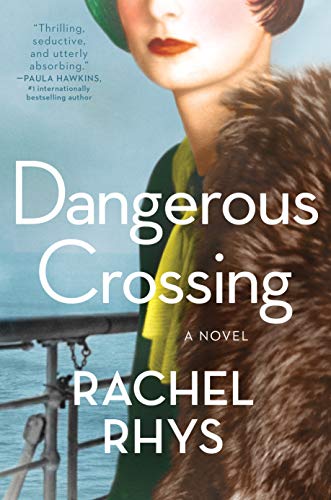
Inhaltsangabe
In this “thrilling, seductive, and utterly absorbing” (Paula Hawkins, #1 New York Times bestselling author) historical suspense novel in the tradition of Agatha Christie’s Death on the Nile and Ruth Ware’s The Woman in Cabin 10, pre-war tension and forbidden romance abound, and not everyone will survive the journey…
The ship has been like a world within itself, a vast floating city outside of normal rules. But the longer the journey continues, the more confined it is starting to feel, deck upon deck, passenger upon passenger, all of them churning around each other without anywhere to go...
1939: Europe is on the brink of war when young Lily Shepherd boards an ocean liner in Essex, bound for Australia. She is ready to start anew, leaving behind the shadows in her past. The passage proves magical, complete with live music, cocktails, and fancy dress balls. With stops at exotic locations along the way—Naples, Cairo, Ceylon—the voyage shows Lily places she’d only ever dreamed of and enables her to make friends with those above her social station, people who would ordinarily never give her the time of day. She even allows herself to hope that a man she couldn’t possibly have a future with outside the cocoon of the ship might return her feelings.
But Lily soon realizes that she’s not the only one hiding secrets. Her newfound friends—the toxic wealthy couple Eliza and Max; Cambridge graduate Edward; Jewish refugee Maria; fascist George—are also running away from their pasts. As the glamour of the voyage fades, the stage is set for something sinister to occur. By the time the ship docks, two passengers are dead, war has been declared, and Lily’s life will be changed irrevocably.
Die Inhaltsangabe kann sich auf eine andere Ausgabe dieses Titels beziehen.
Über die Autorin bzw. den Autor
Rachel Rhys is the pen name of a successful psychological suspense author. Dangerous Crossing is her historical fiction debut. She lives in North London with her family.
Auszug. © Genehmigter Nachdruck. Alle Rechte vorbehalten.
Dangerous Crossing
ONE
29 July 1939, Tilbury Docks, Essex
All her life, Lilian Shepherd will remember her first glimpse of the ship. She has seen photographs of the Orontes in leaflets, but nothing has prepared her for the scale of it, the sheer gray wall towering over the quayside, beside which the passengers and stewards scurry around like ants. All along the dock as far as the eye can see, cranes stretch their long metal necks into the watery blue sky. She had expected the number of people, but the noise of it all comes as a shock—the harsh cries of the gulls circling overhead, the creaking of the heavy chains that hoist the containers from the docks and the jarring clang as they hit the deck, the shouts of the smudge-faced men who are supervising the loading and unloading. And underneath all that, the excited chatter of the families who’ve gathered to see loved ones off, dressed in their best clothes—their funeral and wedding outfits—to mark the momentous occasion.
There is so much industry here, so much activity, that in spite of her nerves she feels her spirits stirring in sympathy, excitement skipping through her veins.
“You won’t be short on company, that’s for sure,” remarks her mother, her eyes darting around from under her best linen hat. “Won’t have time to miss anyone.”
Lily loops her arm through her mother’s and squeezes.
“Don’t be daft,” she says.
Frank is gazing at a couple standing off to the right. The woman is leaning back against a wooden structure while the man looms over her with his hands resting on either side of her head and his face angled down so that the lock of his hair that has come loose in the front brushes her forehead. They are staring fiercely at each other, noses just inches apart, as if nothing else exists and they can’t hear the jangle of noises around them, or smell the pungent mixture of sea and salt and grease and oil and sweat. Even from several feet away, the woman is clearly very beautiful. Her scarlet dress fits her body as if someone has sewn it in place, and her full lips are painted a matching color, dazzling against the sleek black of her hair. He is tall, solid, with a moustache and a cigarette that burns, forgotten, between his fingers. Though the couple are oblivious, Lily feels awkward, as if it is they, her family, who are intruding.
“Fetch your eyes in off those stalks,” she tells her brother sharply, then smiles, to show she was joking.
Lily’s family have visitor’s passes so they can see her safely on board. Lily is worried about how her father will manage the steep gangplank, but he grips the rail and puts his weight on his good foot and ascends in this fashion. Only when he is safely at the top does Lily breathe again. They are getting older, she thinks, and I am leaving them behind. An acidic rush of guilt prompts her to blurt out, once they are all gathered on the ship’s deck, “It’s only two years, remember? I’ll be home before you know it.”
The ship extends far deeper than Lily has imagined. The upper decks are for first-class passengers, while tourist class is below and beneath that are the laundries and the third-class cabins. F deck, where Lily’s cabin is housed in tourist class, is a warren of narrow corridors, and she and her family have to ask directions from two separate stewards before they find her cabin. Inside, there are two sets of bunk beds close enough together that a person in one upper bunk could reach out a hand and touch the person in the other. Lily is pleased to see that her cabin trunk has already arrived, her name stamped on the end neatly in large capital letters, protruding from underneath one of the bunks.
There are two women already in the cabin, sitting on the bottom bunks. Lily guesses the first is two or three years younger than her, maybe twenty-two or twenty-three. She has a round, open face with pale blue eyes so wide and unfocused Lily suspects she ought to be wearing spectacles. The idea that she might perhaps be carrying a pair around in her bag but not wishing to wear them, in a small act of vanity, makes Lily warm to her on sight. Not so her companion, who looks to be at least a decade older, with a thin-lipped smile and a long, sharp chin.
The younger woman leaps to her feet, revealing herself to be of above-average height, although she dips her head to the floor as if to make herself smaller. “Are you Lilian? I knew you had to be, as there are only us three in this cabin. Oh, I’m so happy to meet you. I’m Audrey, and this here is Ida. And this must be your family. Australia! Can you believe it?”
The words gush out as if the girl has no control over them. Her voice pulses with excitement, causing the wisps of fair hair around her face to quiver in tandem.
Lily makes her introductions. Her parents first and then her brother, Frank, whose eyes glide off Audrey’s plain features as if they are coated in oil. Soon the ship will leave and I will stay on it with these two strange women, and my family will go home without me, Lily reminds herself, but it does not seem real.
Lily’s mother is asking Audrey and Ida where they are from.
“We’re chambermaids, working at Claridge’s hotel,” says Audrey.
“Not anymore,” Ida chips in curtly. She is wearing an old-fashioned black high-necked dress, and when she leans forward a sour smell comes off her that catches in Lily’s throat.
“When we saw the advertisement about the assisted-passage scheme, we thought, ‘Well, why not?’?” says Audrey, “but we never really dreamed . . . that is, I never really dreamed . . .” She glances at her older companion and the words dry up in her mouth.
“Are you looking forward to seeing all the sights on the voyage—Naples, Ceylon?” Lily’s mother coughs out the foreign words as if they are small stones she’s found on a lettuce leaf.
“Got to be better than staying here, doesn’t it?” says Ida. “If we go to war—”
Instantly, Lily and Frank glance towards their father, who has stood all this while in silence, leaning against the wall.
“We won’t go to war,” Lily breaks in, anxious to head off the conversation. “Mr. Chamberlain said so, didn’t he? ‘Peace in our time,’ he said.”
“Politicians say a lot of things,” says Ida.
A bell sounds out in the corridor. And again. The air in the cabin vibrates.
“I suppose that means it’s time for us to go,” says Lily’s mother. And her voice now carries a thin note of uncertainty that it lacked before. I will not see her again for two years, Lily tells herself, as if deliberately pressing the sharp blade of a knife against her skin. The answering jolt of pain takes her by surprise and she puts a hand to her chest to steady herself.
“I’ll come with you onto the deck to wave good-bye,” Audrey tells her. “My own folks saw me off at Saint Pancras, but I want to get one last look at Blighty. You coming, Ida?”
The older woman narrows her little black eyes. “Nothing for me to see there,” she says. “Who’d I be waving to? A tree? A crane?”
On the way up to the deck, Audrey whispers in Lily’s ear....
„Über diesen Titel“ kann sich auf eine andere Ausgabe dieses Titels beziehen.
Suchergebnisse für Dangerous Crossing: A Novel

Beispielbild für diese ISBN
Dangerous Crossing
Anbieter: World of Books (was SecondSale), Montgomery, IL, USA
Verkäuferbewertung 5 von 5 Sternen

Hardback. Zustand: Very Good. Servants and socialites sip cocktails side by side on their way to new lives in this thrilling, seductive, and utterly absorbing (Paula Hawkins, #1 New York Times bestselling author) historical suspense novel in the tradition of Agatha Christie's Death on the Nile and Ruth Ware's The Woman in Cabin 10. The ship has been like a world within itself, a vast floating city outside of normal rules. But the longer the journey continues, the more confined it is starting to feel, deck upon deck, passenger upon passenger, all of them churning around each other without anywhere to go. 1939: Europe is on the brink of war when young Lily Shepherd boards an ocean liner in England, bound for Australia. She is ready to start anew, leaving behind the shadows of her past. The passage proves magical, complete with live music, cocktails, and fancy-dress balls. With stops at exotic locations along the way--Naples, Cairo, Ceylon--the voyage shows Lily places she's only ever dreamed of and enables her to make friends with those above her social station, people who would not ordinarily mingle with her. She even allows herself to hope that a man she couldn't possibly have a future with outside the cocoon of the ship might return her feelings. But Lily soon realizes that she's not the only one hiding secrets. Her newfound friends--the toxic wealthy couple Eliza and Max; Cambridge graduate Edward; Jewish refugee Maria; fascist George--are also running away from their pasts. As the glamour of the voyage fades, the stage is set for something sinister to occur. By the time the ship docks, two passengers are dead, war has been declared, and Lily's life is irrevocably changed. A vividly descriptive ride (Marie Claire) with a jaw-dropping ending (RT Book Reviews, Top Pick), Dangerous Crossing is a transporting and gorgeously atmospheric (Ruth Ware, New York Times bestselling author) story for the ages. Artikel-Nr. 00097386593
Gebraucht kaufen
EUR 4,91
Versand gratis
Versand innerhalb von USA
Versand innerhalb von USA
Anzahl: 1 verfügbar
Beispielbild für diese ISBN
Dangerous Crossing
Anbieter: World of Books (was SecondSale), Montgomery, IL, USA
Verkäuferbewertung 5 von 5 Sternen
Hardback. Zustand: Fair. Servants and socialites sip cocktails side by side on their way to new lives in this thrilling, seductive, and utterly absorbing (Paula Hawkins, #1 New York Times bestselling author) historical suspense novel in the tradition of Agatha Christie's Death on the Nile and Ruth Ware's The Woman in Cabin 10. The ship has been like a world within itself, a vast floating city outside of normal rules. But the longer the journey continues, the more confined it is starting to feel, deck upon deck, passenger upon passenger, all of them churning around each other without anywhere to go. 1939: Europe is on the brink of war when young Lily Shepherd boards an ocean liner in England, bound for Australia. She is ready to start anew, leaving behind the shadows of her past. The passage proves magical, complete with live music, cocktails, and fancy-dress balls. With stops at exotic locations along the way--Naples, Cairo, Ceylon--the voyage shows Lily places she's only ever dreamed of and enables her to make friends with those above her social station, people who would not ordinarily mingle with her. She even allows herself to hope that a man she couldn't possibly have a future with outside the cocoon of the ship might return her feelings. But Lily soon realizes that she's not the only one hiding secrets. Her newfound friends--the toxic wealthy couple Eliza and Max; Cambridge graduate Edward; Jewish refugee Maria; fascist George--are also running away from their pasts. As the glamour of the voyage fades, the stage is set for something sinister to occur. By the time the ship docks, two passengers are dead, war has been declared, and Lily's life is irrevocably changed. A vividly descriptive ride (Marie Claire) with a jaw-dropping ending (RT Book Reviews, Top Pick), Dangerous Crossing is a transporting and gorgeously atmospheric (Ruth Ware, New York Times bestselling author) story for the ages. Artikel-Nr. 00100426647
Gebraucht kaufen
EUR 4,91
Versand gratis
Versand innerhalb von USA
Versand innerhalb von USA
Anzahl: 1 verfügbar
Beispielbild für diese ISBN
Dangerous Crossing
Anbieter: World of Books (was SecondSale), Montgomery, IL, USA
Verkäuferbewertung 5 von 5 Sternen
Hardback. Zustand: Like New. Servants and socialites sip cocktails side by side on their way to new lives in this thrilling, seductive, and utterly absorbing (Paula Hawkins, #1 New York Times bestselling author) historical suspense novel in the tradition of Agatha Christie's Death on the Nile and Ruth Ware's The Woman in Cabin 10. The ship has been like a world within itself, a vast floating city outside of normal rules. But the longer the journey continues, the more confined it is starting to feel, deck upon deck, passenger upon passenger, all of them churning around each other without anywhere to go. 1939: Europe is on the brink of war when young Lily Shepherd boards an ocean liner in England, bound for Australia. She is ready to start anew, leaving behind the shadows of her past. The passage proves magical, complete with live music, cocktails, and fancy-dress balls. With stops at exotic locations along the way--Naples, Cairo, Ceylon--the voyage shows Lily places she's only ever dreamed of and enables her to make friends with those above her social station, people who would not ordinarily mingle with her. She even allows herself to hope that a man she couldn't possibly have a future with outside the cocoon of the ship might return her feelings. But Lily soon realizes that she's not the only one hiding secrets. Her newfound friends--the toxic wealthy couple Eliza and Max; Cambridge graduate Edward; Jewish refugee Maria; fascist George--are also running away from their pasts. As the glamour of the voyage fades, the stage is set for something sinister to occur. By the time the ship docks, two passengers are dead, war has been declared, and Lily's life is irrevocably changed. A vividly descriptive ride (Marie Claire) with a jaw-dropping ending (RT Book Reviews, Top Pick), Dangerous Crossing is a transporting and gorgeously atmospheric (Ruth Ware, New York Times bestselling author) story for the ages. Artikel-Nr. 00097713364
Gebraucht kaufen
EUR 4,91
Versand gratis
Versand innerhalb von USA
Versand innerhalb von USA
Anzahl: 1 verfügbar
Beispielbild für diese ISBN
Dangerous Crossing
Anbieter: World of Books (was SecondSale), Montgomery, IL, USA
Verkäuferbewertung 5 von 5 Sternen
Hardback. Zustand: Good. Servants and socialites sip cocktails side by side on their way to new lives in this thrilling, seductive, and utterly absorbing (Paula Hawkins, #1 New York Times bestselling author) historical suspense novel in the tradition of Agatha Christie's Death on the Nile and Ruth Ware's The Woman in Cabin 10. The ship has been like a world within itself, a vast floating city outside of normal rules. But the longer the journey continues, the more confined it is starting to feel, deck upon deck, passenger upon passenger, all of them churning around each other without anywhere to go. 1939: Europe is on the brink of war when young Lily Shepherd boards an ocean liner in England, bound for Australia. She is ready to start anew, leaving behind the shadows of her past. The passage proves magical, complete with live music, cocktails, and fancy-dress balls. With stops at exotic locations along the way--Naples, Cairo, Ceylon--the voyage shows Lily places she's only ever dreamed of and enables her to make friends with those above her social station, people who would not ordinarily mingle with her. She even allows herself to hope that a man she couldn't possibly have a future with outside the cocoon of the ship might return her feelings. But Lily soon realizes that she's not the only one hiding secrets. Her newfound friends--the toxic wealthy couple Eliza and Max; Cambridge graduate Edward; Jewish refugee Maria; fascist George--are also running away from their pasts. As the glamour of the voyage fades, the stage is set for something sinister to occur. By the time the ship docks, two passengers are dead, war has been declared, and Lily's life is irrevocably changed. A vividly descriptive ride (Marie Claire) with a jaw-dropping ending (RT Book Reviews, Top Pick), Dangerous Crossing is a transporting and gorgeously atmospheric (Ruth Ware, New York Times bestselling author) story for the ages. Artikel-Nr. 00097955459
Gebraucht kaufen
EUR 4,91
Versand gratis
Versand innerhalb von USA
Versand innerhalb von USA
Anzahl: 2 verfügbar
Beispielbild für diese ISBN
Dangerous Crossing: A Novel
Verlag:
Atria Books (edition Probable 1st; First Printing), 2018
ISBN 10: 1501162721
ISBN 13: 9781501162725
Gebraucht
Hardcover
Anbieter: BooksRun, Philadelphia, PA, USA
Verkäuferbewertung 5 von 5 Sternen
Hardcover. Zustand: Very Good. Probable 1st; First Printing. With dust jacket. It's a well-cared-for item that has seen limited use. The item may show minor signs of wear. All the text is legible, with all pages included. It may have slight markings and/or highlighting. Artikel-Nr. 1501162721-11-1-29
Gebraucht kaufen
EUR 5,36
Versand gratis
Versand innerhalb von USA
Versand innerhalb von USA
Anzahl: 1 verfügbar
Beispielbild für diese ISBN
Dangerous Crossing : A Novel
Verlag:
Simon & Schuster, Incorporated, 2018
ISBN 10: 1501162721
ISBN 13: 9781501162725
Gebraucht
Hardcover
Anbieter: Better World Books, Mishawaka, IN, USA
Verkäuferbewertung 5 von 5 Sternen
Zustand: Good. Pages intact with minimal writing/highlighting. The binding may be loose and creased. Dust jackets/supplements are not included. Stock photo provided. Product includes identifying sticker. Better World Books: Buy Books. Do Good. Artikel-Nr. 15278394-6
Gebraucht kaufen
EUR 6,34
Versand gratis
Versand innerhalb von USA
Versand innerhalb von USA
Anzahl: 1 verfügbar
Beispielbild für diese ISBN
Dangerous Crossing : A Novel
Verlag:
Simon & Schuster, Incorporated, 2018
ISBN 10: 1501162721
ISBN 13: 9781501162725
Gebraucht
Hardcover
Anbieter: Better World Books: West, Reno, NV, USA
Verkäuferbewertung 5 von 5 Sternen
Zustand: Good. Former library copy. Pages intact with minimal writing/highlighting. The binding may be loose and creased. Dust jackets/supplements are not included. Includes library markings. Stock photo provided. Product includes identifying sticker. Better World Books: Buy Books. Do Good. Artikel-Nr. 14519774-20
Gebraucht kaufen
EUR 6,34
Versand gratis
Versand innerhalb von USA
Versand innerhalb von USA
Anzahl: 1 verfügbar
Beispielbild für diese ISBN
Dangerous Crossing
Anbieter: ThriftBooks-Dallas, Dallas, TX, USA
Verkäuferbewertung 5 von 5 Sternen
Hardcover. Zustand: As New. No Jacket. Pages are clean and are not marred by notes or folds of any kind. ~ ThriftBooks: Read More, Spend Less. Artikel-Nr. G1501162721I2N00
Gebraucht kaufen
EUR 6,62
Versand gratis
Versand innerhalb von USA
Versand innerhalb von USA
Anzahl: 1 verfügbar
Beispielbild für diese ISBN
Dangerous Crossing
Anbieter: ThriftBooks-Atlanta, AUSTELL, GA, USA
Verkäuferbewertung 5 von 5 Sternen
Hardcover. Zustand: As New. No Jacket. Pages are clean and are not marred by notes or folds of any kind. ~ ThriftBooks: Read More, Spend Less. Artikel-Nr. G1501162721I2N00
Gebraucht kaufen
EUR 6,62
Versand gratis
Versand innerhalb von USA
Versand innerhalb von USA
Anzahl: 1 verfügbar
Beispielbild für diese ISBN
Dangerous Crossing: A Novel
Anbieter: Revaluation Books, Exeter, Vereinigtes Königreich
Verkäuferbewertung 5 von 5 Sternen
Hardcover. Zustand: Brand New. 352 pages. 9.50x6.50x1.50 inches. In Stock. Artikel-Nr. 1501162721
Neu kaufen
EUR 79,88
EUR 14,82 Versand
Versand von Vereinigtes Königreich nach USA
Versand von Vereinigtes Königreich nach USA
Anzahl: 1 verfügbar