
Verwandte Artikel zu Life Moves Pretty Fast: The Lessons We Learned from...
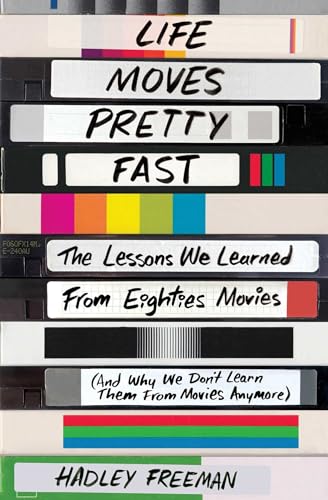
Life Moves Pretty Fast: The Lessons We Learned from Eighties Movies (and Why We Don't Learn Them from Movies Anymore) - Softcover
Inhaltsangabe
From Vogue contributor and Guardian columnist Hadley Freeman, a personalized guide to eighties movies that describes why they changed movie-making forever—featuring exclusive interviews with the producers, directors, writers and stars of the best cult classics.
For Hadley Freeman, movies of the 1980s have simply got it all. Comedy in Three Men and a Baby, Hannah and Her Sisters, Ghostbusters, and Back to the Future; all a teenager needs to know in Pretty in Pink, Ferris Bueller’s Day Off, Say Anything, The Breakfast Club, and Mystic Pizza; the ultimate in action from Top Gun, Die Hard, Beverly Hills Cop, and Indiana Jones and the Temple of Doom; love and sex in 9 1/2 Weeks, Splash, About Last Night, The Big Chill, and Bull Durham; and family fun in The Little Mermaid, ET, Big, Parenthood, and Lean On Me.
In Life Moves Pretty Fast, Hadley puts her obsessive movie geekery to good use, detailing the decade’s key players, genres, and tropes. She looks back on a cinematic world in which bankers are invariably evil, where children are always wiser than adults, where science is embraced with an intense enthusiasm, and the future viewed with giddy excitement. And, she considers how the changes between movies then and movies today say so much about society’s changing expectations of women, young people, and art—and explains why Pretty in Pink should be put on school syllabuses immediately.
From how John Hughes discovered Molly Ringwald, to how the friendship between Dan Aykroyd and John Belushi influenced the evolution of comedy, and how Eddie Murphy made America believe that race can be transcended, this is a “highly personal, witty love letter to eighties movies, but also an intellectually vigorous, well-researched take on the changing times of the film industry” (The Guardian).
Die Inhaltsangabe kann sich auf eine andere Ausgabe dieses Titels beziehen.
Über die Autorin bzw. den Autor
Hadley Freeman is a staff writer for The Sunday Times in the UK. She was born in New York and lives in London. Her books include Life Moves Pretty Fast and the bestselling House of Glass, and her work has appeared in Vogue US and UK, New York magazine, Harper’s Bazaar, and many other publications.
Auszug. © Genehmigter Nachdruck. Alle Rechte vorbehalten.
Life Moves Pretty Fast
Dirty Dancing
Abortions Happen and That’s Just Fine
Few movies have been as underrated and misunderstood as 1987’s Dirty Dancing. I first saw it when I was ten and I’m afraid that far from appreciating that I was bearing witness to one of the great feminist films of all time, I was so excited to be watching a movie that had the word dirty in the title that I spent the whole film waiting for it to finish so I could call my friend Lauren to brag about this achievement.
“Well, I just saw Can’t Buy Me Love, twice,” said Lauren balefully, referring to the Patrick Dempsey teen romcom, “and two viewings of Can’t Buy Me Love is worth one Dirty Dancing.”
Out of politeness, I agreed, but we both knew that was totally not true (Can’t Buy Me Love doesn’t have a single sex scene so, like, come on). But just to make sure, I then watched Dirty Dancing two more times in a row so that Lauren would definitely not be able to catch up with my coolness. And just to prove how cool I was, I then called Lauren again to tell her that, too.
Adult critics and audiences at the time were just as blind as ten-year-old me when it came to seeing the feminism in Dirty Dancing (although presumably most of them didn’t immediately brag to their frenemies about having just seen the movie). Partly this comes down to sexism. Partly it’s a reflection of how times have changed in the past thirty years. And mainly it’s because the film’s writer, Eleanor Bergstein, rightly thought the best way to deliver a social message was “to present it in a pleasurable way so that the moral lessons would sneak up on people.” But for a long time I was so distracted by the pleasure—specifically, the soundtrack, the sex, the Swayze—that the moral lessons didn’t sneak up at all. For years I didn’t realize I was watching one of the great feminist tracts of the 1980s, easily up there with Susan Faludi’s feminist study of the eighties, Backlash. But then, Faludi’s book doesn’t come with a half-naked Patrick Swayze, so it is easier to recognize it as a contribution to the fight against misogyny.
By the mid-eighties, both Flashdance and Footloose had been released and studios were desperate for another teen movie that featured dancing and came with a great commercial soundtrack. But one movie they definitely did not want was Dirty Dancing.
“I cannot be clear enough about this: everybody thought Dirty Dancing was just a piece of teenage junk,” says the charmingly chatty Bergstein. “Nobody wanted to make it. Nobody. I would send out the script to studios along with a tape of the soundtrack that I’d made to go with it, that was just recordings of my old forty-fives from the 1960s, and executives would call me and say, ‘Oh yeah, Eleanor, we’re not going to make the movie, but could you send me another cassette? I wore out the last one.’ But not even that convinced them of the movie’s potential.”
MGM briefly took on the script at the encouragement of several female executives (the men there all hated it), but then dropped it. Not a single other studio would consider it. Eventually a small independent production company looked at it, saw it as an easy quick buck, and offered to make it for $4 million, about a fifth of the average cost of a movie at the time. Bergstein and her producer, Linda Gottlieb, accepted.
Bergstein had already had one screenplay produced, the undeservedly forgotten 1980 film It’s My Turn, in which Jill Clayburgh plays a mathematics professor who has an affair with an athlete, played by Michael Douglas. The inspiration for that came from Bergstein’s observations of female mathematics students at Princeton, where her husband was a professor, and the condescension they had to endure from men, including accusations that their boyfriends did all their work for them (“It made me so mad!” she wails, still just as infuriated today as she was three decades ago). During the making of that film, Bergstein included a dance sequence inspired by the kind of dancing she used to do with her friends when growing up in Brooklyn, but it was ultimately cut. This was fortunate for two reasons: one, just the thought of Michael Douglas Dirty Dancing is faintly traumatizing; and, two, this then made her determined to write a movie that foregrounded the dancing. After a few years, she wrote the story of a young woman known as Baby (Jennifer Grey) who goes to a holiday camp in the Catskills with her parents and sister in the summer of 1963 and falls in love with the dance instructor, Johnny (Patrick Swayze).
After having endured so much studio skepticism about the film, Bergstein has become pretty hardened to critics misunderstanding and dismissing her film. Proving author William Goldman’s adage that no one knows anything in the film business, one producer said before the film was released that it was so bad they should just burn the negatives and collect the insurance money, and, hundreds of millions of dollars later, Bergstein laughs at the memory. But there are two comments she frequently hears that drive her crazy: “I hate it when people describe Baby as an Ugly Duckling, because Jennifer [Grey]’s beautiful, obviously. I also can’t stand it when people describe it as a Cinderella story, because all Cinderella ever did was sit on her rump!”
Baby definitely does a lot more with her rump than just sit on it. When the film opens she is reading a book about economic development because she’s going to major in the economics of underdeveloped countries—not English literature, she impatiently corrects a condescending suitor—and join the Peace Corps. “Our Baby’s going to save the world!” her proud father, Dr. Houseman (the delightfully eyebrowed Jerry Orbach), boasts to the folk at Kellerman’s, the (not very subtly Jewish) holiday camp. (Dirty Dancing is easily the most Jewish eighties teen film, which is probably another reason it is so close to my own Jewish heart. As Bergstein says, “You just have to know how to spot the clues.”I)
But until she can save the world, Baby sets about saving everyone she meets. Grey is perfect as a naïve and idealistic but likable teenager, one who is determined to help the poor and downtrodden, and yet has no concept of what life is like for anyone who is anything other than JewishII and middle class (another probable reason why I found it so easy to relate to this film so much). She is repulsed by the disdainful manner with which the holiday camp’s bosses treat the (Catholic) working-class entertainment staff, and she is horrified when she realizes her father is just as big a snob. When she learns that the dance instructor Penny (Cynthia RhodesIII) is pregnant with the waiter Robbie’s (Max CantorIV) baby, she tells Robbie to pay for Penny’s abortion. When he refuses, she gets the money herself. When Johnny needs someone to stand in for Penny for the dance routine, Baby offers herself. When Penny’s abortion is botched, she gets her father to step in.
...
„Über diesen Titel“ kann sich auf eine andere Ausgabe dieses Titels beziehen.
Suchergebnisse für Life Moves Pretty Fast: The Lessons We Learned from...

Beispielbild für diese ISBN
Life Moves Pretty Fast: The Lessons We Learned from Eighties Movies (and Why We Don't Learn Them from Movies Anymore)
Anbieter: World of Books (was SecondSale), Montgomery, IL, USA
Verkäuferbewertung 5 von 5 Sternen

Zustand: Good. Item in good condition. Textbooks may not include supplemental items i.e. CDs, access codes etc. Artikel-Nr. 00100623525
Gebraucht kaufen
EUR 4,11
Versand gratis
Versand innerhalb von USA
Versand innerhalb von USA
Anzahl: 6 verfügbar
Beispielbild für diese ISBN
Life Moves Pretty Fast: The Lessons We Learned from Eighties Movies (and Why We Don't Learn Them from Movies Anymore)
Anbieter: World of Books (was SecondSale), Montgomery, IL, USA
Verkäuferbewertung 5 von 5 Sternen
Zustand: Acceptable. Item in acceptable condition! Textbooks may not include supplemental items i.e. CDs, access codes etc. Artikel-Nr. 00104848317
Gebraucht kaufen
EUR 4,11
Versand gratis
Versand innerhalb von USA
Versand innerhalb von USA
Anzahl: 1 verfügbar
Beispielbild für diese ISBN
Life Moves Pretty Fast : The Lessons We Learned from Eighties Movies (and Why We Don't Learn Them from Movies Anymore)
Anbieter: Better World Books, Mishawaka, IN, USA
Verkäuferbewertung 5 von 5 Sternen
Zustand: Good. Former library copy. Pages intact with minimal writing/highlighting. The binding may be loose and creased. Dust jackets/supplements are not included. Includes library markings. Stock photo provided. Product includes identifying sticker. Better World Books: Buy Books. Do Good. Artikel-Nr. 10796791-6
Gebraucht kaufen
EUR 6,09
Versand gratis
Versand innerhalb von USA
Versand innerhalb von USA
Anzahl: 3 verfügbar
Beispielbild für diese ISBN
Life Moves Pretty Fast: The Lessons We Learned from Eighties Movies (and Why We Don't Learn Them from Movies Anymore)
Anbieter: ThriftBooks-Atlanta, AUSTELL, GA, USA
Verkäuferbewertung 5 von 5 Sternen
Paperback. Zustand: Good. No Jacket. Pages can have notes/highlighting. Spine may show signs of wear. ~ ThriftBooks: Read More, Spend Less. Artikel-Nr. G1501130455I3N00
Gebraucht kaufen
EUR 7,31
Versand gratis
Versand innerhalb von USA
Versand innerhalb von USA
Anzahl: 1 verfügbar
Beispielbild für diese ISBN
Life Moves Pretty Fast: The Lessons We Learned from Eighties Movies (and Why We Don't Learn Them from Movies Anymore)
Anbieter: ThriftBooks-Dallas, Dallas, TX, USA
Verkäuferbewertung 5 von 5 Sternen
Paperback. Zustand: Good. No Jacket. Former library book; Pages can have notes/highlighting. Spine may show signs of wear. ~ ThriftBooks: Read More, Spend Less. Artikel-Nr. G1501130455I3N10
Gebraucht kaufen
EUR 7,31
Versand gratis
Versand innerhalb von USA
Versand innerhalb von USA
Anzahl: 1 verfügbar
Beispielbild für diese ISBN
Life Moves Pretty Fast: The Lessons We Learned from Eighties Movies (and Why We Don't Learn Them from Movies Anymore)
Anbieter: ThriftBooks-Dallas, Dallas, TX, USA
Verkäuferbewertung 5 von 5 Sternen
Paperback. Zustand: Very Good. No Jacket. May have limited writing in cover pages. Pages are unmarked. ~ ThriftBooks: Read More, Spend Less. Artikel-Nr. G1501130455I4N00
Gebraucht kaufen
EUR 7,31
Versand gratis
Versand innerhalb von USA
Versand innerhalb von USA
Anzahl: 1 verfügbar
Beispielbild für diese ISBN
Live Moves Pretty Fast: the lessons we learned from eighties movies
Anbieter: Hollywood Canteen Inc., Toronto, ON, Kanada
Verkäuferbewertung 5 von 5 Sternen
Soft Cover. Zustand: Very Good. 2025 septremainder mark. Artikel-Nr. 99298568
Gebraucht kaufen
EUR 13,54
EUR 5,71 Versand
Versand von Kanada nach USA
Versand von Kanada nach USA
Anzahl: 1 verfügbar
Beispielbild für diese ISBN
Life Moves Pretty Fast: The Lessons We Learned from Eighties Movies (and Why We Don't Learn Them from Movies Anymore)
Anbieter: medimops, Berlin, Deutschland
Verkäuferbewertung 5 von 5 Sternen
Zustand: acceptable. Ausreichend/Acceptable: Exemplar mit vollständigem Text und sämtlichen Abbildungen oder Karten. Schmutztitel oder Vorsatz können fehlen. Einband bzw. Schutzumschlag weisen unter Umständen starke Gebrauchsspuren auf. / Describes a book or dust jacket that has the complete text pages (including those with maps or plates) but may lack endpapers, half-title, etc. (which must be noted). Binding, dust jacket (if any), etc may also be worn. Artikel-Nr. M01501130455-B
Gebraucht kaufen
EUR 13,62
EUR 10,00 Versand
Versand von Deutschland nach USA
Versand von Deutschland nach USA
Anzahl: 1 verfügbar
Beispielbild für diese ISBN
Life Moves Pretty Fast: The Lessons We Learned from Eighties Movies (and Why We Don't Learn Them from Movies Anymore)
Anbieter: WorldofBooks, Goring-By-Sea, WS, Vereinigtes Königreich
Verkäuferbewertung 5 von 5 Sternen
Paperback. Zustand: Very Good. The book has been read, but is in excellent condition. Pages are intact and not marred by notes or highlighting. The spine remains undamaged. Artikel-Nr. GOR008711026
Gebraucht kaufen
EUR 23,92
EUR 6,50 Versand
Versand von Vereinigtes Königreich nach USA
Versand von Vereinigtes Königreich nach USA
Anzahl: 2 verfügbar
Beispielbild für diese ISBN
Life Moves Pretty Fast: The Lessons We Learned from Eighties Movies (And Why We Don't Learn Them from Movies Anymore)
Anbieter: Revaluation Books, Exeter, Vereinigtes Königreich
Verkäuferbewertung 5 von 5 Sternen
Paperback. Zustand: Brand New. 320 pages. 8.50x5.50x1.00 inches. In Stock. Artikel-Nr. x-1501130455
Neu kaufen
EUR 19,55
EUR 11,61 Versand
Versand von Vereinigtes Königreich nach USA
Versand von Vereinigtes Königreich nach USA
Anzahl: 2 verfügbar