
Verwandte Artikel zu Worth Dying For: A Navy Seal's Call to a Nation...
Inhaltsangabe
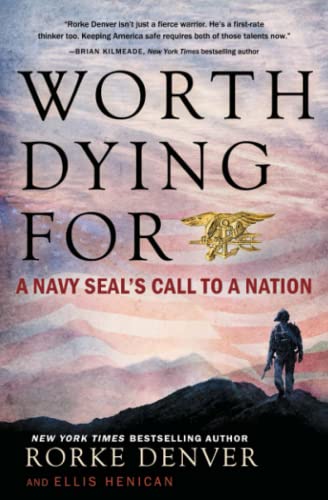
In a fast-paced and action-packed narrative, Navy SEAL commander Rorke Denver tackles the questions that have emerged about America’s past decade at war—from what makes a hero to why we fight and what it does to us.
Heroes are not always the guys who jump on grenades. Sometimes, they are the snipers who decide to hold their fire, the wounded operators who find fresh ways to contribute, or the wives who keep the families together back home. Even a SEAL commander—especially a SEAL commander—knows that. But what’s a hero, really? What do we have a right to expect from our heroes? How should we hold them accountable? Amid all the loose talk of heroes, these questions are seldom asked.
As a SEAL commander, Rorke Denver is uniquely qualified to answer questions about what makes a hero or a leader, why men kill, how best to serve your country, how battlefield experiences can elevate us, and most important, why we fight and what it does for and to us. And in Worth Dying For, Denver shares his personal experiences from the forefront of war today.
Denver applies some of his SEAL sense to nine big-picture, news-driven questions of war and peace, in a way that appeals to all sides of the public conversation. By broadening the issues, sharing his insights, and achieving what civilian political leaders have been utterly unable to, Denver eloquently shares answers to America’s most burning questions about war, heroism, and what it all means for America’s future.
Die Inhaltsangabe kann sich auf eine andere Ausgabe dieses Titels beziehen.
Über die Autorinnen und Autoren
Rorke Denver is a Navy SEAL commander, author of the New York Times bestseller Damn Few, and star of the hit film Act of Valor. Denver was awarded the Bronze Star with “V” for valorous action in combat. He is an honor graduate of the United States Army Ranger School and holds a BA from Syracuse University, where he was an All-American lacrosse player and captain of the varsity lacrosse team. Denver earned his master’s degree in Global Business Leadership from the University of San Diego.
Ellis Henican is a Pulitzer Prize–winning journalist and New York Times bestselling author.
Auszug. © Genehmigter Nachdruck. Alle Rechte vorbehalten.
Worth Dying For
CHAPTER 1
SEND ME A HERO
Not long ago, I was the guest speaker at a middle school in Texas. The teachers and students couldn’t have been more welcoming—when I walked into the auditorium, half a dozen American flags were lined up on the stage. The entire school, it seemed, had come to hear me. The school’s principal, a friendly man in a plaid sport coat, announced that “a real war hero has come to share his experiences with us today.” I couldn’t help myself. When he said that, I glanced over my shoulder to get a look at this hero he was referring to.
Our culture craves heroes. Often I hear people say, “There aren’t enough heroes anymore,” and I understand the sentiment. We all need someone to admire. Someone to measure ourselves against. Someone who exhibits qualities the rest of us can emulate. It certainly feels to me like we could all use a few more of those. But heroic isn’t how I see myself or how my SEAL teammates see themselves. To us, applying that word to ourselves is almost like claiming an undeserved prize. It might look shiny at first, but it’s hard to imagine ever really enjoying it. In the minds of most warriors, the heroes are the ones who didn’t make it home, the ones who gave that last, full measure of themselves and never returned from the battlefield. Those are the people we hold in our hearts as heroes. The rest of us are just doing our jobs.
SEALs never use the word heroic as we head out on a mission. We’re much too focused on the last-minute, practical things. “Are the trucks fueled up?” “Do we have a solid navigation plan?” “Have we built in the right contingencies?” If anything, I have wondered, “Will today be the day that my bravery is tested profoundly?” knowing I can never predict what might arrive or when.
I’m not reaching for false humility here. Most of the time, war is just dirty, ugly work. The day-to-day stuff is straight labor—dangerous labor, maybe, but labor nonetheless. Prepping our gear. Loading the vehicles. Getting from here to there. Stopping to kick in a door, set up an ambush, or find suitable terrain for a fight. I wouldn’t call it heroic. I wouldn’t even call it brave. I would call it a tough and important job that in certain, rare moments can lead toward heroism or be deemed heroic by others. But mostly, we get in. We get it done. We get out—all of us, if we’ve done our jobs effectively—alive. Day in and day out, that’s what war is.
I have won awards including a high-ranking one, the Bronze Star with “V” for valorous action in combat. I appreciated the honor, but when someone looks at me, or someone else in the military, and uses that heavyweight word, it feels awkward. My first reaction is almost always the one I had in that middle school auditorium, some version of “There must be someone in the room with shinier medals or who has lived a more exemplary life than I have.”
When good people say, “Thank you for your service,” I understand it comes from a place of appreciation and respect. So “thank you” is what I told that principal as I launched into my talk that day—and left it at that.
With that simple, polite exchange, I was reminded that we are stuck with outmoded archetypes of who even qualifies to be called a hero. It’s easy to say the hero is the guy who hit the home run in the ninth inning to win the World Series or did something dramatic on the battlefield that won him a Silver Star. Yes, every first responder at 9/11 can be called a hero for passing the personal-sacrifice test, running toward the dust and tragedy of the collapsing towers to help those in need. All these acts are good and deserving of our praise. But so is whispering just the right words into the ear of a child at exactly the right moment. We need to be more discerning and broaden our understanding of what a hero is. Hardly anyone ever calls a mailman, truck driver, schoolteacher, or stay-at-home mom a hero. Maybe we should. Without a doubt, some of them deserve it.
There is something terribly out of whack today about the way we pick our heroes. We get fixated on high-profile stars, athletes, and people who work in a handful of supposedly heroic professions—soldiers and police officers, firefighters and trauma surgeons—and we pretty much leave it at that. In truth, athletes worth emulating are few and far between. Heroic billionaires and business tycoons are certainly rare. Actors play heroes, but how many of today’s celebrities truly behave heroically? Who among the current crop of stars has dropped out of that glitzy lifestyle to go serve—and I don’t just mean militarily. Which one of them has sacrificed anything? As far as I can tell, almost all of their charitable works are accompanied by press releases and paparazzi photo ops. There was once an era when athletes and the Hollywood elite actually said, “I’m going to pick up a gun in one of the world wars,” or “I’m putting my film career on hold and returning to Ohio to care for my aged mother.” It’s been a while.
After years of thinking about this, I have come to understand that heroism lives in many forms and in many different kinds of people. It extends beyond dying on the battlefield, the definition my teammates and I find reflexive refuge in. Nor can the concept of what constitutes a hero be limited to the familiar categories. I live in one of those categories, and I can tell you without a shadow of a doubt that the pool of potential heroes is a whole lot deeper than the people who are running back an interception for a touchdown or walking a red carpet or killing a bunch of bad guys in a war zone. Dead can’t be the only defining characteristic of heroism. Nor can fame. Nor can money. Nor can the number of Facebook followers someone has.
We need to step back for a minute and think this through. What exactly is a hero? What is it that makes someone’s service, someone’s sacrifice, someone’s bravery, stand out heroically? Most people don’t have a clue where to start looking, much less an understanding of what really makes a hero. I’ve had the privilege to know many true heroes—people who served their country in the military—and people who didn’t. While those who deserve to be called “hero” don’t all possess the same precise mix of traits, my experience has taught me that true heroes do share a few core characteristics in common. Let me tell you what I think they are.
HEROES PUT OTHERS FIRST
Personal sacrifice is at the very heart of heroism, a willingness to put the needs of others first, even at extraordinary personal cost. That’s why Pat Tillman stood out for so many. A future superstar in the NFL, he had always exceeded his potential. He wasn’t physically big enough to play football, and yet he played spectacularly. He had a huge career ahead of him when he did something remarkable. In 2002, eight months after 9/11 and four days after Memorial Day, he left his promising life as an NFL player to join the Army Rangers. He went to Afghanistan and was tragically killed in action. For someone like Pat, just being there—when he had so many reasons not to be—was heroic.
Malala Yousafzai was this kind of hero. I’ve never met her, though I’d like to one day. Malala was born in Pakistan into a family that believed deeply in education—for girls as well as boys. When she was old enough, she began attending a school her father had founded just as the strict...
„Über diesen Titel“ kann sich auf eine andere Ausgabe dieses Titels beziehen.
Suchergebnisse für Worth Dying For: A Navy Seal's Call to a Nation...

Beispielbild für diese ISBN
Worth Dying For: A Navy Seal's Call to a Nation (A Military Leadership Bestseller)
Anbieter: World of Books (was SecondSale), Montgomery, IL, USA
Verkäuferbewertung 5 von 5 Sternen

Zustand: Good. Item in good condition. Textbooks may not include supplemental items i.e. CDs, access codes etc. Artikel-Nr. 00094834980
Gebraucht kaufen
EUR 4,56
Versand gratis
Versand innerhalb von USA
Versand innerhalb von USA
Anzahl: 4 verfügbar
Beispielbild für diese ISBN
Worth Dying For: A Navy Seal's Call to a Nation (A Military Leadership Bestseller)
Anbieter: World of Books (was SecondSale), Montgomery, IL, USA
Verkäuferbewertung 5 von 5 Sternen
Zustand: Acceptable. Item in acceptable condition! Textbooks may not include supplemental items i.e. CDs, access codes etc. Artikel-Nr. 00108241059
Gebraucht kaufen
EUR 4,56
Versand gratis
Versand innerhalb von USA
Versand innerhalb von USA
Anzahl: 1 verfügbar
Beispielbild für diese ISBN
Worth Dying For: A Navy Seal's Call to a Nation (A Military Leadership Bestseller)
Verlag:
Howard Books (edition Reprint), 2017
ISBN 10: 1501125680
ISBN 13: 9781501125683
Gebraucht
Paperback
Anbieter: BooksRun, Philadelphia, PA, USA
Verkäuferbewertung 5 von 5 Sternen
Paperback. Zustand: Fair. Reprint. The item might be beaten up but readable. May contain markings or highlighting, as well as stains, bent corners, or any other major defect, but the text is not obscured in any way. Artikel-Nr. 1501125680-7-1
Gebraucht kaufen
EUR 4,67
Versand gratis
Versand innerhalb von USA
Versand innerhalb von USA
Anzahl: 1 verfügbar
Beispielbild für diese ISBN
Worth Dying For : A Navy Seal's Call to a Nation
Anbieter: Better World Books, Mishawaka, IN, USA
Verkäuferbewertung 5 von 5 Sternen
Zustand: Very Good. Former library copy. Pages intact with possible writing/highlighting. Binding strong with minor wear. Dust jackets/supplements may not be included. Includes library markings. Stock photo provided. Product includes identifying sticker. Better World Books: Buy Books. Do Good. Artikel-Nr. 55967788-6
Gebraucht kaufen
EUR 5,97
Versand gratis
Versand innerhalb von USA
Versand innerhalb von USA
Anzahl: 1 verfügbar
Beispielbild für diese ISBN
Worth Dying For : A Navy Seal's Call to a Nation
Anbieter: Better World Books, Mishawaka, IN, USA
Verkäuferbewertung 5 von 5 Sternen
Zustand: Good. Pages intact with minimal writing/highlighting. The binding may be loose and creased. Dust jackets/supplements are not included. Stock photo provided. Product includes identifying sticker. Better World Books: Buy Books. Do Good. Artikel-Nr. 19084526-75
Gebraucht kaufen
EUR 5,97
Versand gratis
Versand innerhalb von USA
Versand innerhalb von USA
Anzahl: 2 verfügbar
Beispielbild für diese ISBN
Worth Dying for: A Navy Seal's Call to a Nation (A Military Leadership Bestseller)
Anbieter: WorldofBooks, Goring-By-Sea, WS, Vereinigtes Königreich
Verkäuferbewertung 5 von 5 Sternen
Paperback. Zustand: Very Good. The book has been read, but is in excellent condition. Pages are intact and not marred by notes or highlighting. The spine remains undamaged. Artikel-Nr. GOR012902790
Gebraucht kaufen
EUR 4,23
EUR 6,53 Versand
Versand von Vereinigtes Königreich nach USA
Versand von Vereinigtes Königreich nach USA
Anzahl: 1 verfügbar
Foto des Verkäufers
Worth Dying for: A Navy Seal's Call to a Nation (A Military Leadership Bestseller)
Anbieter: WeBuyBooks, Rossendale, LANCS, Vereinigtes Königreich
Verkäuferbewertung 5 von 5 Sternen
paperback. Zustand: Very Good. Most items will be dispatched the same or the next working day. A copy that has been read, but is in excellent condition. Pages are intact and not marred by notes or highlighting. The spine remains undamaged. Artikel-Nr. rev2215032349
Gebraucht kaufen
EUR 4,76
EUR 6,15 Versand
Versand von Vereinigtes Königreich nach USA
Versand von Vereinigtes Königreich nach USA
Anzahl: 1 verfügbar
Beispielbild für diese ISBN
Worth Dying for
Anbieter: PBShop.store UK, Fairford, GLOS, Vereinigtes Königreich
Verkäuferbewertung 5 von 5 Sternen
PAP. Zustand: New. New Book. Shipped from UK. Established seller since 2000. Artikel-Nr. IB-9781501125683
Neu kaufen
EUR 17,33
EUR 4,85 Versand
Versand von Vereinigtes Königreich nach USA
Versand von Vereinigtes Königreich nach USA
Anzahl: 15 verfügbar
Beispielbild für diese ISBN
Worth Dying for: A Navy Seal's Call to a Nation
Anbieter: Revaluation Books, Exeter, Vereinigtes Königreich
Verkäuferbewertung 5 von 5 Sternen
Paperback. Zustand: Brand New. reprint edition. 230 pages. 8.50x5.75x0.75 inches. In Stock. Artikel-Nr. x-1501125680
Neu kaufen
EUR 18,45
EUR 11,66 Versand
Versand von Vereinigtes Königreich nach USA
Versand von Vereinigtes Königreich nach USA
Anzahl: 2 verfügbar
Beispielbild für diese ISBN
Worth Dying for: A Navy Seal's Call to a Nation (A Military Leadership Bestseller)
Anbieter: Kennys Bookstore, Olney, MD, USA
Verkäuferbewertung 5 von 5 Sternen
Zustand: New. 2017. Reprint. paperback. . . . . . Books ship from the US and Ireland. Artikel-Nr. V9781501125683
Neu kaufen
EUR 22,67
EUR 9,05 Versand
Versand innerhalb von USA
Versand innerhalb von USA
Anzahl: Mehr als 20 verfügbar