
Verwandte Artikel zu The Accomplice: A Novel
Inhaltsangabe
“Gripping and authentic…Kanon’s imagination flourishes [and] the narrative propulsion is clear. A thoroughly satisfying piece of entertainment that extends a tentacle into some serious moral reflection.” —The New York Times Book Review
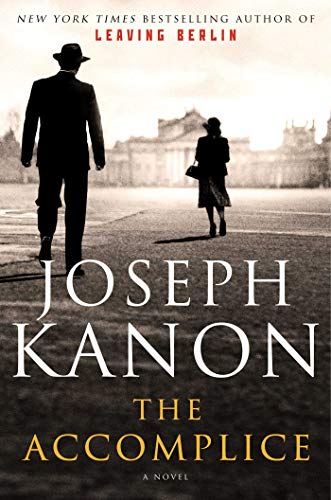
The “master of the genre” (The Washington Post) Joseph Kanon returns with a heart-pounding and intelligent espionage novel about a Nazi war criminal who was supposed to be dead, the rogue CIA agent on his trail, and the beautiful woman connected to them both.
Seventeen years after the fall of the Third Reich, Max Weill has never forgotten the atrocities he saw as a prisoner at Auschwitz—nor the face of Dr. Otto Schramm, a camp doctor who worked with Mengele on appalling experiments and who sent Max’s family to the gas chambers. As the war came to a close, Schramm was one of the many high-ranking former-Nazi officers who managed to escape Germany for new lives in South America, where leaders like Argentina’s Juan Perón gave them safe harbor and new identities. With his life nearing its end, Max asks his nephew Aaron Wiley—an American CIA desk analyst—to complete the task Max never could: to track down Otto in Argentina, capture him, and bring him back to Germany to stand trial.
Unable to deny Max, Aaron travels to Buenos Aires and discovers a city where Nazis thrive in plain sight, mingling with Argentine high society. He ingratiates himself with Otto’s alluring but wounded daughter, whom he’s convinced is hiding her father. Enlisting the help of a German newspaper reporter, an Israeli agent, and the obliging CIA station chief in Buenos Aires, he hunts for Otto—a complicated monster, unexpectedly human but still capable of murder if cornered. Unable to distinguish allies from enemies, Aaron will ultimately have to discover not only Otto, but the boundaries of his own personal morality, how far he is prepared to go to render justice.
“With his remarkable emotional precision and mastery of tone” (Kirkus Reviews, starred review), Joseph Kanon crafts another compelling and unputdownable thriller that will keep you breathlessly turning the pages.
Die Inhaltsangabe kann sich auf eine andere Ausgabe dieses Titels beziehen.
Über die Autorin bzw. den Autor
Joseph Kanon is the Edgar Award–winning author of The Accomplice, Defectors, Leaving Berlin, Istanbul Passage, Los Alamos, The Prodigal Spy, Alibi, Stardust, and The Good German, which was made into a major motion picture starring George Clooney and Cate Blanchett. He lives in New York City.
Auszug. © Genehmigter Nachdruck. Alle Rechte vorbehalten.
Chapter 1
1
HAMBURG, 1962
IT WAS LATE IN the season to put tables outside, but the unexpected sun had drawn crowds to the Alsterpavillon, all asking for the terrace, so that by noon the entire promenade had become one long outdoor café, people sipping coffee, wrapped in coats and mufflers against the wind coming off the lake, their faces tilted up to the sun.
“You look like a turtle,” Aaron said, glancing at his uncle sitting with his chin down in his coat, his great nose sticking out like a beak.
“Idiots, they think it’s summer.” He drew on his cigarette, a small shrug. “I’m cold all the time now.”
“Go to Israel.”
“Israel. What’s in Israel?”
“Sun at least.”
“And then you’re even farther away. Another ocean. So maybe that’s the idea.”
Aaron moved his hand, brushing this away. “Then come back with me.”
“To America. To sit around and argue with you.” He shook his head. “My work is here.”
Aaron looked up at him. “You can’t keep doing this. Your heart—”
“So then it’s something else. How can I stop? We got Pidulski. All these years and we got him. What is that worth? A man who kicked children to death. In the head, like a football.”
“Max—”
“So what is that worth?” he said, his voice rising. “To get him. On trial, so everybody sees. A little heart trouble? OK. I’ll take it.”
Aaron sipped his coffee, a second of calm. “Max, we need to talk about this. The doctor said—”
“Give up smoking,” Max said. “I’m not going to do that either.” Taking a noisy puff, illustrating.
“I have to go back.”
“You just got here.”
“Max.”
“You’re a big shot. You can take the time off.”
“Compassionate leave. It’s usually a few days.”
“What, to bury somebody? So hang around, it won’t be long.”
“You told me you were dying. You’re not dying.”
Max shrugged again. “Anyway, it’s cheaper for you to come here than talk on the phone. Calls to America. Who can afford that?” He paused. “I wanted to talk to you.”
“I know. I’m here, aren’t I?”
“But you don’t talk back. Days now and you don’t answer. Who else is there? You’re a son to me.” He looked toward the bright lake, taking a breath, a theatrical gesture, overcome.
“Max, we’ve been over this.”
“But you haven’t agreed yet.”
Aaron smiled and Max, catching it, smiled back.
“You want me to retire. Whatever that is. This is something you don’t walk away from, what we do. It’s not possible. For you either. We’re the only ones left in the family. Everyone else— Think about that. Everyone else. You don’t turn your back on that.”
“Twenty years.”
“And still guilty. Still.”
“It’s different for me. I never knew them.”
“You knew your mother. You remember her.”
“Of course.”
But what exactly? The way she smelled when she leaned down to kiss him good night, the day’s last trace of perfume. Sitting in her lap on the train. The voice, wrapping around him like a blanket. But her face was a face in photographs now, no longer someone he knew.
Max was shaking his head. “She waited too long. Herschel was right—get out now. And she says, ‘You go, I’ll come after.’ You know she wanted to keep you here with her? So think, if Herschel had agreed. You would have been killed too, like everybody else. And you think it’s not personal with you?”
“Why did she stay?” Aaron said quietly, as if it were a casual interest, the question he’d been asking all his life.
“She was helping people here. You know this. Herschel said, ‘Save yourself. Think of the child,’?” he said, nodding to Aaron. “But he’ll be safe with you, she says. I can’t leave now—” He stopped, the story still painful. “She thought she had more time. We all thought that. Except Herschel. The smart one. So you can thank God he didn’t wait. You’d be a statistic. A number. Like Minna.” He looked over. “She was tall, like you. That’s where you get it. And the hair.” He touched his own, a few wisps. “Not from our side.” He took a breath. “Did he talk about her? Herschel?”
“When the letters came.” The ones that meant she hadn’t abandoned them, however it felt. “She was always on her way. Soon. Any day. And then they stopped.” He looked up, answering the question. “He didn’t talk about her after that. He didn’t want to talk about—what happened. He said people didn’t want to hear about that.”
“People there. And by this time he’s Wiley. Weill isn’t good enough. More American than the Americans. As if it would make any difference—that they wouldn’t know what he was.”
“He blamed himself. Leaving her behind.”
“Ach,” Max said, a sound of dismissal. “And what good did that do?” He shook his head. “She didn’t die because she stayed. She died because they killed her. Don’t forget that. That’s what this is all about. They killed her. Everybody. That’s who we do this for. Your family.”
“Max, I never knew them.”
“Listen to them now, then. You can hear them if you listen.” He moved his hand, taking in the crowd, as if all the Weills, all the dead, were here in the crowd on the Binnenalster. “I hear them all the time. You don’t retire from that.” He moved his hand toward Aaron’s. “I’ll teach you what you don’t know. The archives. It’s all about the documents. Not all that cloak-and-dagger stuff Wiesenthal talks about. Liar. You listen to him, he found Eichmann himself. Shoved him in the car. Oh, the Mossad was there? Who would know, with Wiesenthal playing Superman?”
Aaron looked over. “Max.” The old rivalry, Max and Wiesenthal even sharing a Time cover. The Nazi Hunters. As if the feud were a Macy’s and Gimbel’s rivalry, with discount sales.
“All right. So it helps him raise money. Eichmann. Who cares about Pidulski? Except the children he murdered. Maybe I should do it too. Say I’m this close to Mengele,” he said, pinching his fingers. “To Schramm. You could always raise a few donations if you said you had a lead on him. Which I did once.” His voice went lower, private. “Imagine, to get him. After everything. But he got away. And then he cheated me. Dead. But no trial. No—” He caught himself drifting. “So now it’s Mengele if you want to raise money. Wiesenthal says he’s in Paraguay. No, Brazil. No, somewhere else. So here’s a check. Go find him.” He stopped. “We all do it. How else to keep going? Think how useful you would be. An American. The money’s in America. And maybe a little guilt...
„Über diesen Titel“ kann sich auf eine andere Ausgabe dieses Titels beziehen.
Suchergebnisse für The Accomplice: A Novel

Beispielbild für diese ISBN
The Accomplice
Anbieter: World of Books (was SecondSale), Montgomery, IL, USA
Verkäuferbewertung 5 von 5 Sternen

Zustand: Good. Good condition ex-library book with usual library markings and stickers. Artikel-Nr. 00110213001
Gebraucht kaufen
EUR 3,85
Versand gratis
Versand innerhalb von USA
Versand innerhalb von USA
Anzahl: 1 verfügbar
Beispielbild für diese ISBN
The Accomplice
Anbieter: World of Books (was SecondSale), Montgomery, IL, USA
Verkäuferbewertung 5 von 5 Sternen
Zustand: Acceptable. Item in acceptable condition! Textbooks may not include supplemental items i.e. CDs, access codes etc. Artikel-Nr. 00097546609
Gebraucht kaufen
EUR 4,57
Versand gratis
Versand innerhalb von USA
Versand innerhalb von USA
Anzahl: 2 verfügbar
Beispielbild für diese ISBN
The Accomplice
Anbieter: World of Books (was SecondSale), Montgomery, IL, USA
Verkäuferbewertung 5 von 5 Sternen
Zustand: Good. Item in good condition. Textbooks may not include supplemental items i.e. CDs, access codes etc. Artikel-Nr. 00109070495
Gebraucht kaufen
EUR 4,57
Versand gratis
Versand innerhalb von USA
Versand innerhalb von USA
Anzahl: 1 verfügbar
Foto des Verkäufers
The Accomplice: A Novel
Anbieter: Dream Books Co., Denver, CO, USA
Verkäuferbewertung 5 von 5 Sternen
Zustand: good. Gently used with minimal wear on the corners and cover. A few pages may contain light highlighting or writing, but the text remains fully legible. Dust jacket may be missing, and supplemental materials like CDs or codes may not be included. May be ex-library with library markings. Ships promptly! Artikel-Nr. DBV.1501121421.G
Gebraucht kaufen
EUR 4,70
Versand gratis
Versand innerhalb von USA
Versand innerhalb von USA
Anzahl: 1 verfügbar
Beispielbild für diese ISBN
The Accomplice: A Novel
Verlag:
Atria Books (edition First Edition), 2019
ISBN 10: 1501121421
ISBN 13: 9781501121425
Gebraucht
Hardcover
Erstausgabe
Anbieter: BooksRun, Philadelphia, PA, USA
Verkäuferbewertung 5 von 5 Sternen
Hardcover. Zustand: Very Good. First Edition. With dust jacket. It's a well-cared-for item that has seen limited use. The item may show minor signs of wear. All the text is legible, with all pages included. It may have slight markings and/or highlighting. Artikel-Nr. 1501121421-11-22-29
Gebraucht kaufen
EUR 5,31
Versand gratis
Versand innerhalb von USA
Versand innerhalb von USA
Anzahl: 1 verfügbar
Beispielbild für diese ISBN
The Accomplice: A Novel
Verlag:
Atria Books (edition First Edition), 2019
ISBN 10: 1501121421
ISBN 13: 9781501121425
Gebraucht
Hardcover
Erstausgabe
Anbieter: BooksRun, Philadelphia, PA, USA
Verkäuferbewertung 5 von 5 Sternen
Hardcover. Zustand: Very Good. First Edition. With dust jacket. It's a well-cared-for item that has seen limited use. The item may show minor signs of wear. All the text is legible, with all pages included. It may have slight markings and/or highlighting. Artikel-Nr. 1501121421-8-1-29
Gebraucht kaufen
EUR 5,81
Versand gratis
Versand innerhalb von USA
Versand innerhalb von USA
Anzahl: 1 verfügbar
Beispielbild für diese ISBN
The Accomplice: A Novel
Anbieter: Wonder Book, Frederick, MD, USA
Verkäuferbewertung 5 von 5 Sternen
Zustand: Very Good. Very Good condition. Very Good dust jacket. A copy that may have a few cosmetic defects. May also contain light spine creasing or a few markings such as an owner's name, short gifter's inscription or light stamp. Artikel-Nr. V16B-06194
Gebraucht kaufen
EUR 6,27
Versand gratis
Versand innerhalb von USA
Versand innerhalb von USA
Anzahl: 2 verfügbar
Beispielbild für diese ISBN
The Accomplice: A Novel
Anbieter: Wonder Book, Frederick, MD, USA
Verkäuferbewertung 5 von 5 Sternen
Zustand: Good. Good condition. Very Good dust jacket. A copy that has been read but remains intact. May contain markings such as bookplates, stamps, limited notes and highlighting, or a few light stains. Artikel-Nr. D14A-04192
Gebraucht kaufen
EUR 6,27
Versand gratis
Versand innerhalb von USA
Versand innerhalb von USA
Anzahl: 1 verfügbar
Beispielbild für diese ISBN
The Accomplice : A Novel
Anbieter: Better World Books, Mishawaka, IN, USA
Verkäuferbewertung 5 von 5 Sternen
Zustand: Good. Former library copy. Pages intact with minimal writing/highlighting. The binding may be loose and creased. Dust jackets/supplements are not included. Includes library markings. Stock photo provided. Product includes identifying sticker. Better World Books: Buy Books. Do Good. Artikel-Nr. 18110530-6
Gebraucht kaufen
EUR 6,59
Versand gratis
Versand innerhalb von USA
Versand innerhalb von USA
Anzahl: 2 verfügbar
Beispielbild für diese ISBN
The Accomplice : A Novel
Anbieter: Better World Books, Mishawaka, IN, USA
Verkäuferbewertung 5 von 5 Sternen
Zustand: Very Good. Former library copy. Pages intact with possible writing/highlighting. Binding strong with minor wear. Dust jackets/supplements may not be included. Includes library markings. Stock photo provided. Product includes identifying sticker. Better World Books: Buy Books. Do Good. Artikel-Nr. 18659072-6
Gebraucht kaufen
EUR 6,59
Versand gratis
Versand innerhalb von USA
Versand innerhalb von USA
Anzahl: 2 verfügbar