
Verwandte Artikel zu Political Gridlock: It's Time for a Reboot!
Inhaltsangabe
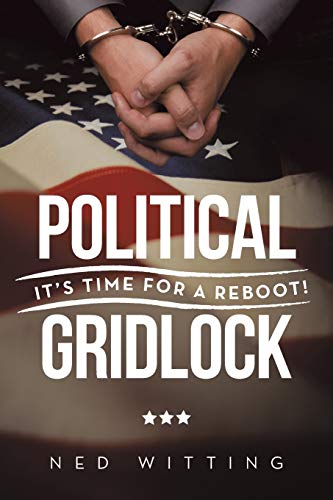
Ned Witting is a political junkie with a businessman's perspective. In Political Gridlock, he looks at Congress through the eyes of an efficiency expert and considers why it isn't working the way it should. He doesn't concern himself with whether it produces tax reductions or affordable health care; he investigates why it produces so little of either. In Political Gridlock, he explains how our political process has invisibly disenfranchised moderates in favor of MoveOn.org liberals on the left and Tea Party conservatives on the right. The book examines factors that are unrecognized and ignored by political pundits but that empower political extremes, allowing them to block constructive legislation. It is also the how-to manual on how to reboot our government. It evaluates the obstacles to effective governance and suggests solutions for each. In plain language, Political Gridlock outlines the steps necessary to reclaim Congress and get government working again. It is a book Americans have been waiting for.
Die Inhaltsangabe kann sich auf eine andere Ausgabe dieses Titels beziehen.
Auszug. © Genehmigter Nachdruck. Alle Rechte vorbehalten.
Political Gridlock
It's Time for a Reboot!
By Ned WittingAuthorHouse
Copyright © 2014 Ned Witting
All rights reserved.
ISBN: 978-1-4918-6979-6All rights reserved.
Contents
Introduction: When Did the Patients Take Over the Asylum?, 1,
Part I: Factors That Contribute to Polarization, 9,
Election Apparatus: Who Gets Elected and Why, 11,
The Two-Primary Effect: The Root of Extremism, 30,
The District-Design Effect: Is Your Vote a Placebo?, 45,
The Motivation Effect: An Ounce of Motivation Is Worth a Pound of Everything Else, 53,
Party Leverage: The Power Multiplier, 64,
The Road Ahead: A Parable, 77,
Legislative Apparatus: What Determines What Gets Done, 94,
Media Influence: Truth, Lies, and Propaganda?, 102,
Political Spin, 111,
Part II: Strategies to Reduce Polarization and Gridlock, 117,
Existing Efforts to Reduce Gridlock, 119,
Ways to Bolster Bipartisanship: Mitigation Strategies, 125,
Two-Primary Effect Strategies, 126,
District-Design Effect Strategies, 129,
The Motivation Effect Strategies, 138,
Party Leverage Strategies, 145,
Political Spin Strategies, 151,
Media Influence Strategies, 156,
Summary, 158,
Part III: The Moderate Manifesto, 161,
Overview, 163,
The Plan of Action, 165,
Phase 1: Individual Initiatives, 167,
Phase 2: Legislative Initiatives, 181,
Phase 3: Other Initiatives, 184,
We Can Do This!, 186,
Summary and Conclusions, 189,
Glossary, 191,
Appendix A, 195,
Appendix B, 202,
Appendix C, 210,
Appendix D, 216,
Appendix E, 219,
Appendix F, 233,
Endnotes, 237,
CHAPTER 1
Election Apparatus: Who Gets Elected and Why
Many Americans assume that the most popular candidate (the one who earns the most votes) wins the election. However, as we saw in the 2000 presidential election, this is not the case. Al Gore won five hundred thousand more votes than George Bush and still lost the election. This resulted because presidents are elected based on the number of electoral votes they receive rather than the popular vote of the people.
The Electoral College is part of what I will call the election apparatus, which includes all the rules around which an election is organized. It has a profound but, in many ways, unrecognized influence on election outcomes. Among other things, our existing election apparatus does the following:
1. Makes it virtually impossible for moderate candidates to win elections; eliminates moderate candidates in favor of more partisan ones and does so in a manner that is invisible to voters and pundits alike
2. Disenfranchises some voters and prevents their votes from ever affecting election outcomes
3. Creates congressional districts where the outcome of a general election is a forgone conclusion
4. Reduces the responsiveness of elected representatives to their constituents
5. Makes it possible for some groups to exert influence out of proportion to their numbers
6. Gives political organizations an inflated sense of their own popularity, thereby causing them to advance radical political agendas
In order to understand just how important the election apparatus really is, let's look at a simple example. In this example, a small town of fourteen registered voters will elect a new mayor from among four candidates. As you will discover, the outcome of the election depends entirely on how the votes are counted.
Rocky Top
The town of Rocky Top has fourteen registered voters. The last mayor has retired, and it is time to elect the new mayor. There are four candidates for the post. Each of the voters has been interviewed by Rachel Townsend, a reporter for the Rocky Top Herald, in an effort to predict the outcome of the election. She has recorded the preferences of each of the fourteen voters in exhibit A.1, ranking their choices from one, the preferred candidate, to four, the most disliked candidate. With this information, she figures it will be easy to identify the winner. She starts out by tabulating all of the first-place votes. Her results are shown at the bottom.
Abe Able won the most votes, so she concludes he will be the winner. Then it occurs to her that he has not won a majority. She decides to do some more analysis, but for now she records her preliminary result.
Winner popular vote: Abe Able
Next, she decides to analyze the results if a majority is required. She remembers that there are often primaries that select the top two candidates, so she decides to evaluate the results if the top two candidates, Abe Able (five votes) and Dan Darwin (four votes), have a runoff. She goes back to her chart and shades it in as shown in exhibit A.2. The dark boxes represent candidates who have been eliminated. The lighter boxes represent each voter's top preference between the two remaining candidates. Rachel now counts the votes for each candidate and again records the results at the bottom.
To her surprise, Rachel finds that Dan Darwin will outperform Abe Able if the race becomes a two-person runoff. She then adds another notation to her analysis.
Winner of top-two runoff: Dan Darwin
This result gets her thinking, and she wonders what would be the result if only the losing candidate were excluded from each round of voting. She goes back to her chart and repeats the process as though only the candidate with the lowest number of votes (Call) were excluded after the first round of balloting. The new results are shown in exhibit A.3.
Based on this evaluation, she discovers that Abe Able and Bob Barry are tied after the second round and that Dan Darwin has been eliminated. She then shades D. Darwin in dark gray in her chart and evaluates the result of a runoff between Able and Barry, the two remaining candidates as shown in exhibit A.4.
Her results now show that Bob Barry would be the victor, so she makes the following entry:
Winner when only the losing candidate is excluded: Bob Barry
She is amazed that she has three diff erent winners depending on how the votes are tabulated. To figure out who the real winner is, she decides to do a head-to-head runoff between each pair of candidates. She decides to start with Bob Barry and Cheryl Call, the two weakest candidates in the first round. Her results are shown in exhibit A.5.
She is amazed to find that Call has won a convincing victory over Barry.
Next, she decides to run Call against Darwin. She uses the same shading scheme as she used with Barry. The results are shown in exhibit A.6.
She is shocked to find that Call has won again, but by a slightly narrower margin than with Bob Barry. By this time, it is time for lunch, but Rachel can't wait to see the results of the runoff between Call and Able. She quickly repeats her shading scheme for this additional contest. Her results are shown in exhibit A.7.
Cheryl has won again! Rachel can hardly believe her eyes. She just shakes her head and makes one last notation. Now her summary notations appear as shown below:
Winner popular vote: Abe Able
Winner top-two runoff: Dan Darwin
Winner when only the losing candidate is excluded: Bob Barry
Most popular head-to-head: Cheryl Call
After all her work, Rachel still can't figure out who the winner should be. She has definitely learned one thing, however: the election apparatus determines election outcomes!
Now let's consider which election apparatus is the best. For...
„Über diesen Titel“ kann sich auf eine andere Ausgabe dieses Titels beziehen.
Suchergebnisse für Political Gridlock: It's Time for a Reboot!

Beispielbild für diese ISBN
Political Gridlock: It's Time for a Reboot!
Anbieter: Ria Christie Collections, Uxbridge, Vereinigtes Königreich
Verkäuferbewertung 5 von 5 Sternen

Zustand: New. In English. Artikel-Nr. ria9781491869796_new
Neu kaufen
EUR 24,50
EUR 11,17 Versand
Versand von Vereinigtes Königreich nach USA
Versand von Vereinigtes Königreich nach USA
Anzahl: Mehr als 20 verfügbar