
Verwandte Artikel zu The Half-way Pacifist: Thomas Jefferson's View...
Inhaltsangabe
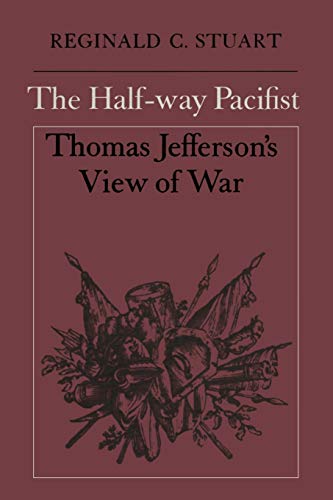
By the middle of the eighteenth century war had come to be regarded as a limited instument of state policy and one that should be controlled in the interests of social justice and human progress. Thomas Jefferson's attitude towards war emerged from this Enlightenment tradition and evolved in response to the issues he faced during his career. Drawing on comments scattered through his letters and other writings and an interpretation of the policies he actually pursued, this book traces the development of Jefferson's view of war, from the time of his participation in the Continental Congress, through his years as negotiator and diplomat in Paris following the peace with Britain and independence, his terms as secretary of state, vice-president, and president during an era of European war and near war that threatened United States interests, and his years of retirement when the United States engaged in war and promulgated the Monroe Doctrine.
While Jefferson displayed an overwhelming desire to avoid war, he did not suppose that it could be eliminated. He considered it a part of nature, occasionally both just and necessary. He emphasized defence and deterrance, but he did not hesitate to use or threaten war to preserve national integrity and promote national interests during his presidency. Politically and philosophically, he was a pragmatist rather than a pacifist, ready to engage in limited war for limited objectives and as a last resort, but opposed to war as a crusade.
Throughout, Stuart's analysis of Jefferson's thinking on matters military shows a sensitive awareness of the tensions in western thought which arose in the transition from the ideas of the Enlightenment to those of the modern era.
Die Inhaltsangabe kann sich auf eine andere Ausgabe dieses Titels beziehen.
Über die Autorin bzw. den Autor
REGINALD C. STUART is a member of the Department of History at the University of Prince Edward Island.
„Über diesen Titel“ kann sich auf eine andere Ausgabe dieses Titels beziehen.
Suchergebnisse für The Half-way Pacifist: Thomas Jefferson's View...

Beispielbild für diese ISBN
The Half-way Pacifist
Anbieter: PBShop.store UK, Fairford, GLOS, Vereinigtes Königreich
Verkäuferbewertung 5 von 5 Sternen

PAP. Zustand: New. New Book. Shipped from UK. Established seller since 2000. Artikel-Nr. FW-9781487573416
Neu kaufen
EUR 19,58
EUR 3,93 Versand
Versand von Vereinigtes Königreich nach USA
Versand von Vereinigtes Königreich nach USA
Anzahl: 15 verfügbar
Beispielbild für diese ISBN
The Half-way Pacifist: Thomas Jefferson's View of War (Heritage)
Anbieter: Kennys Bookstore, Olney, MD, USA
Verkäuferbewertung 5 von 5 Sternen
Zustand: New. 1978. paperback. . . . . . Books ship from the US and Ireland. Artikel-Nr. V9781487573416
Neu kaufen
EUR 28,19
EUR 9,37 Versand
Versand innerhalb von USA
Versand innerhalb von USA
Anzahl: Mehr als 20 verfügbar
Beispielbild für diese ISBN
The Half-way Pacifist: Thomas Jefferson's View of War (Heritage)
Anbieter: Ria Christie Collections, Uxbridge, Vereinigtes Königreich
Verkäuferbewertung 5 von 5 Sternen
Zustand: New. In English. Artikel-Nr. ria9781487573416_new
Neu kaufen
EUR 30,77
EUR 11,19 Versand
Versand von Vereinigtes Königreich nach USA
Versand von Vereinigtes Königreich nach USA
Anzahl: Mehr als 20 verfügbar
Foto des Verkäufers
The Half-way Pacifist: Thomas Jefferson\ s View of War
Anbieter: moluna, Greven, Deutschland
Verkäuferbewertung 5 von 5 Sternen
Zustand: New. Über den AutorREGINALD C. STUART is a member of the Department of History at the University of Prince Edward Island.KlappentextStuart s analysis of Jefferson s thinking on matters military s. Artikel-Nr. 596072658
Neu kaufen
EUR 32,56
EUR 48,99 Versand
Versand von Deutschland nach USA
Versand von Deutschland nach USA
Anzahl: Mehr als 20 verfügbar
Foto des Verkäufers
The Half-Way Pacifist | Thomas Jefferson's View of War
Verlag:
University of Toronto Press, 1978
ISBN 10: 1487573413
ISBN 13: 9781487573416
Neu
Taschenbuch
Anbieter: preigu, Osnabrück, Deutschland
Verkäuferbewertung 5 von 5 Sternen
Taschenbuch. Zustand: Neu. The Half-Way Pacifist | Thomas Jefferson's View of War | Reginald C Stuart | Taschenbuch | Einband - flex.(Paperback) | Englisch | 1978 | University of Toronto Press | EAN 9781487573416 | Verantwortliche Person für die EU: Mare Nostrum Group B.V., Doelen 72, 4831 GR BREDA, NIEDERLANDE, gpsr[at]mare-nostrum[dot]co[dot]uk | Anbieter: preigu. Artikel-Nr. 117314944
Neu kaufen
EUR 19,70
EUR 70,00 Versand
Versand von Deutschland nach USA
Versand von Deutschland nach USA
Anzahl: 5 verfügbar