
Inhaltsangabe
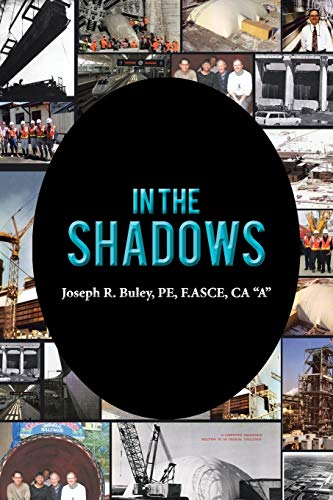
This is the memoir of a professional civil engineer practicing within two government entities and twelve construction companies during his career. Joe describes his civil engineer practice working for family-owned construction companies, a major corporation, and the government. Joe traces his practice from a design engineer at Brooks AFB, to a construction engineer at a major mining management company, to construction management positions at several family owned construction companies, to an estimation consultancy at a major government transportation entity. Joe has built successful union operations and a successful merit shop company for respected union contractors. With this experience, he describes the details for building merit shop divisions and the management of the ensuing double breasted operations. Joe describes his consultancy during a troubled construction period of a major transportation agency. Joe places you in his office as he grows a regional heavy, industrial rigging company into a highly respected national industrial constructor. The reader relives with Joe, the execution of the double breasted business model for two respected union contractors. Joe will impart to the reader the excitement of starting a merit shop company and doubling its growth each year. Joe will let the reader relive California labor history as he or she participates in the initial development of the ABC, Southern California parallel craft training programs. Joe will take the reader inside the establishment and growth of a Los Angeles industrial division for a major ENR fifty merit shop constructor, as itrelentlessly drive to become a billion dollar industrial constructor. Joe's more than ten years as a construction claims consultant is described as he builds a professional estimation department within a state transportation entity recovering from federal sanctions and experiencing chaotic restructuring. Finally, Joe will des
Die Inhaltsangabe kann sich auf eine andere Ausgabe dieses Titels beziehen.
Auszug. © Genehmigter Nachdruck. Alle Rechte vorbehalten.
IN THE SHADOWS
The Memoir of a Professional Civil Engineer
By Joseph R. BuleyAuthorHouse
Copyright © 2013 Joseph R. Buley, PE, F.ASCE, CA "A"
All rights reserved.
ISBN: 978-1-4817-0834-0All rights reserved.
Contents
| Foreword................................................................... | ix |
| Part I The Early Years.................................................... | |
| Chapter 1 The Road Not Taken............................................... | 3 |
| Chapter 2 Transition....................................................... | 13 |
| Chapter 3 The Stakes Are High.............................................. | 33 |
| Chapter 4 The Golden Years................................................. | 45 |
| Chapter 5 Saving a Construction Company.................................... | 61 |
| Chapter 6 Graceful Exit.................................................... | 69 |
| Part II The Texas Three-Step.............................................. | |
| Chapter 7 Starting Over.................................................... | 99 |
| Chapter 8 Texas Culture.................................................... | 115 |
| Chapter 9 The Team Reunites................................................ | 123 |
| Chapter 10 Centrig Industries, Inc., Central Rigging & Contracting Corp., Inc., and Vanderbilt Industrial Contracting Corp vs. Joseph R. Buley....... | 139 |
| Part III California, Here We Come......................................... | |
| Chapter 11 Bragg Crane and Rigging......................................... | 155 |
| Chapter 12 Starting Summit................................................. | 173 |
| Chapter 13 Summit Construction & Maintenance Co., Inc (Summit)—1987........ | 185 |
| Chapter 14 Summit—The Growth Years (1988-1990)............................. | 199 |
| Chapter 15 The Industrial Company (TIC)—Culture and Operations............. | 229 |
| Chapter 16 How to Structure the Los Angeles Basin.......................... | 253 |
| Chapter 17 Chaotic Growth Year and Abrupt Decline.......................... | 265 |
| Chapter 18 Irwin Consultancy............................................... | 305 |
| Part IV Government Service................................................ | |
| Chapter 19 Changing Career Focus........................................... | 333 |
| Chapter 20 Navigating Troubled Waters...................................... | 359 |
| Chapter 21 The Estimation Team............................................. | 389 |
| Chapter 22 Engineers Don't Die; They Just Fade Away........................ | 421 |
| Epilogue................................................................... | 452 |
| Where Are They Now?........................................................ | 455 |
| Appendix................................................................... | 459 |
| Project Work Product (1966 to 2010)........................................ | 459 |
Excerpt
CHAPTER 1
The Road Not Taken
I originate from the veteran generation third classification,part of a post-World War II cohort, born in the middle of theera, 1939. The first classification is Depression Era, born 1912to 1921. The second classification is World War II, born 1922 to1927. Society defined my generation as having the best work andeducation opportunities, because of the postwar economic boom.We also tend to hold a deep regard for security, comfort, andfamiliar activities and environments.
In 1963, the third group of NASA astronauts and supportspecialists was made up of five young men from this generation.Dr. Joe Allen, age twenty-six, held a master's in physics from Yaleand was a guest researcher at Brookhaven National Laboratory.Major Ed White, age thirty-three, held a master's in aeronauticalengineering from Michigan and was an experimental test pilot.Captain Richard Gordon, age thirty-four, had a bachelor's inchemistry from the University of Washington and was a Navytest pilot. Colonel Buzz Aldrin, age thirty-three, held a doctoratein astronautics from MIT and was an Air Force fighter pilot. I, atthe age of twenty-four, had a master's in civil engineering fromStanford and was first lieutenant in base engineering at Brooks AirForce Base, San Antonio, Texas. I supported the NASA astronautgroup.
On January 20, 1961, President John F. Kennedy, in hisinaugural address, proclaimed the now-immortal words, "Andso, my fellow Americans: ask not what your country can do foryou—ask what you can do for your country." On May 25, 1961, ourpresident further defined our national strategic goal: "I believe thatthis nation should commit itself to achieving the goal, before thisdecade is out, of landing a man on the moon and returning himsafely to earth."
In June 1961, I graduated from the University of Vermont'scivil engineering program and was accepted into the graduateengineering program at Stanford, a second lieutenant with aone-year deferment from active duty. By 1962, I had completedmy master's degree and attained an automatic promotion to firstlieutenant. In July of that year, I reported for duty at Brooks AirForce Base (BAFB) in San Antonio, Texas.
I soon learned that BAFB was one of the first beneficiariesof President Kennedy's goal to put a man on the moon beforethe decade ended. Although the base, founded in 1917, was oneof the oldest facilities in the United States Air Force, it was nowthe center for Advanced Medical Research (AMD). The AMD'smission was to understand the human condition at the extremeborders of the earth's atmosphere and in interplanetary space.It represented the newest division of the Air Force SystemsCommand. Base engineering managed the design, engineering,and construction of six new buildings and infrastructure upgradesthat were the signature accomplishment, to date, of the fledglingspace program. The six buildings would support research for theProjects Gemini and Apollo. They included an extension of theheating and cooling plant and five buildings aptly named theProfessional Building, the Bioastronautics-Biodynamics Laboratory,the Bionucleonics Laboratory, the Aeromedical Library, and theVivarium Support Facility.
In time, I would work on upgrades to the centrifuge, agondola hung from a twenty-foot arm that spun a prospectiveastronaut at extremely high speeds, duplicating the bodily stressesexperienced at entrance to and exit from space. I would also workon the space cabin, a pressurized vessel allowing personnel totrain in simulated altitudes of up to 30,000 feet. The atmospherewithin the space cabin varied from ordinary air to pure oxygen.In this environment, the forerunner to the modern space suit wasdeveloped. The Vivarium Support Facility was a state-of-the-arthospital that cared for the well-being of research animals,including horses, sheep, goats, and monkeys. The Bionucleonicslaboratory housed the master slave, remote handling device—arobotic arm that allowed manipulation of experiments fromoutside a room, the forerunner to today's microsurgerytechnology. The...
„Über diesen Titel“ kann sich auf eine andere Ausgabe dieses Titels beziehen.
Weitere beliebte Ausgaben desselben Titels

Suchergebnisse für In the Shadows

Beispielbild für diese ISBN
In the Shadows
Anbieter: Ria Christie Collections, Uxbridge, Vereinigtes Königreich
Verkäuferbewertung 5 von 5 Sternen

Zustand: New. In. Artikel-Nr. ria9781481708340_new
Neu kaufen
EUR 26,95
EUR 13,83 Versand
Versand von Vereinigtes Königreich nach USA
Versand von Vereinigtes Königreich nach USA
Anzahl: Mehr als 20 verfügbar
Foto des Verkäufers
In the Shadows
Anbieter: moluna, Greven, Deutschland
Verkäuferbewertung 4 von 5 Sternen

Zustand: New. KlappentextThis is the memoir of a professional civil engineer practicing within two government entities and twelve construction companies during his career. Joe describes his civil engineer practice working for family-owned construction. Artikel-Nr. 447908070
Neu kaufen
EUR 30,92
EUR 48,99 Versand
Versand von Deutschland nach USA
Versand von Deutschland nach USA
Anzahl: Mehr als 20 verfügbar