
Verwandte Artikel zu Freefall
Inhaltsangabe
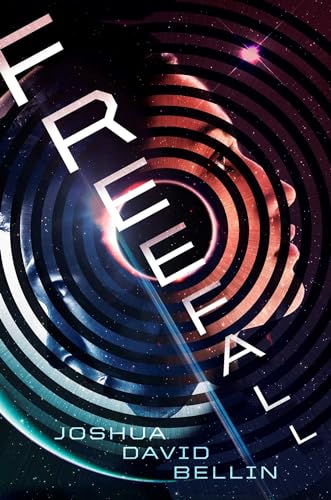
When the 1% and the 99% clash, the fate of the human race hangs on the actions of two teens from very different backgrounds in this thrilling adventure that School Library Journal calls “a strong choice for YA sci-fi shelves.”
In the Upperworld, the privileged 1% are getting ready to abandon a devastated planet Earth. And Cam can’t wait to leave. After sleeping through a 1,000-year journey, he and his friends will have a pristine new planet to colonize. And no more worries about the Lowerworld and its 99% of rejects.
Then Cam sees a banned video feed of protesters in the Lowerworld who also want a chance at a new life. And he sees a girl with golden eyes who seems to be gazing directly at him. A girl he has to find. Sofie.
When Cam finds Sofie, she opens his eyes to the unfairness of their world, and Cam joins her cause for Lowerworld rights. He also falls hard for Sofie. But Sofie has her own battles to fight, and when it’s time to board the spaceships, Cam is alone.
Waking up 1,000 years in the future, Cam discovers that they are far off-course, trapped on an unknown and hostile planet. Who has sabotaged their ship? And does it have anything to do with Sofie, and the choices—and the enemies—he made in the past?
Die Inhaltsangabe kann sich auf eine andere Ausgabe dieses Titels beziehen.
Über die Autorin bzw. den Autor
Joshua David Bellin has been writing books since the age of eight (though his first few were admittedly very, very short). He is the author of Freefall, Survival Colony 9, and Scavenger of Souls. When he’s not writing, he spends his time drawing, catching amphibians, and watching monster movies with his kids. A Pittsburgh native, Josh has taught college English, published three nonfiction books (one about monsters!), and taken part in the movement to protect the environment. You can find him online at JoshuaDavidBellin.com.
Auszug. © Genehmigter Nachdruck. Alle Rechte vorbehalten.
Freefall
Otherworld
Earth Year 3151
Night
I wake with her name on my lips.
And the feeling that something’s gone terribly wrong.
But I don’t know what. My mind’s cloudy, my thoughts scattered and unreal. My throat burns. My eyes blink open, but total darkness wraps me. Darkness and dizziness. Closing my eyes doesn’t help with the sensation that everything’s spinning. My heart races, and the first thought that makes sense is that I must have been having a nightmare. But I can’t remember it, not one detail. I can’t even remember going to sleep.
I try to think. The effort doubles my nausea, and I dry heave into the dark. Why can’t I see anything? What’s happened to me? Where am I?
When am I?
The fog rolls back slowly, and it starts to make sense.
I’m in my pod. The place where I was put into deepsleep and then into storage aboard the Upperworld starship, the Executor. Me, and close to a million others. Each of us in our own pod, sleeping through the endless vacancies of space until our ship was pulled by its target star’s gravitational field to its destination, the Earth-analog planet Tau Ceti e. If I’m awake, that must mean we’re here.
But there’s still something wrong. My pounding heart is a sure sign the pod’s given me an adrenaline injection. No gradual slide from slumber to wakefulness, the way it worked back on Earth when they put us into a week of deepsleep to test our response to total physiological hibernation. I’ve been wrenched awake, and that can mean only one thing.
The mission’s failed. The pods have ejected. And I could be a million light-years from where I’m supposed to be.
Golden lights dance around me as the pod’s systems spring to life. The front panel displays my personal information, reminding me, in case of a rocky awakening, who I am:
PASSENGER: NEWELL, C.
DOB: 05022134
CLASSIFICATION AT DEPARTURE: 17 EY
HT: 1.75 m
WT: 68.49 kg
HAIR: brown
EYES: brown
CORPONATION OF ORIGIN: Can-Do Amortization
GENETIC SCREEN: within designated parameters
PSYCHOLOGICAL PROFILE: within designated parameters
It gets dizzying reading all the data, but I turn my attention to the display that shows my vitals: heart, breathing, muscle tone, bone density. According to the numbers, I’ve lost very little in however long I’ve been in deepsleep, which means the pod’s nanotechnology has done its job, continuously monitoring calcium, muscle fiber, organ systems. My vision’s blurry, like looking through goggles, but I can see enough to scan the instrument panel, passing over the silver-and-black JIPOC logo, seeking the time log.
When I find it, I’m both relieved and shocked.
EY 3151.
The exact year we were meant to arrive. Precisely a thousand Earth-years after we left. The math of relativity was always slippery to me, so I won’t try to figure out how long that was for my sleeping body. But so far as Earth is concerned, I’ve survived a voyage that lasted more than twelve human life spans. And that means that if the readout’s accurate, the pods ejected at the end of the mission, when we’d reached our target.
I’m here. I’m where I’m meant to be. But if I’m where I’m meant to be, I can’t understand why I’m alone and locked in the life pod.
I try to sit. There’s not much room to maneuver, and despite the pod’s best efforts to revive me, I’m clumsy and uncoordinated from all the time in deepsleep. But after a few minutes of me struggling like a bug on its back, my muscles respond the way they’re supposed to, enabling me to lift my head and get into a hunched squat. That brings me face-to-face with the readout for my location, and when I see it, I blink and shake my head, thinking my eyes must be betraying me.
The screen’s blank.
Or not exactly blank. There’s a weak blue light emanating from it. But empty. No coordinates. No map. Nothing to tell me whether I’ve reached Tau Ceti e or not.
That could mean a number of things: I’m not where I’m supposed to be. I’m where I’m supposed to be, but the system’s malfunctioning. I’m where I’m supposed to be, but the sensors think I’m not.
Which could mean a number of other things. Deep-space travel’s brand-new—or was when the Executor left. There were no guarantees our destination would end up being what we’d been led to believe. All the data told us Tau Ceti e was sustainable—but then so was Earth, and we saw how well that turned out. So maybe I am here, but the computer’s telling me here doesn’t match what it expected to find.
The dizziness returns as I check the environmental readouts: atmospheric composition and pressure, water, life-forms. They, too, are blank.
I’m faced with a decision. I’m upright, breathing, blinking, moving. All systems go. The emergency release lies within reach. But if I pop the top and I’m not where I’m supposed to be, I’m screwed. Excessive or inadequate pressure. Radiation. Microorganisms. Lots of ways for me to die. And some of them slow and messy.
But the alternative isn’t any prettier. The pod could have kept me alive indefinitely in a suspended state. But now that I’m awake, my body’s clamoring for attention. My stomach cramps from eons of emptiness. My lungs strain to pull oxygen from the enclosed space. Embarrassingly, my bladder feels ready to explode. (Or maybe not so embarrassingly. You try holding it for a thousand years.) If I stay here, within a matter of days or hours I’ll be dead.
My mind is coming clear. It hurts to concentrate, but that’s an unavoidable side effect of not thinking for a millennium. I know what the pods are designed to do. In an emergency scenario, they abandon ship to seek planetary conditions meeting certain minimum requirements for human life. If they don’t find it, they don’t touch down. They wander forever, or at least until they run out of fuel. No one told us how long that was.
So, assuming the pod’s working, it’s set me down somewhere it thinks I can survive. Maybe where it was meant to. The Executor might have experienced trouble in orbit, and the pods responded on cue: eject, search for the right environment, wake the sleeper. Everything might be all right.
Or everything might have failed, theory and/or execution, and the moment I open the door, my head might get sucked off my body.
I take a deep breath. Or try to. The oxygen’s wearing thin. It’s like breathing through a paper mask, the kind people in the Lowerworld used to wear. The kind that got thicker and thicker as the air got less and less breathable.
That settles it. I’ve seen people hacking up lungs. If it’s a choice between that kind of death and the instantaneous, head-sucking kind, I’ll take the latter.
But I’m not a complete idiot. I listened to the JIPOC trainers. The pod carries a self-contained oxygen unit, good for up to twenty-four hours (depending on exertion and anxiety). Another safety feature in case one of the pods gets thrown clear of the ship during touchdown. If I’m where I’m supposed to be, and if the gravitation and air pressure...
„Über diesen Titel“ kann sich auf eine andere Ausgabe dieses Titels beziehen.
Suchergebnisse für Freefall

Beispielbild für diese ISBN
Freefall
Verlag:
Margaret K. McElderry Books, 2017
ISBN 10: 1481491652
ISBN 13: 9781481491655
Gebraucht
Hardcover
Anbieter: World of Books (was SecondSale), Montgomery, IL, USA
Verkäuferbewertung 5 von 5 Sternen

Zustand: Very Good. Item in very good condition! Textbooks may not include supplemental items i.e. CDs, access codes etc. Artikel-Nr. 00092266185
Gebraucht kaufen
EUR 5,14
Versand gratis
Versand innerhalb von USA
Versand innerhalb von USA
Anzahl: 1 verfügbar
Beispielbild für diese ISBN
Freefall
Verlag:
Margaret K. McElderry Books (edition ), 2017
ISBN 10: 1481491652
ISBN 13: 9781481491655
Gebraucht
Hardcover
Anbieter: BooksRun, Philadelphia, PA, USA
Verkäuferbewertung 5 von 5 Sternen
Hardcover. Zustand: Very Good. With dust jacket. It's a well-cared-for item that has seen limited use. The item may show minor signs of wear. All the text is legible, with all pages included. It may have slight markings and/or highlighting. Artikel-Nr. 1481491652-11-1-29
Gebraucht kaufen
EUR 5,39
Versand gratis
Versand innerhalb von USA
Versand innerhalb von USA
Anzahl: 1 verfügbar
Beispielbild für diese ISBN
Freefall
Verlag:
McElderry Books, Margaret K., 2017
ISBN 10: 1481491652
ISBN 13: 9781481491655
Gebraucht
Hardcover
Anbieter: Better World Books, Mishawaka, IN, USA
Verkäuferbewertung 5 von 5 Sternen
Zustand: Good. Pages intact with minimal writing/highlighting. The binding may be loose and creased. Dust jackets/supplements are not included. Stock photo provided. Product includes identifying sticker. Better World Books: Buy Books. Do Good. Artikel-Nr. 14131124-6
Gebraucht kaufen
EUR 7,21
Versand gratis
Versand innerhalb von USA
Versand innerhalb von USA
Anzahl: 1 verfügbar
Beispielbild für diese ISBN
Freefall
Verlag:
McElderry Books, Margaret K., 2017
ISBN 10: 1481491652
ISBN 13: 9781481491655
Gebraucht
Hardcover
Anbieter: Better World Books, Mishawaka, IN, USA
Verkäuferbewertung 5 von 5 Sternen
Zustand: Good. Former library copy. Pages intact with minimal writing/highlighting. The binding may be loose and creased. Dust jackets/supplements are not included. Includes library markings. Stock photo provided. Product includes identifying sticker. Better World Books: Buy Books. Do Good. Artikel-Nr. 39309443-75
Gebraucht kaufen
EUR 7,21
Versand gratis
Versand innerhalb von USA
Versand innerhalb von USA
Anzahl: 1 verfügbar
Beispielbild für diese ISBN
Freefall
Verlag:
Margaret K. McElderry Books, 2017
ISBN 10: 1481491652
ISBN 13: 9781481491655
Gebraucht
Hardcover
Anbieter: ThriftBooks-Atlanta, AUSTELL, GA, USA
Verkäuferbewertung 5 von 5 Sternen
Hardcover. Zustand: Very Good. No Jacket. May have limited writing in cover pages. Pages are unmarked. ~ ThriftBooks: Read More, Spend Less. Artikel-Nr. G1481491652I4N00
Gebraucht kaufen
EUR 7,39
Versand gratis
Versand innerhalb von USA
Versand innerhalb von USA
Anzahl: 1 verfügbar
Beispielbild für diese ISBN
Freefall
Anbieter: Revaluation Books, Exeter, Vereinigtes Königreich
Verkäuferbewertung 5 von 5 Sternen
Hardcover. Zustand: Brand New. 320 pages. 9.00x6.25x1.25 inches. In Stock. Artikel-Nr. 1481491652
Neu kaufen
EUR 32,88
EUR 11,81 Versand
Versand von Vereinigtes Königreich nach USA
Versand von Vereinigtes Königreich nach USA
Anzahl: 1 verfügbar