
Verwandte Artikel zu The Remedy (Volume 3) (Program, Band 3)
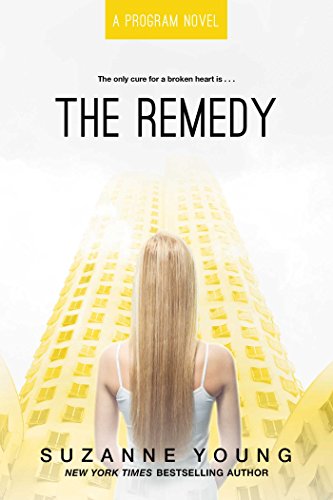
Inhaltsangabe
Can one girl take on so many identities without losing her own? Find out in this riveting companion to The Program and the New York Times bestselling The Treatment.
In a world before The Program…
Quinlan McKee is a closer. Since the age of seven, Quinn has held the responsibility of providing closure to grieving families with a special skill—she can “become” anyone.
Recommended by grief counselors, Quinn is hired by families to take on the short-term role of a deceased loved one between the ages of fifteen and twenty. She’s not an exact copy, of course, but she wears their clothes and changes her hair, studies them through pictures and videos, and soon, Quinn can act like them, smell like them, and be them for all intents and purposes. But to do her job successfully, she can’t get attached.
Now seventeen, Quinn is deft at recreating herself, sometimes confusing her own past with those of the people she’s portrayed. When she’s given her longest assignment, playing the role of Catalina Barnes, Quinn begins to bond with the deceased girl’s boyfriend. But that’s only the beginning of the complications, especially when Quinn finds out the truth about Catalina’s death. And the epidemic it could start.
Die Inhaltsangabe kann sich auf eine andere Ausgabe dieses Titels beziehen.
Über die Autorin bzw. den Autor
Suzanne Young is the New York Times bestselling author of The Program series. Originally from Utica, New York, Suzanne moved to Arizona to pursue her dream of not freezing to death. She is a novelist and an English teacher, but not always in that order. Suzanne is also the author of Girls with Sharp Sticks, All in Pieces, Hotel for the Lost, and several other novels for teens. Visit her online at AuthorSuzanneYoung.com or follow her on Instagram at @AuthorSuzanneYoung.
Auszug. © Genehmigter Nachdruck. Alle Rechte vorbehalten.
The Remedy
CHAPTER ONE
IT’S TIME TO SAY GOOD-BYE. I sit in the armchair closest to the door and fold my hands politely in my lap. The room is too warm. Too quiet. My mother enters from the kitchen, her left eye swollen and bruised, small scratches carved into her cheeks. She limps to the plaid sofa, waving off help when I offer, and eases onto the patterned cushion next to my father. I shoot him an uncomfortable glance, but he doesn’t lift his head; tears drip onto his gray slacks, and I turn away.
I begin to gnaw on the inside of my lower lip, waiting in silence as they consider their words. This intervention-style farewell is hardly the format I imagined, but the moment belongs to them, so I don’t interfere. I cast a longing look to where my worn backpack waits near the door. Aaron had better not be late picking me up this time.
“Are you sure you can’t stay another night?” my father asks, gripping his wife’s hand hard enough to turn his knuckles white. They both stare at me pleadingly, but I don’t give them false hope. I won’t be that cruel.
“Sorry, but no,” I say kindly. “This is where we say good-bye.”
My mother pulls her hand from my father’s, curling it into a fist at her mouth. She chokes back a sob, and I watch as the stitched wound on her cheek crinkles her skin.
I reach for my own tears, trying to appear sympathetic. You’ll never see your parents again, I think. Isn’t that sad? But all I can muster is a bit of blurry vision. It seems a little heartless, even to me, that I can’t mourn their loss. But I’ve only known these people for two days. Besides, the clips on my hair extensions are driving my scalp mad. I reach a fingernail in between my red strands and scratch.
My mother takes a deep breath and then begins her rehearsed good-bye. “Emily,” she says in a shaky voice. “When you died, my life ended too.” A tear rolls slowly down her cheek, slipping into her dimple before falling away. “I couldn’t see beyond my grief,” she continues. “The counselors told me I had to, but I could only replay those last minutes in the car. This horrible loop of pain—” She chokes up, and my father reaches to rub her back soothingly. I don’t interrupt. “And then you were gone,” my mother whispers, looking at me. “I loved you more than anything, but you were torn away. I tried . . . I tried so hard, but I couldn’t save you. I’m sorry, Emily.”
I’m a barely passable version of Emily—different eyes, smaller chin. But my mother is grieving, and through her tears I’m sure she thinks I look identical to her dead daughter. And maybe that resemblance pains her even more when we’re this close.
“I love you too, Mom,” I say automatically, and flick my gaze to my father. “And thank you, Dad, for all you’ve done for me. I was very happy. No matter what, I’ll always be with you”—I put my hand on my chest—“in your hearts.”
The words are dry in my mouth, but I stick to the script when I can’t personalize my speech in some other way. Ultimately, this is what they wanted to hear—or rather, what they needed to hear to have closure. They wanted me to know I was loved.
My phone buzzes in my pocket, but I don’t ruin the moment to check it. We’re past deadline and it has grown dark outside, but I won’t leave until I’m sure my parents will get through this. I wait a beat, and my mother sniffles and wipes her face with her palms.
“I miss you, Emily,” she says, and her voice cracks over my name. “I miss you every day.” The first tears prick my eyes, the honesty in her emotions penetrating the wall I’ve carefully built. I smile at her, hoping it lessens her ache.
“I know you loved me,” I say, going off script. “But, Mom . . . this wasn’t your fault. It was an accident—a terrible, tragic accident. Please don’t blame yourself anymore. I forgive you.”
My mother claps both hands over her mouth, relief hemorrhaging as her shoulders shake with her sobs. This is it—her closure. She needed relief from her guilt. My father climbs to his feet and motions toward the door. I stand to follow him, but pause and look back at my mother.
“I’m safe now,” I continue. “Nothing can ever hurt me again. Not one thing.” I turn to leave the room, my voice barely audible over her cries. “Good-bye, Mom.”
My assignment is complete.
I follow my father to the front door, and when we reach the entryway, I rummage through the shredded middle pocket of my backpack and pull out a sweatshirt. I yank the Rolling Stones T-shirt off over my tank top and hand it to my dad . . . or, rather, Alan Pinnacle.
For the past two days, I’ve been wearing his daughter’s favorite clothes, eating her favorite foods, sleeping in her bed. I’m the Goldilocks the bears took in to replace the one they lost, even if it was only to say good-bye.
Alan looks down at Emily’s black shirt and pushes it in my direction. “Keep it,” he says, staring at the fabric like it’s precious. I widen my eyes and take a step back.
“But it’s not mine,” I say quietly. “It belonged to your daughter.” Sometimes parents become confused, and part of my job is to keep them grounded in reality. Martha sits on the couch, staring toward the window with a calmed expression, but I worry that Alan is having an emotional breakdown.
“You’re right,” he says sadly. “But Emily isn’t coming home.” He holds up the shirt. “If this is still being worn, in a way, her spirit will be out there. She’ll still be part of the world.”
“I really shouldn’t,” I say, although if I’m honest, that T-shirt was my favorite part of this assignment. But we’re not supposed to keep artifacts of the dead. It opens up the possibility of lawsuits against the entire grief department, claims of unprofessionalism.
“Please,” he murmurs. “I think she would have really liked you.”
It’s just a shirt, I think. No one’s ever been fired over a shirt. I reluctantly take the fabric from his hand, and Alan’s face twists in a flash of pain. Impulsively, I lean in and kiss his cheek.
“Emily was a lucky girl,” I whisper close to his ear. And then, without waiting to see his expression, I turn and walk out of Emily Pinnacle’s house.
* * *
The night air is heavy with moisture as I step onto the wooden slats of the front porch; cool rainy wind blows against my face. The headlights of a car parked down the road flick on, and my muscles relax. I’m glad I won’t be hanging around for a ride; Aaron usually sucks at being on time. I reach into my hair and begin to remove the extensions, unclipping them and then shoving them into the bag on my shoulder, where I stuffed the Rolling Stones T-shirt.
The car pulls up, and I hold my backpack over my head to protect myself from the rain. I throw one more glance toward the house, glad neither parent is looking out the window. I hate to break the illusion for them; it’s like seeing a teacher at the grocery store or a theme-park character without its oversize head.
I open the car door and drop onto the passenger seat of a shiny black Cadillac. It reeks of leather and coconut air freshener. I turn sideways,...
„Über diesen Titel“ kann sich auf eine andere Ausgabe dieses Titels beziehen.
Suchergebnisse für The Remedy (Volume 3) (Program, Band 3)

Beispielbild für diese ISBN
The Remedy Program
Verlag:
Simon & Schuster Books for Young Readers, 2016
ISBN 10: 1481437666
ISBN 13: 9781481437660
Gebraucht
Softcover
Anbieter: World of Books (was SecondSale), Montgomery, IL, USA
Verkäuferbewertung 5 von 5 Sternen

Zustand: Acceptable. Item in acceptable condition! Textbooks may not include supplemental items i.e. CDs, access codes etc. Artikel-Nr. 00091244649
Gebraucht kaufen
EUR 3,72
Versand gratis
Versand innerhalb von USA
Versand innerhalb von USA
Anzahl: 4 verfügbar
Beispielbild für diese ISBN
The Remedy
Anbieter: World of Books (was SecondSale), Montgomery, IL, USA
Verkäuferbewertung 5 von 5 Sternen
Paperback. Zustand: Very Good. Synopsis coming soon. Artikel-Nr. 00106889513
Gebraucht kaufen
EUR 3,72
Versand gratis
Versand innerhalb von USA
Versand innerhalb von USA
Anzahl: 2 verfügbar
Beispielbild für diese ISBN
The Remedy Program
Verlag:
Simon & Schuster Books for Young Readers, 2016
ISBN 10: 1481437666
ISBN 13: 9781481437660
Gebraucht
Softcover
Anbieter: World of Books (was SecondSale), Montgomery, IL, USA
Verkäuferbewertung 5 von 5 Sternen
Zustand: Good. Item in good condition. Textbooks may not include supplemental items i.e. CDs, access codes etc. Artikel-Nr. 00097999345
Gebraucht kaufen
EUR 3,72
Versand gratis
Versand innerhalb von USA
Versand innerhalb von USA
Anzahl: 10 verfügbar
Beispielbild für diese ISBN
The Remedy (Program)
ISBN 10: 1481437666
ISBN 13: 9781481437660
Gebraucht
Paperback
Anbieter: BooksRun, Philadelphia, PA, USA
Verkäuferbewertung 5 von 5 Sternen
Paperback. Zustand: Very Good. Reprint. It's a well-cared-for item that has seen limited use. The item may show minor signs of wear. All the text is legible, with all pages included. It may have slight markings and/or highlighting. Artikel-Nr. 1481437666-11-18
Gebraucht kaufen
EUR 5,00
Versand gratis
Versand innerhalb von USA
Versand innerhalb von USA
Anzahl: 1 verfügbar
Beispielbild für diese ISBN
The Remedy
Anbieter: Better World Books, Mishawaka, IN, USA
Verkäuferbewertung 5 von 5 Sternen
Zustand: Good. Reprint. Pages intact with minimal writing/highlighting. The binding may be loose and creased. Dust jackets/supplements are not included. Stock photo provided. Product includes identifying sticker. Better World Books: Buy Books. Do Good. Artikel-Nr. 11967498-6
Gebraucht kaufen
EUR 6,19
Versand gratis
Versand innerhalb von USA
Versand innerhalb von USA
Anzahl: 4 verfügbar
Beispielbild für diese ISBN
The Remedy
Anbieter: Better World Books, Mishawaka, IN, USA
Verkäuferbewertung 5 von 5 Sternen
Zustand: Good. Reprint. Former library copy. Pages intact with minimal writing/highlighting. The binding may be loose and creased. Dust jackets/supplements are not included. Includes library markings. Stock photo provided. Product includes identifying sticker. Better World Books: Buy Books. Do Good. Artikel-Nr. 14377857-6
Gebraucht kaufen
EUR 6,19
Versand gratis
Versand innerhalb von USA
Versand innerhalb von USA
Anzahl: 1 verfügbar
Beispielbild für diese ISBN
The Remedy
Verlag:
Simon & Schuster Books for Young Readers, 2016
ISBN 10: 1481437666
ISBN 13: 9781481437660
Gebraucht
Paperback
Anbieter: ThriftBooks-Reno, Reno, NV, USA
Verkäuferbewertung 5 von 5 Sternen
Paperback. Zustand: Very Good. No Jacket. May have limited writing in cover pages. Pages are unmarked. ~ ThriftBooks: Read More, Spend Less. Artikel-Nr. G1481437666I4N00
Gebraucht kaufen
EUR 6,31
Versand gratis
Versand innerhalb von USA
Versand innerhalb von USA
Anzahl: 1 verfügbar
Beispielbild für diese ISBN
The Remedy
Verlag:
Simon & Schuster Books for Young Readers, 2016
ISBN 10: 1481437666
ISBN 13: 9781481437660
Gebraucht
Paperback
Anbieter: ThriftBooks-Dallas, Dallas, TX, USA
Verkäuferbewertung 5 von 5 Sternen
Paperback. Zustand: Very Good. No Jacket. May have limited writing in cover pages. Pages are unmarked. ~ ThriftBooks: Read More, Spend Less. Artikel-Nr. G1481437666I4N00
Gebraucht kaufen
EUR 6,31
Versand gratis
Versand innerhalb von USA
Versand innerhalb von USA
Anzahl: 1 verfügbar
Beispielbild für diese ISBN
The Remedy
Verlag:
Simon & Schuster Books for Young Readers, 2016
ISBN 10: 1481437666
ISBN 13: 9781481437660
Gebraucht
Paperback
Anbieter: ThriftBooks-Atlanta, AUSTELL, GA, USA
Verkäuferbewertung 5 von 5 Sternen
Paperback. Zustand: Very Good. No Jacket. May have limited writing in cover pages. Pages are unmarked. ~ ThriftBooks: Read More, Spend Less. Artikel-Nr. G1481437666I4N00
Gebraucht kaufen
EUR 6,31
Versand gratis
Versand innerhalb von USA
Versand innerhalb von USA
Anzahl: 2 verfügbar
Beispielbild für diese ISBN
The Remedy
Verlag:
Simon & Schuster Books for Young Readers, 2016
ISBN 10: 1481437666
ISBN 13: 9781481437660
Gebraucht
Paperback
Anbieter: ThriftBooks-Phoenix, Phoenix, AZ, USA
Verkäuferbewertung 5 von 5 Sternen
Paperback. Zustand: Very Good. No Jacket. May have limited writing in cover pages. Pages are unmarked. ~ ThriftBooks: Read More, Spend Less. Artikel-Nr. G1481437666I4N00
Gebraucht kaufen
EUR 6,31
Versand gratis
Versand innerhalb von USA
Versand innerhalb von USA
Anzahl: 1 verfügbar