
Inhaltsangabe
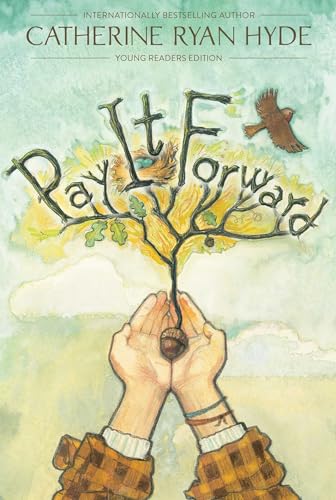
The internationally bestselling book that inspired the Pay It Forward movement is now available in a middle grade edition.
Pay It Forward is a moving, uplifting novel about Trevor McKinney, a twelve-year-old boy in a small California town who accepts his teacher’s challenge to earn extra credit by coming up with a plan to change the world. Trevor’s idea is simple: do a good deed for three people, and instead of asking them to return the favor, ask them to “pay it forward” to three others who need help. He envisions a vast movement of kindness and goodwill spreading across the world, and in this “quiet, steady masterpiece with an incandescent ending” (Kirkus Reviews), Trevor’s actions change his community forever.
This middle grade edition of Pay It Forward is extensively revised, making it an appropriate and invaluable complement to lesson plans and an ideal pick for book clubs, classroom use, and summer reading. Includes an author'snote and curriculum guide.
Die Inhaltsangabe kann sich auf eine andere Ausgabe dieses Titels beziehen.
Über die Autorin bzw. den Autor
Catherine Ryan Hyde is the author of twenty-five books, which include Where We Belong, When You Were Older, Walk Me Home, When I Found You, Don’t Let Me Go, The Language of Hoofbeats, and Take Me With You, among others. More than fifty of her short stories have been published in various literary magazines. Following the success of Pay It Forward, Catherine founded the Pay It Forward Foundation and served as president until 2009. She lives in California with her dog, Ella, and their cat, Jordan. To learn more about the foundation and other forthcoming books, visit CatherineRyanHyde.com.
Auszug. © Genehmigter Nachdruck. Alle Rechte vorbehalten.
Pay It Forward
CHAPTER ONE
Reuben
January 1992
The woman smiled so politely that he felt offended.
“Let me tell Principal Morgan that you’re here, Mr. St. Clair. She’ll want to talk with you.” She walked two steps, turned back. “She likes to talk to everyone, I mean. Any new teacher.”
“Of course.”
He should have been used to this by now.
More than three minutes later she emerged from the principal’s office, smiling too widely. Too openly. People always display far too much acceptance, he’d noticed, when they are having trouble mustering any for real.
“Go right on in, Mr. St. Clair. She’ll see you.”
“Thank you.”
The principal appeared to be about ten years older than Reuben, with a great deal of dark hair, worn up, a Caucasian, and attractive.
“We are so pleased to meet you face-to-face, Mr. St. Clair.” Then she flushed, as if the mention of the word “face” had been an unforgivable error.
“Please call me Reuben.”
“Reuben, yes. And I’m Anne.”
She met him with a steady, head-on gaze and at no time appeared startled. So she had been verbally prepared by her assistant. And somehow the only thing worse than an unprepared reaction was the obviously rehearsed absence of one.
He hated these moments so.
She motioned toward a chair, and he sat.
“I’m not quite what you were expecting, am I, Anne?”
“In what respect?”
“Please don’t do this. You must appreciate how many times I’ve replayed this same scene. I can’t bear to talk around an obvious issue.”
She tried to establish eye contact, as one normally would when addressing a coworker in conversation, but she could not make it stick. “You know this has nothing to do with your being African American,” she said.
“Oh, yes,” he said. “I do know that. I know exactly what it’s about.”
“If you think your position is in any jeopardy, Reuben, you’re worrying for nothing.”
“Do you really have this little talk with everyone?”
“Of course I do.”
“Before they even address their first class?”
Pause. “Not necessarily. I just thought we might discuss the subject of . . . initial adjustment.”
“You worry that my appearance will alarm the students.”
“What has your experience been with that in the past?”
“The students are always easy, Anne. This is the difficult moment. Always.”
“I understand.”
“With all respect, I’m not sure you do,” he said. Out loud.
* * *
At his former school, in Cincinnati, Reuben had a friend named Louis Tartaglia. Lou had a special way of addressing an unfamiliar class. He would enter, on that first morning, with a yardstick in his hand. Walk right into the flap and fray. They like to test a teacher, you see, at first. He would ask for silence, which he never received on the first request. After counting to three, he would bring this yardstick up over his head and smack it down on the desktop in such a way that it would break in two. The free half would fly up into the air behind him, hit the blackboard, and clatter to the floor. Then, in the audible silence to follow, he would say, simply, “Thank you.” And he’d have no trouble with the class after that.
Reuben warned him that someday a piece would fly in the wrong direction and hit a student, causing a world of problems, but it had always worked as planned, so far as he knew.
“It boils down to unpredictability,” Lou explained. “Once they see you as unpredictable, you hold the cards.”
Then he asked what Reuben did to quiet an unfamiliar and unruly class, and Reuben replied that he had never experienced the problem; he had never been greeted by anything but stony silence and was never assumed to be predictable.
“Oh. Right,” Lou said, as if he should have known better.
And he should have.
* * *
Reuben stood before them, for the first time, both grateful for and resentful of their silence. Outside the windows on his right was California, a place he’d never been before. The trees were different; the sky did not say winter as it had when he’d started the long drive from Cincinnati. He wouldn’t say from home, because it was not his home, not really. And neither was this. And he’d grown tired of feeling like a stranger.
He performed a quick head count, seats per row, number of rows. “Since I can see you’re all here,” he said, “we will dispense with the roll call.”
It seemed to break a spell, that he spoke, and the students shifted a bit, made eye contact with one another. Whispered across aisles. Neither better nor worse than usual. He turned away to write his name on the board. Mr. St. Clair. Also wrote it out underneath, Saint Clair, as an aid to pronunciation. Then he paused before turning back, so they would have time to finish reading his name.
In his mind, his plan, he thought he’d start right off with the assignment. But it caved from under him, like skidding down the side of a sand dune. He was not Lou, and sometimes people needed to know him first. Sometimes he was startling enough on his own, before his ideas even showed themselves.
“Maybe we should spend this first day,” he said, “just talking. Since you don’t know me at all. We can start by talking about appearances. How we feel about people because of how they look. There are no rules. You can say anything you want.”
Apparently, they did not believe him yet, because they said the same things they might have with their parents looking on. To his disappointment.
Then, in what he supposed was an attempt at humor, a boy in the back row asked if he was a pirate.
“No,” he said. “I’m not. I’m a teacher.”
“I thought only pirates wore eye patches.”
“People who have lost eyes wear eye patches. Whether they are pirates or not is beside the point.”
* * *
The class filed out, to his relief, and he looked up to see a boy standing in front of his desk. A thin white boy, but very dark haired, possibly part Hispanic, who said, “Hi.”
“Hello.”
“What happened to your face?”
Reuben smiled, which was rare for him, being self-conscious about the lopsided effect. He pulled a chair around so the boy could sit facing him and motioned for him to sit, which he did without hesitation. “What’s your name?”
“Trevor.”
“Trevor what?”
“McKinney. Did I hurt your feelings?”
“No, Trevor. You didn’t.”
“My mom says I shouldn’t ask people things like that, because it might hurt their feelings. She says you should act like you didn’t notice.”
“Well, what your mom doesn’t know, Trevor, because she’s never been in my shoes, is that if you act like you didn’t notice, I still know that you did. And then it feels strange that we can’t talk about it when we’re both thinking about it. Know what I...
„Über diesen Titel“ kann sich auf eine andere Ausgabe dieses Titels beziehen.
Weitere beliebte Ausgaben desselben Titels

Suchergebnisse für Pay It Forward: Young Readers Edition

Foto des Verkäufers
Pay It Forward: Young Readers Edition
Verlag:
A Paula Wiseman Book/Beach Lane Books, 2014
ISBN 10: 1481409409
ISBN 13: 9781481409407
Gebraucht
Softcover
Anbieter: Dream Books Co., Denver, CO, USA
Verkäuferbewertung 5 von 5 Sternen

Zustand: good. Gently used with minimal wear on the corners and cover. A few pages may contain light highlighting or writing, but the text remains fully legible. Dust jacket may be missing, and supplemental materials like CDs or codes may not be included. May be ex-library with library markings. Ships promptly! Artikel-Nr. DBV.1481409409.G
Gebraucht kaufen
EUR 3,65
Versand gratis
Versand innerhalb von USA
Versand innerhalb von USA
Anzahl: 1 verfügbar
Beispielbild für diese ISBN
Pay It Forward: Young Readers Edition
Verlag:
Simon & Schuster/Paula Wiseman Books, 2014
ISBN 10: 1481409409
ISBN 13: 9781481409407
Gebraucht
Softcover
Anbieter: World of Books (was SecondSale), Montgomery, IL, USA
Verkäuferbewertung 5 von 5 Sternen
Zustand: Very Good. Item in very good condition! Textbooks may not include supplemental items i.e. CDs, access codes etc. Artikel-Nr. 00103312870
Gebraucht kaufen
EUR 3,69
Versand gratis
Versand innerhalb von USA
Versand innerhalb von USA
Anzahl: 1 verfügbar
Beispielbild für diese ISBN
Pay It Forward: Young Readers Edition
Verlag:
Simon & Schuster/Paula Wiseman Books, 2014
ISBN 10: 1481409409
ISBN 13: 9781481409407
Gebraucht
Softcover
Anbieter: World of Books (was SecondSale), Montgomery, IL, USA
Verkäuferbewertung 5 von 5 Sternen
Zustand: Acceptable. Item in acceptable condition! Textbooks may not include supplemental items i.e. CDs, access codes etc. Artikel-Nr. 00090475568
Gebraucht kaufen
EUR 3,69
Versand gratis
Versand innerhalb von USA
Versand innerhalb von USA
Anzahl: 12 verfügbar
Beispielbild für diese ISBN
Pay It Forward: Young Readers Edition
Verlag:
Simon & Schuster/Paula Wiseman Books, 2014
ISBN 10: 1481409409
ISBN 13: 9781481409407
Gebraucht
Softcover
Anbieter: World of Books (was SecondSale), Montgomery, IL, USA
Verkäuferbewertung 5 von 5 Sternen
Zustand: Good. Item in good condition. Textbooks may not include supplemental items i.e. CDs, access codes etc. Artikel-Nr. 00089755535
Gebraucht kaufen
EUR 3,69
Versand gratis
Versand innerhalb von USA
Versand innerhalb von USA
Anzahl: Mehr als 20 verfügbar
Beispielbild für diese ISBN
Pay It Forward
Verlag:
Paula Wiseman Book/Beach Lane Books, 2014
ISBN 10: 1481409409
ISBN 13: 9781481409407
Gebraucht
Paperback
Anbieter: ThriftBooks-Phoenix, Phoenix, AZ, USA
Verkäuferbewertung 5 von 5 Sternen
Paperback. Zustand: Very Good. No Jacket. May have limited writing in cover pages. Pages are unmarked. ~ ThriftBooks: Read More, Spend Less. Artikel-Nr. G1481409409I4N00
Gebraucht kaufen
EUR 5,68
Versand gratis
Versand innerhalb von USA
Versand innerhalb von USA
Anzahl: 1 verfügbar
Beispielbild für diese ISBN
Pay It Forward
Verlag:
Paula Wiseman Book/Beach Lane Books, 2014
ISBN 10: 1481409409
ISBN 13: 9781481409407
Gebraucht
Paperback
Anbieter: ThriftBooks-Dallas, Dallas, TX, USA
Verkäuferbewertung 5 von 5 Sternen
Paperback. Zustand: Good. No Jacket. Pages can have notes/highlighting. Spine may show signs of wear. ~ ThriftBooks: Read More, Spend Less. Artikel-Nr. G1481409409I3N00
Gebraucht kaufen
EUR 5,68
Versand gratis
Versand innerhalb von USA
Versand innerhalb von USA
Anzahl: 1 verfügbar
Beispielbild für diese ISBN
Pay It Forward
Verlag:
Paula Wiseman Book/Beach Lane Books, 2014
ISBN 10: 1481409409
ISBN 13: 9781481409407
Gebraucht
Paperback
Anbieter: ThriftBooks-Dallas, Dallas, TX, USA
Verkäuferbewertung 5 von 5 Sternen
Paperback. Zustand: As New. No Jacket. Pages are clean and are not marred by notes or folds of any kind. ~ ThriftBooks: Read More, Spend Less. Artikel-Nr. G1481409409I2N00
Gebraucht kaufen
EUR 5,68
Versand gratis
Versand innerhalb von USA
Versand innerhalb von USA
Anzahl: 1 verfügbar
Beispielbild für diese ISBN
Pay It Forward
Verlag:
Paula Wiseman Book/Beach Lane Books, 2014
ISBN 10: 1481409409
ISBN 13: 9781481409407
Gebraucht
Paperback
Anbieter: ThriftBooks-Atlanta, AUSTELL, GA, USA
Verkäuferbewertung 5 von 5 Sternen
Paperback. Zustand: As New. No Jacket. Pages are clean and are not marred by notes or folds of any kind. ~ ThriftBooks: Read More, Spend Less. Artikel-Nr. G1481409409I2N00
Gebraucht kaufen
EUR 5,68
Versand gratis
Versand innerhalb von USA
Versand innerhalb von USA
Anzahl: 1 verfügbar
Beispielbild für diese ISBN
Pay It Forward
Verlag:
Paula Wiseman Book/Beach Lane Books, 2014
ISBN 10: 1481409409
ISBN 13: 9781481409407
Gebraucht
Paperback
Anbieter: ThriftBooks-Reno, Reno, NV, USA
Verkäuferbewertung 5 von 5 Sternen
Paperback. Zustand: Very Good. No Jacket. May have limited writing in cover pages. Pages are unmarked. ~ ThriftBooks: Read More, Spend Less. Artikel-Nr. G1481409409I4N00
Gebraucht kaufen
EUR 5,68
Versand gratis
Versand innerhalb von USA
Versand innerhalb von USA
Anzahl: 1 verfügbar
Beispielbild für diese ISBN
Pay It Forward
Verlag:
Paula Wiseman Book/Beach Lane Books, 2014
ISBN 10: 1481409409
ISBN 13: 9781481409407
Gebraucht
Paperback
Anbieter: ThriftBooks-Dallas, Dallas, TX, USA
Verkäuferbewertung 5 von 5 Sternen
Paperback. Zustand: Very Good. No Jacket. May have limited writing in cover pages. Pages are unmarked. ~ ThriftBooks: Read More, Spend Less. Artikel-Nr. G1481409409I4N00
Gebraucht kaufen
EUR 5,68
Versand gratis
Versand innerhalb von USA
Versand innerhalb von USA
Anzahl: 1 verfügbar