
Verwandte Artikel zu His Favorites: A Novel
Inhaltsangabe
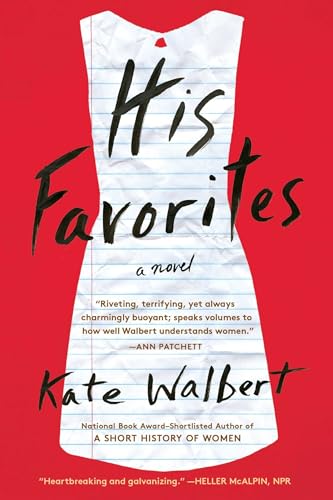
A “tense, taut, and thrilling” (Marie Claire) novel about a teenage girl, a predatory teacher, and a school’s complicity from the highly acclaimed, bestselling National Book Award finalist and author of A Short History of Women—“riveting, terrifying, exactly the book for our times” (Ann Patchett).
They were on a lark, three teenaged girls speeding across the greens at night on a “borrowed” golf cart, drunk. The cart crashes and one of the girls lands violently in the rough, killed instantly. The driver, Jo, flees the hometown that has turned against her and enrolls at a prestigious boarding school. Her past weighs on her. She is responsible for the death of her best friend. She has tipped her parents’ rocky marriage into demise. She is ready to begin again, far away from the accident.
“Devastatingly relevant” (Vogue) and “fueled by gorgeous writing” (NPR), His Favorites reveals the interior life of a young woman determined to navigate the treachery in a new world. Told from her perspective many years later, the story coolly describes a series of shattering events and a school that failed to protect her. “Before things turn treacherous, there’s a moment when predation can feel dangerously like kindness…Walbert understands this…His Favorites begs to be read” (Time).
Die Inhaltsangabe kann sich auf eine andere Ausgabe dieses Titels beziehen.
Über die Autorin bzw. den Autor
Kate Walbert is the author of seven works of fiction: She Was Like That, longlisted for the Story Prize and a New York Times Notable Book of the Year; His Favorites, an Atlantic Monthly Best Book of the Year; The Sunken Cathedral; A Short History of Women, a New York Times Book Review 10 Best Books of the Year and finalist for the Los Angeles Times Book Prize; Our Kind, a National Book Award finalist; The Gardens of Kyoto; and the story collection Where She Went. Her work has appeared in many publications, including The New Yorker, The Paris Review, The Best American Short Stories, and The O. Henry Prize stories. She lives with her family in New York City.
Auszug. © Genehmigter Nachdruck. Alle Rechte vorbehalten.
His Favorites
This is not a story I’ve told before. No one would believe me. I mean, really believe me. They would get that look and nod. They would ask certain questions that suggested I was somehow culpable or that I was making most of it up out of nothing—just girlish fantasies and daydreams. Hysteria. They would wonder how my actions might have precipitated everything or encouraged everything, especially given why I was at Hawthorne at all. I had a reputation for drama then. I also had an appetite for alcohol and marijuana, as did my parents, although we would have gotten along just fine in our individual clouds of stupor, my parents in the living room and me in my bedroom, until the night I stole and wrecked a golf cart, stoned, with my friends Carly and Stephanie.
Carly and Stephanie were my best friends, Carly a girl from an Italian family who owned mushroom barns in Farmingdale, the stench particularly strong the last weeks of summer, when they opened the doors for some kind of airing out. Carly said her family made a great living in shit, the mushrooms grown and harvested in horse manure, but she could not stand to be anywhere near that smell in late August and so decamped to my house, where we slumped around in my bedroom or on the roof just outside my bedroom window, smoking joints if we had them or listening to the radio or sitting with open tin-foiled record albums beneath our chins, the sun’s rays singeing our faces red.
Stephanie lived in the neighborhood, a development on the other side of town from the mushroom barns called Huntington Acres, though the houses were on quarter acres. Ever since middle school, she and I had walked home together from the school bus, watching television in somebody’s living room or doing homework, heating frozen pretzels in the oven. Huntington Acres bordered the Huntington Country Club golf course; we had belonged since we moved in—something about ownership and membership—so if it was warm enough, Stephanie and I sat by the club swimming pool or used our roll of red tickets to order a frozen Milky Way or French fries from the snack bar.
On that day, Carly and Stephanie and I baked on our roof for most of the afternoon so that our faces were a little tanned, mostly burned—a look we loved and wanted to show off. We spent some time lip-synching in front of my bedroom mirror, my hairbrushes our microphones, Elton John’s Goodbye Yellow Brick Road full blast, played repeatedly, especially “All the Young Girls Love Alice,” which we didn’t quite understand, or at least I didn’t, but it seemed portent and relevant and about things so far from where I was that the line itself was like a bridge out.
I sang it again and again—“tender young Alice, they say.” Stephanie had stolen something from her parents’ liquor cabinet, vodka or gin, that we mixed with orange juice; someone thinking close to dark that we should dress up and head over to the club, that maybe there were some caddies still around, some of the older boys we knew from high school we would see walking behind the men lugging bags of clubs on their shoulders. Or maybe we should sneak into the garage and take a cart, I said.
For years I had humored my mother on the golf course, learning how to play and sometimes accompanying her and her friends for nine holes, eighteen too boring but nine passable if she would let me drive the cart. I liked to zoom up to my mother’s lie or mine, slamming on the brakes at the last minute, skidding just a little so she believed I would crush her Titleist four or five, the great drive she’d made from the ladies’ tee, the next shot she could almost taste. This would make her laugh. My mother was a woman who liked to laugh.
Suffice it to say I knew my way around the front nine of the Huntington course blindfolded, and also that on Friday nights the keys to the carts were left underneath the cart mats, Saturday mornings exclusively for the men who began to play before the fog burned off the shorn fairways, the grass still wet. You would see them in clusters of threes and fours, shadowy, inky, and hear the whoosh and thwack of their graphite drivers as they hit the ball off the men’s tee, graphite drivers all the rage. For months I had been saving to buy one for my father, picturing him unwrapping the new club on Christmas morning every time I slipped Saturday babysitting money into the wallet I kept in my top drawer, Mother agreeing to add to the fund as long as I paid the bulk.
Graphite drivers, she told me, don’t grow on trees.
I knew about graphite drivers like I knew about golf carts, like I knew that the keys to the carts were left under the mats for all the men early Saturday mornings. For most of my life, I waked Saturdays to the electric sound of those carts zipping past as the men followed their shots. We were just off the third tee, far enough back that it would take a mulligan to land in our backyard but close enough that it happened from time to time—the rustle of a ball through our huge magnolia, Mother saying oh shit from the back patio, where in good weather she sat reading a novel, her coffee in a thick mug, her pack of cigarettes on the wrought-iron table. Mother an early riser too.
Oh shit, she said, calling me quick to look for the poor man’s ball before he considered it lost and zoomed off. One thing my mother hated was a lost ball.
Stephanie was reluctant with this plan, her parents members of the Huntington Club but not members in the way of mine—her parents served on the kinds of committees that considered the long-term health of the various species of trees that grew in what we called the “copse”—the particularly tricky rough bordering the seventh fairway. They diligently explained to the bored other members during monthly meetings the need to increase the dues given the appalling situation regarding the crumbling mortar of the old stone wall that ran the length of Old Stone Wall Road, a situation Mother reported back to me, laughing that Marilyn Farmer then asked with her typical Marilyn Farmer seriousness—wouldn’t that make the old stone wall look like a new stone wall? To which Stephanie’s father, known as the Colonel, cleared his throat and explained how the stonemasons were known for their ability to replicate the antiquarian ways of the original Italian citizens who arrived from distant shores to Farmingdale to work in the gunpowder mills we could still see dotting the banks of our river, the name of which everyone had difficulty pronouncing and so pronounced in varying ways, ironic, since the word was a Native American word that meant crooked tongue.
“He went on,” Mother said. “Endless.”
Stephanie’s mother we called Barbara the Nurse; she worked in the nurse’s office at Farmingdale Elementary and never failed to have licorice or lollipops or Snoopy Band-Aids on hand. That I had over the last year convinced Stephanie to steal their liquor, or to occasionally get high, I considered a personal triumph—as an only child my skills at persuasion honed to such precision that even at fifteen more than one adult advised me to go into law.
But Stephanie was in a mood; she had fought with Barbara the Nurse that afternoon, something about makeup or a forgotten chore—they were those kinds of parents—and given Stephanie’s not-quite-right younger brother, Buddy, she had to be the one to do everything perfectly,...
„Über diesen Titel“ kann sich auf eine andere Ausgabe dieses Titels beziehen.
Suchergebnisse für His Favorites: A Novel

Beispielbild für diese ISBN
His Favorites: A Novel
Anbieter: World of Books (was SecondSale), Montgomery, IL, USA
Verkäuferbewertung 5 von 5 Sternen

Zustand: Good. Item in good condition. Textbooks may not include supplemental items i.e. CDs, access codes etc. Artikel-Nr. 00099682871
Gebraucht kaufen
EUR 4,00
Versand gratis
Versand innerhalb von USA
Versand innerhalb von USA
Anzahl: 4 verfügbar
Beispielbild für diese ISBN
His Favorites
Anbieter: ThriftBooks-Dallas, Dallas, TX, USA
Verkäuferbewertung 5 von 5 Sternen
Paperback. Zustand: Very Good. No Jacket. May have limited writing in cover pages. Pages are unmarked. ~ ThriftBooks: Read More, Spend Less. Artikel-Nr. G1476799407I4N00
Gebraucht kaufen
EUR 5,96
Versand gratis
Versand innerhalb von USA
Versand innerhalb von USA
Anzahl: 1 verfügbar
Beispielbild für diese ISBN
His Favorites
Anbieter: ThriftBooks-Atlanta, AUSTELL, GA, USA
Verkäuferbewertung 5 von 5 Sternen
Paperback. Zustand: Very Good. No Jacket. May have limited writing in cover pages. Pages are unmarked. ~ ThriftBooks: Read More, Spend Less. Artikel-Nr. G1476799407I4N00
Gebraucht kaufen
EUR 5,96
Versand gratis
Versand innerhalb von USA
Versand innerhalb von USA
Anzahl: 1 verfügbar
Beispielbild für diese ISBN
His Favorites
Anbieter: ThriftBooks-Reno, Reno, NV, USA
Verkäuferbewertung 5 von 5 Sternen
Paperback. Zustand: Very Good. No Jacket. May have limited writing in cover pages. Pages are unmarked. ~ ThriftBooks: Read More, Spend Less. Artikel-Nr. G1476799407I4N00
Gebraucht kaufen
EUR 5,96
Versand gratis
Versand innerhalb von USA
Versand innerhalb von USA
Anzahl: 1 verfügbar
Beispielbild für diese ISBN
His Favorites : A Novel
Anbieter: Better World Books, Mishawaka, IN, USA
Verkäuferbewertung 5 von 5 Sternen
Zustand: Good. Pages intact with minimal writing/highlighting. The binding may be loose and creased. Dust jackets/supplements are not included. Stock photo provided. Product includes identifying sticker. Better World Books: Buy Books. Do Good. Artikel-Nr. 38947551-6
Gebraucht kaufen
EUR 6,05
Versand gratis
Versand innerhalb von USA
Versand innerhalb von USA
Anzahl: 2 verfügbar
Beispielbild für diese ISBN
His Favorites : A Novel
Anbieter: Better World Books, Mishawaka, IN, USA
Verkäuferbewertung 5 von 5 Sternen
Zustand: Good. Former library copy. Pages intact with minimal writing/highlighting. The binding may be loose and creased. Dust jackets/supplements are not included. Includes library markings. Stock photo provided. Product includes identifying sticker. Better World Books: Buy Books. Do Good. Artikel-Nr. 48523075-6
Gebraucht kaufen
EUR 6,05
Versand gratis
Versand innerhalb von USA
Versand innerhalb von USA
Anzahl: 1 verfügbar
Beispielbild für diese ISBN
His Favorites: A Novel
Verlag:
Scribner (edition Reprint), 2019
ISBN 10: 1476799407
ISBN 13: 9781476799407
Gebraucht
Paperback
Anbieter: BooksRun, Philadelphia, PA, USA
Verkäuferbewertung 5 von 5 Sternen
Paperback. Zustand: Very Good. Reprint. It's a well-cared-for item that has seen limited use. The item may show minor signs of wear. All the text is legible, with all pages included. It may have slight markings and/or highlighting. Artikel-Nr. 1476799407-11-1
Gebraucht kaufen
EUR 8,61
Versand gratis
Versand innerhalb von USA
Versand innerhalb von USA
Anzahl: 1 verfügbar
Beispielbild für diese ISBN
His Favorites
Anbieter: WorldofBooks, Goring-By-Sea, WS, Vereinigtes Königreich
Verkäuferbewertung 5 von 5 Sternen
Paperback. Zustand: Very Good. The book has been read, but is in excellent condition. Pages are intact and not marred by notes or highlighting. The spine remains undamaged. Artikel-Nr. GOR012648020
Gebraucht kaufen
EUR 18,28
EUR 6,53 Versand
Versand von Vereinigtes Königreich nach USA
Versand von Vereinigtes Königreich nach USA
Anzahl: 4 verfügbar
Beispielbild für diese ISBN
His Favorites
Anbieter: Revaluation Books, Exeter, Vereinigtes Königreich
Verkäuferbewertung 5 von 5 Sternen
Paperback. Zustand: Brand New. reprint edition. 149 pages. 7.25x5.00x0.50 inches. In Stock. Artikel-Nr. x-1476799407
Neu kaufen
EUR 15,20
EUR 11,66 Versand
Versand von Vereinigtes Königreich nach USA
Versand von Vereinigtes Königreich nach USA
Anzahl: 2 verfügbar
Beispielbild für diese ISBN
His Favorites: A Novel
Anbieter: Kennys Bookstore, Olney, MD, USA
Verkäuferbewertung 5 von 5 Sternen
Zustand: New. 2019. Paperback. . . . . . Books ship from the US and Ireland. Artikel-Nr. V9781476799407
Neu kaufen
EUR 19,42
EUR 9,17 Versand
Versand innerhalb von USA
Versand innerhalb von USA
Anzahl: Mehr als 20 verfügbar