
Verwandte Artikel zu The Secret Language of Stones: A Novel (Volume 2) (The...
The Secret Language of Stones: A Novel (Volume 2) (The Daughters of La Lune) - Hardcover
Buch 2 von 3: The Daughters of La Lune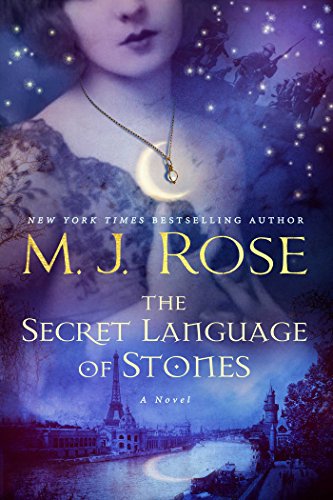
Inhaltsangabe
As World War I rages and the Romanov dynasty reaches its sudden, brutal end, a young jewelry maker discovers love, passion, and her own healing powers in this rich and romantic ghost story, the perfect follow-up to M.J. Rose’s “brilliantly crafted” (Providence Journal) novel The Witch of Painted Sorrows.
Nestled within Paris’s historic Palais Royal is a jewelry store unlike any other. La Fantasie Russie is owned by Pavel Orloff, protégé to the famous Faberge, and is known by the city’s fashion elite as the place to find the rarest of gemstones and the most unique designs. But war has transformed Paris from a city of style and romance to a place of fear and mourning. In the summer of 1918, places where lovers used to walk, widows now wander alone.
So it is from La Fantasie Russie’s workshop that young, ambitious Opaline Duplessi now spends her time making trench watches for soldiers at the front, as well as mourning jewelry for the mothers, wives, and lovers of those who have fallen. People say that Opaline’s creations are magical. But magic is a word Opaline would rather not use. The concept is too closely associated with her mother Sandrine, who practices the dark arts passed down from their ancestor La Lune, one of sixteenth century Paris’s most famous courtesans.
But Opaline does have a rare gift even she can’t deny, a form of lithomancy that allows her to translate the energy emanating from stones. Certain gemstones, combined with a personal item, such as a lock of hair, enable her to receive messages from beyond the grave. In her mind, she is no mystic, but merely a messenger, giving voice to soldiers who died before they were able to properly express themselves to loved ones. Until one day, one of these fallen soldiers communicates a message—directly to her.
So begins a dangerous journey that will take Opaline into the darkest corners of wartime Paris and across the English Channel, where the exiled Romanov dowager empress is waiting to discover the fate of her family. Full of romance, seduction, and a love so powerful it reaches beyond the grave, The Secret Language of Stones is yet another “spellbindingly haunting” (Suspense magazine), “entrancing read that will long be savored” (Library Journal, starred review).
Die Inhaltsangabe kann sich auf eine andere Ausgabe dieses Titels beziehen.
Über die Autorin bzw. den Autor
New York Times bestselling author M.J. Rose grew up in New York City exploring the labyrinthine galleries of the Metropolitan Museum and the dark tunnels and lush gardens of Central Park. She is the author of more than a dozen novels, the founder of the first marketing company for authors, AuthorBuzz.com and cofounder of 1001DarkNights.com She lives in Connecticut. Visit her online at MJRose.com.
Auszug. © Genehmigter Nachdruck. Alle Rechte vorbehalten.
The Secret Language of Stones
Chapter 1
JULY 19, 1918
“Are you Opaline?” the woman asked before she even stepped all the way into the workshop. From the anxious and distraught tone of her voice, I guessed she hadn’t come to talk about commissioning a bracelet for her aunt or having her daughter’s pearls restrung.
Though not a soldier, this woman was one of the Great War’s wounded, here to engage in the dark arts in the hopes of finding solace. Was it her son or her brother, husband, or lover’s fate that drove her to seek me out?
France had lost more than one million men, and there were battles yet to be fought. We’d suffered the second largest loss of any country in any war in history. No one in Paris remained untouched by tragedy.
What a terrible four years we’d endured. The Germans had placed La Grosse Bertha, a huge cannon, on the border between Picardy and Champagne. More powerful than any weapon ever built, she proved able to send shells 120 kilometers and reach us in Paris.
Since the war began, Bertha had shot more than 325 shells into our city. By the summer of 1918, two hundred civilians had died, and almost a thousand more were hurt. We lived in a state of anticipation and readiness. We were on the front too, as much at risk as our soldiers.
The last four months had been devastating. On March 11, the Vincennes Cemetery in the eastern inner suburbs was hit and hundreds of families lost their dead all over again when marble tombs and granite gravestones shattered. Bombs continued falling into the night. Buildings all over the city were demolished; craters appeared in the streets.
Three weeks later, more devastation. The worst Paris had suffered yet. On Good Friday, during a mass at the Saint-Gervais and Saint-Protais Church, a shell hit and the whole roof collapsed on the congregation. Eighty-eight people were killed; another sixty-eight were wounded. And all over Paris many, many more suffered psychological damage. We became more worried, ever more afraid. What was next? When would it happen? We couldn’t know. All we could do was wait.
In April there were more shellings. And again in May. One hit a hotel in the 13th arrondissement, and because Bertha’s visits were silent, without warning, sleeping guests were killed in their beds.
By the middle of July, there was still no end in sight.
That warm afternoon, while the rain drizzled down, I steeled myself for the expression of grief to match what I’d heard in the customer’s voice. I shut off my soldering machine and put my work aside before I looked up.
Turning soldiers’ wristwatches into trench watches is how I have been contributing to the war effort since arriving in Paris three years ago. History repeats itself, they say, and in my case it’s true. In 1894, my mother ran away from her first husband in New York City and came to Paris. And twenty-one years later, I ran away from my mother in Cannes and came to Paris.
In trying to protect me from the encroaching war and to distract me from the malaise I’d been suffering since my closest friend had been killed, my parents decided to send me to America. No amount of protest, tantrums, bargaining, or begging would change their minds. They were shipping me off to live with family in Boston and to study at Radcliffe, where my uncle taught history.
At ten AM on Wednesday, February 11, 1915 my parents and I arrived at the dock in Cherbourg. French ocean liners had all been acquisitioned for the war, so I was booked on the USMS New York to travel across the sea. A frenetic scene greeted me. Most of the travelers were leaving France out of fear, and the atmosphere was thick with sadness and worry. Faces were drawn, eyes red with crying, as we prepared to board the big hulking ship waiting to transport us away from the terrible war that claimed more and more lives every day.
While my father arranged for a porter to carry my trunk, my mother handed me a last-minute gift, a book from the feel of it, then took me in her arms to kiss me good-bye. I breathed in her familiar scent, knowing it might be a long time until I smelled that particular mixture of L’Etoile’s Rouge perfume and the Roger et Gallet poudre de riz she always used to dust her face and décolletage. As she held me and pressed her crimson-stained lips to my cheek, I reached up behind her and carefully unhooked one of the half dozen ropes of cabochon ruby beads slung around her neck.
I let the necklace slip inside my glove, the stones warm as they slid down and settled into my cupped palm.
My mother often told me the story about how, in Paris in 1894, soon after she’d arrived and they’d met, my father helped her secretly pawn some of her grandmother’s treasures to buy art supplies so she could attend École des Beaux-Arts.
Knowing I too might need extra money, I decided to avail myself of some insurance. My mother owned so many strands of those blood-red beads, certainly my transgression would go unnoticed for a long time.
Disentangling herself, my mother dabbed at her eyes with a black handkerchief trimmed in red lace. Like the rubies she always wore, her handkerchiefs were one of her trademarks. Her many eccentricities exacerbated the legends swirling around “La Belle Lune,” as the press called her.
“Mon chou, I will miss you. Write often and don’t get into trouble. It’s one thing to break my rules, but listen to your aunt Laura. All right?”
When my father’s turn came, he took me in his arms and exacted another kind of promise. “You will stay safe, yes?” He let go, but only for a moment before pulling me back to plant another kiss on the top of my head and add a coda to his good-bye. “Stay safe,” he repeated, “and please, forgive yourself for what happened with Timur. You couldn’t know what the future would bring. Enjoy your adventure, chérie.”
I nodded as tears tickled my eyes. Always sensitive to me, my father knew how much my guilt weighed on me. My charming and handsome papa always found just the right words to say to me to make me feel special. I didn’t care that I was about to deceive my mother, but I hated that I was going to disappoint my father.
During the winters of 1913 and 1914, my parents’ friends’ son Timur Orloff lived with us in Cannes. He ran a small boutique inside the Carlton Hotel, where, in high season, the hotel rented out space to a select few high-end retailers in order to cater to the celebrities, royalty, and nobility who flocked to the Riviera.
Our families first met when Anna Orloff bought one of my mother’s paintings, and Monsieur Orloff hired my father to design his jewelry store in Paris. A friendship developed that eventually led to my parents offering to house Timur. We quickly became the best of friends, sharing a passion for art and a love of design.
Creating jewelry had been my obsession ever since I’d found my first piece of emerald sea glass at the beach and tried to use string and glue to fashion it into a ring. My father declared jewelry design the perfect profession for the child of a painter and an architect—an ideal way to marry the sense of color and light I’d inherited from my mother and the ability to visualize and design in three dimensions that I’d inherited from him.
My mother was disappointed I wasn’t following...
„Über diesen Titel“ kann sich auf eine andere Ausgabe dieses Titels beziehen.
Suchergebnisse für The Secret Language of Stones: A Novel (Volume 2) (The...

Beispielbild für diese ISBN
The Secret Language of Stones, 2
Anbieter: World of Books (was SecondSale), Montgomery, IL, USA
Verkäuferbewertung 5 von 5 Sternen

Hardback. Zustand: Good. As World War I rages and the Romanov dynasty reaches its sudden, brutal end, a young jewelry maker discovers love, passion, and her own healing powers in this rich and romantic ghost story, the perfect follow-up to M.J. Rose's brilliantly crafted (Providence Journal) novel The Witch of Painted Sorrows. Nestled within Paris's historic Palais Royal is a jewelry store unlike any other. La Fantasie Russie is owned by Pavel Orloff, prot g to the famous Faberge, and is known by the city's fashion elite as the place to find the rarest of gemstones and the most unique designs. But war has transformed Paris from a city of style and romance to a place of fear and mourning. In the summer of 1918, places where lovers used to walk, widows now wander alone. So it is from La Fantasie Russie's workshop that young, ambitious Opaline Duplessi now spends her time making trench watches for soldiers at the front, as well as mourning jewelry for the mothers, wives, and lovers of those who have fallen. People say that Opaline's creations are magical. But magic is a word Opaline would rather not use. The concept is too closely associated with her mother Sandrine, who practices the dark arts passed down from their ancestor La Lune, one of sixteenth century Paris's most famous courtesans. But Opaline does have a rare gift even she can't deny, a form of lithomancy that allows her to translate the energy emanating from stones. Certain gemstones, combined with a personal item, such as a lock of hair, enable her to receive messages from beyond the grave. In her mind, she is no mystic, but merely a messenger, giving voice to soldiers who died before they were able to properly express themselves to loved ones. Until one day, one of these fallen soldiers communicates a message--directly to her. So begins a dangerous journey that will take Opaline into the darkest corners of wartime Paris and across the English Channel, where the exiled Romanov dowager empress is waiting to discover the fate of her family. Full of romance, seduction, and a love so powerful it reaches beyond the grave, The Secret Language of Stones is yet another spellbindingly haunting (Suspense magazine), entrancing read that will long be savored (Library Journal, starred review). Artikel-Nr. 00097002472
Gebraucht kaufen
EUR 4,68
Versand gratis
Versand innerhalb von USA
Versand innerhalb von USA
Anzahl: 3 verfügbar
Beispielbild für diese ISBN
The Secret Language of Stones: A Novel (2)
Anbieter: BooksRun, Philadelphia, PA, USA
Verkäuferbewertung 5 von 5 Sternen
Hardcover. Zustand: Very Good. It's a well-cared-for item that has seen limited use. The item may show minor signs of wear. All the text is legible, with all pages included. It may have slight markings and/or highlighting. Artikel-Nr. 1476778094-11-1
Gebraucht kaufen
EUR 4,93
Versand gratis
Versand innerhalb von USA
Versand innerhalb von USA
Anzahl: 1 verfügbar
Beispielbild für diese ISBN
The Secret Language of Stones: A Novel (2)
Anbieter: BooksRun, Philadelphia, PA, USA
Verkäuferbewertung 5 von 5 Sternen
Hardcover. Zustand: Very Good. With dust jacket. It's a well-cared-for item that has seen limited use. The item may show minor signs of wear. All the text is legible, with all pages included. It may have slight markings and/or highlighting. Artikel-Nr. 1476778094-11-6-29
Gebraucht kaufen
EUR 5,43
Versand gratis
Versand innerhalb von USA
Versand innerhalb von USA
Anzahl: 1 verfügbar
Beispielbild für diese ISBN
The Secret Language of Stones, Volume 2
Anbieter: ThriftBooks-Dallas, Dallas, TX, USA
Verkäuferbewertung 5 von 5 Sternen
Hardcover. Zustand: Very Good. No Jacket. Former library book; May have limited writing in cover pages. Pages are unmarked. ~ ThriftBooks: Read More, Spend Less. Artikel-Nr. G1476778094I4N10
Gebraucht kaufen
EUR 6,51
Versand gratis
Versand innerhalb von USA
Versand innerhalb von USA
Anzahl: 1 verfügbar
Beispielbild für diese ISBN
The Secret Language of Stones, Volume 2
Anbieter: ThriftBooks-Atlanta, AUSTELL, GA, USA
Verkäuferbewertung 5 von 5 Sternen
Hardcover. Zustand: Good. No Jacket. Pages can have notes/highlighting. Spine may show signs of wear. ~ ThriftBooks: Read More, Spend Less. Artikel-Nr. G1476778094I3N00
Gebraucht kaufen
EUR 6,51
Versand gratis
Versand innerhalb von USA
Versand innerhalb von USA
Anzahl: 1 verfügbar
Beispielbild für diese ISBN
The Secret Language of Stones, Volume 2
Anbieter: ThriftBooks-Dallas, Dallas, TX, USA
Verkäuferbewertung 5 von 5 Sternen
Hardcover. Zustand: Good. No Jacket. Pages can have notes/highlighting. Spine may show signs of wear. ~ ThriftBooks: Read More, Spend Less. Artikel-Nr. G1476778094I3N00
Gebraucht kaufen
EUR 6,51
Versand gratis
Versand innerhalb von USA
Versand innerhalb von USA
Anzahl: 1 verfügbar
Beispielbild für diese ISBN
The Secret Language of Stones, Volume 2
Anbieter: ThriftBooks-Dallas, Dallas, TX, USA
Verkäuferbewertung 5 von 5 Sternen
Hardcover. Zustand: Very Good. No Jacket. May have limited writing in cover pages. Pages are unmarked. ~ ThriftBooks: Read More, Spend Less. Artikel-Nr. G1476778094I4N00
Gebraucht kaufen
EUR 6,51
Versand gratis
Versand innerhalb von USA
Versand innerhalb von USA
Anzahl: 1 verfügbar
Beispielbild für diese ISBN
The Secret Language of Stones : A Novel
Anbieter: Better World Books: West, Reno, NV, USA
Verkäuferbewertung 5 von 5 Sternen
Zustand: Very Good. Pages intact with possible writing/highlighting. Binding strong with minor wear. Dust jackets/supplements may not be included. Stock photo provided. Product includes identifying sticker. Better World Books: Buy Books. Do Good. Artikel-Nr. 13030379-6
Gebraucht kaufen
EUR 6,74
Versand gratis
Versand innerhalb von USA
Versand innerhalb von USA
Anzahl: 1 verfügbar
Beispielbild für diese ISBN
The Secret Language of Stones : A Novel
Anbieter: Better World Books, Mishawaka, IN, USA
Verkäuferbewertung 5 von 5 Sternen
Zustand: Very Good. Former library copy. Pages intact with possible writing/highlighting. Binding strong with minor wear. Dust jackets/supplements may not be included. Includes library markings. Stock photo provided. Product includes identifying sticker. Better World Books: Buy Books. Do Good. Artikel-Nr. 11113103-75
Gebraucht kaufen
EUR 6,74
Versand gratis
Versand innerhalb von USA
Versand innerhalb von USA
Anzahl: 2 verfügbar
Beispielbild für diese ISBN
The Secret Language of Stones : A Novel
Anbieter: Better World Books, Mishawaka, IN, USA
Verkäuferbewertung 5 von 5 Sternen
Zustand: Good. Former library copy. Pages intact with minimal writing/highlighting. The binding may be loose and creased. Dust jackets/supplements are not included. Includes library markings. Stock photo provided. Product includes identifying sticker. Better World Books: Buy Books. Do Good. Artikel-Nr. 10880810-6
Gebraucht kaufen
EUR 6,74
Versand gratis
Versand innerhalb von USA
Versand innerhalb von USA
Anzahl: 1 verfügbar