
Verwandte Artikel zu Convergence: The Idea at the Heart of Science
Inhaltsangabe
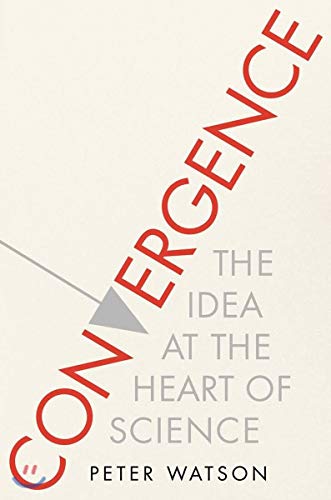
A brilliant history of science over the past 150 years that offers a powerful new argument—that the many disparate scientific branches are converging on the same truths.
Convergence is a history of modern science with an original and significant twist. Various scientific disciplines, despite their very different beginnings, have been coming together over the past 150 years, converging and coalescing. Intimate connections have been discovered between physics and chemistry, psychology and biology, genetics and linguistics. In this groundbreaking book, Peter Watson identifies one extraordinary master narrative, capturing how the sciences are slowly resolving into one overwhelming, interlocking story about the universe.
Watson begins his narrative in the 1850s, the decade when, he argues, the convergence of the sciences began. The idea of the conservation of energy was introduced in this decade, as was Darwin’s theory of evolution—both of which rocketed the sciences forward and revealed unimagined interconnections and overlaps between disciplines. The story then proceeds from each major breakthrough and major scientist to the next, leaping between fields and linking them together. Decade after decade, the story captures every major scientific advance en route to the present, proceeding like a cosmic detective story, or the world’s most massive code-breaking effort.
Watson’s is a thrilling new approach to the history of science, revealing how each piece falls into place, and how each uncovers an “emerging order.” Convergence is, as Nobel Prize-winning physicist Steven Weinberg has put it, “The deepest thing about the universe.” And Watson’s comprehensive and eye-opening book argues that all our scientific efforts are indeed approaching unity. Told through the eyes of the scientists themselves, charting each discovery and breakthrough, it is a gripping way to learn what we now know about the universe and where our inquiries are heading.
Die Inhaltsangabe kann sich auf eine andere Ausgabe dieses Titels beziehen.
Über die Autorin bzw. den Autor
Peter Watson is an intellectual historian, journalist, and the author of thirteen books, including Convergence; Ideas: A History; The Age of Atheists; The German Genius; The Medici Conspiracy; and The Great Divide. He has written for The Sunday Times, The New York Times, the Observer, and the Spectator. He lives in London.
Auszug. © Genehmigter Nachdruck. Alle Rechte vorbehalten.
Convergence
1
“THE GREATEST OF ALL GENERALIZATIONS”
One morning in late August 1847, James Prescott Joule, a wealthy Manchester brewer but also a distinguished physicist, was walking in Switzerland, near Saint-Martin, beneath the Col de la Forclaz, in the south of the country, not too far from the Italian border. On the road between Saint-Martin and Saint-Gervais he was surprised to meet a colleague, William Thomson, a fellow physicist, later even more distinguished as Lord Kelvin. Thomson noted in a letter the next day to his father—a professor of mathematics—that Joule had with him some very sensitive thermometers and asked if Thomson would assist him in an unusual experiment: he wanted to measure the temperature of the water at the top and bottom of a local waterfall. The request was particularly unusual, Thomson suggested in his letter, because Joule was then on his honeymoon.
The experiment with waterfalls came to nothing. There was so much spray and splash at the foot of the local cataract that neither Joule nor Thomson could get close enough to the main body of water to make measurements. But the idea was ingenious and it was, moreover, very much a child of its time. Joule was homing in on a notion that, it is no exaggeration to say, would prove to be one of the two most important scientific ideas of all time, and a significant new view of nature.
He was not alone. Over the previous few years as many as fifteen scientists, working in Germany, Holland, and France as well as in Britain, were all thinking about the conservation of energy. The historian of science Thomas Kuhn says that there is “no more striking instance of the phenomenon known as simultaneous discovery than conservation of energy.” Four of the men—Sadi Carnot in Paris in 1832, Marc Seguin in Lyon in 1839, Carl Holtzmann in Mannheim in 1845, and Gustave-Adolphe Hirn in Mulhouse in 1854—had all recorded their independent convictions that heat and work are quantitatively interchangeable. Between 1837 and 1844, Karl Mohr in Koblenz, William Grove and Michael Faraday in London, and Justus von Liebig in Giessen all described the world of phenomena “as manifesting but a single ‘force,’ one which could appear in electrical, thermal, dynamical, and many other forms but which could never, in all its transformations, be created or destroyed.”1 And between 1842 and 1847, the hypothesis of energy conservation was publicly announced, says Kuhn, by four “widely scattered” European scientists—Julius von Mayer in Tübingen, James Joule in Manchester, Ludwig Colding in Copenhagen, and Hermann von Helmholtz in Berlin, all but the last working in complete ignorance of the others.
Joule and his waterfalls apart, perhaps the most romantic of the different stories was that of Julius von Mayer. For the whole of 1840, starting in February, Julius Robert von Mayer served as a ship’s physician on board a Dutch merchantman to the East Indies. The son of an apothecary from Heilbronn, Württemberg, he was a saturnine, bespectacled man who, in the fashion of his time, wore his beard under—but not actually on—his chin. Mayer’s life and career interlocked in intellectually productive yet otherwise tragic ways. While a student he was arrested and briefly imprisoned for wearing the colors of a prohibited organization. He was also expelled for a year and spent the time traveling, notably to the Dutch East Indies, a lucky destination for him, as it turned out. Mayer graduated in medicine from the University of Tübingen in 1838, though physics was really his first love, and that was when he enlisted as a ship’s doctor with the Dutch East India Company. The return to the East was to have momentous consequences.
On the way there, in the South Atlantic, off South Africa, he observed that the waves that were thrown about during some of the wild storms that the three-master encountered were warmer than the calm seas. That set him thinking about heat and motion. Then, during a stopover in Jakarta in the summer of 1840, he made his most famous observation. As was then common practice, he let the blood of several European sailors who had recently arrived in Java. He was surprised at how red their blood was—he took blood from their veins (blood returning to the heart) and found it was almost as red as arterial blood. Mayer inferred that the sailors’ blood was more than usually red owing to the high temperatures in Indonesia, which meant their bodies required a lower rate of metabolic activity to maintain body heat. Their bodies had extracted less oxygen from their arterial blood, making the returning venous blood redder than it would otherwise have been.2
Heat and Motion Are the Same
Mayer was struck by this observation because it seemed to him to be self-evident support for the theory of his compatriot, the chemist and agricultural specialist Justus von Liebig, who argued that animal heat is produced by combustion—oxidation—of the chemicals in the food taken in by the body. In effect, Liebig was observing that chemical “force” (as the term was then used), which is latent in food, was being converted into (body) heat. Since the only “force” that enters animals is their food (their fuel) and the only form of force they display is activity and heat, then these two forces must always—by definition—be in balance. There was nowhere else for the force in the food to go.
Mayer originally tried to publish his work in the prestigious Annalen der Physik und Chemie. Founded in 1790, the Annalen der Physik was itself a symptom of the changes taking place. By the 1840s it was the most important German journal of physics, though many new journals proliferated in that decade. The Annalen’s editor since 1824, Johann Christian Poggendorff, a “fact-obsessed experimentalist and scientific biographer,” had a very firm idea of what physics was. By the middle of the century, there had emerged “a distinctive science of physics that took quantification and the search for mathematical laws as its universal aims.” (This, it will be recalled, is what drew Mary Somerville to the subject.) Poggendorff could make or break scientific careers. All the more so because he edited the Annalen for fifty-two years, until he died in 1877.
Owing to a number of basic mistakes, however, due to his poor knowledge of physics, Mayer’s paper was rejected by Poggendorff. Disappointed but undeterred, he broached his ideas to the physics professor at Tübingen, his old university, who disagreed with him but suggested some experiments he might do to further develop his ideas. If what Mayer was proposing was true, the professor said, if heat and motion are essentially the same, water should be warmed by vibration, the same thought that had occurred to Joule.
Mayer tried the experiment, and found not only that water is warmed by vibration (as he had spotted, months before, aboard the merchantman), but that he was able to measure the different forces—vibration, kinetic energy, and heat. These results, “Remarks on the Forces of Inanimate Nature,” were therefore published in the Annalen der Chemie und Pharmacie in 1842, and it was here that he argued for a relationship between motion and heat, that “motion and heat are only different manifestations of one and the same force [which must] be able to be converted and transformed into one another.” Mayer’s...
„Über diesen Titel“ kann sich auf eine andere Ausgabe dieses Titels beziehen.
Suchergebnisse für Convergence: The Idea at the Heart of Science

Beispielbild für diese ISBN
Convergence: The Idea at the Heart of Science
Verlag:
Simon & Schuster (edition ), 2017
ISBN 10: 1476754349
ISBN 13: 9781476754345
Gebraucht
Hardcover
Anbieter: BooksRun, Philadelphia, PA, USA
Verkäuferbewertung 5 von 5 Sternen

Hardcover. Zustand: Very Good. With dust jacket. It's a well-cared-for item that has seen limited use. The item may show minor signs of wear. All the text is legible, with all pages included. It may have slight markings and/or highlighting. Artikel-Nr. 1476754349-11-1-29
Gebraucht kaufen
EUR 5,23
Versand gratis
Versand innerhalb von USA
Versand innerhalb von USA
Anzahl: 1 verfügbar
Beispielbild für diese ISBN
Convergence: The Idea at the Heart of Science
Anbieter: ThriftBooks-Atlanta, AUSTELL, GA, USA
Verkäuferbewertung 5 von 5 Sternen
Hardcover. Zustand: Very Good. No Jacket. Former library book; May have limited writing in cover pages. Pages are unmarked. ~ ThriftBooks: Read More, Spend Less. Artikel-Nr. G1476754349I4N10
Gebraucht kaufen
EUR 7,16
Versand gratis
Versand innerhalb von USA
Versand innerhalb von USA
Anzahl: 1 verfügbar
Beispielbild für diese ISBN
Convergence: The Idea at the Heart of Science
Anbieter: ThriftBooks-Dallas, Dallas, TX, USA
Verkäuferbewertung 5 von 5 Sternen
Hardcover. Zustand: Very Good. No Jacket. May have limited writing in cover pages. Pages are unmarked. ~ ThriftBooks: Read More, Spend Less. Artikel-Nr. G1476754349I4N00
Gebraucht kaufen
EUR 7,16
Versand gratis
Versand innerhalb von USA
Versand innerhalb von USA
Anzahl: 1 verfügbar
Beispielbild für diese ISBN
Convergence : The Idea at the Heart of Science
Anbieter: Better World Books, Mishawaka, IN, USA
Verkäuferbewertung 5 von 5 Sternen
Zustand: Good. Former library copy. Pages intact with minimal writing/highlighting. The binding may be loose and creased. Dust jackets/supplements are not included. Includes library markings. Stock photo provided. Product includes identifying sticker. Better World Books: Buy Books. Do Good. Artikel-Nr. 12020794-6
Gebraucht kaufen
EUR 7,21
Versand gratis
Versand innerhalb von USA
Versand innerhalb von USA
Anzahl: 1 verfügbar
Beispielbild für diese ISBN
Convergence : The Idea at the Heart of Science
Anbieter: Better World Books, Mishawaka, IN, USA
Verkäuferbewertung 5 von 5 Sternen
Zustand: Good. Pages intact with minimal writing/highlighting. The binding may be loose and creased. Dust jackets/supplements are not included. Stock photo provided. Product includes identifying sticker. Better World Books: Buy Books. Do Good. Artikel-Nr. 14336155-6
Gebraucht kaufen
EUR 7,21
Versand gratis
Versand innerhalb von USA
Versand innerhalb von USA
Anzahl: 1 verfügbar
Beispielbild für diese ISBN
Convergence : The Idea at the Heart of Science
Anbieter: Better World Books: West, Reno, NV, USA
Verkäuferbewertung 5 von 5 Sternen
Zustand: Good. Former library copy. Pages intact with minimal writing/highlighting. The binding may be loose and creased. Dust jackets/supplements are not included. Includes library markings. Stock photo provided. Product includes identifying sticker. Better World Books: Buy Books. Do Good. Artikel-Nr. 12020794-6
Gebraucht kaufen
EUR 7,21
Versand gratis
Versand innerhalb von USA
Versand innerhalb von USA
Anzahl: 1 verfügbar
Beispielbild für diese ISBN
Convergence : The Idea at the Heart of Science
Anbieter: Better World Books, Mishawaka, IN, USA
Verkäuferbewertung 5 von 5 Sternen
Zustand: Very Good. Former library copy. Pages intact with possible writing/highlighting. Binding strong with minor wear. Dust jackets/supplements may not be included. Includes library markings. Stock photo provided. Product includes identifying sticker. Better World Books: Buy Books. Do Good. Artikel-Nr. 17843637-6
Gebraucht kaufen
EUR 7,21
Versand gratis
Versand innerhalb von USA
Versand innerhalb von USA
Anzahl: 1 verfügbar
Foto des Verkäufers
Convergence: The Idea at the Heart of Science
Verlag:
Simon & Schuster, 2017
ISBN 10: 1476754349
ISBN 13: 9781476754345
Gebraucht
Hardcover
Erstausgabe
Anbieter: Southampton Books, Sag Harbor, NY, USA
Verkäuferbewertung 5 von 5 Sternen
Hardcover. Zustand: Like New. First Edition. First Edition, First Printing. Not price-clipped. Published by Simon & Schuster, 2017. Octavo. Hardcover. Book is like new. Dust jacket is like new with sticker residue on front cover.100% positive feedback. 30 day money back guarantee. NEXT DAY SHIPPING! Excellent customer service. Please email with any questions. All books packed carefully and ship with free delivery confirmation/tracking. All books come with free bookmarks. Ships from Sag Harbor, New York. Artikel-Nr. 446636
Gebraucht kaufen
EUR 17,96
EUR 4,35 Versand
Versand innerhalb von USA
Versand innerhalb von USA
Anzahl: 1 verfügbar
Foto des Verkäufers
Convergence The Idea At the Heart of Science
Verlag:
Simon & Schuster, New York, NY, 2017
ISBN 10: 1476754349
ISBN 13: 9781476754345
Gebraucht
Hardcover
Erstausgabe
Anbieter: True Oak Books, Highland, NY, USA
Verkäuferbewertung 5 von 5 Sternen
Hardcover. Zustand: Very Good. Zustand des Schutzumschlags: Very Good-. First Edition; First Printing. 6 X 1.5 X 9 inches; 543 pages; DJ price clipped. Minor markings on front pastedown endpaper. Light rubbing discoloration to DJ. Very Good condition otherwise. No other noteworthy defects. No markings. ; - Your satisfaction is our priority. We offer free returns and respond promptly to all inquiries. Your item will be carefully cushioned in bubble wrap and securely boxed. All orders ship on the same or next business day. Buy with confidence. Artikel-Nr. GHC19-54992-A-0
Gebraucht kaufen
EUR 24,21
Versand gratis
Versand innerhalb von USA
Versand innerhalb von USA
Anzahl: 1 verfügbar
Foto des Verkäufers
Convergence: The Idea at the Heart of Science
Anbieter: WeBuyBooks, Rossendale, LANCS, Vereinigtes Königreich
Verkäuferbewertung 5 von 5 Sternen
hardcover. Zustand: Very Good. Most items will be dispatched the same or the next working day. A copy that has been read, but is in excellent condition. Pages are intact and not marred by notes or highlighting. The spine remains undamaged. Artikel-Nr. rev8549870849
Gebraucht kaufen
EUR 19,58
EUR 9,74 Versand
Versand von Vereinigtes Königreich nach USA
Versand von Vereinigtes Königreich nach USA
Anzahl: 1 verfügbar